 How to resolve AdBlock issue?
Education
- Details
- Written by: Elizabeth Larson
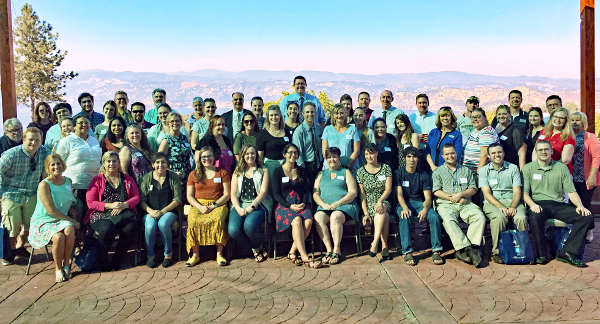
LAKE COUNTY, Calif. – The Lake County Chamber of Commerce and Lake County Office of Education partnered to host the Lake County New Educators Reception at the Riviera Hills Restaurant & Lounge in early September.
More than new Lake County educators from five of Lake County’s six school districts gathered to learn about Lake County, meet local business owners and network with other new educators.
Lake County Superintendent of Schools Brock Falkenberg welcomed the new teachers, administrators and guests.
Joe Casteel, president of the Lake County Chamber of Commerce, thanked the local businesses who generously sponsored the event.
Sponsors included Advanced Environmental Safety and Health, City of Clear Lake, city of Lakeport, Clear Lake Campground, Community First Credit Union, Lake County Theatre Company, McDonald’s Lakeport, North Coast Builders Exchange, Realty World - David R Hughes & Associates, Six Sigma Ranch & Vineyard, Sterling Mortgage, The Aurora RV Park & Marina and The Travel Center.
- Details
- Written by: Caltrans
TURLOCK, Calif. – The National Summer Transportation Institute, or NSTI, is an innovative program to help middle- and high-school students prepare for future careers in transportation and related fields.
This summer, students congregated for the NSTI at California State University, Stanislaus in Turlock.
In this Caltrans News Flash, Public Information Officer Thomas Lawrence gives an inside look at the program.
This summer, students participated in a Science, Technology, Engineering, and Math (STEM) program, heard from transportation professionals, and even launched air-powered rockets made of two-liter plastic bottles on a sunny day in Turlock.
The program is conducted at between 50 to 60 colleges across the nation and helps develop the next generation of transportation professionals.
Caltrans is the state oversight agency for this program and assisted by securing funding, selecting the schools and conducting site visits.
For more information on this program, please visit: http://www.dot.ca.gov/obeo/NSTI.html.
- Details
- Written by: Editor
The event will be held from 6:30 to 7 p.m. immediately following the PTO meeting in Room 3 at the elementary school, 150 Lange St.
Join Principal Aaron Carter to discuss the current school year and upcoming events, and get a preview of what’s to come.
Parents are invited to bring questions and concerns in an effort to build a strong partnership with the school and district.
- Details
- Written by: Elizabeth Larson
The challenge is open to middle and high school-aged students who either live or attend school in the district.
“Our young people are leading the way in developing innovative technologies that help us all get ahead. That’s why I am proud to announce the 2018 Congressional App Challenge for our students, allowing them to solve problems and create content in a fun and innovative way,” said Thompson. “Each year this contest brings together our students to create interesting apps – from games, to new tools, to important solutions – and I am always impressed by their work. I look forward to seeing this year’s submissions and meeting another group of incredible students.”
Applications for the challenge must be submitted by Monday, Oct. 15.
You can click here to learn more and to submit your application.