 How to resolve AdBlock issue?
Education
- Details
- Written by: Editor
The session will be held from 9 a.m. to noon in Room 1060 of MacMillan Hall at the Mendocino College main campus at 1000 Hensley Creek Road in Ukiah.
The study session items are for discussion only and no action will be taken at this meeting.
They include information technology and data security, program creation and assessment, and strategic planning.
- Details
- Written by: Editor
Scholarship applications are available from school offices at Clear Lake High School, Upper Lake High School, Kelseyville High School, Lower Lake High School, Konocti Education Center and Middletown High School.
Applications are also available at the Sutter Lakeside Hospital gift shop, located in the hospital lobby at 5176 Hill Road East in Lakeport.
Applications must be completed and returned to school counselors or the hospital gift shop by March 31.
“The auxiliary is committed to supporting health care in Lake County,” said Joan Taylor, auxiliary secretary. “By offering health care-related scholarships to local seniors we hope to raise awareness of career opportunities in the community, as well as retain residents.”
Applicants must live in Lake County and must be graduating this spring. Applicants must also plan to pursue a career in the medical field.
The auxiliary has offered scholarships for over two decades, totaling over $100,000 to local students. Scholarship money is raised from gift shop profits.
“Education sustains health care,” said Taylor. “Watching high school seniors thrive is incredibly rewarding.”
- Details
- Written by: Editor
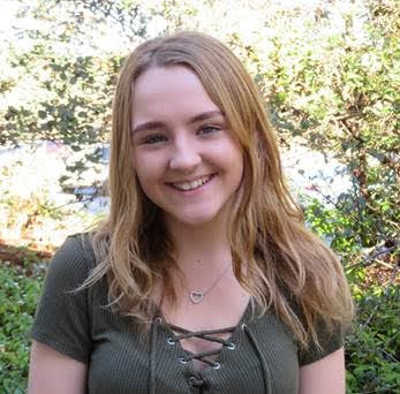
NORTH COAST, Calif. – A little over seven years ago little fifth-grader Alexis Small was sitting next to her best friend, also named Alexis, in an assembly at Yokayo Elementary School when she received a surprise that would change her life.
Small had been chosen to receive the Adopt-A-Fifth Grader award. The award provided a $1,000 scholarship at Mendocino College upon graduation from high school.
Small always believed that she would attend college, but now there was actual scholarship money waiting for her to attend.
At the time of her award, Small admitted to thinking about the money and how fun it would be to redecorate her bedroom.
However, seven years later the reality is that the scholarship helped her pay for textbooks and other school materials. She just finished her first semester at Mendocino College completing 12.0 units and earning a 3.2 grade point average.
She is now taking her spring semester classes and has accepted a job at Hillside Health Center as a medical assistant. She plans to transfer to Sacramento State University in 2019, and she dreams of becoming a gynecologist or women’s health specialist.
Like many who enter the field of medicine, Small recounts stories of multiple family members affected by medical conditions which ultimately led her to the medical field.
Alexis is a first generation college student. When asked how her family feels about her accomplishments she said, “they are all so proud of me, and I hear them quietly bragging about me attending college.”
The Mendocino College Foundation has administered the Adopt A Fifth Grader program since 2007. Program donors give $700 to participate in the program and the foundation guarantees that the gift will grow into a $1,000 scholarship for the student to attend Mendocino College.
To date, the program has over 365 alumni and last year was the largest with 85 recipients representing Lake and Mendocino counties.
For more information about the Adopt A Fifth Grader program or to donate towards any of the foundations programs, call Katie Fairbairn at 707-467-1018 or visit http://foundation.mendocino.edu.
- Details
- Written by: Editor
This school year, Division 35 awarded four mini-grants of $200 each to teachers in Lake County schools.
The only requirement is that the funds be used for the purchase of materials that can be reused in successive years, not for one-time expenses.
The Grant Committee, chaired by Elva Hohn, recently announced the following recipients of the 2017-18 grants:
– Jodi Mansell, a kindergarten teacher at Lakeport Elementary School, will use the grant money toward math games, replacing very old ones as well as ordering new ones.
– Jamie Breedlove teaches first grade at Lakeport Elementary School. She received a grant to purchase a rug that will provide each student with their own space to sit during group lessons.
– Amanda Laughner, a science teacher at Upper Lake High School, received a grant for the purchase of digital blood pressure meters which will be used in her biology, anatomy and physiology classes.
– Alisha Bazzano is a kindergarten teacher at Coyote Valley Elementary School. She will use the grant money to purchase Light Brite screens for her students to practice the spelling of sight words.
The Grant Committee met in December of 2017 to review and evaluate applications for the grants.
“It was a difficult decision to finally select only four from the many deserving applications,” said Hohn.
Members of the committee visited the recipients' schools to present the award at a faculty meeting.
Division President Joyce Anderson added, “We would like to thank all the teachers who submitted their applications. If we can grow our membership by just five more, we would have the resources to fund five grants in the next school year.”
Retired teachers are encouraged to join. Information can be obtained by visiting the Division 35 Web site at https://div35.calrta.org/ and clicking on the “Contact Us” button.