 How to resolve AdBlock issue?
Education
- Details
- Written by: Editor
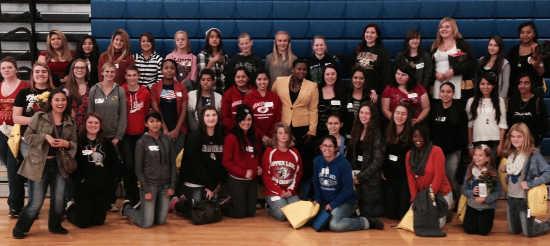
LOWER LAKE, Calif. – On Saturday, Nov. 15, 78 girls attended the Girls in Careers Workshop at Lower Lake High School, with the focus on career exploration.
Mendocino College along with the Lake County Office of Education Career and College Readiness Department funded the event, allowing girls in grades seventh through 12 to explore nontraditional female careers.
Keynote speaker Quanisha Smith welcomed the girls in the morning and encouraged them to do more than dream big, but rather to be open to possibilities and search out a path to individual happiness.
After Smith’s motivating words, the girls spent the rest of the day rotating through hands-on sessions with teachers and industry professionals.
Sessions included “CSI Lake County” taught by Lower Lake High instructor Robynn Giese and Clearlake Police School Resource Office Bobi Thompson and “Chemistry is Beautiful” with Clear Lake High School instructor Oscar Dominguez and owner of Her Purdy Cosmetics Laboratory Leah Palmer.
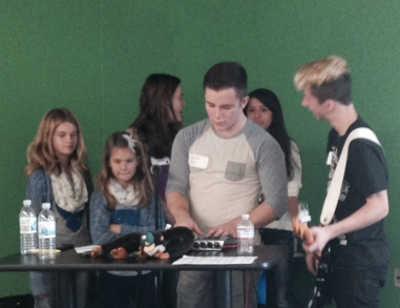
Upper Lake High instructor Erica Boomer and SPCA vet tech Savannah Mello along with a couple of animals led the “A is for Animals” unit and Jacob and Connor Gill from Cheating Daylight were the star attractions in the “Girls on the Mic” seminar.
Each student also participated in a presentation by Smith called, “What’s preventing you from living your desired life?”
Girls were able to explore ambitions, fears, obstacles and solutions in order to build a blueprint for their future success.
Lunch was provided free of charge by Robert Cabrero and the culinary department of Yuba College.
At the end of the day, the group gathered back in the gym for parting remarks from Smith and to partake in the drawing for college prize packs, Chromebook, GoPro, Dr Dre Headphones, Nook tablet, iPod and gift card.
The previous night, Lower Lake High hosted Smith for an adult workshop titled “How to Talk so Youth Will Listen.”
Smith engaged the audience with her life story and educational and career accomplishments in addition to educating participants in effective communication with youth through activities and and asking the right questions.
The 40 participants were not only treated to a great workshop, but received a fabulous meal catered by the Lower Lake High culinary department all without charge. Parent participant Deana Clausen was the recipient of the night's drawing prize of a Kindle Fire.
Smith is an international inspirational speaker, youth achievement mentor, and leadership development trainer.
She draws on more than 15 years of youth development, teaching, personal experience, community organizing and social justice philosophies to deliver purpose-driven success strategies and transformational keynotes for youth, mid-level professionals, college students and women. For more information regarding Smith visit her Web site www.quanishasmith.com .
The Lake County Office of Education Career and College Readiness Department is continually searching for ideas and funding regarding career exploration and college readiness for middle and high school students.
In addition to the Girls in Careers Workshop, they have hosted the “My Future, My Way Workshop” and the Summer Career Technical Education Camps.
Please share your ideas by emailing
For details regarding future events and scholarship opportunities follow the Career and College Readiness Department Facebook page at https://www.facebook.com/LCOEcareerandcollege .
- Details
- Written by: Editor
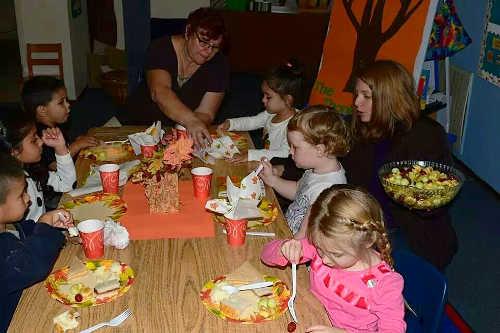
LAKEPORT, Calif. – Lakeport Christian Center Preschoolers enjoyed a wonderful Thanksgiving feast on Friday, Nov. 21.
The feast included turkey with all the trimmings and much more.
Several tables full of happy children were set up throughout the preschool/daycare center.
The staff of Lakeport Christian Center Preschool would like to thank the many parents and other family members who donated food and helped serve the children.
- Details
- Written by: Editor
SACRAMENTO, Calif. – Seeking to make community college workforce education even more responsive to the state’s economy, the California Community Colleges Board of Governors has established a task force to develop policies that will prepare more students for existing high value jobs and promote job creation with workforce training that sparks small business development and lures out-of-state business investment in key industry sectors.
“The Board of Governors is committed to improving our students’ employment prospects and growing the state’s economy,” said Manuel Baca, president of the California Community Colleges Board of Governors. “The California Community Colleges has served as an economic springboard for many Californians and it must enact smart and thoughtful policies in the future for it to continue in that role and I look forward to hearing the recommendations the task force develops.”
The Task Force on Workforce, Job Creation, and a Strong Economy will be comprised of representatives from the California Community Colleges, business community, labor groups, public agencies involved in workforce training, K-12 policy and community based organizations.
“Community colleges serve as the workforce training engines behind California’s regional economies,” said California Community Colleges Chancellor Brice W. Harris.
Harris said the task force will meet with industry leaders, college faculty and staff, elected officials, and other important members of the community to determine what the college system must do to achieve the best for the students and state.
The task force will conduct its work in three separate phases.
The first phase, set to begin this December, will involve holding meetings with community college practitioners to surface strategies and prioritize workforce training policies and practices that engender flexibility to respond to the changing labor market, regional responsiveness, partnership with industry, and ensure student degrees, certificates, credentials, and coursework are universally honored by colleges and have value to employers.
The second phase will start in February 2015 and involve town hall meetings in regions across the state with elected officials and leaders from business, economic development agencies, K-12, labor, and other community organizations to vet and build on ideas and practices that bring stronger alignment between community colleges and key industry sectors.
The town hall meetings will include interactive discussions focused on how the community college system can act as a catalyst for growth in California’s regional economies.
The final phase involves meetings of the full task force itself.
Members will deliberate over information and issues identified at the regional meetings and develop a set of recommendations by the end of summer 2015, which will be proposed for adoption by the Board of Governors.
Throughout the spring, the broader community would be invited to respond to the draft recommendations via the task force’s website.
The task force will build upon other initiatives that the California Community Colleges has undertaken to increase individual and regional economic competitiveness by providing the state’s workforce with relevant skills and quality credentials that match employer needs and fuel a stronger economy.
In August, the California Community Colleges announced a goal of increasing student completions by nearly 250,000 statewide to help meet the needs of the labor market and to ensure more Californians have access to higher education.
The California Community Colleges Chancellor’s Office Doing What Matters for Jobs and the Economy framework and the Student Success Initiative provide the foundation to launch this task force and have also been working to increase workforce and economic competitiveness.
These measures are necessary in light of statistics indicating that there will be 6.3 million job openings in California through 2020, of which 2 million jobs will require a post-secondary certificate or associate degree.
Furthermore, studies show that the labor market is increasingly demanding a more skilled workforce.
Whereas in the 1970s 28 percent of jobs required more than a high school education, by 2020 it is estimated that 65 percent of job openings in the United States will require some postsecondary education or training.
To see the calendar of events for the task force, go to: http://doingwhatmatters.cccco.edu/StrongWorkforce/Events.aspx .
- Details
- Written by: Charles Warren

Hello again readers, and welcome back to the Carlé Chronicle, your primary news source for all things Carlé High School.
Carlé’s student of the week last week was Antonio “AJ” Gelardi, an A student who always works hard in all his classes.
We have a number of seniors who are finishing up their portfolios and getting on the fast track to graduating.
Our first official graduate was Isaiah Piazza, who presented his portfolio and completed all his credits. Jeramy Isom presented his work oriented portfolio on Friday, Nov. 14.
Tiffani Santoni and Savanna Golden had their presentations last week on Wednesday, Nov. 19, and Thursday, Nov. 20, respectively, and we’re all so proud to see such amazing students on their way out into the world.
It was moving to hear their love for Carlé High School and to see how much they all felt the school has done for them.
The SHARP program, which came to help us this year promotes positive thinking, problem solving and healthy living, has been an astounding success and was very well received.
Each and every student has had lots of fun and everyone brings lots of positivity to the group.
The Road To Wellness is a program which supports communities and has chosen Lake County as one of five areas across the whole country as a focus of one of their five year projects.
Alan Siegel will be heading down to the meetings and representing Carlé High School. There are many other people from Konocti Unified on this group including tech guru Michael Auth and Superintendant Donna Becnel.
To our amazing maintenance man, Neb Toshich, who has been out this past week, all our students wish him well and give him our deepest wishes to get better. Filling in for Neb we have Randy Henderson, a very friendly guy who always does his duties and still manages to have good chats with the students.
Another big thanks goes to our secretary Barbara Dye. Barbara has been Carlé’s secretary for a large number of years, and keeps the whole school running smoothly and efficiently, while still bringing a smile and a lot of positivity every day. It’s safe to say without her our little school wouldn’t be the same.
To our new Principal Matt Strahl, we’d also like to extend our deepest thanks.
While he maintains an outgoing, down-to-earth attitude towards students and staff alike, he makes sure there is no tolerance towards fooling around or disobedience.
His firm but fair approach to administration and his friendly personality has been a great addition to Carlé, and we’re all happy to have him here as principal.
Mr. Strahl was awarded a handmade tie by student designer Chris Nuzzo this week.
This week all our Konocti students have the week off to celebrate Thanksgiving Day.
The Monday we come back Carlé students will be receiving their progress reports from our advisory teachers. Those reports track how many credits each students has earned and their overall grades and credits.
Carlé may be the only school in the country that gives progress reports or report cards every three weeks or a total of twelve times throughout the year.
Carlé tries hard to put the knowledge of where each student stands in their heads and then give them the opportunity to take control of their own educational future.
In the meantime though, we hope all our students, staff, and all our faithful readers are having a fantastic week and that their Thanksgiving Day is filled with good food and amazing new memories. Happy Holidays!
Charles Warren is a student at Carlé Continuation High School in Lower Lake, Calif.