 How to resolve AdBlock issue?
Health
- Details
- Written by: Editor
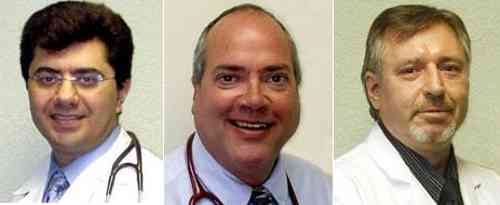
LAKE COUNTY, Calif. – Sutter Pacific Medical Foundation announced the addition of three doctors to its physician network in Lake County.
New primary care providers include internist Afshin Ashfaei, M.D., and David Parsons, D.O., who practices family medicine. Lawrence Milne, M.D., is a general surgeon.
These physicians contribute to the foundation’s growing presence in Lake County.
Afshin Ashfaei, M.D., practices internal medicine and is located at 5116 Hill Road East in Lakeport.
Dr. Ashfaei received his M.D. from Tehran University of Medical Sciences and recently finished a residency in internal medicine at Prince George’s Hospital Center in Cheverly, Maryland. He also has clinical experience as a cardiac sonographer in Canada. Dr. Ashfaei can be reached at 707-263-9689.
David Parsons, D.O., is board-certified in family medicine and is located at 5116 Hill Road East in Lakeport. Dr. Parsons received his D.O. from the University of Osteopathic Medicine and Health Sciences in Des Moines, Iowa, followed by an internship at Broadlawns Medical Center in Des Moines. He completed a family practice residency at North Oakland Medical Center in Pontiac, Michigan. Dr. Parsons can be reached at 707-263-9689.
Lawrence Milne, M.D., board-certified in general surgery, is located at 5128 Hill Road East in Lakeport. Dr. Milne received his M.D. from Loma Linda University School of Medicine in Loma Linda, California, followed by an internship and residency in general surgery at Oregon Health Sciences University in Portland, Oregon. He also completed a vascular surgery fellowship at the University of Western Ontario in London, Ontario, Canada. Dr. Milne’s phone number is 707-263-9683.
Sutter Pacific Medical Foundation is a non-profit organization that provides patient care through its affiliation with three medical groups. Their 230+ physicians offer primary, specialty and complex medical care throughout San Francisco, Marin, Sonoma and Lake counties, as well as at outreach clinics in Northern California and Nevada.
Sutter Pacific physicians are part of the Sutter Medical Network and provide hospital services at Sutter Health hospitals.
For more information or to find a doctor near you, visit www.sutterpacific.org or call 1-888-699-DOCS (3627).
- Details
- Written by: Editor
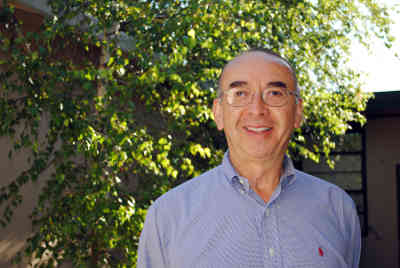
UKIAH – When you think of the ideal doctor, do you think of someone you trust who blends compassion, skill, and quality with an excellent bedside manner.
You might hope for the kind of person who spends time away from the office helping the needy.
Meet Dr. Guy Teran.
Dr. Teran has practiced medicine locally for 15 years, and has recently joined Mendocino Community Health Clinic.
He looks forward to continuing to care for existing patients from his new location at Hillside Health Center on Laws Avenue in Ukiah, as well as meeting new patients.
Speaking of practicing medicine, he said, “It is a privilege to serve people.”
He talks of caring for patients as though the appointment is an opportunity to catch up with an old friend. “We talk about their health, their family, how things have been going.” Then he provides the patient with a diagnosis and treatment plan.
“I don’t always have the answer, but I can always find someone who has an answer for us,” he said.
Part of the reason Dr. Teran is so effective is his extensive medical experience and knowledge, but he also has contact with a broad array of consultants for difficult cases. This network allows him to assist patients with medical problems outside the normal realm.
“I enjoy the challenge of diagnosing a patient’s illness. Being a clinician is like being a detective: I hear clues, put them together and search for the answer,” he said.
Some of his most challenging cases have occurred during his medical mission work. “About six or seven years ago, Dr. Falk [a local general surgeon] talked me into going to Guatemala with him and several others to provide medical care. Once I went, I was hooked and have gone back nearly every year.”
Dr. Teran explained that the medical cases in Guatemala are different from those in the United States because the patients often do not have access to care, so diseases reach advanced stages not seen in this country.
“Some people live in the mountains and walk for a whole day to see us. Some of them have never seen a doctor,” he said.
Dr. Teran is fluent in Spanish as well as English, so he doesn’t require a translator for his work in Guatemala.
Back in Ukiah, his particular interests are preventative care and geriatric medicine. He has a special appreciation for the elderly. “As people age, the complexity of their illnesses increase.”
About joining Mendocino Community Health Clinic, Dr. Teran said, “I am pleased to be associated with such a fine organization.” The quality of the providers and the support he’s received to be successful with the electronic medical record system and other operational issues have been excellent.
According to Medical Director Dr. Michael Carnevale, Dr. Teran is a great fit for MCHC’s practice. “Dr. Teran brings years of experience and a great approach to medicine. He’ll fit right in with the other providers, whose primary focus is always on what’s best for the patient.”
Dr. Teran says, “My goals and those of MCHC are to continue providing the highest quality health care for our community.”
He added, “If you find something you like to do, you’ll never have to work again. I enjoy the practice of medicine.”
- Details
- Written by: Editor
WASHINGTON, DC – An international study of clinical data led by a Department of Veterans Affairs (VA)-Harvard University cardiologist found that patients with deposits of fatty plaque in their arteries are at especially high risk for life-threatening cardiovascular events if they have diabetes, disease in multiple arteries or a history of heart attack or stroke.
"This study was an impressive international collaboration that may hold important clinical benefits for Veterans and others with cardiovascular disease," said VA Secretary Eric K. Shinseki. "The results, presented both in a prestigious medical journal and at a major international cardiology meeting, are likely to be of great significance to physicians-particularly cardiologists-in VA and worldwide."
The findings, from a study of more than 45,000 patients in nearly 30 countries, was published online Aug. 30 by the Journal of the American Medical Association and will appear in the journal's Sept. 22 print edition. The results are also being presented this week at the annual meeting of the European Cardiology Society in Sweden.
According to lead author Dr. Deepak Bhatt and colleagues, the findings may guide future clinical trials and help doctors decide which patients need more aggressive treatment.
Bhatt is chief of cardiology at the VA Boston Healthcare System and director of the Integrated Interventional Cardiovascular Program at VA and Brigham and Women's Hospital, a teaching affiliate of Harvard Medical School.
The four-year study included patients who had at baseline clinical evidence of atherothrombosis-in which fatty deposits break off from artery walls to form clots-or who had risk factors for the condition.
Ruptured plaque deposits can form clots that block blood flow to the heart or brain, resulting in heart attack or stroke.
Depending on their medical status and history, different groups of patients in the trial were at higher or lower risk for stroke, heart attack, or cardiovascular death.
On the low end of the risk scale-7 percent-were those with no diabetes and only risk factors for
atherothrombosis. The risk rose to as high as 25 percent for those with clinical evidence of atherothrombosis in multiple arteries and a history of heart attack or stroke. The presence of diabetes also raised the risk considerably.
"Even stable patients with a previous heart attack or stroke are at particularly high risk of recurrence if they have plaque build-up in several different arteries or if they have diabetes," said Bhatt. "These types of patients need aggressive preventive efforts to keep history from repeating itself."
Knowing that "not all atherothrombosis is equal," write Bhatt and colleagues, can help doctors target therapies such as plaque-reducing and clot-busting drugs to those patients who will benefit most. VA Chief Research and Development Officer Dr. Joel Kupersmith adds, "this study illustrates the importance of basic clinical information in determining the best care for the individual patient."
- Details
- Written by: Editor
SACRAMENTO – Last week Gov. Arnold Schwarzenegger signed SB 1395 by Sen. Elaine Alquist (D-Santa Clara), making it easier for Californians to affirm their organ donor status and creating the nation's first kidney donor registry.
“Organ donors are true heroes and I’m proud to sign SB 1395,” Schwarzenegger said. “This legislation will help save the lives of those waiting for a transplant by making it easier for Californians to affirm their preferred organ donor status. It will also create the nation’s first donor registry for kidney transplants to help connect those in need of a transplant with those willing to give. I applaud all of those who were involved in passing this life-saving legislation.”
On March 19, Schwarzenegger and Alquist announced the introduction of SB 1395.
The legislation will give Californians a choice between registering to be an organ donor or considering at another time via a mandated question through the Department of Motor Vehicles driver license application/renewal or state ID card application process.
The legislation also creates the nation’s first living donor registry for kidney transplants to better connect those who want to donate with those in need of a transplant.