 How to resolve AdBlock issue?
Health
- Details
- Written by: Editor
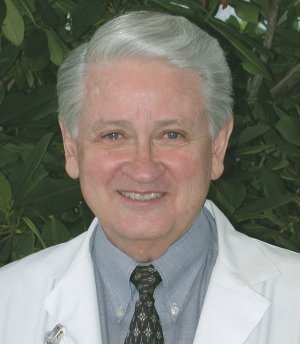
CLEARLAKE – The California Thoracic Society honored John E. Hodgkin, M.D., pulmonologist and critical care specialist, as Clinician of the Year in May.
The award, which recognizes outstanding clinicians, will be given at the annual meeting of the American Thoracic Society.
Dr. Hodgkin, medical director of the pulmonary rehabilitation program at Redbud Community Hospital, completed medical school and residency training at Loma Linda University. Following that, he served in the army (Bronze Star in Vietnam), and completed a Pulmonary and Critical Care Medicine Fellowship at Mayo Clinic, after which he spent 10 years on the faculty at Loma Linda University.
During his time on the Loma Linda faculty, he served as chief of the Pulmonary/Critical Care Section and the medical director of Pulmonary Rehabilitation. In 1983 he moved to private pulmonary practice in the Napa Valley and served as medical director of Respiratory Care and Pulmonary Rehabilitation at St. Helena Hospital.
Despite his full-time clinical practice, Dr. Hodgkin continues to provide service and leadership in the pulmonary community, serving in many capacities within national organizations.
Dr. Hodgkin is probably best known as one of the “founding fathers” of pulmonary rehabilitation, founding the pulmonary rehabilitation programs at both Redbud Community and St. Helena Hospitals.
Dr. Hodgkin is a master diagnostician with the ability to synthesize massive amounts of patient information with the knowledge and wisdom of an amazing intellect and strong intuition. This combination results in a creative and innovative approach to patient care. Dr. Hodgkin has touched many patients’ lives in rehabilitation, in the ambulatory clinic, in intensive care unit and at the end of life.
Overall, Dr. Hodgkin exemplifies an outstanding pulmonary clinician who has dedicated his life to the practice of pulmonary medicine, and to serving his community.
{mos_sb_discuss:2}
- Details
- Written by: Thelma Dangel
KELSEYVILLE – The foot care with James M. Hagan, D.P.M. will be on Monday, Aug. 6, at the Kelseyville Senior Center, 5245 Third St.
This is by appointment only, and it is recommended that you do not wait to make your appointment.
Call now to Dolores Folks, 279-4826, for your appointment.
{mos_sb_discuss:2}
- Details
- Written by: Editor
SACRAMENTO—The Senate Health Committee passed a bill late Wednesday by Assemblywoman Patty Berg that brings California closer to complying with a landmark Supreme Court ruling that has failed to create significant change in this state for nearly eight years.
Assembly Bill 380, by Berg, D-Eureka, would increase funding for community-based programs that give senior citizens the kind of help they need to avoid institutionalization. By doing so, the bill addresses the primary goal of the landmark 1999 Olmstead Decision, in which justices ruled that adults cannot be placed in nursing homes against their will.
Since that ruling, California has made little headway toward adopting policies to make it easier for aging and disabled adults to live in their homes.
“I wish this law had been passed eight years ago,” said Berg. “It’s long overdue.”
At issue is the money the state spends on the Multipurpose Senior Services Program (MSSP), which provides social and health case management services to thousands of frail, nursing home eligible older adults each year.
Assembly Bill 380 would increase funding for the program by linking the state’s contribution to the Consumer Price Index. The program has not received a significant rate increase in two decades, whereas nursing home rates have increased 96 percent during the same period.
“Do the math,” said Berg. “At the present time, we’re only spending $4,000 a year to help someone stay in their home, and it costs $55,000 to put them in a skilled nursing facility.”
Berg, who chairs the Assembly Committee on Aging and Long-Term Care, said her bill enacts one goal of her three-part Master Plan on Aging Baby Boomers. The Master Plan emphasizes policies that enable all Californians to live longer, healthier, and more dignified lives, and do so in their own homes and communities.
“We have to link this rate to inflation,” she said. “Otherwise, we fall farther behind every single year. Every Californian should be able to stay at home as long as they want, and MSSP makes that possible.”
The bill now goes to Senate Appropriations Committee.
Visit Berg's Web site at http://democrats.assembly.ca.gov/members/a01/.
{mos_sb_discuss:3}
- Details
- Written by: Editor
SACRAMENTO – The Senate Health Committee passed a bill late Wednesday by Assemblywoman Patty Berg that would make HIV screening a routine part of medical check-ups.
Under current law, a doctor must have written consent before conducting a HIV test. Assembly Bill 682 would add HIV screening to the routine battery of blood tests taken during a medical check-up, but would allow a patient to decline the test if they wish.
“We must increase HIV testing through medical routine testing,” said Berg, D-Eureka. “Catching HIV in its earliest stage saves lives and slows the epidemic.”
In 2006, the Centers for Disease Control and Prevention called for annual medical testing for HIV during annual check ups. Experts say routine screening will help slow the spread of the HIV virus that causes AIDS.
“I am pleased to be working with Assemblywoman Berg and Assemblyman Huffman to remove barriers for patients and give them access to treatment,” said Assemblywoman Bonnie Garcia, R-Cathedral City. “It is an important issue and I appreciate the bipartisan effort on this critical issue.”
According to the California State Office of AIDS, as many as 40,000 Californians are unaware that they are living with HIV.
“This preventative health care reform will increase the number of people who are tested for HIV leading to a decrease in the number of people who are unknowingly spreading the disease,” said Assemblyman Jared Huffman, D-San Rafael.
The bill also has specific provisions to clarify HIV testing for pregnant women because California law treats pregnant women and HIV testing differently.
The bill now goes to the Senate Appropriations Committee.
Visit Berg's Web site at http://democrats.assembly.ca.gov/members/a01/.
{mos_sb_discuss:3}