 How to resolve AdBlock issue?
Health
- Details
- Written by: Elizabeth Larson
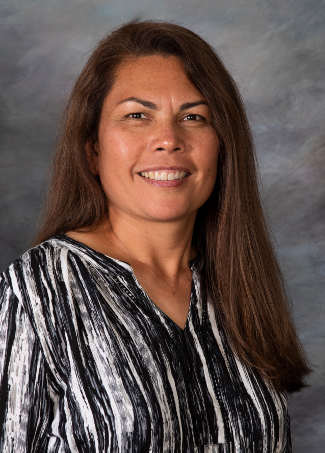
Fairbairn is the executive director of the Mendocino College Foundation and the driving force behind 100+ Women Strong Inland Mendocino County, an organization dedicated to magnifying the impact of local philanthropy by pooling funds to support worthy causes.
Fairbairn was invited to join the MCHC board in part because of her dedication to community-building, but also because of her interest and experience involving health insurance benefits.
Fairbairn has spent years advocating for people’s right to have health coverage, initially as an SEIU field representative and more recently by participating on the Mendocino College Employee Benefits committee.
“I like getting into the minutiae, figuring out what services people need, whether the formulary is being used versus the name brand, that sort of thing,” Fairbairn said.
Although Fairbairn has only attended a few MCHC board meetings, she said she is impressed by MCHC’s passionate, smart and thoughtful leaders and by the organization’s dedication to providing “the most needed healthcare to the neediest populations.”
She continued, “I like to be involved in systems that work well. So far, it seems to me that patients get good care in a streamlined fashion and that MCHC’s leadership is focused on finding and filling gaps in community healthcare while remaining fiscally solvent.”
Fairbairn explained how difficult it must be for the leadership to find a balance between keeping costs down while providing excellent care. She is working quickly to come up to speed on the laws governing healthcare reimbursement for federally qualified health centers like MCHC and says she looks forward to being an ambassador and an advocate for MCHC.
“I’m just learning, so I’m not an authority by any means, but I think it’s important for people to understand what a resource MCHC is for local people, and to help our elected officials understand how they can support health and wellness in rural communities,” she said.
She admitted that before she became a board member, she was unaware of all the services offered by MCHC.
“I liked reading the articles in the paper, but I didn’t realize what an incredible service MCHC provides,” she said. “Without MCHC, the hospital emergency room would be overrun. Patients would suffer more and get a lot sicker; they also wouldn’t get connected with other community resources like they do now. MCHC focuses on helping the whole person, not just improving someone’s medical condition.”
MCHC CEO Carole Press said, “We are very pleased Katie joined our board. She is such a dynamic addition. It’s also great to strengthen the partnership between Mendocino College and MCHC since we have so many of the same goals, like helping community members reach their potential, encouraging health and wellness, and supporting education.”
Fairbairn stated that Mendocino College Interim Superintendent and President Eileen Cichocki wholeheartedly supports Fairbairn’s participation on the board, echoing Press’s sentiments about the benefits of a closer partnership for both organizations.
Fairbairn is also excited to find more ways for the college and MCHC to work together. Currently, the Mendocino College Nursing program trains many of the nurses employed at MCHC, and many Mendocino College students benefit from the healthcare provided at MCHC. Fairbairn says she will continue to raise funds to expand Mendocino College’s allied health programs and noted that in 2020, the college will add a physical therapy assistant program.
Fairbairn also raises money for students in need through the Student Emergency Fund, some of whom get their healthcare at MCHC. “When people get the support they need, they can overcome really tough challenges. For example, in recent years a student who is a mother of two left an abusive relationship and we were able to use the Student Emergency Fund and partner with Project Sanctuary to keep her in school and moving forward towards her educational goal,” she said.
Fairbairn said it is stories like these that confirm she is doing the work she is meant to do. “I believe in giving back to my community and I believe that providing wrap-around services are essential.”
MCHC Health Centers is a local nonprofit organization providing access to comprehensive healthcare for people in Ukiah, Willits and Lakeport. All MCHC health centers accept Medi-Cal, Medicare, Covered California insurance and other insurance. Learn more at www.mchcinc.org .
- Details
- Written by: Elizabeth Larson
UKIAH, Calif. – MCHC Health Centers is pleased to announce the addition of Jennifer Rickard to its board of directors.
Rickard is a community member with experience in both accounting and healthcare who believes everyone should have access to quality health care.
Rickard has been all over the world because her father served in the U.S. Air Force while she was growing up, and she has an insatiable love of travel. She says this gave her a deep appreciation for how fortunate we are in the United States.
“I’ve lived in and been to places where people were looking for their next meal, never mind staying up-to-date on their vaccinations. We take stuff for granted here, things like running water,” she said.
In part because of her upbringing, Rickard had been interested in medicine since her early childhood. During her undergraduate education, she considered going to medical school, but her knowledge of the healthcare industry soured her on the idea.
“I didn’t like how insurance companies dictated healthcare,” she explained.
So, she decided to go into accounting, a pragmatic choice in a field where “no insurance company would dictate how to do it,” she said.
She finished her undergraduate studies at CSU Sacramento, supporting herself by working for Caltrans in their accounts payable department, then as an auditor of long-term care facilities with the California Office of Statewide Health Planning and Development.
Rickard completed a Master of Business Administration degree at Andrews University in Michigan before landing a position in a hospital finance department in Orlando, Florida.
After a few years, she missed traveling so she became a field auditor for Darden Restaurants, Inc., the company that owns Olive Garden, The Capital Grille, and six other restaurants. She loved traveling all over the U.S. and Canada doing operations audits. After seven years with Darden, she began thinking again about her future, and about medicine.
Her husband, a nurse at the Ukiah Veterans Administration Outpatient Clinic, encouraged her to follow her passion for medicine.
“My husband knew I wanted to be a physician, and I didn’t want to look back on my life with any regrets, so I went back to school,” she said.
She has since finished medical school and plans to specialize in anesthesiology. She is currently studying for her board exams and will apply to a residency program after that.
In the meantime, family friend Jerry Chaney, the MCHC board chair, asked Rickard if she would be interested in serving on the MCHC board, noting that her knowledge of finance and medicine makes her a wonderful asset.
MCHC CEO Carole Press said, “We are lucky to have Jennifer on our board. She brings a unique and valuable perspective.”
“I just want to help in any way I can,” she said. “I love that at MCHC, anyone can walk in the door and they won’t be turned away because they can’t afford to pay.”
MCHC Health Centers is a local non-profit organization providing access to comprehensive healthcare for people in Ukiah, Willits and Lakeport. All MCHC health centers accept Medi-Cal, Medicare, Covered California insurance and other insurance. Learn more at www.mchcinc.org.
- Details
- Written by: Elizabeth Larson
The ads address the outbreak of vaping related lung illnesses and the growing teen vaping epidemic.
The public education advertising campaign is part of an Executive Order by Gov. Newsom.
California is the first state in the nation to launch a media campaign in response to this deadly outbreak.
Outbreak is Phase 1 of a multi-part media campaign addressing vaping. Phase 2 will rollout in January 2020 with a continued focus on youth vaping.
“The outbreak of vaping related illnesses has elevated the urgency in addressing youth vaping as a health epidemic,” said Gov. Newsom. "This campaign takes immediate action to inform Californians about the serious health risks associated with vaping and builds upon the work to reduce vaping among youth. I share the concerns of many other parents about the dangers vaping poses to the health and well-being of our kids.”
Outbreak aims to jolt young adults ages 19-29, and parents of middle school and high school students, by drawing attention to the health risks of vaping and this new outbreak of vaping related lung illnesses.
According to the Centers for Disease Control and Prevention, more than 1,600 cases of vaping-related illness in 49 states have been reported, along with 34 deaths.
Three of those deaths were in California. The ads will run parallel to CDPH’s “Flavors Hook Kids” campaign already under way across California.
“E-cigarettes and vaping are not proven to be safe and are dangerous for youth,” said Dr. Sonia Angell, State Public Health Officer and CDPH Director. “California’s data on this outbreak shows that vaping products containing THC, particularly those obtained off the street or from other informal sources, are linked to most of our cases, but we are still investigating. During this time in particular, CDPH urges everyone to refrain from vaping.”
Young Californians are being impacted the most by this outbreak, with the youngest 14 years old. Numerous cases of this outbreak involve youth under age 18.
Since June, CDPH has received more than 138 reports of vaping-related lung illness in the state, all requiring hospitalization and many requiring life support interventions. The median age of California’s victims is 27.
While refraining from vaping is strongly recommended until the investigation is complete, for those who choose to vape, it is imperative that products only be purchased from a licensed retailer.
Do not buy vaping products on the street. Additionally, consumers should never modify a store-bought vape product.
“This outbreak of lung illnesses related to vaping is very serious, and the number of cases continues to climb,” said California Health and Human Services Agency Secretary, Dr. Mark Ghaly. “As a pediatrician, it’s critical that my colleagues, and all medical professionals, have very direct conversations with parents and their patients about tobacco, THC, other cannabis products and vape use.”
Outbreak includes TV, digital, and radio spots, running in 14 markets across California, including Los Angeles, San Francisco, Fresno, San Diego and Sacramento. For more information about the dangers of e-cigarettes and vaping devices, symptoms of the vaping-related lung illness and where to find help, young adults should visit VapeOutbreak and parents should go to FlavorsHookKids.
The first TV spot for young adults shows seemingly carefree lives involving vaping juxtaposed with startling color footage of real patients hospitalized with lung illness. The second TV spot for parents presents dramatic visuals of the deadly outbreak of the vaping-related illness. The TV spot for parents will be released in Spanish, Mandarin, Cantonese, Vietnamese and Korean, in November and December.
Vaping devices are the most commonly used tobacco product in California and 86 percent of high school teens who consume tobacco use a vaping device. Of the California teens who consume tobacco products, nearly 90 percent report using a flavored vaping product. Nationwide, cannabis vaping among youth has increased by 58 percent in a single year. From 2016 to 2018, vaping among California high school students rose 27 percent.
Visit CDPH’s website for more information on the dangers of vaping.
- Details
- Written by: Elizabeth Larson
Cardiac rehabilitation is an exercise, nutrition and education program to reduce the symptoms and prevent progression of heart disease.
The outpatient cardiac rehabilitation program helps those who have suffered a cardiac event to recover to their fullest potential.
Adventist Health Clear Lake’s team of cardiac rehabilitation specialists work with patients to develop an individualized program to meet their specific needs.
The team educates patients about their condition and what they can do to improve their heart health, including implementation of a safe, monitored exercise program, ways to improve diet and how to manage other risk factors.
Benefits of cardiac rehabilitation include stopping or reversing damage to blood vessels, reducing chances of a heart attack, helping control symptoms such as chest pain and shortness of breath, and improving stamina and strength so participants can get back to an active lifestyle.
This is done through monitored exercise sessions, cardiovascular disease education, diet and nutrition instruction, stress management support and medication education.
Kevin Cole, RRT, is director of the cardiac rehabilitation program, which shares a space with Adventist Health Clear Lake’s long standing pulmonary rehabilitation program for individuals with chronic lung conditions.
“Cardiac rehabilitation helps individuals who have experienced a heart attack to get back to the life they love,” Cole explained. “It’s an important education opportunity and offers social connections in addition to supervised exercise.”
Cardiac rehabilitation requires a physician’s referral and is covered by most major insurances, including Medi-Cal and Medicare.
The program is located at 15322 Lakeshore Drive, Suite 204, in Clearlake, and can be reached by calling 707-995-5624.