 How to resolve AdBlock issue?
Health
- Details
- Written by: Elizabeth Larson
During National Trauma Awareness Month in May, nonprofit blood services provider Vitalant asks all who are eligible to give and make sure blood is available for even the most unexpected events.
Alyssa Chase had a fierce passion for exploring the outdoors until a motorcycle crash caused multiple traumatic injuries and broken bones. She received six units of blood to help her to survive.
“I still travel often and hike when I can. I’m not as active as I used to be, but I try to live my life without fear, and still be careful about my health,” Chase said. “The accident changed my life, but thanks to blood donors, I’m still here today.”
Donors of every blood type play a critical role in helping patients. Type O donations are especially needed as that is the most transfused blood type.
As a special thank you to donors in May, all who give with Vitalant will automatically be entered to win one of two “Epic” vacation packages, including four tickets to Universal Epic Universe theme park at Universal Orlando Resort, travel vouchers for airfare and hotel accommodations, and a $2,500 prepaid gift card.
Learn more and make an appointment to give at vitalant.org, download and use the Vitalant blood donor app or call 877-25-VITAL (877-258-4825).
Vitalant is one of the nation’s largest nonprofit blood and biotherapies healthcare organizations, providing hospitals and patients across the U.S. a safe blood supply, specialized laboratory services, transfusion medicine expertise and world-renowned research. Individuals generously donating blood, volunteering and giving financially are essential to our lifesaving mission.
Learn more at vitalant.org.
- Details
- Written by: Elizabeth Larson
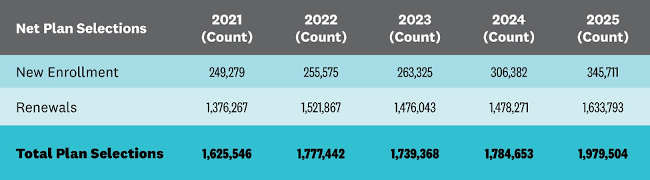
Enrollment rose for the fourth consecutive year after the passage of enhanced premium tax credits through the American Rescue Plan in 2021.
The federal enhanced subsidies were supplemented by a California-only Cost-Sharing Reduction program that Californians took advantage of the past two open enrollments.
“The tremendous success during this open enrollment is the payoff from the work California has done for years to maximize the Affordable Care Act,” Gov. Gavin Newsom said. “California’s uninsured rate has continued to drop as Covered California has made it easier for consumers to find quality coverage at an affordable price.”
Open enrollment began with a record-low uninsured rate of 6.4 percent among Californians, according to federal data.
Since Covered California launched in 2014, California’s uninsured rate has fallen from 17.2 percent to 6.4 percent in 2023, which is the largest percentage point drop for any state in the nation during the ACA era.
More than 6.3 million Californians, or approximately 1 in 6, have had marketplace coverage since 2014.
“Covered California continues to deliver on the promise of the Affordable Care Act,” executive director Jessica Altman said. “The law was created to make sure all Americans could have access to health insurance. With the enhanced federal subsidies since 2021 and California’s exclusive cost-sharing-reduction program introduced last year, we have made that a reality for more Californians than ever before in 2025.”
Enhanced subsidies set to expire
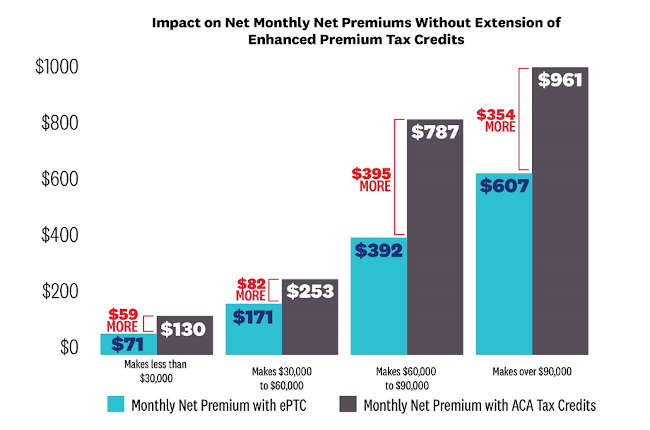
That reality may change in 2026 without action from the United States Congress and President Trump to extend the enhanced subsidies after they expire at the end of this year.
Data shows that on average, consumers save an additional $101 on premium costs each month and that includes over 170,000 middle-income enrollees that are now receiving tax credits when they weren’t previously eligible. For some consumers, that means as much as $395 a month in financial assistance.
“Without an extension for the enhanced subsidies, the loss of coverage could be significant in California,” Altman said. “Every region and corner of the state would be impacted negatively — from small business owners and gig workers, to agricultural workers and residents working multiple jobs to make ends’ meet. It is imperative that federal actions are taken to keep these Americans enrolled.”
Covered California has an ongoing special-enrollment period for residents of Los Angeles and Ventura counties, where a state of emergency was declared by Gov. Newsom due to the Palisades and Eaton fires.
Uninsured residents of these two counties have until March 8 to sign up for coverage for the rest of 2025.
Signing up for coverage is easy
Consumers can learn more about their options by visiting CoveredCA.com, where they can easily find out if they qualify for financial help and see the coverage options in their area.
Those interested in learning more about their coverage options can also:
• Get free and confidential assistance over the phone, in a variety of languages, from one of more than 14,000 certified agents and community-based organizations throughout the state that provide free, confidential help in whatever language or dialect consumers prefer.
• Have a certified enroller call them and help them for free.
• Use Covered California’s online calculator tool.
• Call Covered California at 800-300-1506.
- Details
- Written by: Elizabeth Larson
The coalition released the following statement.
“As state attorneys general, we stand firmly in support of healthcare policies that respect the dignity and rights of all people. Health care decisions should be made by patients, families, and doctors, not by a politician trying to use his power to restrict your freedoms. Gender-affirming care is essential, life-saving medical treatment that supports individuals in living as their authentic selves.
The Trump Administration’s recent Executive Order is wrong on the science and the law. Despite what the Trump Administration has suggested, there is no connection between “female genital mutilation” and gender-affirming care, and no federal law makes gender-affirming care unlawful. President Trump cannot change that by Executive Order.
Last week, attorneys general secured a critical win from a federal court that directed the federal government to resume funding that had been frozen by the Trump Administration. In response to the Court’s Order, the Department of Justice has sent a notice stating that “federal agencies cannot pause, freeze, impede, block, cancel, or terminate any awards or obligations on the basis of the OMB memo, or on the basis of the President’s recently issued Executive Orders.” This means that federal funding to institutions that provide gender-affirming care continues to be available, irrespective of President Trump’s recent Executive Order. If the federal administration takes additional action to impede this critical funding, we will not hesitate to take further legal action.
State attorneys general will continue to enforce state laws that provide access to gender-affirming care, in states where such enforcement authority exists, and we will challenge any unlawful effort by the Trump Administration to restrict access to it in our jurisdictions.”
Joining Attorney General Bonta in issuing this statement are the attorneys general of Colorado, Connecticut, Delaware, Hawaii, Illinois, Maine, Maryland, Massachusetts, New Jersey, New York, Nevada, Rhode Island, Vermont, and Wisconsin.
- Details
- Written by: Elizabeth Larson
The Transforming Maternal Health, or TMaH, Model works by reimbursing providers based on patient health outcomes and quality of care, rather than the volume of services provided.
By focusing on improving maternal outcomes, reducing costs and enhancing the quality of care, the model aims to reduce unnecessary cesareans, lower maternal morbidity, and increase access to maternal care providers, such as midwives, doulas and birth centers, for Medi-Cal members.
“It is unacceptable that the color of your skin or your income can dictate the level of care you receive when you’re pregnant. California refuses to accept that status quo, which is why we applied for funding to begin this important initiative that puts quality of care over profits and allows doctors to focus on the patient in front of them. I am eager to see the success of the TMaH Model impact our Medi-Cal members,” said Gov. Gavin Newsom.
“Your chances of surviving pregnancy and childbirth should not be determined by your race, ethnicity, or background. Yet for far too long, Black and Brown women and Medi-Cal members have faced systemic inequities that compromise their health and dignity. In California, we’re prioritizing maternal health and safety, ensuring that every woman and every family receives the compassionate, high-quality care they deserve,” said First Partner Jennifer Siebel Newsom.
Addressing inequities in maternal health care
Medi-Cal-members have a higher rate of maternal mortality than individuals with commercial insurance. Poor maternal health outcomes disproportionately impact Black, Indigenous, and other communities of color, particularly those in the rural regions of Southern Central Valley and Northeastern/Northern Central Valley regions of California.
This initiative will bring improvements to the state’s maternal care system, particularly for pregnant Medi-Cal members and their infants, who traditionally experience disparities in maternal health care access and outcomes.
The TMaH model will focus on areas with the greatest need for intervention and resources. The Department of Health Care Services will implement the TMaH Model in five Central Valley counties (Fresno, Kern, Kings, Madera and Tulare).
The TMaH Model will provide $17 million in funding over the program's course.
The TMaH Model will provide valuable insights into the impact of value-based care models on maternal health. It will emphasize improving care coordination, enhancing provider training, and offering holistic support that accounts for social drivers of health, including housing, food security and transportation.
TMaH aligns with and will be complementary to DHCS’ Birthing Care Pathway, a comprehensive policy and care model roadmap to cover the journey of all pregnant and postpartum Medi-Cal members from conception through 12 months postpartum. The Birthing Care Pathway is being developed to be a strategic roadmap for state entities, managed care plans, counties, providers, social service entities, philanthropy, and other key partners in providing services to pregnant and postpartum Medi-Cal members.