
Health
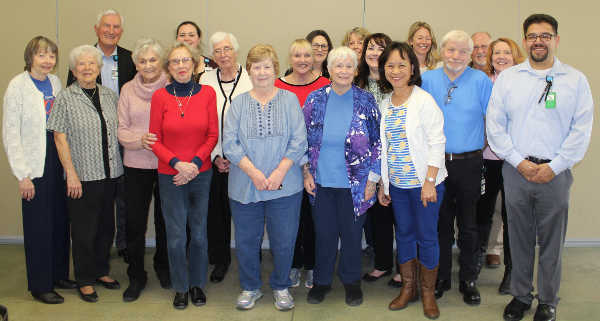
CLEARLAKE, Calif. – Adventist Health Clear Lake’s physicians, nurses and other staff work alongside a dedicated team of men and women who serve patients and visitors as volunteers promoting healing and wellness.
Adventist Health Clear Lake recognized its volunteer team during National Volunteer Appreciation Week, April 8 to 12.
Cumulatively, Adventist Health Clear Lake’s volunteers have served a combined 63,144 hours, the equivalent of more than 31 full-time employees working for one year.
The volunteers serve throughout the hospital and outpatient centers and are most visible at the check-in desk, where they greet patients and help them find their destination within the hospital or clinic.
“The feeling you get in a patient room taking them from a level of anxiety to feeling much better. When you hear a thank you from a patient or when you hear from a doctor ‘Good job, Vale,’ it makes you feel like an asset. It’s all about putting a smile on someone’s face,” said Vale Hanzel, Emergency Department volunteer.“
Hanzel exemplifies the heartfelt impact a volunteer can create for our patients and visitors when they arrive at our hospital and clinics, according to Katie Sust, director of patient experience. “That is why we are so grateful to have such compassionate and service-minded individuals as part of our team.”
Sust and the team at Adventist Health Clear Lake planned a full week of activities to celebrate the dedicated service of the volunteer team, beginning with the annual Volunteer Appreciation Luncheon on April 9 at the Lake County Campus of Woodland Community College, where each volunteer was honored for their hours of service in 2018 and received a special gift.
Festivities continued with Coffee and Goodies on April 10, in the Mountain View Café and concluded with dinner at the hospital’s Mountain View Café on April 11.
Ron Boyce is one of the newest members of the volunteer team. ”When folks hug your neck, or when you talk to someone that is down and use your words to turn their day around. That is where the reward comes in. I thank God He gives me the ability to look at the positive.”
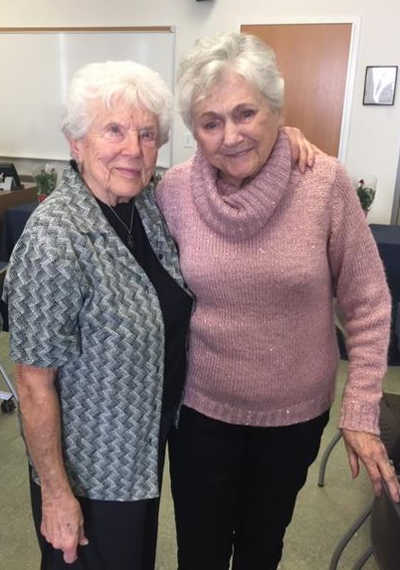
Shirley Knobels and Lois Meisenbach are best friends and long-time volunteers at the hospital.
“Shirley and I entertain! It’s like a dinner show,” Meisenbach said.
Knobels agreed. “You try to smile because you just don’t know why they are here. It’s very rewarding to be there for people.”
Knobels is retiring from volunteer service at the hospital after nearly 30 years, to move closer to family, and takes a little piece of our heart with her.
National Volunteer Week, April 8 to 12, celebrated the work of volunteers nationwide. Established in 1974 by Presidential Proclamation, National Volunteer Week recognizes volunteers and urges a culture of service.
If you are interested in volunteering at St. Helena Hospital Clear Lake, contact Katie Sust, director of patient experience, at
- Details
- Written by: Elizabeth Larson
SACRAMENTO – The California Department of Public Health announced Thursday that an infant from Orange County has died from pertussis, better known as whooping cough.
This is the first confirmed infant death from the disease since 2018.
CDPH and the Centers for Disease Control and Prevention, or CDC, recommend that expectant mothers receive the whooping cough booster shot (also called Tdap, or tetanus, diphtheria and acellular pertussis vaccine) at the earliest opportunity between 27 and 36 weeks of every pregnancy, even if previously immunized.
Getting immunized during pregnancy boosts the mother, who then passes some of her protective antibodies on to the fetus. This helps protect newborns until they are old enough to begin receiving their own whooping cough immunizations at 6 to 8 weeks of age.
“To give babies the best protection, I urge all pregnant women to get vaccinated against whooping cough as early as possible during the third trimester of every pregnancy,” said Dr. Karen Smith, CDPH director and state public health officer. “The best way to prevent whooping cough is by getting vaccinated.”
The symptoms of whooping cough vary by age. For children, whooping cough typically starts with a runny nose and cough for one to two weeks. The cough then worsens and often results in rapid coughing spells that end with a whooping sound.
Young infants may not have typical whooping cough symptoms and may have no apparent cough. Parents may describe episodes in which breathing briefly stops and the infant’s face turns red or purple. For adults, whooping cough may be a cough illness that lasts for several weeks.
Most health plans cover Tdap immunizations, and many pharmacies offer it. Medi-Cal members may be able to get their Tdap shots at the pharmacy where they usually pick up their prescriptions. Call your health plan to learn more. If you do not have health insurance, call your local health department to find a low- or no-cost location.
More information about pertussis is available on CDPH’s Web site.
This is the first confirmed infant death from the disease since 2018.
CDPH and the Centers for Disease Control and Prevention, or CDC, recommend that expectant mothers receive the whooping cough booster shot (also called Tdap, or tetanus, diphtheria and acellular pertussis vaccine) at the earliest opportunity between 27 and 36 weeks of every pregnancy, even if previously immunized.
Getting immunized during pregnancy boosts the mother, who then passes some of her protective antibodies on to the fetus. This helps protect newborns until they are old enough to begin receiving their own whooping cough immunizations at 6 to 8 weeks of age.
“To give babies the best protection, I urge all pregnant women to get vaccinated against whooping cough as early as possible during the third trimester of every pregnancy,” said Dr. Karen Smith, CDPH director and state public health officer. “The best way to prevent whooping cough is by getting vaccinated.”
The symptoms of whooping cough vary by age. For children, whooping cough typically starts with a runny nose and cough for one to two weeks. The cough then worsens and often results in rapid coughing spells that end with a whooping sound.
Young infants may not have typical whooping cough symptoms and may have no apparent cough. Parents may describe episodes in which breathing briefly stops and the infant’s face turns red or purple. For adults, whooping cough may be a cough illness that lasts for several weeks.
Most health plans cover Tdap immunizations, and many pharmacies offer it. Medi-Cal members may be able to get their Tdap shots at the pharmacy where they usually pick up their prescriptions. Call your health plan to learn more. If you do not have health insurance, call your local health department to find a low- or no-cost location.
More information about pertussis is available on CDPH’s Web site.
- Details
- Written by: California Department of Public Health





 How to resolve AdBlock issue?