
Health
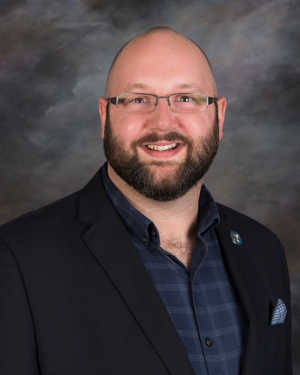
UKIAH, Calif. – MCHC Health Centers is pleased to announce the addition of its newest board member: Corrigan Gommenginger, the chief executive officer of Hospice Services of Lake County.
Originally from Montana, Gommenginger arrived in Lake County via the Seattle area, where he served in several health care-related positions.
He provided accounting services for a number of non-profit organizations before becoming the finance director for a health policy organization and then the chief operating officer of a hospital.
In 2009 to 2010, recognizing the trend of reductions in healthcare reimbursement, he helped his hospital reduce costs and “worked myself out of a job,” he explained.
At that time, he started a consulting firm to help other healthcare organizations optimize operations and reduce costs. One of his clients, Hospice of Kitsap County, was so impressed with his work that they asked him to become their chief financial officer and eventually their CEO, and that is how Gommenginger got into the hospice business.
In January 2015, Gommenginger moved to Lake County to become the CEO of Hospice Services of Lake County.
Like most people who relocate, Gommenginger needed to establish a primary care provider, but he struggled to find one.
“I wanted a male provider and, of course, I had to find someone accepting new patients,” he said.
He met Dr. Jerry Douglas, who became a personal friend, and when Dr. Douglas became the chief medical officer for MCHC Health Centers, Gommenginger asked about MCHC providers.
Gommenginger was connected with Dr. Mario Espindola and he was instantly impressed.
“I’m a millennial, so I fully expect that a doctor will be typing into a computer while talking to me, but after a quick glance at the computer screen, Dr. Espindola turned to me, looked me in the eye and said, ‘Tell me how I can help you today.’ He spent time listening to me, really paying attention and connecting the dots,” Gommenginger said.
Gommenginger’s work in hospice has given him a deep appreciation for the needs of patients and families at the end of life.
He noted that many healthcare organizations struggle to “get it right,” as he put it. “A lot of doctors don’t have those hard, end-of-life conversations until it’s too late. This robs people of important choices and opportunities.”
He noted that MCHC Health Centers is an exception in this area. “MCHC providers do a good job of helping patients and their families prepare as the end approaches,” he said.
Gommenginger explained that the more he learns about MCHC Health Centers, the more impressed he becomes, from its quality of care to its leadership.
“It is clear from the board meetings I’ve attended that the leadership team has a lot of mutual trust and respect. When problems arise, [CEO] Carole [Press] shares them with us along with thoughtful, well-considered solutions. Meetings are focused and directed, and board members seem to be there for the good of the organization—no egos or side agendas. I’m honored to be part of this group,” he said.
MCHC Health Centers is a local nonprofit organization providing access to comprehensive healthcare for people in Ukiah, Willits and Lakeport.
All MCHC health centers accept Medi-Cal, Medicare, Covered California insurance and other insurance. Learn more at www.mchcinc.org .
- Details
- Written by: Editor
SACRAMENTO – The California Department of Public Health has warned consumers to avoid eating raw oysters harvested from south and central Baynes Sound, in British Columbia, Canada.
The raw oysters are linked to an outbreak of norovirus illnesses.
In California, as of April 27, approximately 100 individuals have reported illness after they consumed raw British Columbian oysters sold by restaurants and retailers throughout the state.
Laboratory testing has confirmed norovirus infection in several patients from both California and Canada. Although the number of reported new illnesses has decreased during the last week, the investigation is ongoing.
Canada has reported 172 cases of gastrointestinal illness linked to consumption of raw oysters.
Four oyster farms in the south and central Baynes Sound area of British Columbia that were linked to illnesses were closed between March 23 and April 13, 2018, and remain closed at this time.
Restaurants and retailers should not distribute or serve oysters from these farms, which can be recognized by the following landfile numbers located on the shellfish tags: CLF #1402060, CLF #1411206, CLF #1400483, and CLF #278757.
Restaurants and retailers are encouraged to check Canada’s above website for closure statuses and notices of reopening.
Anyone who eats raw oysters should visit their doctors if they become ill, and should report the incident to the local health department.
“Avoid eating raw and undercooked shellfish, including oysters, to reduce your risk of illness,” said CDPH Director and State Public Health Officer Dr. Karen Smith. “If you do eat shellfish, cook it until it reaches an internal temperature of at least 145°F. Quick steaming isn't sufficient to kill norovirus.”
Norovirus is highly contagious and can spread easily from person-to-person through contaminated surfaces, and by eating contaminated food, including raw or undercooked oysters.
Symptoms of norovirus usually begin 12 to 48 hours after a person has come in contact with the virus, and can last for 1 to 3 days.
Common symptoms include vomiting, diarrhea, nausea, and stomach cramps. People who develop symptoms of norovirus infection should consult their health care providers. For more information on norovirus, please see CDPH’s Norovirus Web page.
The most current information on shellfish advisories and quarantines are available at CDPH’s toll-free Shellfish Information Line at 800-553-4133. For additional information, please visit the CDPH Marine Biotoxin Monitoring Web page.
The raw oysters are linked to an outbreak of norovirus illnesses.
In California, as of April 27, approximately 100 individuals have reported illness after they consumed raw British Columbian oysters sold by restaurants and retailers throughout the state.
Laboratory testing has confirmed norovirus infection in several patients from both California and Canada. Although the number of reported new illnesses has decreased during the last week, the investigation is ongoing.
Canada has reported 172 cases of gastrointestinal illness linked to consumption of raw oysters.
Four oyster farms in the south and central Baynes Sound area of British Columbia that were linked to illnesses were closed between March 23 and April 13, 2018, and remain closed at this time.
Restaurants and retailers should not distribute or serve oysters from these farms, which can be recognized by the following landfile numbers located on the shellfish tags: CLF #1402060, CLF #1411206, CLF #1400483, and CLF #278757.
Restaurants and retailers are encouraged to check Canada’s above website for closure statuses and notices of reopening.
Anyone who eats raw oysters should visit their doctors if they become ill, and should report the incident to the local health department.
“Avoid eating raw and undercooked shellfish, including oysters, to reduce your risk of illness,” said CDPH Director and State Public Health Officer Dr. Karen Smith. “If you do eat shellfish, cook it until it reaches an internal temperature of at least 145°F. Quick steaming isn't sufficient to kill norovirus.”
Norovirus is highly contagious and can spread easily from person-to-person through contaminated surfaces, and by eating contaminated food, including raw or undercooked oysters.
Symptoms of norovirus usually begin 12 to 48 hours after a person has come in contact with the virus, and can last for 1 to 3 days.
Common symptoms include vomiting, diarrhea, nausea, and stomach cramps. People who develop symptoms of norovirus infection should consult their health care providers. For more information on norovirus, please see CDPH’s Norovirus Web page.
The most current information on shellfish advisories and quarantines are available at CDPH’s toll-free Shellfish Information Line at 800-553-4133. For additional information, please visit the CDPH Marine Biotoxin Monitoring Web page.
- Details
- Written by: California Department of Public Health





 How to resolve AdBlock issue?