 How to resolve AdBlock issue?
Health
- Details
- Written by: Elizabeth Larson
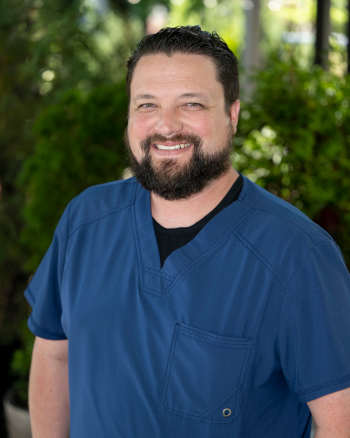
LAKEPORT, Calif. — MCHC Health Centers is pleased to announce the arrival of Dr. Joseph Iaccino, a chiropractor who will serve patients primarily at Lakeview Health Center in Lakeport and Hillside Health Center in Ukiah.
Chief Medical Officer Dr. Matt Swain said, “Dr. Iaccino is a great addition to our team. Chiropractic care can bring enormous relief to patients experiencing certain types of pain.”
After five years in private practice in Boise, Idaho, Dr. Iaccino moved to Yuba City to join Ampla Health, a federally qualified health center, or FQHC, similar to MCHC, where he spent the pandemic serving patients.
Now, after a short stint at another local health center, Dr. Iaccino is excited to be working for an FQHC once again, a setting where he feels he can do his best work and also one that allows him to support patients who might not otherwise have access to chiropractic care.
“Chiropractors are usually lone wolves, but the future of medicine is a team-based approach.” Dr. Iaccino said. “There are certain things I can’t address—that are outside my scope of practice. Being able to knock on the door down the hall and talk to a provider who can address a patient’s needs allows me to focus on what I am good at and for the patient to get access to even more of what they need.”
Open communication is key to his practice, Dr. Iaccino explained. The hands-on nature of chiropractic care can make it easier to build trust, and Dr. Iaccino’s patients often share a wide variety of health issues with him — some that are not related to chiropractic care.
Being able to communicate with other providers who work with his patients means potential problems can be caught and addressed much faster than they might be otherwise.
Not only does MCHC’s team-based model align with Dr. Iaccino’s approach, Its focus on whole-person care is a great fit. Dr. Iaccino explained that he pays attention to the whole body, not just the area in pain.
He says he looks to see what is moving well and what needs to move better. Hey then employs a two-step approach that uses chiropractic adjustment tools followed by soft tissue work rather than the jarring manual adjustments popularized by Tik Tok and other social media sites.
Dr. Iaccino said the mellower approach to adjustment paired with changes to a patient's posture and nutrition can create big changes in patients’ lives.
For Dr. Iaccino, the most rewarding parts of his job are the everyday wins he sees in his practice.
“When a patient comes in with a headache and leaves without one, that’s a great feeling.” Dr. Iaccino said.
Dr. Iaccino said he hopes to make a positive impact in the communities he will serve in his new position, especially Lake County where he has deep family ties.
His father is the retired superintendent for Upper Lake School District and his sister is currently an elementary school teacher in the county.
In fact, Dr. Iaccino substitute taught in the area while getting his master’s degree in human nutrition and functional medicine.
This familial connection paired with his love of the beauty of Lake County made it an easy decision for him to provide care to his community.
When Dr. Iaccino is away from the office, he spends much of his time with his beloved furry companion Ari, an Airedale terrier, exploring California from the coast to Tahoe to Yosemite and everywhere in between.
Dr. Iaccino said he loves hiking, backpacking and camping with his four-legged sidekick.
- Details
- Written by: Elizabeth Larson
“I am glad that the Ways and Means Committee today passed my bill reducing administrative burdens and making it easier for businesses to comply with the Affordable Care Act,” Thompson said on Wednesday. “This bill will streamline reporting requirements so companies can focus on what they do best — creating jobs and growing our local economies.”
“The Employer Reporting Improvement Act is an important step toward streamlining employer reporting requirements,” said Rep. Smith. “Now more than ever, employers need certainty to navigate the evolving needs of the workforce, and I’m glad to see this bipartisan bill favorably reported out of the Ways and Means Committee.”
The Employer Reporting Improvement Act:
• Protects privacy by eliminating the requirement that employers collect not only their workers’ Social Security Numbers (SSNs) but their workers’ dependents’ SSNs.
• Allows electronic submission of certain forms to the Internal Revenue Service (IRS) which previously had to be faxed.
• Provides employers a notice before the IRS levies penalties against them if they are not complying with Affordable Care Act (ACA) requirements.
• Gives the IRS more time to go after bad actors who don’t meet their ACA obligations to provide their employees with coverage that meets certain standards.
Thompson represents California’s Fourth Congressional District, which includes all or part of Lake, Napa, Solano, Sonoma and Yolo counties.
- Details
- Written by: Elizabeth Larson
CalGrows is now open for registration with hundreds of courses available to caregivers working with older adults and adults with disabilities, helping support Californians on a path to a career in health care and ensuring the state retains highly-qualified health care workers.
“Investing in and growing our health care workforce is critical to the health and safety of Californians,” said Gov. Gavin Newsom. “As the entire United States faces a health care worker shortage, the CalGrows initiative is yet another tool California is using to ensure our health care workforce remains strong by providing opportunities to those already caring for loved ones.”
CalGrows is grounded in the recognition that direct care jobs can be a gateway into a variety of personal and professional advancement opportunities.
The innovative program brings together dozens of training providers offering hundreds of virtual and in-person courses for caregivers across California.
Courses cover a range of topics, including Alzheimer's disease and related dementia, cultural diversity, food safety, infection control, provider, and consumer communication and more, with courses available in multiple languages.
“CalGrows training courses empower caregivers across California to learn valuable skills to improve the lives of those in their care and help further their careers,” said Susan DeMarois, director of the California Department of Aging. “As California’s population ages, we’ll need hundreds of thousands more direct care workers. The CalGrows program is an important milestone toward ensuring the state has the home care aides, care managers, dementia care specialists, activities coordinators, and other important roles necessary to support our aging population.”
“Care workers are more likely to be women and people of color, who are also at a higher risk for age-related illnesses,” said Dr. Mark Ghaly, secretary of the California Health & Human Services Agency. “CalGrows demonstrates the State’s commitment to support caregivers, as well as those they care for, by providing training in six languages at launch, with more added soon, as well as career growth opportunities. This program is essential to help California achieve our goals in the Master Plan for Aging: to build a California for all ages and abilities.”
CalGrows can help build individual skill sets, job satisfaction, and growth opportunities to help further careers and the retention of skilled, experienced caregivers for older adults and people with disabilities.
Qualified applicants can also receive up to $6,000 in financial incentives.
Free training for paid direct care workers, home and community-based services caregivers, and unpaid family and friend caregivers is available through the CalGrows website at www.calgrows.org.
Most courses are available online, with others offered in person and are searchable by topic, location, language, and incentive.
Caregivers in the paid direct care workforce are also eligible for financial incentives and career pathway development benefits.
Through the CalGrows Innovation Fund grants launched earlier this year, $89 million was awarded to 78 organizations across California.
Grants were awarded to diverse organizations with innovative ideas to offer training and incentives for the direct care Home and Community-Based Services workforce and unpaid family and friend caregivers.
For self-directed care workers through In Home Supportive Services, optional training and compensations for training time are available through IHSS Career Pathways.
The Workforce for a Healthy California Initiative is part of the state’s broader strategy to build a health workforce that represents California’s diverse communities and provides people with the quality care they deserve, while addressing the growing workforce shortages throughout the state’s health and human services system.
The cornerstone of the Initiative comes from a once-in-a-generation, $1 billion plus investment from the 2022-23 state budget.
- Details
- Written by: Elizabeth Larson
This collaboration will further the college's goals of growing its nursing program and help meet the rising need for highly qualified healthcare professionals in these areas.
“Partnering with nursing schools is the best way for hospitals to ensure there is a pipeline for recruitment of nurses,” said PUC Department of Nursing Chair Kimberly Dunker. “Because of the long-standing history between our Adventist organizations, we are able to not only partner but share the same values and beliefs for nursing education and talent acquisition.”
The Associate of Science in Nursing, or ASN, program will be open to Adventist Health employees and community members in the local areas of Lake and Mendocino counties looking to move into the nursing field. Classes will begin in September.
Judson Howe, president of the North Coast Network for Adventist Health, said creating a local nursing workforce is one of the organization’s top priorities.
“The nursing program at Pacific Union College creates an additional avenue for our community members to receive a world-class registered nursing education,” Howe said. “Adventist Health North Coast Network will continue to support the excellent nursing programs across our counties, including Mendocino College and looks forward to expanding professional pathways for premier clinical education, allowing local rural healthcare to thrive.”
The California Board of Registered Nurses, or BRN, and the Education Licensing Committee, or ELC, approved the addition of 18 students to the Angwin campus with clinical partners in rural areas like Mendocino and Lake counties.
This hard-won achievement is the result of a two-year collaborative effort by PUC and Adventist Health to establish new nursing education centers in underserved areas. California will need the most nurses in the nation by 2030.
Still, nursing programs in the state typically find it challenging to receive permission to admit more students due to limited clinical space in hospitals. Sometimes, qualified students may wait up to three years for admission to nursing programs.
PUC has a sterling reputation as a well-established, high-quality nursing program — lauded by the state nursing board in its evaluation last spring. The program also boasts excellent NCLEX outcomes. Nursing professors from PUC’s Angwin campus will lead the program’s instruction. The program will also utilize the Adventist Health training facilities in the Adventist Health North Coast Network for most of the skills lab instruction. Sites in these counties include Clear Lake, Ukiah Valley, Howard Memorial (Willits), and Mendocino Coast (Fort Bragg).
PUC Vice President for Enrollment, Marketing & Communication Gene Edelbach also said the partnership has been rewarding. “It's been exciting to partner with Adventist Health over the last few years in developing new educational products that truly meet the needs of our underserved communities,” Edelbach said.
Jill Bartolomie, Patient Care Executive for Adventist Health Ukiah Valley, said this collaboration will be meaningful to both Adventist Health employees and students from the local community.
“The program will allow them to fulfill their dreams faster and get to working as an RN without continually delaying their education,” she said. “It allows them to work full time and continue to support themselves and their family while they are in school because this is a flexible, hybrid program.”
Prospective students for this program must meet the admission criteria outlined by the college and the nursing program. The criteria include completion of specific courses, GPA, and testing requirements. More information can be found on the website, puc.edu/nursing-requirements. Students will be expected to meet the criteria to ensure their access and completion of the program.
With the new program, there is a clear path from becoming a Medical Assistant (MA) to receiving a Master of Science in Nursing. For example, students can achieve their MA through programs offered at AH locations, their ASN at the Adventist Health sites in Lake and Mendocino counties and earn a bachelor’s and master’s degree in nursing through PUC’s online programs. This opportunity provides students with a robust educational experience while remaining close to their families and local communities.
Preferred pricing for Adventist Health employees will make the overall cost much less than a PUC on-campus program. Additionally, the admissions process will be individualized, with a dedicated personal advisor for each student.
In 2021, PUC embarked on a vision for the future, focusing on four main pillars—including the addition of online programs and education centers. The Angwin campus is the heart of PUC, while the vision plan states that education centers are the “arms and the legs that put us in motion in communities where we are most needed.”
To learn more about this new ASN program opportunity or apply, please visit https://www.puc.edu/adventist-health.