
Health
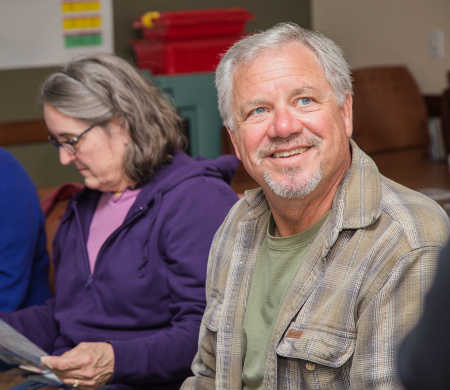
LAKEPORT, Calif. – Very few people diagnosed with pre-diabetes must plan meals around what they can and cannot cook in the middle of a forest during a 2,000 mile motorcycle trip, but Ben Cox-Frankenfield is one of them.
Cox-Frankenfield attended Sutter Lakeside Hospital’s Diabetes Education Day to learn more about building a healthy lifestyle without sacrificing the activities he loves, like riding his motorcycle.
“I bought my first motorcycle for six hundred dollars at age fourteen. I earned the money by cleaning swimming pools. I got $2 per pool,” said Cox-Frankenfield.
For him, motorcycles offer the freedom to wander from place to place with no set agenda or time constraints.
“A pre-diabetes diagnosis was a rude awakening,” said Cox-Frankenfield. “I’m re-educating myself on how to cook and what to eat.”
Patti Cox-Frankenfield attended with her husband in support of his diagnosis.
“I do most of the cooking, so I’m here to learn some new recipes,” she said.
Attendees of the event sampled quinoa salad, a recipe high in protein and low in sugar.
The event, which was coordinated between multiple departments of Sutter Lakeside Hospital, also provided free diabetic cook books, informational pamphlets, and resources for pre-diabetics and diabetics alike. Kathy Exum, RN, answered questions about managing diabetes or pre-diabetes.
“It’s important for you to be your own blood sugar detective,” said Exum. “Stress, illness, or medication can affect your blood sugar. I like for patients to have blood glucose meters to establish a baseline of what’s normal for that individual. Bodies can react differently to the same food, so it’s important for a patient to know what’s normal for him or her.”
Pharmacist intern Greg Matsumura answered questions about diabetes medication management and Medicare testing supplies.
“Your pharmacist is a great resource for questions about what’s covered under your Medicare plan,” said Matsumura. “Testing strips can be very expensive, so it’s important to pick a brand that’s right for your coverage.”
“This was a great event,” said Frank Cox-Frankenfield. “I feel like I learned a lot.”
Sutter Lakeside Hospital is providing free one-on-one counseling to pre-diabetic and diabetic patients with a doctor’s order, and a support group for pre-diabetic or diabetic patients and loved ones will be forming in January.
For more information about diabetes counseling, please call or email Kathy Exum at 707-262-5140 or
For more information about Sutter Lakeside Hospital, visit www.sutterlakeside.org or call 707-262-5121 to schedule a tour.
- Details
- Written by: Morgen Wells
Dogs and cats may provide their human companions with more than love and affection. From cancer and osteoarthritis to inflammatory bowel and heart disease, animals are afflicted with many of the same ailments found in people.
These correlations make companion animals ideal models for naturally occurring diseases, according to a collaborative group of UC Davis researchers.
The team – comprised of basic, translational, and clinical scientists in the School of Veterinary Medicine, the School of Medicine and the College of Engineering – presents a perspective on how the knowledge gained from veterinary medicine can serve as a bridge to not only better understand human diseases but also reduce failure rates of human clinical trials and accelerate the approval and delivery of new therapeutics for humans.
"Because they may provide better models for human disease, companion animals are now being considered critical links between basic and preclinical research in small-animal induced disease models and human clinical trials," said Dori Borjesson, a veterinary clinical pathologist and professor in the School of Veterinary Medicine. "Both veterinary and human patients benefit from this new translational research paradigm."
While rodent models of human disease are essential to basic research, they can be poor predictors of outcomes of human clinical trials, the team writes.
But the increasing participation of companion animals in clinical trials over the past several years has provided valuable insight for translational researchers.
Like humans, cats and dogs exhibit genetic variability, eat diverse diets, have varying personal habits and live in a wide range of environments – all of which play a role in various disease processes.
A recent example of the potential for translating to humans knowledge that was gained from animals involved reconstruction of mandibular (jaw) bone using a regenerative approach that is now in routine use at the UC Davis veterinary hospital.
Veterinary surgeons at UC Davis teamed with biomedical engineers to adapt cutting-edge technology to regrow missing mandibular bone in dogs.
That technique has been used on more than 20 dogs that have lost bone to injuries or removal of cancerous tumors. Researchers anticipate the procedure in canines will prove instrumental in solving this difficult problem in humans.
- Details
- Written by: Editor





 How to resolve AdBlock issue?