
Health
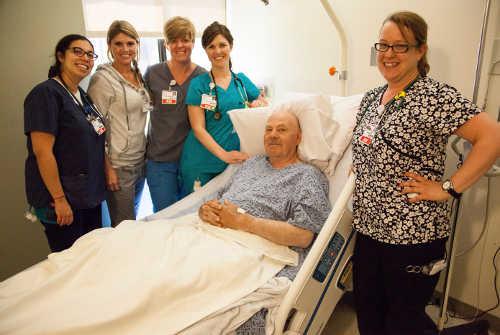
UKIAH, Calif. – Ukiah Valley Medical Center is proud to announce that it has received the Nurses Improving Care for Healthsystem Elders (NICHE) designation.
This designation signifies UVMCs dedication and commitment to excellence in providing care for the elderly in Mendocino county.
According to Vice President for Patient Care Heather Van Housen, “The NICHE designation demonstrates our leadership and commitment to meeting and exceeding the special care needs of older adults in the communities we serve.”
Van Housen also said that to achieve the NICHE designation the nursing leadership team, herself included, completed a six-week course on how to build the infrastructure needed to support our aging population.
“Our next step in the process,” said Van Housen, “is to evaluate how we currently care for elders and make quality improvements where needed.”
Once the evaluation has taken place the nursing staff is then educated on best practices for caring for elders in varying situations.
“Our goal is to educate our nursing team and care providers on the age-related changes of the older adult,” saidd Kristen Marin, director of education. “Being compassionate and empathetic towards elders is part of the training to enhance our team’s communication skills with our elderly patients, including their support persons and family members. This is just as important as their clinical skills and will help us provide excellent care for our older patients.”
Eugene Lewis of Ft. Bragg, a recent patient at UVMC, felt that the nursing team was great. “They anticipated all of my needs – the team knew what they were doing. I received great care.”
New treatment methods are also being introduced to patient care for treating certain conditions.
“We will be introducing massage, music, and essential oils therapies to help treat delirium,” said Lindsey Spencer, director of acute care services. “The evaluation we are conducting on our current care methods for our elder patients will also give us an opportunity to adjust care plans to provide new and alternative treatment methods that best meet the needs of each individual patient.”
“UVMC shows a tremendous commitment to meet the most critical challenge of our times - quality care of older adults,” said Liz Capezuti, PhD, RN, FAAN, NICHE director.
Likewise, Dr. John W. Rowe, professor in successful aging, New York University College of Nursing said, “UVMCs dedication to drive continuous improvement processes and enhance care marks them as leaders in the field.”
NICHE is the leading nurse-driven program designed to help hospitals improve the care of older adults.
The vision of NICHE is for all patients 65-and-over to be given sensitive and exemplary care. The mission of NICHE is to provide principles and tools to stimulate a change in the culture of healthcare facilities to achieve patient-centered care for older adults.
NICHE, based at NYU College of Nursing and comprised of almost 450 hospitals and healthcare facilities throughout North America, engages hospitals and their affiliates in achieving and sustaining the NICHE designation.
NICHE designation demonstrates a hospital's organizational commitment and continued progress in improving quality, enhancing the patient and family experience, and supporting hospitals’ efforts to serve their communities.
For more information visit www.nicheprogram.org .
- Details
- Written by: Editor
MISSOULA, Mont. – Each year more than 1,000 people die from heat stroke in the United States.
Long thought to be the product of dehydration, traditional prevention and treatment of heat related illness has been to drink more water.
More recent research has proven that, while proper hydration is important, the key step to preventing heat stroke is to recognize when one is working too hard for the given environment and slowing down or stopping.
“One can absolutely suffer and even die from heat stroke even when properly hydrated,” said Dr. Brent Ruby, Director of the Center for Work Physiology and Exercise Metabolism at The University of Montana. “Prevention of heat stroke starts with recognizing our own limits while being active in hot environments. Our bodies are sending us signals to slow down and stop; we just have to know when to say when.”
The first stage of heat related illness is heat cramps with symptoms including painful muscle aches.
The next stage is heat exhaustion with symptoms such as headache, nausea, dizziness, weakness, irritability, thirst and heavy sweating.
Without taking steps to cool down, heat exhaustion can quickly progress to heat stroke when the body becomes overwhelmed by heat and is unable to regulate its core temperature.
Symptoms of heat stroke include, sweating stops and the victim may become confused, lose consciousness, and have seizures. Heat stroke is a medical emergency that may result in death.
“In cases of HRI (heat related illness) that are developed during exertional heat stress, the individual is working too hard for the environment they are in and likely thinks – if I can stay hydrated, I will be fine,” explained Ruby. “But, that’s the wrong thinking. Even aggressive hydration strategies that attempt to match fluid loss one-to-one will not prevent the HRI. Knowing when to stop is the crucial step in prevention of heat stroke.”
Dr. Brent Ruby, Ph.D., FACSM is Director of the Montana Center for Work Physiology and Exercise Metabolism (Montana WPEM) at the University of Montana and a fellow of the American College of Sports Medicine (ACSM).
Dr. Ruby’s research interests include nutritional strategies during ultra-endurance work/competition, muscle metabolism during and after exercise, the use of stable isotope tracers for the measure of water turnover and energy expenditure, and issues surrounding heat stress during arduous work.
Differentiating WPEM from other labs, Ruby created a solar powered, mobile lab that allows controlled laboratory research to be meshed with raw field data to draw scientific conclusions.
- Details
- Written by: Editor





 How to resolve AdBlock issue?