 How to resolve AdBlock issue?
Health
- Details
- Written by: Editor
CLEARLAKE, Calif. – On Jan. 23 St. Helena Hospital Clear Lake Women’s Care Department hosted two training sessions with University of California San Francisco (UCSF), “Diabetes in Labor and the Immediate Postpartum Period” and “Infant of the Diabetic Mother.”
This special training included a discussion on how to manage pregnant woman with pregestational and gestational diabetes as well as finding ways to help with diabetes in postpartum.
The team described and identified possible problems from maternal hyperglycemia and contributing factors and interventions for the hypoglycemic infant.
The training was coordinated by St. Helena Hospital Clear Lake Women’s Care Unit Lead, Debbie Keith RN, and instructed by Molly Killion, RN, MS, CNS and Cynthia Jensen, RN, MS, CNS of UCSF.
“St. Helena Hospital Clear Lake is committed to the care and well-being of mothers and their babies,” said Debbie Keith RN. “This information will help our staff in working with mothers and infants who may have pre-diabetes or diabetes.”
St. Helena Hospital Clear Lake offers childbirth education classes every other month at the Live Well Functional Space, 15230 Lakeshore Drive in Clearlake. Please call 707-994-4594 for information.
- Details
- Written by: Sarah Yang
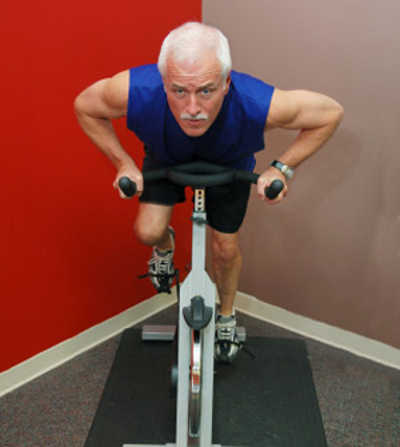
A new study led by researchers at the University of California, Berkeley, represents a major advance in the understanding of the molecular mechanisms behind aging while providing new hope for the development of targeted treatments for age-related degenerative diseases.
Researchers were able to turn back the molecular clock by infusing the blood stem cells of old mice with a longevity gene and rejuvenating the aged stem cells’ regenerative potential. The findings were published online Thursday, Jan. 31, in the journal Cell Reports.
The biologists found that SIRT3, one among a class of proteins known as sirtuins, plays an important role in helping aged blood stem cells cope with stress. When they infused the blood stem cells of old mice with SIRT3, the treatment boosted the formation of new blood cells, evidence of a reversal in the age-related decline in the old stem cells’ function.
“We already know that sirtuins regulate aging, but our study is really the first one demonstrating that sirtuins can reverse aging-associated degeneration, and I think that’s very exciting,” said study principal investigator Danica Chen, UC Berkeley assistant professor of nutritional science and toxicology. “This opens the door to potential treatments for age-related degenerative diseases.”
Chen noted that over the past 10 to 20 years, there have been breakthroughs in scientists’ understanding of aging. Instead of an uncontrolled, random process, aging is now considered as highly regulated as development, opening it up to possible manipulation.
‘A molecular fountain of youth’
“Studies have already shown that even a single gene mutation can lead to lifespan extension,” said Chen. “The question is whether we can understand the process well enough so that we can actually develop a molecular fountain of youth. Can we actually reverse aging? This is something we’re hoping to understand and accomplish.”
Chen worked with David Scadden, director of the Center for Regenerative Medicine at Massachusetts General Hospital and co-director of the Harvard Stem Cell Institute.
Sirtuins have taken the spotlight in this quest as the importance of this family of proteins to the aging process becomes increasingly clear. Notably, SIRT3 is found in a cell’s mitochondria, a cell compartment that helps control growth and death, and previous studies have shown that the SIRT3 gene is activated during calorie restriction, which has been shown to extend lifespan in various species.
To gauge the effects of aging, the researchers studied the function of adult stem cells, which are responsible for maintaining and repairing tissue; it is a function that breaks down with age. They focused on hematopoietic, or blood, stem cells because of their ability to completely reconstitute the blood system, the capability that underlies successful bone marrow transplantation.
The researchers first observed the blood system of mice that had the gene for SIRT3 disabled. Surprisingly, among young mice, the absence of SIRT3 made no difference. It was only when time crept up on the mice that things changed. By the ripe old age of two, the SIRT3-deficient mice had significantly fewer blood stem cells and decreased ability to regenerate new blood cells compared with regular mice of the same age.
What is behind the age gap? It appears that in young cells, the blood stem cells are functioning well and have relatively low levels of oxidative stress, which is the burden on the body that results from the harmful byproducts of metabolism. At this youthful stage, the body’s normal antioxidant defenses can easily deal with the low stress levels, so differences in SIRT3 are less important.
“When we get older, our system doesn’t work as well, and we either generate more oxidative stress or we can’t remove it as well, so levels build up,” said Chen. “Under this condition, our normal antioxidative system can’t take care of us, so that’s when we need SIRT3 to kick in to boost the antioxidant system. However, SIRT3 levels also drop with age, so over time, the system is overwhelmed.”
Old mice, new blood
To see if boosting SIRT3 levels could make a difference, the researchers increased the levels of SIRT3 in the blood stem cells of aged mice. That experiment rejuvenated the aged blood stem cells, leading to improved production of blood cells.
It remains to be seen whether over-expression of SIRT3 can actually prolong life, but Chen pointed out that extending lifespan is not the only goal for this area of research. “A major goal of the aging field is to utilize knowledge of genetic regulation to treat age-related diseases,” she said.
Study co-lead author Katharine Brown, who conducted the research as a UC Berkeley Ph.D. Student in Chen’s lab, said SIRT3 has some potential in this regard.
“Other researchers have demonstrated that SIRT3 acts as a tumor suppressor,” said Brown. “This is promising because, ideally, one would want a rejuvenative therapy where you could increase a protein’s expression without increasing the risk of diseases like cancer.”
The other co-lead author of this study is Stephanie Xie, a post-doctoral fellow at Massachusetts General Hospital’s Center for Regenerative Medicine at the time of the study. Xie is now a post-doctoral researcher at the University of Toronto.
A number of funding sources supported this study, including the Searle Scholars Program, the National Institutes of Health and the Siebel Stem Cell Institute.
Sarah Yang writes for the UC Berkeley News Center.
- Details
- Written by: Editor
A 20-page large-print booklet and a series of videos to help people adapt to life with low vision are available from the National Eye Institute (NEI), a part of the National Institutes of Health.
The materials were released for Low Vision Awareness Month, February 2013.
The booklet, “Living with Low Vision: What you should know,” urges people with low vision to seek help from a low vision specialist and provides tips to maximize remaining eyesight, enabling them to safely enjoy a productive and rewarding life.
The videos feature patient stories about living with low vision. Another video, targeted to health care professionals, emphasizes the importance of informing patients with vision loss about vision rehabilitation services. The booklet and the videos were developed by the NEI National Eye Health Education Program (NEHEP).
Low vision means that even with regular glasses, contact lenses, medicine, or surgery, people find everyday tasks difficult to do. Reading the mail, shopping, cooking, and writing can seem challenging.
The chief causes of vision loss in older people are age-related macular degeneration, diabetic retinopathy, cataract, and glaucoma.
Among younger Americans, low vision is most often caused by inherited eye conditions, infectious and autoimmune eye disease, or trauma.
A 2012 report cosponsored by the National Institutes of Health estimates that 2.9 million Americans are living with low vision. The number is projected to increase 72 percent by 2030 when the last of the baby boomers turn 65. Most people with low vision are 65 years old or older.
“I encourage anyone with low vision to seek guidance about vision rehabilitation from a low vision specialist,” said NEI Director Paul A. Sieving, M.D., Ph.D. “For many people, vision rehabilitation can improve daily living and overall quality of life.”
A low vision specialist is an ophthalmologist or optometrist who specializes in the care of patients with low vision.
A low vision specialist can develop a rehabilitation plan that identifies strategies and assistive devices appropriate for a person’s particular needs, which vary depending on the person’s age and the source and severity of vision loss.
As described in the booklet and videos, vision rehabilitation services include:
- training to use magnifying and adaptive devices;
- learning new daily living skills to remain safe and live independently;
- developing strategies to navigate inside and outside the home;
- providing resources and support to help patients with vision loss.
“A vision rehabilitation plan helps people reach their true visual potential when nothing more can be done from a medical or surgical standpoint,” said Mark Wilkinson, O.D., a low vision specialist at the University of Iowa Hospitals and Clinics and a NEHEP planning committee member. “Vision rehabilitation can make a world of difference to a person adjusting to vision loss and should be considered part of the continuum of care. I urge health professionals to help their patients with low vision seek vision rehabilitation services.”
The NEI is committed to finding new ways to improve the lives of people living with visual impairment. The NEI currently dedicates more than $24 million to research projects aimed at low vision.
Projects include learning how the brain adapts to vision loss, strategies to improve vision rehabilitation, and the development of new technologies to help people with low vision read, shop, and find their way in unfamiliar places.
Statistics on low vision are taken from the report, 2012 Fifth Edition of Vision Problems in the U.S., available on the NEI Web site at http://www.nei.nih.gov/eyedata .
The new NEI booklet and videos along with other resources for people with low vision can be viewed and downloaded at http://www.nei.nih.gov/lowvision .
- Details
- Written by: Editor
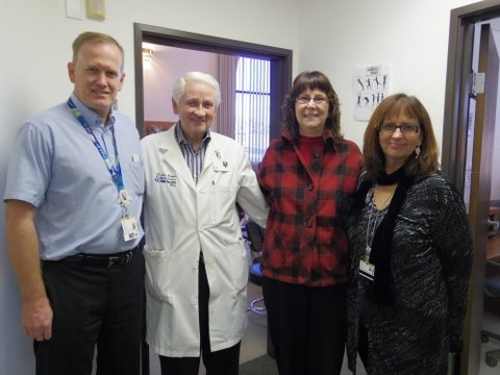
CLEARLAKE, Calif. – St. Helena Clear Lake’s Pulmonary Rehabilitation Program, which has helped many community members celebrate personal milestones, is proud to celebrate a milestone of its own: 10 years of service.
The program, which is designed to improve the quality of life for people with chronic lung disease, measures the significance of this anniversary by the difference it has made in the community, one life at a time.
“What we do here has made a life-changing difference for hundreds of local residents,” said Program Coordinator Nancy Perrin, RCP. “For people living with conditions like emphysema, chronic bronchitis, asthma, or pulmonary fibrosis, even the most basic activities of life can seem overwhelming. With this program, we help people get their lives back, and do more than they ever thought possible.”
Under the leadership of world-renowned pulmonary specialist John Hodgkin, MD, St. Helena Clear Lake Pulmonary Rehabilitation emphasizes individual solutions based on each patient’s needs and goals.
The benefits of the program include breathing more comfortably, greater mobility, reduced anxiety and depression, and the ability to do daily activities with greater ease.
The evidence-based program is nationally certified by the American Association of Cardiovascular and Pulmonary Rehabilitation (AAVCPR), the gold standard for pulmonary rehabilitation programs.
Certified AACVPR programs are recognized as leaders in the field of cardiovascular and pulmonary rehabilitation because they offer the most advanced practices available.
“We start with a careful assessment of each patient, then build a program using goal setting, structured therapy, and exercise therapy,” says Perrin, who works individually with each participant, along with Rehab Secretary Donna Perry. “Education and empowerment are key elements of success, so we do a lot of teaching and encouraging. Ultimately, though, our patients are the heroes. They teach us so much about strength and commitment that we feel incredibly fortunate to work with them.”
One of those heroes is John Gilliam, 72, who was recently referred by his pulmonary physician in Lakeport.
Diagnosed with moderate chronic obstructive lung disease, he was extremely debilitated, with severe shortness of breath on exertion.
After 30 years of a two-pack-a-day habit, Gillham was skeptical that the program could help him. Now, however, he’s a believer.
“The positive way I was treated when I started the exercise program has made all the difference,” he said. “I’m breathing easier already having learned proper breathing techniques and self pacing, and seem to have an easier time exerting myself.”
Sylvia Timmons, 58, is another believer. Originally diagnosed in 2008 with primary pulmonary hypertension, an untreatable disorder, Timmons underwent bilateral lung transplant surgery in 2011.
In the aftermath of a series of complications and setbacks following the surgery, she was disheartened by her inability to manage many of the basic tasks in her life.
“I had an unspoken dream of going on a vacation with my husband and son, but I didn’t think my body could ever handle the challenges of a road trip. I couldn’t even go grocery shopping, which I’ve always loved to do,” she said.
After starting rehab in the late fall of 2012, however, she experienced major improvements in strength and stamina that brought a renewed sense of hope.
Now, Timmons has achieved her dream of going on vacation, and has returned to many of the simple pleasures of life she thought she’d lost forever.
“I have so much more self-confidence, and I can do the things I need to do. Best of all, I’ve learned how to continue to exercise at home to maintain my progress,” she said.
At 90 years young, Robert Urquhart is one of the most young-at-heart attendees of pulmonary rehabilitation.
After graduating from the full program over five years ago, he has steadfastly continued his exercise at home, and faithfully attends the maintenance exercise group for graduated patients. Far from seeing his workouts as a chore, Urquhart approaches them in typical can-do fashion.
“The pulmonary rehab group is my social time and a good opportunity to get my vitals checked weekly,” he said. “We are a wonderful ‘motley crew’ of graduated folks who care about continuing our exercise and breathing as best as we can. This program is a great community service for those who need it. I certainly did!”
With hundreds of stories like these, to the team at St. Helena Clear Lake Pulmonary Rehabilitation, 10 years of service seems like just the beginning.
“We built this program on things that are proven to work, often very simple things, and we’ve seen the value of it demonstrated over and over again,” said Dr. Hodgkin. “One of the most powerful things we try to convey is that even though many of these conditions are incurable, you can get better. Even small things add up, over time, to greater wellness in body and mind, and we’re here to help you make that arithmetic work.”
For more information on attending the Pulmonary Rehabilitation program contact Donna Perry at 707-995-5624.
Location is at the Hilltop Professional Building, 15322 Lakeshore Blvd., Suite 204, Clearlake.