 How to resolve AdBlock issue?
Recreation
- Details
- Written by: Jessica Silva
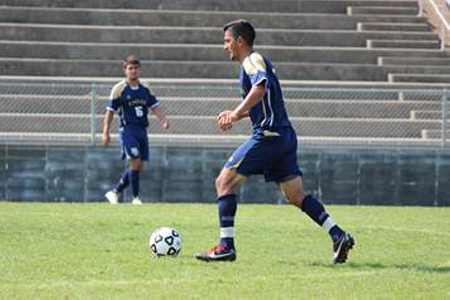
NORTH COAST, Calif. – The Mendocino College men’s soccer team was competing on Friday, Nov. 7, for a tie or a win to earn the conference championship in their inaugural season of competition.
The Eagles tied the game at 1-1 in the 64th minute to earn a point and secure the championship.
This conference championship guarantees a top 16 play-off spot and the opportunity to compete for the state championship.
“A wonderful group of young men that have worked incredibly hard for this achievement,” said Head Coach Shane Huff. “I couldn’t be more proud of this team that is made up of 100-percent Redwood Empire players. They are a hardworking group of individuals that feel honored and privileged to represent their community and Mendocino College. These young men give one hundred percent effort at each and every game.”
Soccer uses power point rankings to determine who hosts playoff games. Being a conference champion ensures Mendocino College’s playoff spot, but not a home game.
The last game of the regular season is this Friday, Nov. 14, at home vs Merit College.
If the Eagles win this game they will most likely host their first playoff game.
“I’m very happy for each and every one of these young men,” Huff said. “They have been given a platform to go to school and play a sport they love. These gentleman are competing against and beating all the larger JC schools. They have completely immersed themselves into the programs high expectations and standards set on and off the field. They are relentless in training and it seamlessly transfers to the games they play. They are a hard working group that is always striving to better themselves and each other! The playoffs will be another exciting and fun challenge for this team. I’m confident that they will continue to work hard and give themselves the best opportunities for success.”
The Mendocino Eagle’s men’s soccer team is currently ranked 14th in the country according to National Soccer Coaches Association of America.
Jessica Silva is Mendocino College's director of community relations and communication.
- Details
- Written by: Editor
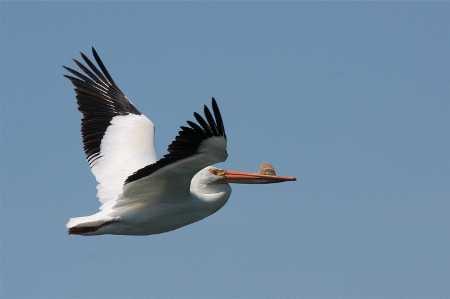
KELSEYVILLE, Calif. – Join Brad Barnwell on Saturday, Nov. 15, for a bird walk along Cole Creek, Kelsey Creek Outlet and Kelsey Slough at Clear Lake State Park.
The two-hour walk will start at the visitor center parking lot at 8:30 a.m.
The walk will be at a slow pace and cover about one mile of paved road and trails.
Participants should wear sturdy shoes and bring binoculars/scopes, birding guide and water. Rain will cancel the walk.
Clear Lake State Park is located at 5300 Soda Bay Rd, Kelseyville, and entry into the park is free for those attending the walk.
Anyone having special needs should contact the Clear Lake State Park Sector office Tuesday through Thursday between 8 a.m. and 5 p.m. at 707-279-2267.
For further information on California State Parks go to www.parks.ca.gov .
- Details
- Written by: Editor
California Department of Fish and Wildlife (CDFW) crews recently completed a successful season tagging white sturgeon in Bay Area waters.
The tagging operation is part of a comprehensive population study aimed at managing California's white sturgeon and its habitat.
Information developed from tagging this year will be complemented by information provided by anglers' 2014 Sturgeon Fishing Report Cards.
Anglers use the cards to record data on species, location and date of catch. The card was implemented in 2007 as part of a suite of significant changes to sturgeon fishing regulations.
“Research, management and enforcement staff work together to protect the sturgeon population and the fishery,” CDFW Environmental Program Manager Marty Gingras said. “From Sturgeon Fishing Report Cards, we know how many sturgeon were caught, where and when they were caught and what size they were. We have tremendous insight into the population's status and ecology because we look at data from anglers and the tagging study, as well as data we develop about juvenile white sturgeon and sturgeon habitat.”
Tagging this year included a first-time collaboration with the U.S. Fish and Wildlife Service. This age and growth study was conducted by two research vessels on fishing grounds in San Pablo Bay and Suisun Bay between Aug. 6 and Oct. 22.
The crews caught 468 white sturgeon, 250 of which were above the minimum study size and were subsequently tagged.
Most of the captured white sturgeon were about 3 feet long, which means they were born in the year 2006. The largest white sturgeon captured was just under seven feet long.
The Sacramento-San Joaquin system is the southernmost spawning grounds for white sturgeon, which is why the population and fishery typically experience major boom and bust cycles.
The white sturgeon fishery was closed for decades due to overfishing, then managed with very liberal regulations for nearly 50 years. It has been further restricted since 2006 to address concerns about white sturgeon and green sturgeon populations.
White sturgeon can live more than 100 years and weigh over 500 pounds, but – even 20-plus years after the establishment of regulation to limit the maximum size of fish that may be kept – less than 10 percent of the fish seen by anglers in California are "oversized" fish (greater than 60 inches fork length) and must be released.
Green sturgeon are so uncommon that fishing for and harvesting them is illegal under the Federal Endangered Species Act.
Anglers can submit Sturgeon Fishing Report Cards by mail or online by logging into the CDFW license system and submitting catch data.
To submit Sturgeon Fishing Report Cards by mail, please send them to: CDFW – Sturgeon Fishing Report Card, P.O. Box 944209, Sacramento, CA 94244-2090.
To receive a reward for catching a tagged fish, please submit disk-tags along with mailing address, catch date, approximate location of catch (e.g., San Pablo Bay), length of fish and fate of fish (released or kept) to CDFW – Sturgeon Disk Tag, 2109 Arch-Airport Road, Suite 100, Stockton, CA 95206.
- Details
- Written by: Ron Hallman
HIDDEN VALLEY LAKE, Calif. – The HVL Men’s Niners Golf Club held a pinehurst – or two-man – tournament on Thursday, Nov. 6.
The results were:
– “A” flight: The team of Dennis Bero/Mike Henley took first with a combined net of 30. Keith Ipsen/Tom Marshall, Dave Mann/Mike Casolo and Bill Eagleton/Randy Brown tied for second at 31.
– “B” flight: Jim Hodges/Jay Hodges and Al Burrows/Phil Tyler tied for first with the lowest net of the day, 29. Olie Smith/Bob Costello was third, 30.
Closest to the par 3 pins were Bob Chesnut and Bill Lyon.
Chip-ins were scored by Dennis Bero. Mike Henley and Don Holland.
Fifty-two men participated in this event.
Ron Hallman is publicist for the HVL Men’s Niners Golf Club.