How to resolve AdBlock issue?
Recreation
- Details
- Written by: Editor
HIDDEN VALLEY LAKE, Calif. – The Hidden Valley Lake Men’s Niners Golf Club held its final tournament of the 2013 season on Dec. 5.
Forty four men competed in a three by three by three format with two-man teams.
The results were:
- “A” flight: The team of Don Dornbush/Jim Stratton was first with a combined net of 31. Bruce Hamilton/Bill Kyle was second, 32, and Fred Figg/Jeff Markham third, 33.
- “B” flight: The father/son team Jim Hodges/Jay Hodges posted the lowest net of the day, 27. Juergen Haller/Mike Higman was second at 29, and Jim DeRosa/Pete Gumina third, 30.
Closest to the par 3 pins were Jim Hodges and Jay Hodges.
Chip-ins were scored by Paul Peterson, Don Dornbush and Bill Brewster.
- Details
- Written by: Editor
LAKE COUNTY, Calif. – Clear Lake High School wrestlers put in a strong performance at a tournament this past weekend.
Coach Aden Pierson said all seven Clear Lake High wrestlers taking part in the event brought home medals in Saturday's Coastal Mountain Conference Novice tournament.
He said big congratulations go to gold medalists Emily Psalmonds and Andreas Tejada; silver medalists Markus Estrada, Amelia Tejada and Aireon Banuet; and bronze medalists Izak Wynacht and Holden Braider.
“The kids looked really good this year at novice,” Pierson said. “I am very proud of the performance they gave and their hard work definitely paid off.”
Next week the varsity squad will be at Green and Gold in Novato, with the girls and younger squad to compete at the Lower Lake tournament, Pierson said.
- Details
- Written by: Carrie Wilson
Charity dinner with donated game
Question: An organization I belong to wants to do a benefit event with donated fish and game meals prepared for the homeless and the hungry.
I know that waterfowl regulations are set by the federal government, but wonder if it may be possible to accept donated wild ducks and geese and turn them into a meal for a few hundred.
It would be a one-day event to draw attention to a local shelter and help boost the image of us hunter types as charitable people who help to conserve our resources.
At some point, someone is going to be over their possession limit to make this happen.
Obviously, we won't charge for the event, and our organization often leaves a generous donation to the facility, but I always thought there was a possession problem. Whaddaya think? (Scott L.)
Answer: Yes, an event like this can be done. A designated person may receive and possess game birds and mammals from multiple donors to give to or prepare for a charitable organization or charitable entity (under Fish and Game Code, section 3080) as long as they have:
1) Copies of the hunting licenses and validated tags for the species possessed. They must be issued for the current or immediate past license year and signed and dated by the donor confirming the donation.
2) The charitable organizations or charitable entities receiving and distributing game birds or mammals for charitable or humane purposes, must maintain the documentation described above for one year from the date of disposal.
Fishing license for collecting seaweed?
Question: Is a fishing license required to collect seaweed? (Jane S., Monterey)
Answer: A fishing license is not required to take seaweed but there is a daily bag limit of 10 pounds wet weight in the aggregate. There are three prohibited species that may not be cut or disturbed: eel grass (Zostera), surf grass (Phyllospadix) and sea palm (Postelsia).
Legal shoot time
Question: If you are sitting in your duck blind waiting for legal shooting time, and you have a shotgun loaded and ready to go (in other words shells in the magazine and chamber), can you be cited for hunting before legal shooting time?
Some say yes since you're loaded up and ready to go, so you are technically “hunting” (even if you have the shotgun sitting in the corner of the blind and never touch it until the legal shoot time).
Others say it’s legal because you aren’t shooting … so as long as you don't fire the gun, you're good.
Who's right? (Eric M.)
Answer: As long as you make no attempt to take a duck, there is no violation for loading your gun as you wait for legal shooting time. However, having a live round in the chamber while you are waiting is not advised for safety reasons.
Abalone reporting
Question: How do I go about reporting my annual abalone harvest take? I just want to find out where I should go on the Web site to report my abalone harvest. Otherwise, do I have to mail the original in by mail? Please advise. (Richard S.)
Answer: You have two options. You can either report your abalone harvest date online at www.dfg.ca.gov/licensing/harvestreporting , or you can mail your completed Abalone Report Cards to:
California Department of Fish and Wildlife
32330 N. Harbor Drive
Fort Bragg, CA 95437
Cards or card data must be submitted to California Department of Fish and Wildlife (CDFW), even if the card holder did not take or even try to take abalone. All card data provides information necessary for annual take estimates.
Fishing for sturgeon
Question: When sturgeon fishing, is it true we cannot use sinkers on leaders or steel leaders? I don’t find these laws stated in the regulations booklet, so are they true? (Mon S., Stockton)
Answer: When fishing for sturgeon, only one single barbless hook may be used on a line (see California Code of Regulations Title 14, sections 5.80 and 27.90.)
The use of sinkers or steel leaders while fishing for sturgeon is not prohibited in most waters, but the use of any hook that is attached closer than 18 inches to any weight exceeding one half ounce is prohibited (CCR Title 14, section 2.10(b)(2)). (Exception: Sacramento River from Keswick Dam to the Highway 162 Bridge, no wire leaders may be used and no sturgeon may be taken.)
Carrie Wilson is a marine environmental scientist with the California Department of Fish and Wildlife. While she cannot personally answer everyone’s questions, she will select a few to answer each week in this column. Please contact her at
- Details
- Written by: Editor
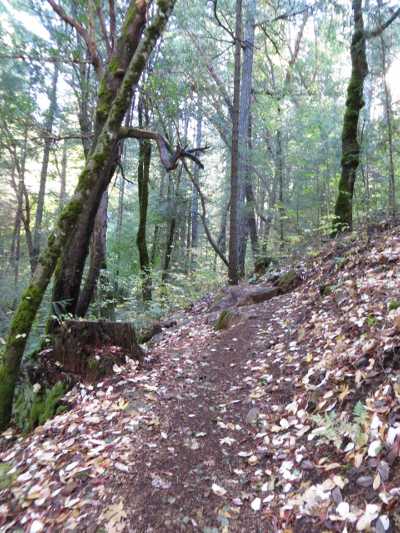
BOGGS MOUNTAIN, Calif. – The Friends of Boggs Mountain will be offering a 1.3-mile hike at 9 a.m. Wednesday, Dec. 11.
The hike will be moderately paced on moderate terrain and will be led by Darlene Hecomovich.
Winter has its special gifts, and they will enjoy crisp, invigorating air, breathtaking vistas and an opportunity to exercise while enjoying the wonders of nature.
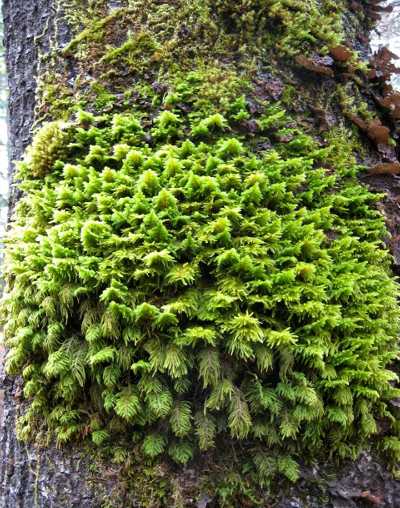
It is a time when pine cones are on the forest floor rather than up in the tree tops and leafless trees display their silhouettes to their best advantage. It is in winter, when mosses and lichens flourish.
Hopefully, they will have some rain that will prompt the mushrooms to appear. Do come and enjoy it all.
Wear sturdy shoes, dress appropriately for weather conditions, and bring water and enthusiasm.
Meet at the parking lot kiosk promptly at 9 a.m.
The forest entrance is located off Highway 175 just one and a half miles north of Cobb Village. Turn at the blue State Fire Station/Boggs Mountain Forest sign.
For further information phone Darlene Hecomovich at 707-928-5591 or email at