 How to resolve AdBlock issue?
Recreation
- Details
- Written by: Editor
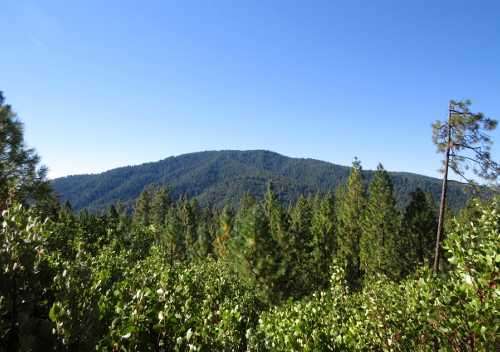
BOGGS MOUNTAIN, Calif. – The Lake County Big Read Program, together with the Friends of Boggs, is presenting a “Hike and Read” event on Sunday, Oct. 20, at Boggs Mountain State Forest.
The Big Read provides citizens with the opportunity to read and discuss a single book at various events within their community over a period of a month.
The Lake County program month is October, and the reading selection is the popular “The Joy Luck Club” by Amy Tan.
The Lake County Big Read is a grant-funded program of the National Endowment for the Arts (NEA) designed to restore reading and the role of literature in American culture and to encourage citizens to read for pleasure and enlightenment. The NEA presents The Big Read in partnership with Arts Midwest.
To nurture these goals, the Boggs Mountain Event will feature a 2.9-mile hike, and at the half-way point, the group will take a break and enjoy a snack as they discuss “The Joy Luck Club” and share one of their favorite passages in the novel and listen to the readings presented by others.
This will be a moderate-level hike on moderate terrain with some elevation and will be led by the director of the Big Read for Lake County, Robin Fogel-Shrive, together with Darlene Hecomovich, a member of Friends of Boggs.
Attendees will have the additional benefit of exercise while they hike through the Douglas fir/ponderosa pine forest enjoying lovely vistas and the beauty of fall in the forest.
Wear sturdy shoes, dress appropriately for weather conditions, and bring water, your snack as well as a bundle of enthusiasm.
Meet at the parking lot kiosk promptly at 9 a.m. The forest entrance is located off Highway 175 just 1½ miles north of Cobb Village. Turn at the blue State Fire Station/Boggs Mountain Forest sign.
For further information phone Darlene at 707-928-5591 or email
- Details
- Written by: Editor
KELSEYVILLE, Calif. – The Kelseyville Tennis Club held a doubles fundraiser on Saturday, Oct. 12, at the Gard Street Courts in Kelseyville.
There was a good turnout for the event. They had a great time and look forward to the Spring Fundraiser Tournament to be held in March.
The group held a raffle for prizes that were donated.The group would like to thank the following merchants for their generous donations: Studebaker’s Coffee House, Wildhurst Winery, Chacewater Winery and Olive Oil, Disney’s Watersports and Awards and Kelseyville Pizza.
The players made donations to the Kelseyville Unified School District in order to contribute to the court repair fund. This is an ongoing effort and future tournaments will be held.
Anyone wishing to donate to the fund can make a donation in the name of the tennis club to the Kelseyville Unified School District. The club offered thanks for support of the community tennis courts.
For any person interested in becoming a member and gaining access to the tennis courts, please call Larry Larson at 707-279-8680.
- Details
- Written by: Editor
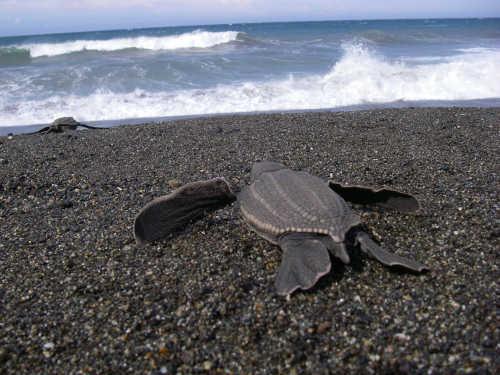
In an effort to bring awareness and protect the population for generations to come, California has designated Oct. 15 as Pacific Leatherback Sea Turtle Conservation Day.
As one of largest migratory sea turtles, the Pacific leatherback sea turtle (leatherback) mark an incredible journey each year, traveling more than 6,000 miles from nesting beaches in Indonesia to feed on California jellyfish during summer and fall months.
Listed as threatened on both federal and state lists, the species faces threats from capture in fishing gear, harvesting of eggs on nesting beaches, plastic pollution and climate change.
“Despite being listed as an endangered or threatened species since 1970, the leatherback population has decreased by approximately 90 percent over the last 20 years,” said CDFW Director Charlton H. Bonham. “Our hope with this celebration is to bring awareness to the plight of the leatherback to preserve it for years to come.”
Passed by the Assembly and signed into law by Gov. Brown in September 2012, Assembly Bill 1776 established leatherbacks as the official state marine reptile.
The bill encourages public schools to include leatherbacks in their curriculum and urges state and federal agencies to take proactive conservation measures to prevent further threats.
Scientists and government representatives from California and Indonesia will also convene in Monterey, California Oct. 14-16, 2013, for an historic summit on leatherbacks.
The conference will host more than a dozen Indonesian delegates, providing the opportunity to reaffirm each country’s commitments and forge new partnerships to prevent the extinction of this magnificent species that call both regions home.
Leatherbacks are the deepest-diving, longest-living and largest sea turtle.
An adult can weigh up to 2,000 pounds and measure more than 6.5 feet in length and can easily be differentiated from other turtle species by its lack of a bony shell.
According to National Marine Fisheries Service (NMFS) scientists, there are less than 5,000 leatherback breeding females left in the world today.
- Details
- Written by: Editor
The ongoing federal government shutdown is impacting some waterfowl hunting opportunities in California due to the resulting closure of National Wildlife Refuges (NWRs).
State Wildlife Areas are unaffected and will be open for hunting during the regular waterfowl seasons.
All NWRs will be closed until a federal budget is passed, including those designated as Type A areas for which the state draws reservations and operates the check stations.
Once the federal budget is passed, hunters should verify that the refuge they wish to visit will be open by contacting the U.S. Fish and Wildlife Service or calling the refuge they wish to visit.
• Colusa NWR, 530-934-2801
• Delevan NWR, 530-934-2801
• Kern NWR, 661-725-6504
• Merced NWR, 209-826-3508
• Sacramento NWR, 530-934-2801
• San Luis NWR, (including Kesterson, Bear Creek, Freitas North or Freitas South), 209-826-3508
• Sutter NWR, 530-934-2801
• Sonny Bono Salton Sea NWR, 760-348-5278
• Lower Klamath NWR, 530-667-2231
• Tule Lake NWR, 530-667-2231
• Modoc NWR, 530-233-3572
• Stone Lakes NWR, 916-775-4421
The below Type A and B State Wildlife Areas (and all Type C wildlife areas that permit waterfowl hunting) will be open for waterfowl hunting regardless of the federal budget status.
A few of the wildlife areas below are located in waterfowl hunting zones which opened on Oct. 5.
Most are scheduled to open on Oct. 19 when the rest of the state opens for waterfowl hunting.
• Gray Lodge Wildlife Area (Type A)
• Grizzly Island Wildlife Area (Type A and Type B Units)
• Los Banos Wildlife Area (Type A)
• Mendota Wildlife Area (Type A)
• North Grasslands Wildlife Area (Including China Island, Salt Slough and Gadwall Units) (Type A)
• San Jacinto Wildlife Area (Type A)
• Upper Butte Basin Wildlife Area (Including Little Dry Creek, Howard Slough and Llano Seco Units) (Type A)
• Volta Wildlife Area (Type A)
• Wister Unit of Imperial Wildlife Area (Type A)
• Yolo Bypass Wildlife Area (Type A)
• Ash Creek Wildlife Area (Type B)
• Butte Valley Wildlife Area (Type B)
• Honey Lake Wildlife Area (Fleming and Dakin Units) (Type B)
• Shasta Valley Wildlife Area (Type B)
• Willow Creek Wildlife Area (Type B)
Reservation drawings will be performed for Type A NWRs that are subject to the federal shutdown.
The California Department of Fish and Wildlife (CDFW) has been accepting reservation applications since Sept. 1.
The federal budget situation could be resolved at any time and the NWRs are expected to be open for hunting soon after. CDFW is conducting reservation drawings in the event the areas will open.
CDFW has posted a frequently asked questions page on its Web site at https://nrm.dfg.ca.gov/FileHandler.ashx?DocumentID=73964&;inline=1 .
For further information, please visit CDFW’s Web site at http://www.wildlife.ca.gov .