 How to resolve AdBlock issue?
Recreation
- Details
- Written by: Lake County News Reports

KELSEYVILLE, Calif. – A morning on the Indian Nature Trail at Clear Lake State Park is a perfect way to start a weekend.
You are invited to meet docent Walt Lyon at 8:30 a.m. on Saturday, Sept. 3, at the trailhead near the park entrance kiosk.
The short shaded trail is rated as moderate. Sturdy shoes are recommended for ease of walking on stone steps.
During this guided walk, Lyon will talk about the flora along the way.
How do you tell a blue oak from a valley oak? Are foothill pine nuts edible? Is the California buckeye really dying? Why do bears like the manzanita? Can poison oak really be that beautiful?
Enjoy a great exchange of information as you ascend this picturesque ancient lava flow.
If the parking lot at the entrance is congested, additional parking is available in the lot adjacent to the Visitor Center, which is only a brisk 15-minute walk back to the trailhead.
Visit www.clearlakestatepark.org for great photos and park information provided by Clear Lake State Park Interpretive Association.
Clear Lake State Park is located at 5300 Soda Bay Road near Kelseyville.
- Details
- Written by: Editor
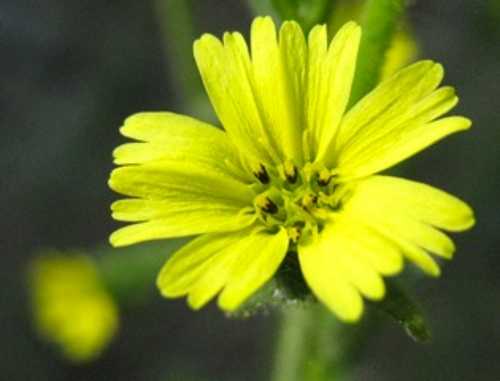
COBB, Calif. – The Friends of Boggs Mountain will offer a nature walk on the interpretive trail on Wednesday, Aug. 31.
The walk will begin at 9 a.m.
Every season has its special gifts, and as summer slides into fall, they will look for signs of the change of the seasons.
Both the Konocti and Sonoma Manzanita bushes are losing some of their leaves, the madrone trees have laid down a carpet of yellow and the Woodland Madia, a late summer wildflower, is in full bloom.
This is an opportunity to get some exercise while you enjoy the wonders of nature.
The interpretive trail has more than 50 signs identifying the plants, shrubs, trees, mosses and wildflowers encountered on the path.
The 1.3-mile hike will be on moderate terrain and will be led by Darlene Hecomovich.
Wear study shoes, dress appropriately for weather conditions, and bring water and enthusiasm.
Meet at the Parking Lot Kiosk promptly at 9 a.m.
The forest entrance is located off Highway 175 just two miles north of Cobb Village. Turn at the blue State Fire Station/Boggs Mountain Forest sign.
For further information phone Darlene Hecomovich at 707-928-5591 or email at
Come and enjoy the fun.

- Details
- Written by: Editor
The assessment results are now available to the public at www.dfg.ca.gov/marine/sfmp/halibut-assessment.asp. A summary can be viewed below.
Completed in July 2011, the assessment examined two separate halibut stocks off the coast of California, with the boundary drawn at Point Conception.
The results from central California indicated that the halibut stock in those waters is healthy and that fishing is currently not the major factor in controlling the abundance level of the central California population.
Instead, abundance in that area is driven by pulses of large numbers of young halibut which only occur in some years. These pulses are probably environmentally influenced.
The assessment of the Southern California population showed that the stock in those waters has been depressed over the last 40 years.
The southern population is nevertheless above a level which can still produce a sustainable fishery, albeit at relatively low levels.
A lack of good recruitment (young halibut entering the fishery) during the last decade has prevented the stock from achieving higher abundance levels in recent years.
Funded by DFG, the assessment was conducted under contract by Dr. Mark Maunder, an internationally recognized authority on fishery modeling. DFG staff collaborated on the effort by providing numerous databases relative to the recent and historical monitoring of the commercial and recreational fisheries and from fishery-independent surveys.
The final report was subjected to an independent peer review before being released.
DFG staff will be conducting three public meetings in Southern California to explain the results of the stock assessment and how it may affect halibut management. These meetings will be held on the following dates:
Tuesday, Sept. 20, 5 to 7 p.m.
Hubbs-SeaWorld Research Institute
Shedd Auditorium
2595 Ingraham St.
San Diego
Wednesday, Sept. 21, 5 to 7 p.m.
Veteran’s Memorial Building Auditorium
112 West Cabrillo Blvd.
Santa Barbara
Friday, Sept. 23, 5 to 7 p.m.
Community Room
Burton W. Chace Park
13650 Mindanao Way
Marina Del Rey
Questions about the stock assessment documents may be directed to Travis Tanaka, DFG Marine Region, 20 Lower Ragsdale Drive, Suite 100, Monterey CA 93940, or by e-mail to
- Details
- Written by: Editor
LAKEPORT, Calif. – The annual demolition derby at the Lake County Fair will take place on Friday, Sept. 2.
It's an evening of crashing and smashing, as drivers try to out-maneuver each other, smashing the other guy's car to smithereens while keeping their own car running. The last car running is the winner.
Traditionally, two-thirds of the cars entered in the fair derby have come from Lake or Mendocino county's during the last several years.
Cash prize money is being put up by local promoters at Lakeport Speedway. All grandstand shows begin at 7:30 p.m.
Anyone interested in entering either derby should contact Lakeport Speedway by calling 707-279-9577.
Other events in the grandstand arena the Lake County Lawn Mower Challenge Races on Thursday evening, open mud bogs and 4x4 truck pulls on Saturday evening, and the California State Finals of the WGAS Motorsports Tuff Truck and Buggy Races on Sunday evening. All grandstand shows start at 7:30 pm.
Local participants are also encouraged in the truck pulls, mud bogs and the tuff truck races, and entry forms are available at the fairgrounds office.
Regular admission prices for the 2011 Lake County Fair are $10 for a regular ticket, $6 for a senior over age 60 and $6 for children ages 6 through 11.
Children under 6 years old are admitted free every day. Children through age 11 are admitted for $3 on Thursday, Sept. 1, only, for “Kid's Day.”
The Lake County Fair traditionally occurs Labor Day weekend each year at the fairgrounds in Lakeport. The 2011 fair dates are Thursday, Sept. 1, through Sunday, Sept. 4.
Lake County Fair is one of Lake County's favorite summertime events, and is enjoyed by nearly 40,000 people each year.
The fair features a variety of entertainment, food, exhibits, a carnival, and livestock shows.
The fair theme for 2011 is “Make Some Magic!”