 How to resolve AdBlock issue?
Recreation
- Details
- Written by: Elizabeth Larson
Thanks to the generous contributions from Lake County Tribal Health, Friedman’s Home Improvement and Community First Credit Union, with support from Furia Construction, Max 93.5 FM, 94.5 Kwine and Bicoastal Media fireworks will be taking place at dusk at Ukiah Speedway on Saturday, July 6.
Engines will be revving Saturday in Ukiah where the racing continues featuring the BCRA Midgets, Vintage Midgets, Focus Midgets, Sprint Cars, Pro 4 Modifieds, Limited Modifieds and Bombers.
Gates will open at each track at 3:30 p.m. and racing will begin at 6 p.m. with the exciting ground show fireworks happening during the program on Saturday night.
Race promoter David Furia has been the mastermind behind bringing the fireworks to the Speedway for the last six years.
Furia is excited about this year’s show. “The show is an incredible in-your-face display of fireworks and pyrotechnics. The style of fireworks that will be presented will astound
and amaze every person in the grandstands. This will be the fireworks show that will make people wish they had been there. The crew puts on a great show and we have never been disappointed.”
Tickets to either race are $15 for adults; seniors and students, $12; children 6 to 11, $8; and children 5 and under are admitted free.
There will be a $5 fee for parking in the Ukiah fairgrounds parking lot. However, the parking stub is redeemable at the ticket gate for $5 off one gate entry for the race and fireworks show.
- Details
- Written by: Gabrielle Stevenson
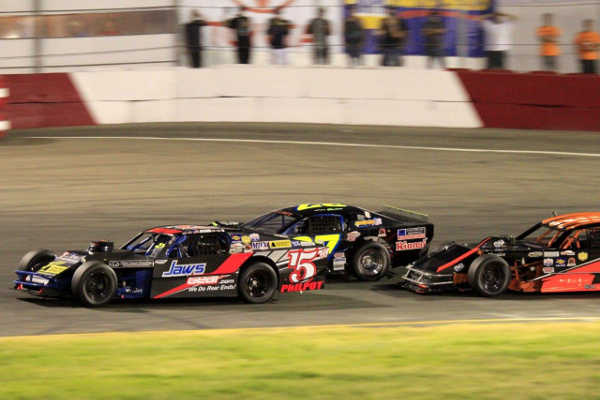
ROSEVILLE, Calif.– All American Speedway was the second stop ever in the history of the North State Modified Series, presented by Protect the Harvest, when it began in 2014.
The professional series features drivers from all over California or Oregon, battling for every point in the 12-event championship hunt.
The next stop on the schedule is a return to All American Speedway – July 6 – on a night that includes the first ever Cherokee Truck Tires Big Rig Rumble, NASCAR weekly racing, 49er Hall of Famer Tom Rathman as Grand Marshall and fireworks.
The owners of the series – racer and car owner Jeff Stephens of Rio Linda and long-time racing promoters Bob and Nadine Strauss of Lucerne – are thrilled to be racing at All American Speedway this weekend. It’s the only All American Speedway stop for the series in 2019.
The professional series began when local tracks started going away from the modified racing classes.
“Modified racing was real popular in our region and then for some reason, it just started to fall off and a lot of tracks dropped the class,” Nadine Strauss said. “That’s why we started the series. The racing is fun and exciting and we don’t have a lot of restrictions like local tracks might in a similar class, but the cars are open wheel so you have to be a pretty good driver to win in this series.”
Many of the current North State Modified racers are former champions of their local tracks. That kind of competitive environment can dial up the excitement.
“We don’t have a lot of rubbing and bumping like in stock cars,” Strauss said. “It takes a good professional-level racer to get the win in this series and we have a lot of them which is why our points are so close.”
Cameron Austin is currently leading the standings by a mere eight points over Robbie Knittel. There have been multiple points leaders this season because the competition is so close. There are championship points and $1,000 on the line this weekend at All American Speedway.
“We have great racers and an even better following because the racing is so exciting and close,” Strauss said. “Our points leaders have been within 10 points of each other before and after each race. We never know who is going to win or lead after each race.”
Bill McAnally Racing Promotions decided to bring the series back to All American Speedway because of that competitive racing. The series is also loaded with local track champions — people fans know and support.
“The series is run by three people who are very knowledgeable about racing and care about the racers,” McAnally said. “And the racers have won at other levels and put on a great show. These racers come from all over the region and they bring experience and a following that we really enjoy hosting at All American Speedway.”
Gates open at 4 p.m. on Saturday, July 6 for a full slate of NASCAR Whelen racing, Cherokee Truck Tires Big Rig Rumble racing, North State Modifieds and fireworks. Information can be found at www.allamericanspeedway.com including purchasing advance tickets.
- Details
- Written by: California Department of Fish and Wildlife
The California Department of Fish and Wildlife's Yolo Bypass Wildlife Area is welcoming back the largest colony of Mexican free-tailed bats in California. The bats return each summer to give birth to their young and soar over the floodplain in a nightly bug-eating bonanza.
The public is invited to experience this amazing event as thousands of bats emerge each evening to hunt for insects over the rice fields of the Yolo Bypass Wildlife Area, located just east of the city of Davis.
Each year during bat "pupping" season, from June through September, the Yolo Basin Foundation offers "Bat Talk and Walk" tours.
The tour begins with a 45-minute indoor presentation on bat natural history, after which attendees are shuttled to the outdoor viewing area to witness firsthand the spectacular aerial performance.
An estimated 250,000 Mexican free-tailed bats migrate to the area every summer to give birth under the shelter of the Yolo Causeway.
The bats roost in the cement expansion joints and stream into the sky at dusk to feed, flying as high as two miles into the air.
"The sheer volume of bats roosting is incredible – it is a pretty amazing sight to see them fly out in ribbons," explains Yolo Bypass Wildlife Area Manager Joe Hobbs. "This wildlife experience is a great family outing, since it's in the evening when it's not too hot and the Delta breeze is coming through. Bring a picnic dinner, and definitely bring insect repellent!"
The event lasts for about three hours. Advance reservations must be made online at http://yolobasin.org/battalkandwalks .
Adult admission is $14 and children 15 and under are free. Private tours are also available upon request. Those unable to walk may view the bats by car.
Bat Talk and Walk Schedule, July-September 2019:
July
Wednesday, July 3 – 6:30 p.m.
Saturday, July 6 – 6:30 p.m.
Sunday, July 7 – 6:30 p.m.
Monday, July 8 – 6:30 p.m.
Monday, July 15 – 6:30 p.m.
Monday, July 22 – 6:30 p.m.
Saturday, July 27 – 6:30 p.m.
Tuesday, July 30 – 6:30 p.m.
August
Sunday, Aug. 4 – 6:15 p.m.
Monday, Aug. 5 – 6:15 p.m.
Thursday, Aug. 8 – 6:15 p.m.
Monday, Aug. 12 – 6:15 p.m.
Friday, Aug. 16 – 6:15 p.m.
Saturday, Aug. 17 – 6:15 p.m.
Tuesday, Aug. 20 – 6 p.m.
Thursday, Aug. 22 – 6 p.m.
Wednesday, Aug. 28 – 6 p.m.
Friday, Aug. 30 – 6 p.m.
Saturday, Aug. 31 – 6 p.m.
September
Wednesday, Sept. 4 – 5:45 p.m.
Friday, Sept. 6 – 5:45 p.m.
Tuesday, Sept. 10 – 5:30 p.m.
Thursday, Sept. 12 – 5:30 p.m.
Saturday, Sept. 14 – 5:30 p.m.
Monday, Sept. 16 – 5:15 p.m.
Wednesday, Sept. 18 – 5:15 p.m.
Friday, Sept. 20 – 5:15 p.m.
- Details
- Written by: Nadine Strauss
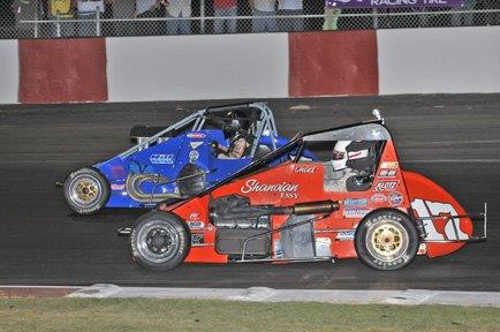
LAKEPORT, Calif. – This Friday night, July 5, Northern California Racing Association, or NCRA, brings both auto racing and a huge up-close fireworks display to the Lakeport Speedway.
The auto racing program will include the only appearance of the Bay Cities Racing Association Midgets and Vintage Midgets, the NCMA Sprint Cars, the NCRA Modifieds and the Taco Bell Bombers.
The PYRO Spectacular fireworks display is presented by Hillside Honda of Lakeport.
Auto racing will begin at 6 p.m. and the fireworks are scheduled to shoot off at 9:30 p.m.
General admission will be $15 for 12 years and up, children ages 6 to 11 get in for only $5, and a family pass which includes 2 adults and 3 children costs $40. Kids ages five and under get in free.
Gates open at 5 p.m.
For more information on the 2019 racing season, visit NCRA – Lakeport Speedway on Facebook or call the business office at 707-274-1662.