 How to resolve AdBlock issue?
Recreation
- Details
- Written by: Editor
- Details
- Written by: Editor
- Details
- Written by: Editor
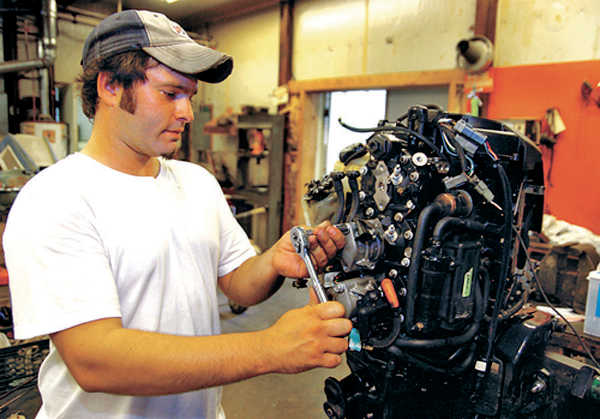
This summer, the Environmental Protection Agency asked the public how much ethanol it wanted to be added to the nation’s gasoline supply, and recreational boaters as well as many other owners of gasoline engines and vehicles spoke up against increasing ethanol volumes under the Renewable Fuel Standard, or RFS.
On Friday, EPA set the 2018 RFS at 19.29 billion gallons, a 0.05 percent increase over the 2017 standard.
Signed into law in 2005, the RFS requires an increasing amount of biofuels, such as corn ethanol, to be blended into the gasoline supply.
“In August, EPA originally proposed a slight lowering of the overall ethanol mandate. However, bowing to pressure from the ethanol backers, the agency actually notched the mandate higher,” said BoatUS Government Affairs Manager David Kennedy. “We think the EPA’s decision unfairly supports the ethanol industry over protecting consumers, recreational boaters, and the environment. If ethanol is as good for America’s fuel supply as Big Ethanol would like you to believe, then why do we have a law that forces more ethanol each year into the market? The RFS no longer works for Americans.”
When it was written, RFS assumed that America’s use of gasoline would continue to grow.
Since 2005, however, gasoline usage has not increased as forecasted, which today forces more ethanol into each gallon of gas.
To keep up with the RFS mandate, in 2010 EPA granted a waiver to allow E15 (15 percent ethanol) into the marketplace. However, only fuels containing up to 10 percent ethanol (E10) are permitted for use in recreational boats. As higher blends enter the gas supply, the chance of misfueling increases.
“Ethanol has been demonstrated to cause harm to many gasoline engines at the present 10 percent ethanol level, especially legacy outboard motors, decreases fuel efficiency, increases fuel costs for consumers, and has questionable environmental benefits,” added Kennedy. “BoatUS will continue to fight on behalf of America’s recreational boaters to fix the RFS.”
Go to www.BoatUS.com/gov/rfs for more information on the Renewable Fuel Standard.
BoatUS is a member of the Smarter Fuel Future coalition.
- Details
- Written by: California Department of Fish and Wildlife
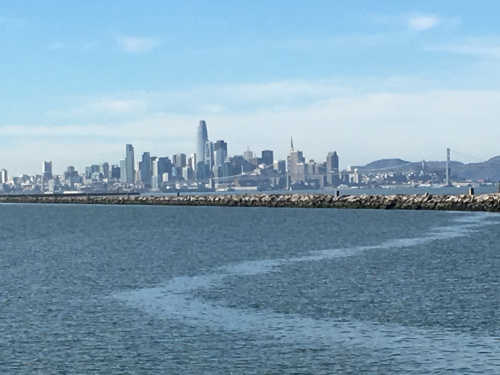
Is a license needed to fish from the alameda rock wall?
Question: My questions have to do with the Alameda rock wall located behind Encinal High School in Alameda (Alameda County).
Is a California fishing license required at the Alameda rock wall? I've heard some say that it is considered a public pier and would not require a license.
Also, how many poles (lines) are you allowed to have per angler at the rock wall? Some have said one because Alameda is part of the San Francisco Bay. Others have said that the Alameda rock wall is a jetty, so therefore two poles are allowed. I want to make sure that I'm following all Department of Fish and Wildlife laws when I want to bring new friends into the sport. (Luan T.)
Answer: We appreciate the efforts of experienced fishers to teach their friends and younger generations about fishing and help them gain an appreciation for the outdoors. Public piers are excellent places to take beginners who may be apprehensive about trying to go fishing for the first time.
No license is needed when fishing off the Alameda rock wall as it is considered a public pier. In fact, a fishing license is not needed when fishing recreationally from any public pier in California's ocean waters.
A public pier is defined in the sport fishing regulations as a publicly owned, man-made structure that has the following characteristics: is connected, above the mean high tide, to the main coastline or to the land mass of a named and charted natural island; has unrestricted free access for the general public; and has been built or currently functions for the primary purpose of allowing angling access to ocean waters (California Code of Regulations Title 14, section 1.88).
Additionally, publicly owned jetties or breakwaters that are connected to land, as described above, that have free unrestricted access for the general public and whose purpose it is to form the most seaward protective boundary of an ocean harbor are public piers.
Jetties, breakwaters, promenades, sea walls, moles, docks, linings, barriers and other structures that are not the most seaward protective boundary of an ocean harbor, are not public piers.
You are correct that the Alameda rock wall is within the San Francisco Bay (see California Code of Regulations Title 14, section 27.00 for the definition) and therefore has the restriction of only allowing one line with not more than three hooks when fishing for finfish (CCR Title 14, section 28.65(a)).
Furthermore, the Alameda rock wall is a publicly accessible jetty so it falls under the definition of public pier. If you are fishing for finfish from the Alameda rock wall, you can use one line with not more than three hooks, and a second line attached to a net or trap to take other fish, such as rock crab.
Even though a fishing license is not required on a public pier, all other regulations (including minimum size, bag limits, seasons and report card requirements) apply. Good luck and have fun fishing with your friends!
Is portion of Kern River open to year-round fishing?
Question: I'm from Bakersfield and I see in the regulations that there is a portion of the Kern River that is open to fishing year-round. Does this also include streams that flow into the Kern River? Also, if you are practicing catch-and-release, can you fish for trout when the season is closed? (Cody G.)
Answer: Cody, you are correct in that the portion of the Kern River from Lake Isabella north to the Johnsondale Bridge is open to trout fishing year-round. However, the other waters in that part of Tulare County, including the streams that flow into the Kern River, fall under the general regulations for the Sierra Sport Fishing District and are only open the last Saturday in April through Nov. 15.
If you have specific questions about particular streams, you can always check the Trout, Salmon and Special Regulations portion of the 2017-18 Freshwater Sport Fishing Regulations, which will list individual waters, such as the Kern River, with special fishing regulations. If the specific stream you are curious about is not listed, then that stream falls under the general regulations of that particular sport fishing district.
Please be aware that the Kern River above the Johnsondale Bridge is a special regulation water that is open to trout fishing the last Saturday in April to Nov. 15 with restricted limits and minimum size requirements, and only artificial lures with barbless hooks may be used.
In regard to your other question, you cannot fish for trout in any fashion when the season is closed to trout fishing. The portions of the Kern River that close to trout fishing are also closed to fishing for all other fish species with the exception of fishing for amphibians, freshwater clams, crayfish and lampreys. When fishing for these other species, however, no hook-and-line methods are allowed during the closed trout season.
If you have a question for the California Department of Fish and Wildlife, please feel free to email