 How to resolve AdBlock issue?
Recreation
- Details
- Written by: Editor
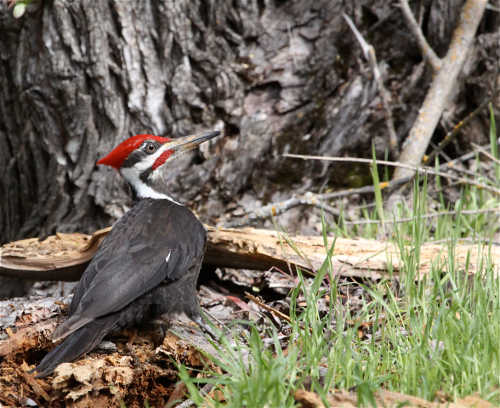
KELSEYVILLE, Calif. – A new year is beginning and Clear Lake State Park would like to invite you and your family to celebrate the fourth annual America’s State Parks First Day Hikes and the 100th anniversary of the National Park Service by participating in a self guided walk in Clear Lake State Park on Jan. 1, 2016.
At 10 a.m. meet with Clear Lake State Park Interpretive Association and State Park volunteers Rich and Oleta Simpson and Brad Barnwell at the visitor center parking lot to start the walk down the Old Kelsey Creek Trail.
Entry into the park for walk participants will be free.
The one-hour, one-mile walk is on an Americans with Disabilities Act-accessible trail that meanders along old Kelsey Creek through the cottonwood and willow trees.
The slow pace will give you the opportunity to experience the parks flora and fauna as if you were actually one of the park’s wildlife residents.
The winter weather could be brisk and participants should dress appropriately and wear sturdy shoes and bring binoculars, and water. Rain will cancel the walk.
Clear Lake State Park is located at 5300 Soda Bay Road, Kelseyville, and entry into the park is free for those attending the walk.
Anyone having special needs should contact the Clear Lake State Park Sector Office Tuesday through Thursday between 8 a.m. and 5 p.m. at 707-279-2267.
For further information on California State Parks go to www.parks.ca.gov .
- Details
- Written by: Carrie Wilson
Do lost crippled birds count toward your bag limit?
Question: I was informed that a downed crippled bird that was not recovered, even though a true effort was made to find the downed bird, still counts toward your bag limit. Where is this stated in the regulations? (Aaron W.)
Answer: It is not in regulation. It is an ethical hunter issue. Ethical hunters will make every attempt to find a downed bird. Even if that bird is never located but the hunter knows it was hit, the ethical hunter will still count it towards their bag limit. Ethical hunters do what is right even when they think no one’s looking.
Fishing and retrieving lobster hoop nets
Question: I understand that each person that drops a hoop net must be the same person that retrieves it. How do you monitor this? If we have four people in the boat and 10 nets, are we supposed to somehow mark each net to distinguish whose is whose? (Bill J.)
Answer: The law states that the owner of the hoop net or the person who placed the hoop net into the water shall raise the hoop net to the surface and inspect the contents of the hoop net at intervals not to exceed two hours.
The intent of this law is to require a minimum checking interval of every two hours at least by whoever placed the net in the water and not to cite somebody for pulling up their buddy’s net.
Wildlife officers understand if you are working together as a team, but any net placed into the water is your responsibility to raise and inspect every two hours.
Depending on someone else to do that for you may result in you receiving a citation if they fail to comply with this requirement.
Yo-yo fishing
Question: I know jug fishing, yo-yo fishing and the use of trotlines with 20+ hooks per line are the norm in the South.
I am interested in yo-yo fishing in California for catfish and possibly trying a two-jug trotline with 10 to 12 hooks on the line to catch catfish.
My question is: In California, are private (non-commercial) fishermen limited to fish with just one line with three hooks max?
In reading the regs, it seems that an extra pole endorsement is just that, for an extra pole, not an extra line. (Mark H., San Bruno)
In regard to yo-yo fishing and trotline fishing, here is an article from 2007 Outdoor Life: www.outdoorlife.com/articles/fishing/2007/09/tackle-free-fishing .
Answer: You must closely attend your lines at all times and you are limited to two lines with a maximum of three hooks on each line with a two-pole stamp.
Otherwise, you must use a single line with three hooks maximum when fishing bait, or three lures per line which could each have three hooks. It is illegal to allow lines to simply fish themselves while attached to a float.
For a similar previous question and answer, please go to: http://californiaoutdoors.wordpress.com/2008/11/ .
Hunting around Lake Shasta
Question: I have a few questions about hunting in northern California by Lake Shasta. I want to go there to hunt for pig and turkey at the same time when the season reopens.
Am I allowed to carry ammo for pig and turkey on me at the same time as long as it is all lead-free? Also, I heard something about a limit on how much ammo may be carried on you at one time? I'm not looking to carry hundreds of rounds but did want to have a spare box plus my clips on me. (Kevin F.)
Answer: Yes, it would be legal to hunt pigs and turkeys simultaneously as long as any shotgun shells for pigs are slugs and not shot. A hunter who possesses shot size larger than No. 2 could be cited while turkey hunting, but the regulation limiting shot size that may be possessed when taking turkey does not address slugs.
Methods authorized for taking big game (wild pig) include shotgun slugs, rifle bullets, pistol and revolver bullets, bow and arrow and crossbow (2015-2016 Mammal Hunting Regulation booklet, page 27, section 353).
Methods of take for resident small game (wild turkey) are shotguns 10 gauge or smaller. Shotgun shells may not be used or possessed that contain shot size larger than No. BB, except that shot size larger than No. 2 may not be used or possessed when taking wild turkey (California Code of Regulations Title 14, section 311(b)).
Carrie Wilson is a marine environmental scientist with the California Department of Fish and Wildlife. While she cannot personally answer everyone’s questions, she will select a few to answer each week in this column. Please contact her at
- Details
- Written by: Editor

LAKEPORT, Calif. – On Saturday, Dec. 19, the Clear Lake Cardinals sent out six wrestlers to compete in the weekend's tournaments.
Three boys went to the Holiday Bash in Fort Bragg, and three girls went to the CVHS Girls Wrestling Classic in Castro Valley.
In Castro Valley, Emily Psalmonds (111 pounds) went 3-0 and took home the gold medal with two pins and a major decision.
Ciera Moreno (137 pounds) went 3-1 to take home the bronze medal, with three pins and her only loss coming against the eventual champion.
Hailey Vinson (235 pound) took sixth place with her losses coming against the second, third and fifth place finishers.
In Fort Bragg, Jacob Pyorre (120 pounds) went 3-1 winning the bronze medal with two pins. His only loss on the day was a close fought match against the eventual gold medalist and outstanding lightweight winner from Las Plumas in the Northern Section.
Isaac Lewis (160 pounds) went 3-1 winning a bronze medal with three pins and his only loss against the eventual champion from River City in the Sac-Joaquin Section.
Brandon Dickey (138 pounds) moved up a weight class and just missed the medal rounds, finishing in the top eight.
- Details
- Written by: Editor
LAKE COUNTY, Calif. – The Konocti Rod and Gun Club is hosting its annual Junior Pheasant Hunt at Highland Springs this Saturday, Dec. 19, between 10 a.m. and 3 p.m.
The hunt will take place in the northeast field in front of the gun ranges, as it has in the past. This area of the park will be closed during that time.
For more information please call the Lake County Department of Water Resources at 707-263-2344.