 How to resolve AdBlock issue?
Recreation
- Details
- Written by: Editor
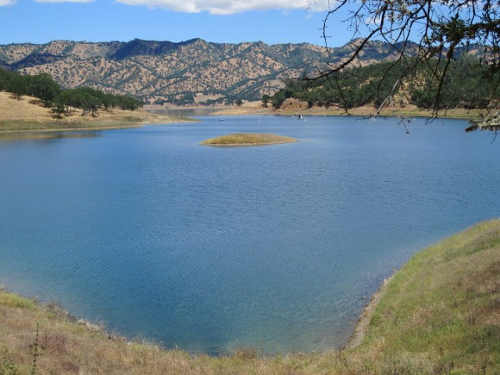
WOODLAND, Calif. – On Saturday, Oct. 3, Tuleyome Home Place Adventures, is hosting a free hike where participants will explore the trails along Lake Berryessa.
The hike will take place from 9 a.m. to noon.
Hike leader Carol Kunze will lead participants on an interpretive hike revealing the flora and fauna of the area.
Participants will learn about nearby restoration efforts and have an opportunity to get more information on future projects. This is a mild hike with very little elevation gain.
Limited space is available. For information and RSVP please email
Tuleyome’s Home Place Adventure program believes everyone deserves access to the outdoors. Tuleyome is a conservation non-profit based in Woodland, committed to protecting the wild and agricultural heritage of our region. While this event is free and open to the public, there is a $5 suggested donation.
For more information, event details, and directions please visit our website at www.tuleyome.org .
- Details
- Written by: Editor
National Hunting and Fishing Day will be celebrated on Saturday, Sept. 26.
In conjunction with this annual observance, the California Department of Fish and Wildlife (CDFW) reminds Californians of the plentiful opportunities to enjoy hunting and fishing in the state and commends them for their commitment to conservation.
“California's anglers and hunters play a crucial role in the conservation of California's natural resources,” said CDFW Director Charlton H. Bonham. “On behalf of CDFW, I thank them for their invaluable contribution.”
President Richard Nixon signed the first proclamation of National Hunting and Fishing Day in 1972. It is annually held on the fourth Saturday in September to promote outdoor sports and conservation.
California is the third-largest state in the nation and approximately half of its land is publicly owned. That translates into millions of acres of huntable public property on which CDFW offers varied hunting opportunities.
In 2014, 284,761 licensed hunters contributed approximately $25,181,595 toward wildlife management and conservation activities in the state.
Wildlife management and conservation activities have resulted in numerous success stories over the years in California.
For example:
Tule elk
1874: Thirty were remaining in California in one herd in the southern San Joaquin Valley.
2015: 4,200 animals distributed in 22 herds across California.
Wild turkeys
1959: There were virtually no wild turkeys other than game farm birds, which were essentially raised to be shot and killed.
2015: There are an estimated 250,000 wild turkeys in the state.
Desert bighorn sheep (nelson)
1915: They were nearly extirpated in the state.
2014: There are approximately 2,000 in California.
Aleutian Canada Goose
1970: There were approximately 200 to 300 in California.
2015: There are approximately 120,000 in the state.
Fishing opportunities also abound in the more than 30,000 miles of rivers and streams, 4,172 lakes and reservoirs and 80 major rivers in California. The state features more than 1,100 miles of coastline that is home to hundreds of fish and shellfish species.
CDFW offers two “free fishing” days each year in the state, and this year prospective anglers received those opportunities on July 4 and Sept. 5. Fish production is also an important activity of CDFW, which in 2014 produced 2.5 million pounds of trout for recreational angling.
Last year, CDFW issued 1.78 million fishing licenses and those licenses (including report cards and validations) generated $63 million in funding for fisheries management and protection.
California also received $17.3 million in federal Sport Fish Restoration Grants in 2015 – the grant amount is based on a formula that incorporates the geographical size of a state and the total number of licensed individuals in the state.
Fisheries management and conservation activities have also resulted in numerous success stories over the years in California.
For example:
Wild trout fisheries
1970: No designated wild trout sport fisheries.
2015: 51 designated wild trout waters, encompassing 1,400 miles of streams and 14 lakes.
Landlocked salmon
1993: No landlocked salmon sport fisheries.
2015: Twenty-one reservoirs support sport fishing for Kokanee salmon and 12 reservoirs support sport fishing for landlocked Chinook salmon.
Largemouth bass
1874: Introduced into California.
2015: Twenty of 25 largest largemouth bass caught worldwide have been in California.
Alabama Spotted Bass
1974: Introduced into California.
2015: The current world record for the species was caught in a California reservoir. The state record for the species was broken twice in a one-month span, including a pending new world record.
For more information on hunting and fishing opportunities in the Golden State, visit www.wildlife.ca.gov .
For information on how to purchase a hunting or fishing license, visit www.wildlife.ca.gov/licensing/online-sales .
For more information on National Hunting and Fishing Day, visit http://www.nhfday.org/ .
- Details
- Written by: California Department of Fish and Wildlife
As California’s 2015 deer hunting season continues with the opening of additional hunt zones this weekend, the California Department of Fish and Wildlife (CDFW) is urging hunters to research where they plan to hunt in advance, as access to some areas may be restricted due to wildfires.
Current information regarding closures and restrictions can be found on Cal Fire's California Statewide Fire Map Web page, www.fire.ca.gov/general/firemaps.php .
CDFW does not close or open areas due to fires, but leaves that authority to incident commanders with Cal Fire and the U.S. Forest Service.
- Details
- Written by: CARRIE WILSON
Question: Is there anything I can do to deter or discourage sea lions from eating all my crabbing bait? I know that seals and sea lions are protected under the Marine Mammal Protection Act but I've heard there are exceptions for recreational fishermen to deter them to prevent damage to private property, including gear and catch.
What can I legally do to chase off these seals/sea lions or at least prevent them from chewing up my bait cages and hoop nets? Is it legal to shoot them with paintball guns? (Sam L.)
Answer: California sea lions and Pacific harbor seals have been federally protected under the Marine Mammal Protection Act since 1972, and thus harassing, capturing, killing or attempting to do so is prohibited and carries a hefty fine.
According to the National Oceanic and Atmospheric Administration (NOAA), in recent years the populations of these animals have increased dramatically and are now considered healthy and robust.
Unfortunately, with the good often comes the bad – the increased abundance of animals has also resulted in a growing number of negative interactions with humans and incidents of property damage.
People seeking legal methods for deterring marine mammals in order to protect their property, fishing gear and catch from damage by sea lions and seals can find recommendations and approved methods on NOAA’s Web site, www.westcoast.fisheries.noaa.gov/protected_species/marine_mammals/deterring_qa.html .
Shooting wrong deer
Question: If you are out hunting and shoot a spike by mistake, what should a person do?
What kind of trouble could a hunter get into for that if reported to the California Department of Fish and Wildlife (CDFW)? (Steve C.)
Answer: If you shoot a spike deer by mistake, you should immediately contact your local CDFW office and/or your local wildlife officer to report it and explain what the situation was that caused the mistake.
You may still be cited for wrongly harvesting an animal that you are not authorized to take, and if convicted you could lose your deer hunting privileges for the following year in all wildlife violator compact states.
If you try to conceal the animal, don’t tag it, take it home or leave it in the field without field dressing it, you may be cited for additional violations that entail higher fines and penalties.
And these actions could lead to an extended revocation of your deer hunting privileges in all Wildlife Violator compact states, or may lead to the revocation of all hunting privileges in California and all wildlife violator compact states.
Archery for quail
Question: I am planning on archery hunting for quail this year. Do the same laws from shotgun apply to archery?
Does the quail have to be flying before shooting at it? Or if archery hunting, can the quail be standing on the ground or sitting in the trees? (John V.)
Answer: The early archery-only season for quail ended on Sept. 4, but using archery equipment generally allows you to hunt both during the archery-only season (listed under California Code of Regulations Title 14, section 300) and during the general season. Otherwise, the bag and possession limits are the same.
Whether to shoot the birds when flying vs. when they are standing on the ground or roosting in trees is not a legal question but rather an ethical decision that you must make.
Under the widely accepted “fair chase” principles that most hunters abide by, shooting upland game birds or waterfowl under conditions other than when they are flying would violate this principal and be considered unethical.
Six months residency requirement
Question: If a taxpayer is considered a California resident for tax purposes and pays about $6000 a year in California income tax, plus California sales tax, but has lived overseas for part of the year, why can't they purchase a resident fishing license until after they have physically resided in California for six months?
Under fishing regs it would be legal to purchase a license in January, leave the country and return in 11 months and the California license is still valid within the same year. What is the point of this rule? (Bob R.)
Answer: While there are many ways the legislature could have defined residency, for purposes of purchasing hunting and fishing licenses, Fish and Game Code section 70 defines a resident as “any person who has resided continuously in the State of California for six months or more immediately prior…” to the date of application for a license or permit.
The law also includes specific provisions regarding persons on active duty in the military and persons enrolled in the federal Job Corps.
The purpose of this law is to provide criteria to establish residency for the purpose of purchasing hunting and fishing licenses.
According to CDFW License Program Analyst Glenn Underwood, the law does not say that you cannot leave California while you are a resident.
However, if you live outside of California, your identification is based outside of California, or you buy resident licenses in another state or country, then you will not be able to purchase a resident California license. Many people attempt to purchase resident licenses in more than one state.
Carrie Wilson is a marine environmental scientist with the California Department of Fish and Wildlife. While she cannot personally answer everyone’s questions, she will select a few to answer each week in this column. Please contact her at