
 How to resolve AdBlock issue?
 News
LAKE COUNTY, Calif. — Public comment on a proposed fire hazard severity zone map that significantly expands Lake County acreage in the highest severity zone is set to close next week. So far, officials say the response has been minimal.
On Feb. 10, Cal Fire released its new fire hazard severity zone map for “Local Responsibility Areas,” or the LRA, adding a total of 14,000 acres of Lake County land to the “very high” fire hazard severity zone, marking an 878% increase in acreage designated the highest severity category.
County and city officials feared that with such expansion, the new map could have major implications for the county, particularly in relation to fire insurance. They also have questioned the fact that the ratings on the map cannot be altered to a lower grade, regardless of local mitigation efforts.
The new map is in a 90-day public comment period that began Feb. 12 and ends Tuesday, May 13.
Local governments are required to adopt the map by ordinance at the end of a 120-day period; their deadline is July 1.
Nearly three months after the map’s release, both the cities of Lakeport and Clearlake report receiving no public input.
“At this time the City of Lakeport has not received any comments regarding the LRA Fire Hazard Severity Maps,” Lakeport City Manger Kevin Ingram said in an email to Lake County News this week.
“We haven't received any comments I am aware of,” Clearlake City Manager Alan Flora said. “We had been worried the response would be very muted.”
With the adoption deadline approaching, all three local governments are considering setting public hearings.
County Community Development Director Mireya Turner said the Board of Supervisors is tentatively scheduled to hold a first reading of the draft ordinance adopting the map on May 20.
Flora said Clearlake will present the map and ordinance at next week’s City Council meeting.
Ingram said Lakeport is tentatively planning to bring the item to either its June 3 or June 17 meeting. Once a date is confirmed, he expects public interest to increase.
“However, Cal Fire does not really leave much room for substantive action on any received comments beyond upzoning a location,” he added, noting the limited effect public input may have.
Still, officials say the opportunity for comment remains important.
During a Clearlake City Council meeting in February, Flora urged residents to speak up — even though he didn’t expect many would.
“Unfortunately, the community probably is not going to respond or care about this as much as they should until they get a cancellation notice of their insurance,” he said at the time. “Which, if they do nothing, is going to happen.”
The public can still direct questions about the maps to the Office of the State Fire Marshal atThis email address is being protected from spambots. You need JavaScript enabled to view it. or by calling 916-633-7655.
Public comment can be submitted to the county and two city councils:
City of Clearlake: 14050 Olympic Drive, Clearlake. Email comments that apply within the city of Clearlake to:This email address is being protected from spambots. You need JavaScript enabled to view it. or call City Manager Alan Flora at 707-994-8201.
City of Lakeport: 225 Park St., Lakeport. Email comments that apply within the city of Lakeport to:This email address is being protected from spambots. You need JavaScript enabled to view it. or call City Manager Kevin Ingram at 707-263-5615, Extension 102.
County of Lake: 255 N Forbes St., Lakeport, Third Floor, Community Development Department. Email comments for County Jurisdiction areas to:This email address is being protected from spambots. You need JavaScript enabled to view it. or call Director Mireya Turner at 707-263-2382.
Significant increase in the highest-severity zone acreage
The release of the new LRA map marks its first update since 2011.
Compared to the 2011 version, this new map significantly expands the “very high” acreage in Lake County.
In Clearlake, the acreage rated as “very high” increases from 1,583 to 4,054 acres. In Lakeport, it rises from zero to 603 acres.
Meanwhile, unincorporated areas under county jurisdiction see the most dramatic jump, from just 5 acres to 10,881 acres.
Overall, the total acreage classified as "very high" has grown by 13,950 acres — from 1,588 to 15,538 acres — a total increase of approximately 878%.
In addition, the 2011 map was only required to show the “very high” category. The new map, however, also displays local areas rated moderate and high.
This is not the first time that Lake County has dealt with concerns about the fire hazard severity zone map.
The Office of the State Fire Marshal is required by law to classify both the state and local responsibility areas into moderate, high and very high fire hazard severity zones.
In April 2024, the updated mapping for State Responsibility Areas went into effect, despite local opposition expressed during the public hearing at the Lake County Board of Supervisors meeting.
The updated State Responsibility Areas map classified 366,812 acres in Lake County as "very high" fire hazard zones, accounting for 92% of the total acreage under SRA.
Concerns on fire insurance and the mandatory adoption process
Local officials have raised concerns about both the consequences and the process of adopting the new LRA map.
While Cal Fire and the State Insurance Commission maintain that the map is intended for governance and administrative purposes, a new policy enacted in December allows insurance companies to incorporate catastrophic maps into rate-setting.
“We know that the insurance companies were using them,” said Lakeport Fire Chief Patrick Reitz in a preliminary discussion about the map at the Lakeport city council meeting on Feb. 18.
“But now it is absolutely permitted,” he said.
Cal Fire has also been instructed to accelerate its “Zone 0” policy implementation which requires all structures in “very high” fire hazard zones on the LRA map to maintain an “ember-resistant zone” within the immediate 5-feet of structures.
In the meantime, local officials are frustrated by the fact that the county and cities “must” adopt the map as required by state law.
It’s not by choice, said Flora, who also used the word “restrictive” to describe the lack of flexibility in the adoption process: “We can increase the severity zones, but we can’t decrease them.”
“It is frustrating to be able to do a lot of mitigation work that still does not impact these severity zones,” Flora added.
“If you have ‘moderate,’ you can make a claim — ‘actually, it’s not moderate, it should be high,’” said Supervisor Bruno Sabatier of the rule that he found peculiar. “I don’t know who would ever do it.”
“We can’t do anything about it,” Chief Reitz said. “They give us a public hearing process that's lip service only.”
Email staff reporter Lingzi Chen atThis email address is being protected from spambots. You need JavaScript enabled to view it. .
On Feb. 10, Cal Fire released its new fire hazard severity zone map for “Local Responsibility Areas,” or the LRA, adding a total of 14,000 acres of Lake County land to the “very high” fire hazard severity zone, marking an 878% increase in acreage designated the highest severity category.
County and city officials feared that with such expansion, the new map could have major implications for the county, particularly in relation to fire insurance. They also have questioned the fact that the ratings on the map cannot be altered to a lower grade, regardless of local mitigation efforts.
The new map is in a 90-day public comment period that began Feb. 12 and ends Tuesday, May 13.
Local governments are required to adopt the map by ordinance at the end of a 120-day period; their deadline is July 1.
Nearly three months after the map’s release, both the cities of Lakeport and Clearlake report receiving no public input.
“At this time the City of Lakeport has not received any comments regarding the LRA Fire Hazard Severity Maps,” Lakeport City Manger Kevin Ingram said in an email to Lake County News this week.
“We haven't received any comments I am aware of,” Clearlake City Manager Alan Flora said. “We had been worried the response would be very muted.”
With the adoption deadline approaching, all three local governments are considering setting public hearings.
County Community Development Director Mireya Turner said the Board of Supervisors is tentatively scheduled to hold a first reading of the draft ordinance adopting the map on May 20.
Flora said Clearlake will present the map and ordinance at next week’s City Council meeting.
Ingram said Lakeport is tentatively planning to bring the item to either its June 3 or June 17 meeting. Once a date is confirmed, he expects public interest to increase.
“However, Cal Fire does not really leave much room for substantive action on any received comments beyond upzoning a location,” he added, noting the limited effect public input may have.
Still, officials say the opportunity for comment remains important.
During a Clearlake City Council meeting in February, Flora urged residents to speak up — even though he didn’t expect many would.
“Unfortunately, the community probably is not going to respond or care about this as much as they should until they get a cancellation notice of their insurance,” he said at the time. “Which, if they do nothing, is going to happen.”
The public can still direct questions about the maps to the Office of the State Fire Marshal at
Public comment can be submitted to the county and two city councils:
City of Clearlake: 14050 Olympic Drive, Clearlake. Email comments that apply within the city of Clearlake to:
City of Lakeport: 225 Park St., Lakeport. Email comments that apply within the city of Lakeport to:
County of Lake: 255 N Forbes St., Lakeport, Third Floor, Community Development Department. Email comments for County Jurisdiction areas to:
Significant increase in the highest-severity zone acreage
The release of the new LRA map marks its first update since 2011.
Compared to the 2011 version, this new map significantly expands the “very high” acreage in Lake County.
In Clearlake, the acreage rated as “very high” increases from 1,583 to 4,054 acres. In Lakeport, it rises from zero to 603 acres.
Meanwhile, unincorporated areas under county jurisdiction see the most dramatic jump, from just 5 acres to 10,881 acres.
Overall, the total acreage classified as "very high" has grown by 13,950 acres — from 1,588 to 15,538 acres — a total increase of approximately 878%.
In addition, the 2011 map was only required to show the “very high” category. The new map, however, also displays local areas rated moderate and high.
This is not the first time that Lake County has dealt with concerns about the fire hazard severity zone map.
The Office of the State Fire Marshal is required by law to classify both the state and local responsibility areas into moderate, high and very high fire hazard severity zones.
In April 2024, the updated mapping for State Responsibility Areas went into effect, despite local opposition expressed during the public hearing at the Lake County Board of Supervisors meeting.
The updated State Responsibility Areas map classified 366,812 acres in Lake County as "very high" fire hazard zones, accounting for 92% of the total acreage under SRA.
Concerns on fire insurance and the mandatory adoption process
Local officials have raised concerns about both the consequences and the process of adopting the new LRA map.
While Cal Fire and the State Insurance Commission maintain that the map is intended for governance and administrative purposes, a new policy enacted in December allows insurance companies to incorporate catastrophic maps into rate-setting.
“We know that the insurance companies were using them,” said Lakeport Fire Chief Patrick Reitz in a preliminary discussion about the map at the Lakeport city council meeting on Feb. 18.
“But now it is absolutely permitted,” he said.
Cal Fire has also been instructed to accelerate its “Zone 0” policy implementation which requires all structures in “very high” fire hazard zones on the LRA map to maintain an “ember-resistant zone” within the immediate 5-feet of structures.
In the meantime, local officials are frustrated by the fact that the county and cities “must” adopt the map as required by state law.
It’s not by choice, said Flora, who also used the word “restrictive” to describe the lack of flexibility in the adoption process: “We can increase the severity zones, but we can’t decrease them.”
“It is frustrating to be able to do a lot of mitigation work that still does not impact these severity zones,” Flora added.
“If you have ‘moderate,’ you can make a claim — ‘actually, it’s not moderate, it should be high,’” said Supervisor Bruno Sabatier of the rule that he found peculiar. “I don’t know who would ever do it.”
“We can’t do anything about it,” Chief Reitz said. “They give us a public hearing process that's lip service only.”
Email staff reporter Lingzi Chen at
- Details
- Written by: LINGZI CHEN
LAKE COUNTY, Calif. — A potential strike by the Middletown Teachers Association has been averted thanks to the union and the Middletown Unified School District reaching an agreement that the district school board will consider approving on Wednesday night.
The district will hold its regular board meeting at 6 p.m. Wednesday, May 7, in the Middletown Unified multi-use room, located at 20932 Big Canyon Road.
On April 16, the membership of the Middletown Teachers Association, or MTA, voted overwhelmingly to authorize a potential strike, the first time such a vote was taken since the association was formed more than 30 years ago, as Lake County News has reported.
At that time, Middletown Unified Superintendent Jeff Crane told Lake County News that a May 2 bargaining session between the district and union was planned, and that the district was optimistic progress would be made.
As it turned out, that session yielded a tentative agreement that both Crane and union representative Diego Santelices confirmed that the MTA’s membership voted to ratify on Tuesday.
Now, it’s up to the Middletown Unified School Board to make a final decision on the contract, which it’s expected to do on Wednesday evening.
The tentative agreement calls for a 1% salary increase for MTA members to be added to the salary schedule starting in 2025-26 — and retroactive to July 1, 2025 — if the district’s unaudited actuals for the 2024-25 school year reflect an increase in the end balance for unrestricted funds that equals more than $6.1 million.
The single year retro payment is expected to total $850 per full-time employee, according to the agenda packet.
Other provisions of the tentative agreement include that the district will arrange for mandated training to be completed during professional development time, early release days and in lieu of staffing meetings, with an effort to reduce training as much as possible; for peer support stipends to be increased to $2,500 annually; for adjustments to be made surrounding rules for bilingual stipends; and for the district to send an annual reminder at the start of the school year to all personnel responsible for individualized education programs, or IEPs, in order for them to prepare for their participation.
Email Elizabeth Larson atThis email address is being protected from spambots. You need JavaScript enabled to view it. . Follow her on Twitter, @ERLarson, and on Bluesky, @erlarson.bsky.social. Find Lake County News on the following platforms: Facebook, @LakeCoNews; X, @LakeCoNews; Threads, @lakeconews, and on Bluesky, @lakeconews.bsky.social.
The district will hold its regular board meeting at 6 p.m. Wednesday, May 7, in the Middletown Unified multi-use room, located at 20932 Big Canyon Road.
On April 16, the membership of the Middletown Teachers Association, or MTA, voted overwhelmingly to authorize a potential strike, the first time such a vote was taken since the association was formed more than 30 years ago, as Lake County News has reported.
At that time, Middletown Unified Superintendent Jeff Crane told Lake County News that a May 2 bargaining session between the district and union was planned, and that the district was optimistic progress would be made.
As it turned out, that session yielded a tentative agreement that both Crane and union representative Diego Santelices confirmed that the MTA’s membership voted to ratify on Tuesday.
Now, it’s up to the Middletown Unified School Board to make a final decision on the contract, which it’s expected to do on Wednesday evening.
The tentative agreement calls for a 1% salary increase for MTA members to be added to the salary schedule starting in 2025-26 — and retroactive to July 1, 2025 — if the district’s unaudited actuals for the 2024-25 school year reflect an increase in the end balance for unrestricted funds that equals more than $6.1 million.
The single year retro payment is expected to total $850 per full-time employee, according to the agenda packet.
Other provisions of the tentative agreement include that the district will arrange for mandated training to be completed during professional development time, early release days and in lieu of staffing meetings, with an effort to reduce training as much as possible; for peer support stipends to be increased to $2,500 annually; for adjustments to be made surrounding rules for bilingual stipends; and for the district to send an annual reminder at the start of the school year to all personnel responsible for individualized education programs, or IEPs, in order for them to prepare for their participation.
Email Elizabeth Larson at
- Details
- Written by: Elizabeth Larson
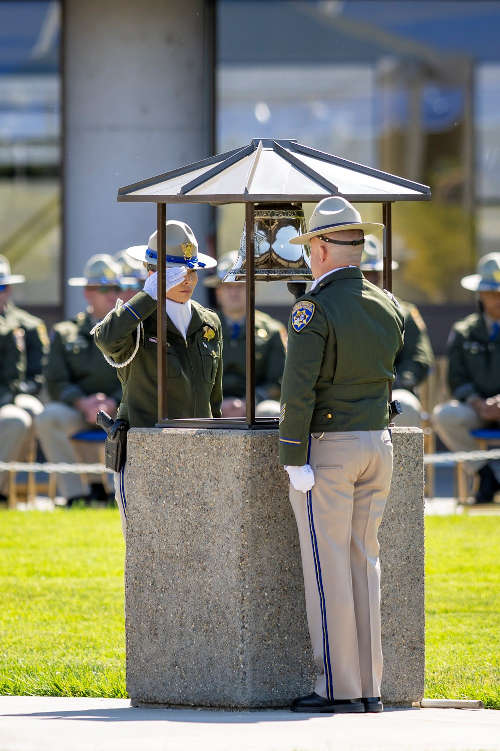
On Tuesday, Gov. Gavin Newsom attended the California Highway Patrol Annual Memorial Ceremony, paying tribute to the 232 uniformed members who have lost their lives in the line of duty since the department’s inception in 1929.
“We remember the officers who faced uncertainty and risk with resolve, not because they expected recognition, but because they believed in doing what is right. May their service to this state never be forgotten,” said Newsom.
The memorial ceremony at the CHP Academy in West Sacramento included an honor guard procession, laying of the wreath, rifle salute, roll call of the fallen and knelling of the memorial bell.
In memorial, Governor Newsom ordered flags to be flown at half-staff over the State Capitol and Capitol Annex Swing Space.

- Details
- Written by: LAKE COUNTY NEWS REPORTS
This week, Rep. Mike Thompson (D-CA-04) and Rep. Greg Steube (R-FL-17) announced that they have founded the bipartisan Natural Disaster Caucus.
Members of the Natural Disaster Caucus are dedicated to natural disaster preparation, response and relief.
Reps. Thompson and Steube will serve as co-chairs of the caucus, which will provide resources for members of Congress and their staff to help districts across our country prevent, prepare for, and respond to natural disasters.
“Every community across our country is at risk of natural disasters, whether it’s wildfires, hurricanes, floods, earthquakes, or other disasters. It just makes sense that we work together to improve the ways in which we prepare for disasters, respond to them, and ultimately deliver relief to survivors,” said Thompson. “It’s great to partner with my colleague Rep. Greg Steube to establish this bipartisan caucus to continue our work preventing and responding to disasters.”
“Millions of Americans are impacted every year by natural disasters. When trials come, our constituents deserve to know their leaders are working together on their behalf in order to help them rebuild. I am pleased to partner with my colleagues on the Natural Disaster Caucus to advance common sense policies that will better prepare our communities for when the next natural disaster strikes,” said Steube.
Natural disasters continue to impact Americans around the country. In 2024, there were 27 natural disasters in the United States, including droughts, floods, severe storms, cyclones, wildfires and winter storms.
These disasters led to over 500 deaths and incurred losses exceeding $180 billion.
The caucus founders said the nation must work to prepare for and respond to natural disasters to mitigate the widespread impacts.
Reps. Thompson and Steube founded the Natural Disaster Caucus following their successful effort to deliver disaster relief to survivors of wildfires in California’s Fourth District and hurricanes in Florida’s 17th District.
Last Spring, Rep. Thompson and Rep. Greg Steube (FL-17) led a bipartisan group of 218 Members of Congress to successfully advance a discharge petition which forced House Speaker Mike Johnson to bring their bill, the Federal Disaster Tax Relief Act, to the House floor for a vote.
The Federal Disaster Tax Relief Act supports the nearly 70,000 qualified survivors who suffered significant losses during three major federally declared California fires in 2015, 2017, and 2018 who received related settlement payments.
At the time, the historic advancement of Rep. Thompson and Rep. Steube’s petition marked only the third time a House discharge petition had succeeded in the 21st Century.
Their efforts succeeded as the Federal Disaster Tax Relief Act passed the Senate and was signed into law by President Biden at the end of 2024.
Thompson represents California’s Fourth Congressional District, which includes all or part of Lake, Napa, Solano, Sonoma and Yolo counties.
Members of the Natural Disaster Caucus are dedicated to natural disaster preparation, response and relief.
Reps. Thompson and Steube will serve as co-chairs of the caucus, which will provide resources for members of Congress and their staff to help districts across our country prevent, prepare for, and respond to natural disasters.
“Every community across our country is at risk of natural disasters, whether it’s wildfires, hurricanes, floods, earthquakes, or other disasters. It just makes sense that we work together to improve the ways in which we prepare for disasters, respond to them, and ultimately deliver relief to survivors,” said Thompson. “It’s great to partner with my colleague Rep. Greg Steube to establish this bipartisan caucus to continue our work preventing and responding to disasters.”
“Millions of Americans are impacted every year by natural disasters. When trials come, our constituents deserve to know their leaders are working together on their behalf in order to help them rebuild. I am pleased to partner with my colleagues on the Natural Disaster Caucus to advance common sense policies that will better prepare our communities for when the next natural disaster strikes,” said Steube.
Natural disasters continue to impact Americans around the country. In 2024, there were 27 natural disasters in the United States, including droughts, floods, severe storms, cyclones, wildfires and winter storms.
These disasters led to over 500 deaths and incurred losses exceeding $180 billion.
The caucus founders said the nation must work to prepare for and respond to natural disasters to mitigate the widespread impacts.
Reps. Thompson and Steube founded the Natural Disaster Caucus following their successful effort to deliver disaster relief to survivors of wildfires in California’s Fourth District and hurricanes in Florida’s 17th District.
Last Spring, Rep. Thompson and Rep. Greg Steube (FL-17) led a bipartisan group of 218 Members of Congress to successfully advance a discharge petition which forced House Speaker Mike Johnson to bring their bill, the Federal Disaster Tax Relief Act, to the House floor for a vote.
The Federal Disaster Tax Relief Act supports the nearly 70,000 qualified survivors who suffered significant losses during three major federally declared California fires in 2015, 2017, and 2018 who received related settlement payments.
At the time, the historic advancement of Rep. Thompson and Rep. Steube’s petition marked only the third time a House discharge petition had succeeded in the 21st Century.
Their efforts succeeded as the Federal Disaster Tax Relief Act passed the Senate and was signed into law by President Biden at the end of 2024.
Thompson represents California’s Fourth Congressional District, which includes all or part of Lake, Napa, Solano, Sonoma and Yolo counties.
- Details
- Written by: LAKE COUNTY NEWS REPORTS

LAKEPORT, Calif. — The expanding effort to end the high number of Indigenous people becoming crime victims was celebrated in a special Friday event.
The Lake County Tribal Health Consortium hosted its annual Missing and Murdered Indigenous Peoples Day event on Friday afternoon in Lakeport’s Xabatin Park.
The movement to raise awareness of the Missing and Murdered Indigenous Peoples, or MMIP, epidemic has grown stronger in recent years, thanks in part to events like the one Tribal Health hosts annually.
This year’s gathering had an attendance of 1,655 people, said Darnell Aparicio, Tribal Health’s public health outreach manager.
They came to watch Pomo dancers performing with Clear Lake and Mount Konocti in the background, enjoy lunch and tour 78 booths hosted by nonprofit service organizations and agencies such as Behavioral Health, the Lake County Sheriff’s Office, California Highway Patrol and many others.
Visitors were greeted with a display of red dresses, fluttering in the wind, representing the thousands of individuals whose stories have been added to the evidence of the crisis’ toll on Indian Country.
Those who attended also were given a black ink stamp of a hand, which is another symbol of MMIP.

Studies highlighted by the Bureau of Indian Affairs have found that the rates of murder, rape and other violent crimes are higher for Indigenous people than the national average.
Aparicio said Tribal Health placed the event’s focus on resilience, titling it, “Resilient Spirits Healing Together.”
“It really boils down to the fact that we experience a trickle-down effect — when a loved one goes missing or is taken by violence, our children lose out on a vital part of their culture,” Aparicio said. “The grief and loss ripple through generations, deeply impacting our families’ sense of identity, safety, and community belonging.”
He said Friday’s MMIP event and those like it “are essential steps in addressing the trauma and beginning the process of healing.”
Aparicio thanked the county’s agencies and leadership for their cooperation and collaboration, including the city of Lakeport allowing them to use Xabatin Park.
“This growing alliance represents a positive and necessary step forward in addressing and helping to combat the devastating plight of Missing and Murdered Indigenous People,” he said.
He added that they’re also deeply thankful to the community and its overwhelming support, not only regarding recognition “but to the urgent need for sustained awareness around this epidemic of epic proportions.”
Email Elizabeth Larson at

- Details
- Written by: Elizabeth Larson
NORTH COAST, Calif. — Redwood Region Resilient Inclusive Sustainable Economy, or RISE, has announced the preliminary selection of Catalyst Awardees who will receive a total of $9 million in funding to boost economic development throughout the Redwood Region.
With North Edge Financing as fiscal agent and the California Center for Rural Policy at Cal Poly Humboldt as regional convener, this California Jobs First initiative will support pre-development projects that align RRRISE’s 10-year Regional Roadmap.
“The Catalyst Fund represents critical investment in the future of Redwood Region’s rural economies,” says Susan Seaman, Program Director of North Edge. “These preliminary awards mark the beginning of projects that will leverage our key industry sectors and foster inclusive economic development and job growth for all Redwood Region residents.”
The Catalyst Awards support high-impact projects at two key stages: early-stage “exploratory” initiatives and near implementation-ready "last-mile" efforts. These awards position promising projects to compete for future regional, state, private and federal implementation funding, focusing on initiatives that advance the RRRISE Regional Roadmap's four key sectors: Arts, culture, and tourism; health and caregiving; renewable and resilient energy; and working lands and blue economy.
With over 70% of the Catalyst funding directed to projects led by priority and disinvested communities, officials said the selected awardees address critical regional challenges through sustainable food systems, renewable energy projects, affordable housing solutions, workforce training, cultural preservation, and forest management practices.
Many projects specifically target priority communities to overcome persistent barriers to economic advancement in rural and tribal areas.
The preliminary list of Catalyst Awardees includes:
• BLBS GRID Workforce Training Tiny Home Construction ($331,702): Building Lives By Building Structure Hoopa. Combining affordable housing construction with renewable energy integration while training Native American youth.
• Career Pathways: Fire, Forest, Fish & Facilities ($1,127,936): Trees Foundation, creating sustainable wage opportunities in natural resource jobs across three counties.
• Del Norte Performing Arts and Civic Center ($268,250): Partnership for Performing Arts, cultural hub serving as performance venue, educational space and emergency resource.
• Fire Lines & Fiber Bioregions: A Regional Wool Industry Cluster ($607,856): Kaos Sheep Outfit, developing sustainable fiber production and exploring a regional wool industry cluster.
• Lake County Healthcare Education and Simulator ($650,000): Lake County Economic Development Corp., Enhancing healthcare education and workforce development through simulation facilities.
• Middletown Rancheria Community RISE Project ($500,000): Middletown Rancheria of Pomo Indians of California, addressing tribal community challenges through housing, climate resilience, and cultural preservation.
• North Coast Resilient Food Systems Initiative ($2,306,574): Connecting Del Norte Meat Processing Facility, Hmong Association of Crescent City with North Coast Food System Network, North Coast Growers' Association to strengthen regional food systems.
• Redwood Corridor SEEDS Network ($450,000): North Coast Opportunities, creating community food hubs along Highway 101 to address food security and access.
• Tribal Energy Sovereignty Initiative ($795,316): Pinoleville Solar Port & Renewable Energy Workforce Development, Pinoleville Pomo Nation with Red Hills Bioenergy Facility & Central Wood Processing Plant ($345,316), Scotts Valley Energy Corp. to advance renewable energy solutions and workforce training.
• Timber & Workforce Development Initiative ($1,959,897): Three interconnected initiatives: Carving a Legacy: Tribal Traditions, Woodworking, and Workforce Development, Blue Lake Rancheria Tribe; Connecting Mass Timber to Regional Housing and Building Needs, Mad River Mass Timber; and Developing a Climate Forward Workforce and Innovation Pipeline, Forest WRX Alliance.
“The California Center for Rural Policy is proud to support this process as the Regional Convener,” said Dawn Arledge, executive director of CCRP. “These projects reflect RRRISE’s 150+ organization’s collaborative vision of and commitment to help rural and Tribal communities access the resources they need to thrive.”
Preliminary Catalyst Awardees will undergo contracting and compliance measures before receiving funding. Implementation is expected to begin in May of 2025, with completion by September 2026.
The Redwood Region RISE Collaborative and its four sector investment coordinators are committed to supporting these and the many other excellent economic development projects throughout the region.
The work of Redwood Region RISE is supported by the statewide initiative California Jobs First and has helped inform the newly released California Jobs First Economic Blueprint.
With North Edge Financing as fiscal agent and the California Center for Rural Policy at Cal Poly Humboldt as regional convener, this California Jobs First initiative will support pre-development projects that align RRRISE’s 10-year Regional Roadmap.
“The Catalyst Fund represents critical investment in the future of Redwood Region’s rural economies,” says Susan Seaman, Program Director of North Edge. “These preliminary awards mark the beginning of projects that will leverage our key industry sectors and foster inclusive economic development and job growth for all Redwood Region residents.”
The Catalyst Awards support high-impact projects at two key stages: early-stage “exploratory” initiatives and near implementation-ready "last-mile" efforts. These awards position promising projects to compete for future regional, state, private and federal implementation funding, focusing on initiatives that advance the RRRISE Regional Roadmap's four key sectors: Arts, culture, and tourism; health and caregiving; renewable and resilient energy; and working lands and blue economy.
With over 70% of the Catalyst funding directed to projects led by priority and disinvested communities, officials said the selected awardees address critical regional challenges through sustainable food systems, renewable energy projects, affordable housing solutions, workforce training, cultural preservation, and forest management practices.
Many projects specifically target priority communities to overcome persistent barriers to economic advancement in rural and tribal areas.
The preliminary list of Catalyst Awardees includes:
• BLBS GRID Workforce Training Tiny Home Construction ($331,702): Building Lives By Building Structure Hoopa. Combining affordable housing construction with renewable energy integration while training Native American youth.
• Career Pathways: Fire, Forest, Fish & Facilities ($1,127,936): Trees Foundation, creating sustainable wage opportunities in natural resource jobs across three counties.
• Del Norte Performing Arts and Civic Center ($268,250): Partnership for Performing Arts, cultural hub serving as performance venue, educational space and emergency resource.
• Fire Lines & Fiber Bioregions: A Regional Wool Industry Cluster ($607,856): Kaos Sheep Outfit, developing sustainable fiber production and exploring a regional wool industry cluster.
• Lake County Healthcare Education and Simulator ($650,000): Lake County Economic Development Corp., Enhancing healthcare education and workforce development through simulation facilities.
• Middletown Rancheria Community RISE Project ($500,000): Middletown Rancheria of Pomo Indians of California, addressing tribal community challenges through housing, climate resilience, and cultural preservation.
• North Coast Resilient Food Systems Initiative ($2,306,574): Connecting Del Norte Meat Processing Facility, Hmong Association of Crescent City with North Coast Food System Network, North Coast Growers' Association to strengthen regional food systems.
• Redwood Corridor SEEDS Network ($450,000): North Coast Opportunities, creating community food hubs along Highway 101 to address food security and access.
• Tribal Energy Sovereignty Initiative ($795,316): Pinoleville Solar Port & Renewable Energy Workforce Development, Pinoleville Pomo Nation with Red Hills Bioenergy Facility & Central Wood Processing Plant ($345,316), Scotts Valley Energy Corp. to advance renewable energy solutions and workforce training.
• Timber & Workforce Development Initiative ($1,959,897): Three interconnected initiatives: Carving a Legacy: Tribal Traditions, Woodworking, and Workforce Development, Blue Lake Rancheria Tribe; Connecting Mass Timber to Regional Housing and Building Needs, Mad River Mass Timber; and Developing a Climate Forward Workforce and Innovation Pipeline, Forest WRX Alliance.
“The California Center for Rural Policy is proud to support this process as the Regional Convener,” said Dawn Arledge, executive director of CCRP. “These projects reflect RRRISE’s 150+ organization’s collaborative vision of and commitment to help rural and Tribal communities access the resources they need to thrive.”
Preliminary Catalyst Awardees will undergo contracting and compliance measures before receiving funding. Implementation is expected to begin in May of 2025, with completion by September 2026.
The Redwood Region RISE Collaborative and its four sector investment coordinators are committed to supporting these and the many other excellent economic development projects throughout the region.
The work of Redwood Region RISE is supported by the statewide initiative California Jobs First and has helped inform the newly released California Jobs First Economic Blueprint.
- Details
- Written by: LAKE COUNTY NEWS REPORTS
UPDATE: Thompson's office reported on May 7 that the event is being rescheduled due to a death in Zandi's family.
LAKE COUNTY, Calif. — A virtual town hall this week will give community members a chance to ask questions about the economy as well as trade policies.
Rep. Mike Thompson will be hosting a live town hall via Zoom with Moody’s Analytics Chief Economist, Dr. Mark Zandi.
The town hall will take place via Zoom beginning at 6 p.m. Wednesday, May 7.
Follow this link to register.
The town hall also can be watched on Thompson’s Facebook page.
Thompson and Zandi will discuss the state of the economy and answer questions about how the Trump Administration’s economic and trade policies are affecting the community.
If you are not able to make the town hall but have any questions for Thompson, call him at 202-225-3311 or click here to email him.
Thompson represents California’s Fourth Congressional District, which includes all or part of Lake, Napa, Solano, Sonoma and Yolo counties.
LAKE COUNTY, Calif. — A virtual town hall this week will give community members a chance to ask questions about the economy as well as trade policies.
Rep. Mike Thompson will be hosting a live town hall via Zoom with Moody’s Analytics Chief Economist, Dr. Mark Zandi.
The town hall will take place via Zoom beginning at 6 p.m. Wednesday, May 7.
Follow this link to register.
The town hall also can be watched on Thompson’s Facebook page.
Thompson and Zandi will discuss the state of the economy and answer questions about how the Trump Administration’s economic and trade policies are affecting the community.
If you are not able to make the town hall but have any questions for Thompson, call him at 202-225-3311 or click here to email him.
Thompson represents California’s Fourth Congressional District, which includes all or part of Lake, Napa, Solano, Sonoma and Yolo counties.
- Details
- Written by: LAKE COUNTY NEWS REPORTS
- As heated tobacco products reenter the US market, evidence on their safety remains sparse – new study
- Supervisors to consider letters on legislation and federal cuts, amendments to million-dollar mental health agreement
- Lakeport City Council to consider water safety ordinance, updated utilities billing policy




