
 How to resolve AdBlock issue?
 News
NORTHERN CALIFORNIA — Days after a federal lawsuit was filed over the approval of a casino proposed by the Scotts Valley Pomo tribe in Vallejo, the Department of Interior said it is reconsidering the project.
The news was communicated to Scotts Valley and several tribes opposing its casino plan in a letter from the Department of Interior this week.
The Department of the Interior under the Biden Administration approved the fee-to-trust proposal for Scotts Valley’s project at the start of January, over the objections of tribes and other community leaders and residents in and around Vallejo.
Scotts Valley, based near Lakeport, proposes to build a $700 million, 400,000-square-foot mega casino complex, along with 24 homes and an administrative building, on a 128-acre site near I-80 and Highway 37.
The Yocha Dehe Wintun Nation said the site is on its ancestral land, and that the development will destroy important cultural sites, including a quarry.
On Monday, the Yocha Dehe, which owns Cache Creek Casino in Yolo County, and the Kletsel Dehe Band of Wintun Indians, a nongaming tribe based in Colusa County, filed a lawsuit challenging the Department of the Interior’s casino decision, as Lake County News has reported.
In response, Scotts Valley said the litigation is unmerited and called it an “anti-competitive lawsuit.”
In a letter to Scotts Valley Tribal Chairman Shawn Davis dated March 27, Scott Davis, senior advisor to new Secretary of the Interior Doug Burgum, explained that on Jan. 10, then-Principal Deputy Assistant Secretary - Indian Affairs Wizipan Garriot issued a decision to take the 160.33-acre parcel in the city of Vallejo in trust for gaming purposes for the Scotts Valley Band.
Scott Davis’ letter explained that the decision included two determinations — one that found that the site was eligible for gaming under the restored lands exception of the Indian Gaming Regulatory Act and the Department of the Interior's gaming eligibility determination regulations, and the second, that the site may be taken into trust pursuant to the Indian Reorganization Act
and the agency’s trust determination.
“The Gaming Eligibility Determination replaces a 2019 Indian Lands Opinion that was remanded to the Department on September 30, 2022,” Scott Davis said in his letter, referencing the outcome of a federal lawsuit Scotts Valley had filed against the Department of Interior.
Davis’ letter continued, “This letter is to inform you that, while the Trust Determination still stands and the Vallejo Site remains in trust, the Department is temporarily rescinding the Gaming Eligibility Determination for reconsideration.'”
That action, Davis said, is taken pursuant to law that gives the secretary of the Interior “broad authority to review and reconsider any decision of the Department.”
In this case, “The Secretary is concerned that the Department did not consider additional evidence submitted after the 2022 Remand. During the pendency of this reconsideration, neither the Tribe nor any other entity or person should rely on the Gaming Eligibility Determination,” Davis said.
The tribes that sued the Department of the Interior over the Vallejo casino project greeted the decision with optimism.
“For more than a year, we have requested that the Department of the Interior establish a fair, transparent, fact-based decision-making process in which all tribes can participate on equal footing,” said Yocha Dehe Chairman Anthony Roberts. “It’s hard to know why the Biden Administration refused to follow these basic principles, but we’re glad the incoming Administration is committed to getting it right. This is about more than just a single project. It is about ensuring all tribal voices are honored and heard.”
Roberts added, “Nothing is more important than our ancestral homelands, and to see them stripped away without consultation by the Biden Administration was extremely painful. We applaud Secretary Burgum for beginning the process to right that wrong, and we look forward to working with him to ensure our lands and cultural resources are protected for generations to come.”
Chairman Charlie Wright of the Kletsel Dehe Wintun Nation also lauded Interior’s decision.
“Kletsel Dehe is pleased that the Department of the Interior appears to be taking our concerns seriously, and we look forward to participating in a fair, transparent reconsideration process,” Wright said.
In response to the action, Scotts Valley Tribal Chairman Shawn Davis maintained, “The evidence supporting our tribe’s gaming approval under the restored lands exception is robust, well-documented, and consistent with prior rulings from the department and federal courts. It was the product of many years of thorough study and review. While we are disappointed in the arbitrary decision to reopen a review that already correctly granted our gaming rights, we know we will win on the merits. Our progress will continue towards the development of our homeland to the benefit of our members and our neighbors across Vallejo and Solano County.
Shawn Davis said Interior’s “unilateral reversal, based on the submission of materials by a competitor tribe, disrespects the sovereignty of the Scotts Valley Band and is inconsistent with law and appropriate process. It is unconscionable to reopen a final determination based solely on the objections of a competitor, especially considering they just repackage previously considered and rejected arguments. The greed of the Yocha Dehe Wintun Nation is disgusting. Despite their billions of dollars, they aren’t satisfied. The Scotts Valley Band will not be bullied, and we won’t back down.”
He added, “Scotts Valley’s restoration, federal recognition status, and demonstrated historical connection to the lands remain unchanged. Our tribe and the city of Vallejo have long been underdogs, and we are unimpeded in working together for a brighter future for all residents.
The Department of Interior invited the tribes and other interested parties to submit evidence and/or legal analysis regarding whether the Vallejo site qualifies as restored lands under federal laws.
To ensure that they have all of the relevant materials, they ask that any documents submitted after the September 2022 remand related to the federal course decision should resubmit them by providing them to the director of the Office of Indian Gaming, at 1849 C. Street NW, MS-3543, Washington, DC 20240, or atThis email address is being protected from spambots. You need JavaScript enabled to view it. .
The deadline for submissions is Friday, May 30.
For more information on the opposition to the project visit www.protecttribalhomelands.com.
To learn more about the studies conducted and the proposed project from Scotts Valley’s perspective, visit https://www.scottsvalleycasinoea.com/.
Email Elizabeth Larson atThis email address is being protected from spambots. You need JavaScript enabled to view it. . Follow her on Twitter, @ERLarson, and on Bluesky, @erlarson.bsky.social. Find Lake County News on the following platforms: Facebook, @LakeCoNews; X, @LakeCoNews; Threads, @lakeconews, and on Bluesky, @lakeconews.bsky.social.
The news was communicated to Scotts Valley and several tribes opposing its casino plan in a letter from the Department of Interior this week.
The Department of the Interior under the Biden Administration approved the fee-to-trust proposal for Scotts Valley’s project at the start of January, over the objections of tribes and other community leaders and residents in and around Vallejo.
Scotts Valley, based near Lakeport, proposes to build a $700 million, 400,000-square-foot mega casino complex, along with 24 homes and an administrative building, on a 128-acre site near I-80 and Highway 37.
The Yocha Dehe Wintun Nation said the site is on its ancestral land, and that the development will destroy important cultural sites, including a quarry.
On Monday, the Yocha Dehe, which owns Cache Creek Casino in Yolo County, and the Kletsel Dehe Band of Wintun Indians, a nongaming tribe based in Colusa County, filed a lawsuit challenging the Department of the Interior’s casino decision, as Lake County News has reported.
In response, Scotts Valley said the litigation is unmerited and called it an “anti-competitive lawsuit.”
In a letter to Scotts Valley Tribal Chairman Shawn Davis dated March 27, Scott Davis, senior advisor to new Secretary of the Interior Doug Burgum, explained that on Jan. 10, then-Principal Deputy Assistant Secretary - Indian Affairs Wizipan Garriot issued a decision to take the 160.33-acre parcel in the city of Vallejo in trust for gaming purposes for the Scotts Valley Band.
Scott Davis’ letter explained that the decision included two determinations — one that found that the site was eligible for gaming under the restored lands exception of the Indian Gaming Regulatory Act and the Department of the Interior's gaming eligibility determination regulations, and the second, that the site may be taken into trust pursuant to the Indian Reorganization Act
and the agency’s trust determination.
“The Gaming Eligibility Determination replaces a 2019 Indian Lands Opinion that was remanded to the Department on September 30, 2022,” Scott Davis said in his letter, referencing the outcome of a federal lawsuit Scotts Valley had filed against the Department of Interior.
Davis’ letter continued, “This letter is to inform you that, while the Trust Determination still stands and the Vallejo Site remains in trust, the Department is temporarily rescinding the Gaming Eligibility Determination for reconsideration.'”
That action, Davis said, is taken pursuant to law that gives the secretary of the Interior “broad authority to review and reconsider any decision of the Department.”
In this case, “The Secretary is concerned that the Department did not consider additional evidence submitted after the 2022 Remand. During the pendency of this reconsideration, neither the Tribe nor any other entity or person should rely on the Gaming Eligibility Determination,” Davis said.
The tribes that sued the Department of the Interior over the Vallejo casino project greeted the decision with optimism.
“For more than a year, we have requested that the Department of the Interior establish a fair, transparent, fact-based decision-making process in which all tribes can participate on equal footing,” said Yocha Dehe Chairman Anthony Roberts. “It’s hard to know why the Biden Administration refused to follow these basic principles, but we’re glad the incoming Administration is committed to getting it right. This is about more than just a single project. It is about ensuring all tribal voices are honored and heard.”
Roberts added, “Nothing is more important than our ancestral homelands, and to see them stripped away without consultation by the Biden Administration was extremely painful. We applaud Secretary Burgum for beginning the process to right that wrong, and we look forward to working with him to ensure our lands and cultural resources are protected for generations to come.”
Chairman Charlie Wright of the Kletsel Dehe Wintun Nation also lauded Interior’s decision.
“Kletsel Dehe is pleased that the Department of the Interior appears to be taking our concerns seriously, and we look forward to participating in a fair, transparent reconsideration process,” Wright said.
In response to the action, Scotts Valley Tribal Chairman Shawn Davis maintained, “The evidence supporting our tribe’s gaming approval under the restored lands exception is robust, well-documented, and consistent with prior rulings from the department and federal courts. It was the product of many years of thorough study and review. While we are disappointed in the arbitrary decision to reopen a review that already correctly granted our gaming rights, we know we will win on the merits. Our progress will continue towards the development of our homeland to the benefit of our members and our neighbors across Vallejo and Solano County.
Shawn Davis said Interior’s “unilateral reversal, based on the submission of materials by a competitor tribe, disrespects the sovereignty of the Scotts Valley Band and is inconsistent with law and appropriate process. It is unconscionable to reopen a final determination based solely on the objections of a competitor, especially considering they just repackage previously considered and rejected arguments. The greed of the Yocha Dehe Wintun Nation is disgusting. Despite their billions of dollars, they aren’t satisfied. The Scotts Valley Band will not be bullied, and we won’t back down.”
He added, “Scotts Valley’s restoration, federal recognition status, and demonstrated historical connection to the lands remain unchanged. Our tribe and the city of Vallejo have long been underdogs, and we are unimpeded in working together for a brighter future for all residents.
The Department of Interior invited the tribes and other interested parties to submit evidence and/or legal analysis regarding whether the Vallejo site qualifies as restored lands under federal laws.
To ensure that they have all of the relevant materials, they ask that any documents submitted after the September 2022 remand related to the federal course decision should resubmit them by providing them to the director of the Office of Indian Gaming, at 1849 C. Street NW, MS-3543, Washington, DC 20240, or at
The deadline for submissions is Friday, May 30.
For more information on the opposition to the project visit www.protecttribalhomelands.com.
To learn more about the studies conducted and the proposed project from Scotts Valley’s perspective, visit https://www.scottsvalleycasinoea.com/.
Email Elizabeth Larson at
2025.03.27 DOI Letter Re Reconsideration of Scotts Valley Jan. 10th Decision by LakeCoNews on Scribd
- Details
- Written by: Elizabeth Larson
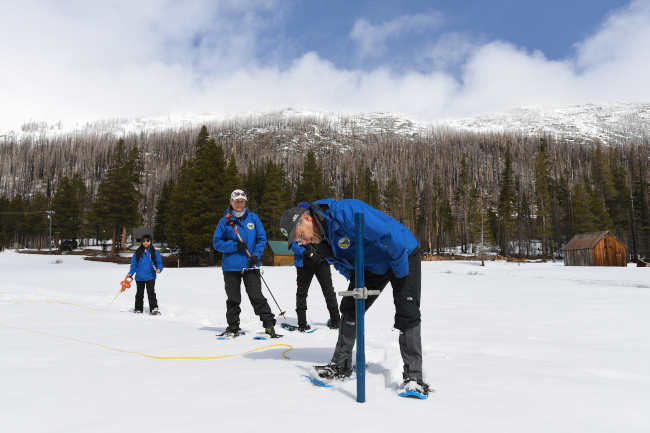
NORTHERN CALIFORNIA — Thanks to more rain and snow, California is winding down the wet season in better shape.
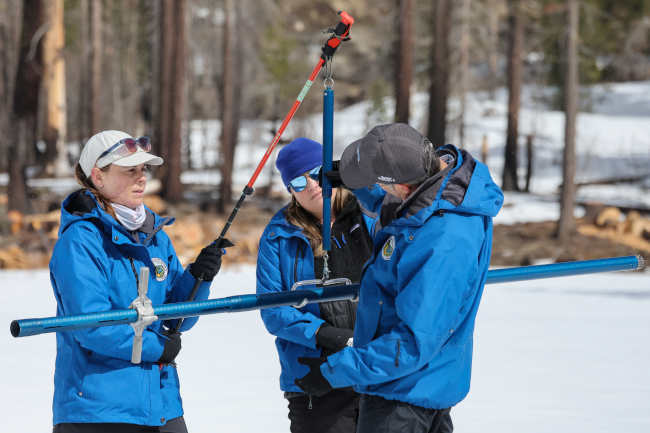
The Department of Water Resources, or DWR, on Friday conducted the April snow survey at Phillips Station.
The manual survey recorded 39.5 inches of snow depth and a snow water equivalent of 17 inches, which is 70 percent of average for this location.
The snow water equivalent measures the amount of water contained in the snowpack and is a key component of DWR’s water supply forecast.
Statewide, the snowpack is 90 percent of average for this date. Given the forecast for storms early next week, DWR conducted the in-person snow survey ahead of April 1.
While DWR’s Snow Surveys and Water Supply Forecasting Unit strives to conduct measurements as close to the first of the month as possible, DWR must schedule surveys around forecasted storm activity to ensure the safety of DWR staff and invited media.
The anticipated storms this weekend and early next week may boost the official April 1 average for statewide snowpack and DWR will provide an update on Tuesday.
The April measurement is a critical marker for water managers across the state, as it is typically the time when the snowpack reaches its maximum volume and begins to melt. DWR’s water supply forecasts use data from the April 1 snowpack to calculate how much snowmelt runoff will eventually make its way into California’s rivers and reservoirs.
While the snowpack has caught up to near normal, broad swaths of Southern California remain exceptionally dry and below average for rainfall. This includes the Los Angeles region, which as of today has only received 45 percent of its average rainfall so far this water year.
“It’s great news that our state’s snowpack has recovered from several weeks of extremely dry conditions in the heart of our winter storm season,” said DWR Director Karla Nemeth. “However, it’s not a wet year across the entire Sierra Nevada. The north has great snowpack, but snowpack is less than average in the central and southern part of the mountain range. That snowpack ultimately flows to the Delta, and the regional disparity affects how much water the State Water Project will be able to deliver.”
Measuring California’s snowpack is a key component that guides how California’s water supplies are managed. On average, California’s snowpack supplies about 30 percent of California’s water needs. Its natural ability to store water is why California’s snowpack is often referred to as California's “frozen reservoir.”
The data and measurements collected from DWR and its partners with the California Cooperative Snow Surveys Program help inform the water supply and snowmelt runoff forecasts, known as the Bulletin 120, that help water managers plan for how much water will eventually reach state reservoirs in the spring and summer. This information is also a key piece in calculating State Water Project allocation updates each month.
“We are very thankful to be ending March where we are now with more snow in the forecast next week, especially considering the dry start to the year,” said Andy Reising, manager of DWR’s Snow Surveys and Water Supply Forecasting Unit. “From major storms in November and December to a bone-dry January, then back to major storms in February and March, this year is a lesson in why we can never know for certain what our water picture will look like until we get to the end of our traditional wet season.”
Before storms in February and March, California was experiencing an excessively dry January that stalled critical growth of the snowpack and contributed to the dangerous conditions that led to devastating wildfires in Southern California.
To prepare for the next drought, DWR and Governor Newsom have taken actions to secure and protect California’s water supply in the face of growing climate extremes while balancing the needs of the environment.
In January, Governor Newsom issued an executive order to make it easier for local and regional agencies to maximize groundwater recharge, ensuring California is able to capture and store as much water as possible during high winter flows.
California is also working with the scientific community to adopt the best available science for the state’s water management. A recently released report shows that DWR’s investments in pursuing new strategies known as Forecast Informed Reservoir Operations, which provides flexible water management based on the newest forecasting technologies, can both reduce flood risk for downstream communities and benefit water supplies during dry periods.
This fall, the State Water Project received a new operating permit after years of working with the U.S. Bureau of Reclamation and partners at state and federal fish agencies, that will address the dual challenges of climate change impacts and endangered species protections.
Thanks to efforts to capture as much water as possible from this year’s storms, reservoirs across the state are currently 115 percent of average.
DWR conducts four or five snow surveys at Phillips Station each winter near the first of each month, January through April and, if necessary, May.
For California’s current hydrological conditions, visit https://cww.water.ca.gov.
- Details
- Written by: LAKE COUNTY NEWS REPORTS

CLEARLAKE, Calif. — Clearlake Animal Control has dozens of dogs waiting for their new families.
The shelter has 52 adoptable dogs listed on its website.
This week’s dogs include “Major,” a handsome 2 and a half year old German shepherd mix.
Major is a charming dog “with a heart full of love and a passion for playtime,” according to shelter staff.
He’s a sweet boy “known for his playful spirit and boundless energy, making every day an adventure. He walks straight on a leash, demonstrating his great manners and eagerness to explore the world around him,” the shelter said.
The shelter is located at 6820 Old Highway 53. It’s open from 9 a.m. to 6 p.m. Tuesday through Saturday.
For more information, call the shelter at 707-762-6227, email
This week’s adoptable dogs are featured below.
Email Elizabeth Larson at
- Details
- Written by: Elizabeth Larson

Recently Mars has had a few Earthly visitors. On March 1, NASA’s Europa Clipper flew within 550 miles (884 kilometers) of the Red Planet’s surface on its way out to Jupiter. On March 12, the European Space Agency’s Hera spacecraft flew within about 3,100 miles (5,000 kilometers) of Mars, and only 300 kilometers from its moon, Deimos.
Hera is on its way to study the binary asteroid Didymos and its moon Dimorphos. Next year, in May 2026, NASA’s Psyche mission is scheduled to buzz the Red Planet on its way to the metal-rich asteroid 16 Psyche, coming within a few thousand kilometers.
Why all these visits to Mars? You might at first think that they’re using Mars as an object of opportunity for their cameras, and you would be partially right. But Mars has more to give these missions than that.
The main reason for these flybys is the extra speed that Mars’ velocity around the Sun can give them. The idea that visiting a planet can speed up a spacecraft is not all that obvious, because the same gravity that attracts the spacecraft on its way towards the planet will exert a backwards force as the spacecraft leaves the planet.
The key is in the direction that it approaches and leaves the planet. If the spacecraft leaves Mars heading in the direction that Mars is traveling around the Sun, it will gain speed in that direction, slingshotting it farther into the outer solar system.
A spacecraft can typically gain several percent of its speed by performing such a slingshot flyby. The closer it gets to the planet, the bigger the effect. However, no mission wants to be slowed by the upper atmosphere, so several hundred kilometers is the closest that a mission should go. And the proximity to the planet is also affected by the exact direction the spacecraft needs to go when it leaves Mars.
Clipper’s Mars flyby was a slight exception, slowing down the craft — by about 1.2 miles per second (2 kilometers per second) — to steer it toward Earth for a second gravity assist in December 2026. That will push the spacecraft the rest of the way to Jupiter, for its 2030 arrival.
While observing Mars is not the main reason for their visits, many of the visiting spacecraft take the opportunity to use their cameras either to perform calibrations or to study the Red Planet and its moons.
During Clipper’s flyby over sols 1431-1432, Mastcam-Z was directed to watch the skies for signs of the interplanetary visitor. Clipper’s relatively large solar panels could have reflected enough sunlight for it to be seen in the Mars night sky, much as we can see satellites overhead from Earth.
Unfortunately, the spacecraft entered the shadow of Mars just before it came into potential view above the horizon from Perseverance’s vantage point, so the sighting did not happen. But it was worth a try.
Meanwhile, back on the ground, Perseverance is performing something of a cliff-hanger. “Sally’s Cove” is a relatively steep rock outcrop in the outer portion of Jezero crater’s rim just north of “Broom Hill.”
Perseverance made an approach during March 19 to 23, and has been exploring some dark-colored rocks along this outcrop, leaving the spherules behind for the moment. Who knows what Perseverance will find next?
Roger Wiens is principal investigator, SuperCam instrument / Co-Investigator, SHERLOC instrument at Purdue University.
- Details
- Written by: Roger Wiens
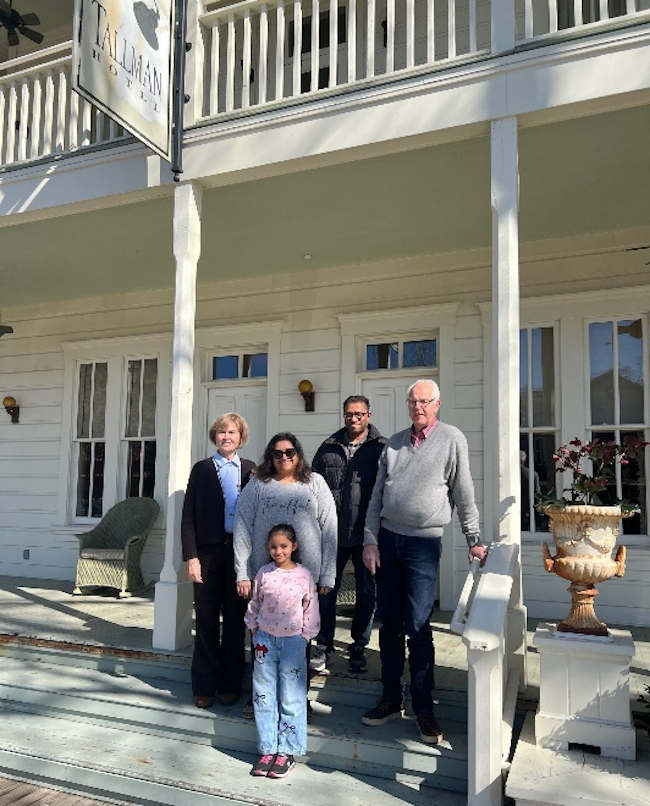
UPPER LAKE, Calif. — After two decades of being at the heart of renewal and redevelopment in downtown Upper Lake, the Tallman Hotel and Blue Wing Saloon restaurant have been sold.
Bernie and Lynne Butcher, who renovated the historic hotel and built the restaurant next door, said they have sold the two businesses to Amar and Rajvi Alapati. The sale closed Thursday.
“We’re proud of what we’ve been able to build here in Upper Lake over the past twenty years with the help of a first-rate, professional staff,” said Lynne Butcher. “In looking for new owners, it was important to us to find people with both the experience and the dedication to take the business to the next level.”
The Alapatis own eight other boutique hotels, most under the umbrella of Serenite Hotels. Their other properties include the Amador Hotel in Pioneer, located in the Gold Country; the Groveland Hotel and Narrow Gauge Inn, both located close to Yosemite National Park; and the Shaver Lake Village Hotel.
“Rajvi and I are delighted to add the Tallman and Blue Wing to our portfolio,” said Amar Alapati. “We were impressed from day one with the quality of the physical facilities here as well as the reputation that has been developed as the premier hotel and one of the top dining facilities in Lake County.”
He said they have rehired all of the existing staff, “and we’re committed to enhancing profitability while preserving the current high level of personal service.”
Rajvi Alapati noted the attention to detail the Butchers put into all aspects of the property and the five-star ratings she’s seen online for both the hotel and restaurant.
“We hope to leverage the economies of scale we can achieve with our other hotels and to find ways to bring even more people to experience the attractions of Lake County,” she said.
History and redevelopment
Rufus and Mary Tallman originally built a stage stop hotel and saloon on the site in the early 1870s. The Tallman House Hotel burned down in October 1895. It was rebuilt and called the Riffe’s Hotel when the Tallmans’ daughter, Winnyford, and her husband, Hank Riffe, took over the business in 1906.
A history of the site said the Tallmans also operated the original Blue Wing Saloon next door to the hotel. However, during Prohibition in the 1920s, the Riffes tore down the saloon.
After her husband’s death in 1937, Winnyford Riffe ran the hotel as a boarding house, and it was a retirement home in the 1940s and into the 1950s.
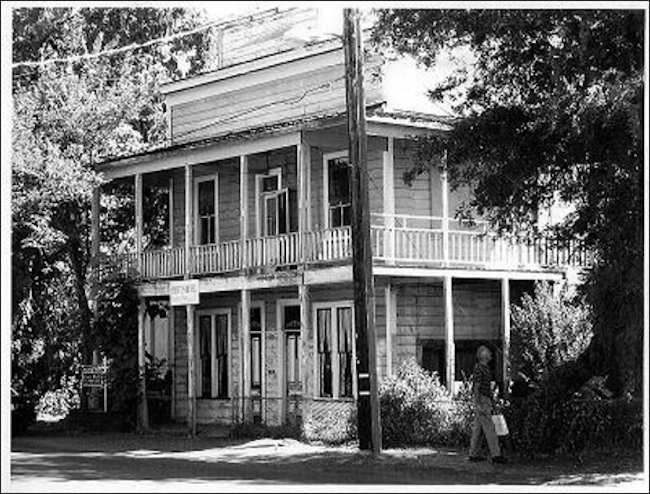
The hotel remained in place but was largely abandoned by 1962. For 40 years, the building was left in a declining state, looking like a backdrop from a western movie set.
In 2003, the Butchers purchased the building — then in the county’s Northshore redevelopment area — and set about a complete rebuild and expansion of the hotel that included green technology such as a geo-exchange cooling system while paying attention to the property’s history.
As part of the project, they built the new restaurant. The redeveloped property also includes the Riffe’s Meeting House, named for the hotel’s second owners.
The Butchers opened the Blue Wing in 2005 and the 17-room Tallman Hotel in 2006.
The Tallman Hotel was added as a point of historical interest in the California Register of Historical Resources in 2008.
Since then, the hotel and restaurant have won accolades for service and for their environmentally friendly operations, drawn visitors from around the region and beyond, been a hub of activity in downtown Upper Lake, and a popular spot for live music, events and meetings. The Butchers also developed the annual Blue Wing Blues Festival.
“We’re impressed with the special events hosted by the Tallman and the local music program in the Blue Wing. We’re looking forward to hosting the 18th annual Blue Wing Blues Festival over Labor Day weekend,” Amar Alapati said.
The Alapatis will be able to call on the Butchers as they get settled into the ownership of the Tallman and Blue Wing.
“We’ll be here to help them in the transition,” Bernie Butcher said. “I expect they’ll do whatever they can to preserve the essence of what we’ve built here while putting their own stamp on the business over time.”
The Butchers thanked the Lake County community for all the support they have received over the years.
They said they plan to remain active in many areas of local interest.
Email Elizabeth Larson at

- Details
- Written by: Elizabeth Larson
LAKE COUNTY, Calif. — The California Employment Development Department said Thursday that it has awarded $10 million as part of the Farmworker Advancement Program to 12 California based organizations — including one that serves Lake County — for creating programs that help farmworkers adjust to the ever-changing demands of the farming industry.
An additional $1 million has been awarded to Jobs for the Future to assist these organizations in the development and rollout of their programs.
The Thursday announcement comes just ahead of Cesar Chavez Day, which will be marked on March 31, in honor of Chavez’s work and legacy of supporting farm workers.
“We’re helping to increase equity and improve outcomes for farmworkers in a rapidly changing industry,” said Employment Development Director Nancy Farias. “This investment builds the necessary skills to prepare farmworkers for upward mobility and higher wages.”
Among the awardees is North Bay Jobs with Justice, which serves Lake, Napa and Sonoma counties.
The organization — which explains on its website that it’s a grassroots coalition of more than 30 labor and community organizations — will receive $985,200.
The Farmworker Advancement Program is a California Jobs First initiative. In partnership with its 13 economic regions, the state is investing in job creation, industrial strategy, and economic development initiatives to create a greener and more equitable economy that works for everyone.
The awarded organizations will develop programs that address farmworkers’ unique needs while adapting to ongoing changes in the agriculture industry.
These programs will provide hands-on training in industry-specific skills, including climate-smart technologies and techniques that leave our land, waters, and climate in better shape for the future. Participants will also receive essential training in English, math, and digital literacy.
By equipping workers with these skills, the programs aim to enhance job stability through career advancement, which can empower farmworkers and strengthen California’s agricultural workforce.
An additional $1 million has been awarded to Jobs for the Future to strengthen collaboration among the 12 awardees, share best practices, and support program development and implementation.
This added layer of support will help ensure programs are effective, sustainable, and aligned with industry needs — ultimately improving outcomes for farmworkers and their communities.
“This work supports grantees to provide critical skills training to farmworkers through innovative programming,” said Stewart Knox, secretary of the California Labor & Workforce Development Agency. “Agriculture is essential to California’s economy and is evolving in response to climate change and technological advancements. We are investing to build pathways for the current workforce to fill the jobs of tomorrow whether in agriculture or other industries.”
These grants are 100 percent federally funded by two separate grant awards totaling $9,999,054.89 and $1 million, respectively, from the U.S. Department of Labor.
In addition to North Bay Jobs with Justice, 2024-25 Farmworker Advancement Program grant recipients include the following:
• Caravanserai Project; Riverside County; $984,532.03.
• Center for Employment Training; Imperial, Monterey, San Diego, Santa Cruz, Riverside and Ventura counties; $985,200.
• Central Valley Opportunity Center Inc.; Madera, Merced and Stanislaus counties; $985,200.
• Equitable Food Initiative; Fresno, Santa Barbara, Monterey and Santa Cruz counties; $490,112.37.
• Five Keys Schools and Programs; Riverside County; $448,248.27.
• Fresno Building Healthy Communities; Fresno and Madera counties; $985,200.
• Kern/Inyo/Mono Consortium Workforce Development Area — Kern County Employer's Training Resource; Kern County; $985,200.
• Mixteco Indigena Community Organizing Project; Ventura County; $482,881.99.
• Sonoma County Fundación de la Voz de los Viñedos; Sonoma County; $712,756.73.
• University of California Riverside; Imperial, Riverside, San Diego, Santa Barbara and Ventura counties; $980,407.
• West Hills Community College District; Fresno and Kings counties; $974,116.50.
In addition, Jobs for the Future, which offers services statewide, received $1 million through the Farmworker Advancement Program Technical Assistance and Developmental Evaluation 2024-25 Program.
An additional $1 million has been awarded to Jobs for the Future to assist these organizations in the development and rollout of their programs.
The Thursday announcement comes just ahead of Cesar Chavez Day, which will be marked on March 31, in honor of Chavez’s work and legacy of supporting farm workers.
“We’re helping to increase equity and improve outcomes for farmworkers in a rapidly changing industry,” said Employment Development Director Nancy Farias. “This investment builds the necessary skills to prepare farmworkers for upward mobility and higher wages.”
Among the awardees is North Bay Jobs with Justice, which serves Lake, Napa and Sonoma counties.
The organization — which explains on its website that it’s a grassroots coalition of more than 30 labor and community organizations — will receive $985,200.
The Farmworker Advancement Program is a California Jobs First initiative. In partnership with its 13 economic regions, the state is investing in job creation, industrial strategy, and economic development initiatives to create a greener and more equitable economy that works for everyone.
The awarded organizations will develop programs that address farmworkers’ unique needs while adapting to ongoing changes in the agriculture industry.
These programs will provide hands-on training in industry-specific skills, including climate-smart technologies and techniques that leave our land, waters, and climate in better shape for the future. Participants will also receive essential training in English, math, and digital literacy.
By equipping workers with these skills, the programs aim to enhance job stability through career advancement, which can empower farmworkers and strengthen California’s agricultural workforce.
An additional $1 million has been awarded to Jobs for the Future to strengthen collaboration among the 12 awardees, share best practices, and support program development and implementation.
This added layer of support will help ensure programs are effective, sustainable, and aligned with industry needs — ultimately improving outcomes for farmworkers and their communities.
“This work supports grantees to provide critical skills training to farmworkers through innovative programming,” said Stewart Knox, secretary of the California Labor & Workforce Development Agency. “Agriculture is essential to California’s economy and is evolving in response to climate change and technological advancements. We are investing to build pathways for the current workforce to fill the jobs of tomorrow whether in agriculture or other industries.”
These grants are 100 percent federally funded by two separate grant awards totaling $9,999,054.89 and $1 million, respectively, from the U.S. Department of Labor.
In addition to North Bay Jobs with Justice, 2024-25 Farmworker Advancement Program grant recipients include the following:
• Caravanserai Project; Riverside County; $984,532.03.
• Center for Employment Training; Imperial, Monterey, San Diego, Santa Cruz, Riverside and Ventura counties; $985,200.
• Central Valley Opportunity Center Inc.; Madera, Merced and Stanislaus counties; $985,200.
• Equitable Food Initiative; Fresno, Santa Barbara, Monterey and Santa Cruz counties; $490,112.37.
• Five Keys Schools and Programs; Riverside County; $448,248.27.
• Fresno Building Healthy Communities; Fresno and Madera counties; $985,200.
• Kern/Inyo/Mono Consortium Workforce Development Area — Kern County Employer's Training Resource; Kern County; $985,200.
• Mixteco Indigena Community Organizing Project; Ventura County; $482,881.99.
• Sonoma County Fundación de la Voz de los Viñedos; Sonoma County; $712,756.73.
• University of California Riverside; Imperial, Riverside, San Diego, Santa Barbara and Ventura counties; $980,407.
• West Hills Community College District; Fresno and Kings counties; $974,116.50.
In addition, Jobs for the Future, which offers services statewide, received $1 million through the Farmworker Advancement Program Technical Assistance and Developmental Evaluation 2024-25 Program.
- Details
- Written by: LAKE COUNTY NEWS REPORTS
On Wednesday, the U.S. District Court for the Southern District of California held that California’s age-based restrictions on sales and transfers of firearms are constitutional.
The case, Chavez v. Bonta, was a Second Amendment challenge to California's law prohibiting licensed firearms dealers from selling, supplying, delivering, or giving possession or control of handguns or semiautomatic centerfire rifles to 18- to 20-year-olds who are not active members of law enforcement or the military.
The plaintiffs also challenged the law’s requirement that 18- to 20-year-olds must first pass a training course and obtain a hunting license before being able to purchase other long guns from licensed dealers.
“We applaud the court’s decision and celebrate this important victory in the fight against gun violence,” said California Attorney Rob General Bonta. “This commonsense regulation will continue to protect our young and vulnerable communities from preventable gun violence. I am proud of the countless hours my team has put in to defend this law and we know the fight is not over. We will continue to lead efforts to defend commonsense gun-safety laws and protect our communities from senseless violence.”
In 2018, the California Legislature enacted Senate Bill 1100 in response to the mass shooting by 19-year-old Nikolas Cruz at Marjory Stoneman Douglas High School in Parkland, Florida.
Among other provisions, SB 1100 restricts the sale, rental, delivery or transfer of long guns by firearms dealers to any person under the age of 21 unless the individual has a valid, unexpired hunting license issued by the Department of Fish and Wildlife, is an active-duty police officer or member of the Armed Forces or is an honorably discharged member of the Armed Forces.
In 2019, the Legislature passed Senate Bill 61, which limited the sale of semiautomatic centerfire rifles by firearms dealers to individuals under 21 with exceptions for certain active duty or reserve law enforcement officers and Armed Forces members.
A copy of the court order is published below.
The case, Chavez v. Bonta, was a Second Amendment challenge to California's law prohibiting licensed firearms dealers from selling, supplying, delivering, or giving possession or control of handguns or semiautomatic centerfire rifles to 18- to 20-year-olds who are not active members of law enforcement or the military.
The plaintiffs also challenged the law’s requirement that 18- to 20-year-olds must first pass a training course and obtain a hunting license before being able to purchase other long guns from licensed dealers.
“We applaud the court’s decision and celebrate this important victory in the fight against gun violence,” said California Attorney Rob General Bonta. “This commonsense regulation will continue to protect our young and vulnerable communities from preventable gun violence. I am proud of the countless hours my team has put in to defend this law and we know the fight is not over. We will continue to lead efforts to defend commonsense gun-safety laws and protect our communities from senseless violence.”
In 2018, the California Legislature enacted Senate Bill 1100 in response to the mass shooting by 19-year-old Nikolas Cruz at Marjory Stoneman Douglas High School in Parkland, Florida.
Among other provisions, SB 1100 restricts the sale, rental, delivery or transfer of long guns by firearms dealers to any person under the age of 21 unless the individual has a valid, unexpired hunting license issued by the Department of Fish and Wildlife, is an active-duty police officer or member of the Armed Forces or is an honorably discharged member of the Armed Forces.
In 2019, the Legislature passed Senate Bill 61, which limited the sale of semiautomatic centerfire rifles by firearms dealers to individuals under 21 with exceptions for certain active duty or reserve law enforcement officers and Armed Forces members.
A copy of the court order is published below.
2025.03.26 Dkt 159 Order Granting Ds MSJ Denying Ps MSJ by LakeCoNews on Scribd
- Details
- Written by: LAKE COUNTY NEWS REPORTS




