LAKE COUNTY, Calif. — The Lake County Symphony Association Wine Club is now taking applications for home brewers, winemakers and food and craft vendors for the 2025 Winefest coming to Library Park on June 7.
Participants are urged to register early to ensure a spot.
Home brewers and winemakers throughout Northern California have attended past Winefests, supplying samples of their product for judging by the public, in hopes of winning a coveted “Peoples’ Choice” award for their homemade beverages.
Home winemakers will also have the chance to enter their creations for judging by experts the evening prior to the Winefest.
Vendors selling food, arts and crafts, agricultural products, clothing and other products are another important part of the Winefest and help make it more enjoyable for everyone.
Vendor booth fees are $35. There is no booth fee for amateur wine and beer makers. Vendors and wine/beer makers may bring their own canopies or rent one for $25 to provide shade.
Home winemakers, beer makers and vendors wishing to participate should visit the Winefest website to download applications for the 2025 event.
You can also reach the Winefest website by going to the LCSA website and clicking on the Wine Club/Winefest tab.
Questions? Send to This email address is being protected from spambots. You need JavaScript enabled to view it..
On Wednesday, Gov. Gavin Newsom and California Attorney General Rob Bonta filed a lawsuit in federal court challenging President Donald Trump’s use of emergency powers to enact broad-sweeping tariffs that hurt states, consumers, and businesses.
The lawsuit argues that President Trump lacks the authority to unilaterally impose tariffs through the International Economic Emergency Powers Act, creating immediate and irreparable harm to California, the largest economy, manufacturing, and agriculture state in the nation.
These tariffs have disrupted supply chains, inflated costs for the state and Californians, and inflicted billions in damages on California’s economy, the fifth largest in the world.
“President Trump’s unlawful tariffs are wreaking chaos on California families, businesses, and our economy — driving up prices and threatening jobs. We’re standing up for American families who can’t afford to let the chaos continue,” said Newsom.
“The president’s chaotic and haphazard implementation of tariffs is not only deeply troubling, it’s illegal,” said Bonta. “As the fifth largest economy in the world, California understands global trade policy is not just a game. Californians are bracing for fallout from the impact of the President’s choices — from farmers in the Central Valley, to small businesses in Sacramento, and worried families at the kitchen table — this game the President is playing has very real consequences for Californians across our state. I am proud to go to bat alongside Governor Newsom to fight for California’s vibrant economy, businesses, and residents.”
The lawsuit, filed in the United States District Court for the Northern District of California, requests the court to declare the tariffs imposed by President Trump void and enjoin their implementation.
Since early February, the Trump Administration has issued over a dozen executive orders under the International Emergency Economic Powers Act of 1977, or IEEPA, to impose tariffs that have sent shockwaves through financial markets, businesses, and consumers in every corner of the globe.
The IEEPA gives the president authority to take certain actions if he declares a national emergency in response to a foreign national security, foreign policy, or economic threat. The law, which was enacted by Congress in 1977, specifies many different actions the president can take, but tariffs aren’t one of them. In fact, this is the first time a president has attempted to rely on this law to impose tariffs.
Claiming authority under the IEEPA, President Trump has issued multiple executive orders to impose, pause, re-start, and modify 25% tariffs on Mexico and Canada and a universal 10% tariff on every other U.S. trading partner.
The president’s actions have goaded China into a full-blown trade war, with tariffs reaching 145% on Chinese goods, and China imposing reciprocal 125% tariffs on U.S. goods.
Additionally, President Trump has imposed individualized reciprocal tariffs of up to 50% on nearly 90 specific countries; they are currently paused for 90 days before going into effect. Once the 90-day “pause” expires, the harm will only compound further. And new tariffs are being contemplated or announced nearly every day.
To justify his tariffs, the president has declared national emergencies and extended prior declared emergencies beyond the bounds of reason. But with or without emergencies, the president does not have the power to levy tariffs under the IEEPA, according to Bonta and Newsom.
In the lawsuit filed Wednesday, Bonta and Newsom challenge the president’s use of the IEEPA to levy those tariffs, arguing that the IEEPA does not authorize the president to impose these tariffs.
The emergency tariffs challenged under the lawsuit are projected to, at a minimum, shrink the U.S. economy by $100 billion annually, increase inflation by 1.3%, and cost the average American family $2,100.
The economic impact of the president’s tariffs could have resounding impacts on California’s economy, budget and consumers, Bonta and Newsom argue. California is a significant and frequent purchaser of goods impacted by the tariffs and the projected increase in cost to the state is significant.
California’s gross domestic product was $3.9 trillion in 2023, making it 50% bigger than the GDP of the nation’s next-largest state, Texas. The state drives national economic growth and also sends over $83 billion more to the federal government than it receives in federal funding.
California is the leading agricultural producer in the country and is also the center for manufacturing output in the United States, with over 36,000 manufacturing firms employing over 1.1 million Californians.
The Golden State’s manufacturing firms have created new industries and supplied the world with manufactured goods spanning aerospace, computers and electronics, and, most recently, zero-emission vehicles.
California engaged in nearly $675 billion in two-way trade in 2024, supporting millions of jobs throughout the state. California’s economy and workers rely heavily on this trade activity, particularly with Mexico, Canada, and China — the state’s top three trade partners. Over 40% of California imports come from these countries, totaling $203 billion of the more than $491 billion in goods imported by California in 2024.
These countries are also California’s top three export destinations, buying nearly $67 billion in California exports, which was over one-third of the state’s $183 billion in exported goods in 2024.
The lawsuit invokes the U.S. Supreme Court’s major questions doctrine, which holds that in novel matters of vast economic and political significance, federal agencies and the executive branch must have clear and specific authorization from Congress.
In recent years, the court has applied this standard to strike down major initiatives, including President Obama’s Clean Power Plan and President Joe Biden’s student loan forgiveness program, ruling that novel executive actions with broad impacts on the national economy cannot rest on vague statutory authority.
The complaint filed Wednesday alleges that the Constitution expressly gives the authority to impose tariffs to Congress, not the president, and the IEEPA does not provide the required congressional authorization for President Trump to impose tariffs — Congress enacted the IEEPA to limit Presidential authority and to prevent Presidential abuse of power — not to give the President these powers.
The complaint asks the court to declare that tariff orders made under the purported authority of the IEEPA are unlawful and void and to halt DHS and CPB from implementing and enforcing these orders.
Americans at all wealth levels are more likely to die sooner than their European counterparts, with even the richest U.S. citizens living shorter lives than northern and western Europeans. That is the key finding of our new study, published in the New England Journal of Medicine.
We also found that while the wealthiest Americans live longer than the poorest, the wealth-mortality gap in the U.S. is far more pronounced than in Europe.
We analyzed survey data from 73,838 adults ages 50 to 85 across the United States and 16 European countries over a 12-year period and compared how long people across the wealth spectrum lived during the course of our study. The 16 European countries are grouped into European regions: northern and western, southern and eastern Europe.
Our research revealed that people in the wealthiest 25% of the study population across the U.S. and Europe were 40% less likely to die during the study period than the poorest quarter of people. The wealthiest 25% of people in northern and western Europe had mortality rates that were about 35% lower than participants in the wealthiest quartile in the U.S. For those from southern Europe, during the study period this value ranged from 24% to 33%. For those from eastern Europe, the value ranged from 1% to 7%. The poorest individuals in the U.S. appear to have the worst survival, including when compared with the poorest quarter of people in each European region.
Our study also reveals a wider wealth-mortality gap in the U.S. when compared with Europe. In other words, personal wealth does buy more years of life in the U.S. than in Europe. These findings suggest that personal wealth alone is not enough to compensate for other factors that tend to affect how long people live, such as health behaviors like smoking or heavy drinking, education or social support.
At its core, our research suggests that health outcomes are shaped by much more than just health care systems. It is likely that economic and social policies − from education and employment to housing and food security − play a crucial role in determining how long people live, including across the wealth distribution.
European countries have found ways to reduce health disparities without dramatically increasing health spending. By distributing health-promoting resources more equally across wealth groups, these nations may have created environments where longevity is less dependent on individual wealth.
What still isn’t known
While our study shows clear longevity differences between Americans and Europeans across wealth levels, more work still needs to be done to determine which specific aspects of European social systems − whether health care delivery, education access, retirement security or tax policies − most effectively protect health regardless of personal wealth.
Pinpointing exactly how these factors interact with wealth to influence health outcomes would allow researchers to identify which European policies could be most successfully adapted to improve longevity for all Americans.
What’s next
Looking ahead, we plan to identify which of those policy levers might be most effective in reducing mortality gaps.
The Research Brief is a short take on interesting academic work.
Photo Illustration by Gabe Hongsdusit, CalMatters; Larry Valenzuela CalMatters/CatchLight Local The California DMV routinely allows dangerous drivers with horrifying histories to continue to operate on our roadways. Too often they go on to kill. Many keep driving even after they kill. Some go on to kill again.
This story was originally published by CalMatters. Sign up for their newsletters.
Court research by Robert Lewis, Lauren Hepler, Anat Rubin, Sergio Olmos, Cayla Mihalovich, Ese Olumhense, Ko Bragg, Andrew Donohue and Jenna Peterson.
Ivan Dimov was convicted of reckless driving in 2013, after fleeing police in Washington state while his passenger allegedly dumped heroin out the window. Before that, he got six DUIs in California over a six-year period. None of that would keep him off the road.
The California Department of Motor Vehicles reissued him a driver’s license in 2017. The next year, on Christmas Eve, he drove drunk again, running stop signs and a traffic light in midtown Sacramento, going more than 80 mph, court records show. He T-boned another car, killing a 28-year-old man who was going home to feed the cat before heading to his mom’s for the holiday.
Kostas Linardos had 17 tickets — including for speeding, reckless driving and street racing — and had been in four collisions. Then, in November 2022, he gunned his Ram 2500 truck as he entered a Placer County highway and slammed into the back of a disabled sedan, killing a toddler, court records show. He’s now facing felony manslaughter charges.
In December of last year, while that case was open, the DMV renewed his driver’s license.
Ervin Wyatt’s history behind the wheel spreads across two pages of a recent court filing: Fleeing police. Fleeing police again. Running a red light. Causing a traffic collision. Driving without a license, four times. A dozen speeding tickets.
Yet the DMV issued him a license in 2019. Wyatt promptly got three more speeding tickets, court records show. Prosecutors say he was speeding again in 2023 when he lost control and crashed into oncoming traffic, killing three women. He’s now facing murder charges in Stanislaus County.
The California Department of Motor Vehicles routinely allows drivers like these — with horrifying histories of dangerous driving, including DUIs, crashes and numerous tickets — to continue to operate on our roadways, a CalMatters investigation has found. Too often they go on to kill. Many keep driving even after they kill. Some go on to kill again.
With state lawmakers grappling with how to address the death toll on our roads, CalMatters wanted to understand how California handles dangerous drivers. We first asked the district attorneys for all 58 counties to provide us with a list of their vehicular manslaughter cases from 2019 through early last year. Every county but Santa Cruz provided the information.
Because California has no centralized court system and records aren’t online, we then traveled to courthouses up and down the state to read through tens of thousands of pages of files. Once we had defendants’ names and other information, we were able to get DMV driver reports for more than 2,600 of the defendants, providing details on their recent collisions, citations and license status.
The court records and driving histories reveal a state so concerned with people having access to motor vehicles for work and life that it allows deadly drivers to share our roads despite the cost. Officials may call driving a privilege, but they treat it as a right — often failing to take drivers’ licenses even after they kill someone on the road.
We found nearly 40% of the drivers charged with vehicular manslaughter since 2019 have a valid license.
That includes a driver with two separate convictions for vehicular manslaughter, for crashes that killed a 16-year-old girl in 2009 and a 25-year-old woman in 2020. In July of last year, the DMV issued him a driver’s license.
The agency gave licenses to nearly 150 people less than a year after they allegedly killed someone on the road, we found. And while the agency has since suspended some of those, often after a conviction, the majority remain valid. In Santa Clara County, a man prosecutors charged with manslaughter got his current license just a month and a half after the collision that killed a mother of three young children.
And many drivers accused of causing roadway deaths don’t appear to have stopped driving recklessly. Records show that nearly 400 got a ticket or were in another crash — or both — after their deadly collisions.
A commercial driver drove his semi truck on the wrong side of the road into oncoming traffic, killing a motorcyclist in Kern County in 2021. Less than a year later, he still had a valid license when he barreled his semi into slow-moving traffic, hitting four vehicles and killing a woman in Fresno County, records show. Another man, sentenced to nine years in prison for killing two women while driving drunk, got his privileges restored by the DMV after being paroled, only to drive high on meth in Riverside and weave head-on into another car, killing a woman.
“It is somewhat shocking to see how much you can get away with and still be a licensed driver in the state of California,” Placer County District Attorney Morgan Gire said. “I don’t think anyone fully understands what you need to do behind the wheel to lose your driving privilege.”
Almost as interesting as the information in the drivers’ DMV records is what’s not there.
Hundreds of drivers’ DMV records simply don’t list convictions for manslaughter or another crime related to a fatal crash, we found. The apparent error means some drivers who should have their driving privileges suspended instead show up in DMV records as having a valid license.
The cases we reviewed cut across demographics and geography. Defendants include farmworkers and a farm owner. They include off-duty police officers and people with lengthy rap sheets, drivers who killed in a fit of rage and others whose recklessness took the lives of those they loved most — high school sweethearts, siblings, children. The tragedies span this vast state. From twisty two-lane mountain roads near the Oregon border to the dusty scrubland touching Mexico. From the crowded streets of San Francisco to the highways of the Inland Empire. From Gold Country, to timber country, to Silicon Valley, to the almond capital of the world. So much death. More people than are killed by guns.
Dangerous drivers are able to stay on the roads for many reasons. The state system that targets motorists who rack up tickets is designed to catch clusters of reckless behavior, not long-term patterns. And while there are laws requiring the DMV to suspend a driver’s license for certain crimes, like DUIs, there is no such requirement for many vehicular manslaughter convictions.
It’s often up to the DMV whether to act. Routinely it doesn’t.
The DMV declined to make its director, Steve Gordon — who has been in charge since Gov. Gavin Newsom appointed him in 2019 — available for an interview to discuss our findings.
Chris Orrock, a DMV spokesperson, said the agency follows the law when issuing licenses. “We use our authority as mandated and as necessary,” he said.
Even when the DMV does take away motorists’ driving privileges, state officials, law enforcement and the courts are often unable or unwilling to keep them off the road. We found cases where drivers racked up numerous tickets while driving on a suspended license and faced little more than fines before eventually causing a fatal crash, even though authorities could have sent them to jail.
Taking away someone’s driving privilege is no small decision. It can consign a family to poverty, affecting job prospects, child care and medical decisions.
Still, the stakes couldn’t be higher. More than 20,000 people died on the roads of California from 2019 to early 2024.
Kowana Strong thinks part of the problem is that lawmakers and regulators are too quick to treat fatal crashes as an unfortunate fact of life, as opposed to something they can address.
Her son Melvin Strong III — who went by his middle name, Kwaun — was finishing college and planning to start a master’s program in kinesiology when he was killed by Dimov, the driver with six prior DUI convictions. Kwaun was a bright and innocent young man, she said, just starting his life.
“It’s just another accident as far as they’re concerned,” Kowana Strong said.
Holes in the DMV’s point system
Young people think they’re invincible. It’s the old who know how unfair life is, Jerrod Tejeda said.
His daughter Cassi Tejeda was just 22. She was months from graduating from Chico State with a bachelor’s degree in history and a plan to be a teacher. Outgoing and athletic, she wanted to travel, see the world and make her own life.
She had a girlfriend who was visiting. Courtney Kendall was 24 and a student at Louisiana State University.
On a Sunday afternoon in January 2022, a Volvo SUV topping speeds of 75 mph ran a red light and smashed into their Jeep, court records show. The collision killed them both. “The most difficult part besides the incident is every day that goes by you're always wondering what if. What would they be doing today?” Jerrod Tejeda said. “Would they be married? Would they have developed into the career that they chose? Where would she be living?” Tanya Kendall lamented not being there to protect her daughter, hold her hand or say goodbye.
“Instead, I was left with the unbearable task of choosing what outfit she would be buried in. Buried, Your Honor. Not the gown she would wear to her graduation from LSU — the one she will never attend,” the mother wrote in a letter to a Butte County judge, adding that she and her husband stood in their daughter’s place, accepting her diploma.
Such pain was preventable.
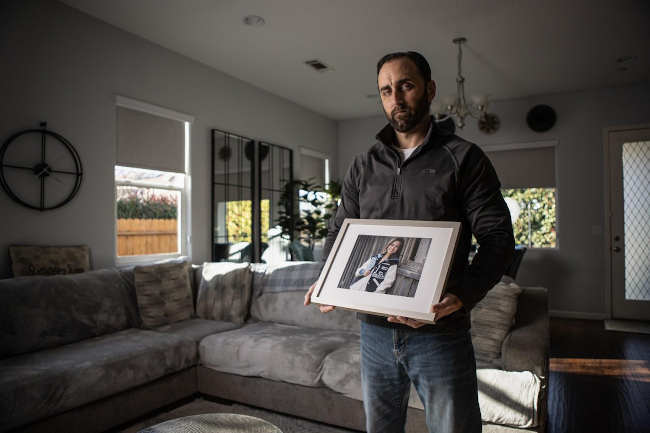
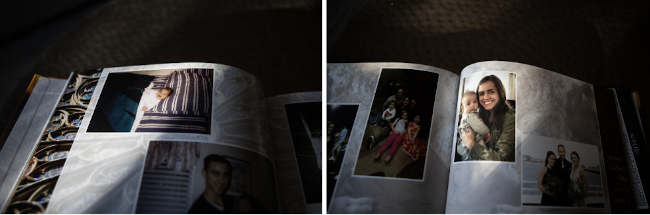
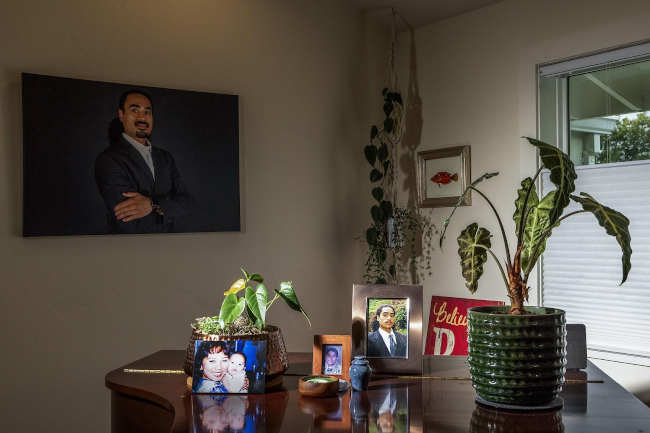
Jerrod Tejeda holds a framed photo of his daughter Cassi Tejeda, at his home in Visalia on March 6, 2025. Cassi was killed by a drunk driver with two prior DUIs in January of 2022. Photo by Larry Valenzuela, CalMatters/CatchLight Local A scrapbook of photographs of Cassi Tejeda on the table of Jerrod Tejeda’s home in Visalia on March 6, 2025. Cassi was killed by a drunk driver with two prior DUIs in January of 2022. Photos by Larry Valenzuela, CalMatters/CatchLight Local The driver of the Volvo, Matthew Moen, had a blood alcohol level more than three times the legal limit, according to court filings. And it wasn’t his first time drinking and driving. Moen was caught driving drunk in Oregon in 2016. He never completed the requirements of a diversion program and had an outstanding warrant at the time of the fatal crash, the Butte County district attorney’s office said. In January 2020, he was convicted of DUI in Nevada County for driving with a blood alcohol level more than twice the legal limit, given a couple weeks in jail and put on probation for three years.
His license was valid at the time of the fatal 2022 crash, records show.
Across the country, states grapple with how to effectively spot and punish drivers who could be a danger on the road. Often they rely on a basic point system, with drivers accruing points for various types of traffic violations and thresholds for when the state will take away a motorist’s driving privileges. But like many, California has such high limits that drivers with a pattern of reckless behavior can avoid punishment.
The state suspends a driver’s license for accumulating four points in a year, six points in two years or eight points in three years. What does it take to get that many points? Using a cellphone while driving is zero points. A speeding ticket is a point. Vehicular manslaughter is two points.
Between March 2017 and March 2022, Trevor Cook received two citations for running red lights, got two speeding tickets and was deemed responsible for two collisions, including one in which someone was injured, court records show. (A third red-light ticket was dismissed.) At-fault collisions add a point to a driver’s license, according to the DMV. But the incidents were spaced out enough that none resulted in a suspension.
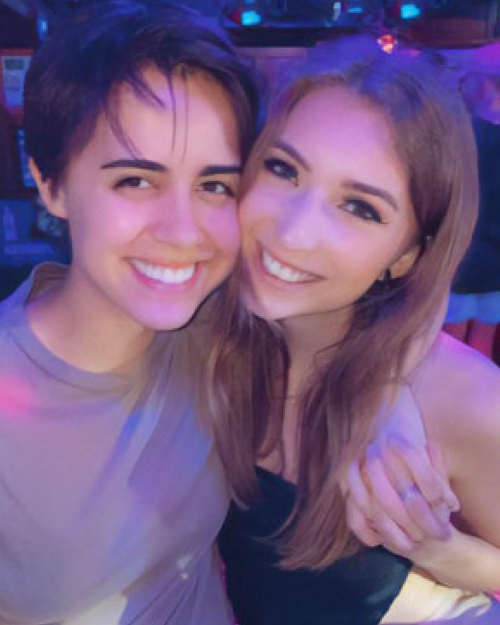
Cassi Tejeda and Courtney Kendall. Photo via Butte County District Attorney So Cook had a valid license on April 14, 2022, just a month after his last speeding ticket, when he blew through a Yolo County stop sign at more than 100 mph.
At that exact moment, Prajal Bista passed through the intersection, on his way to work after dinner and a movie with his wife, according to details of the crash that prosecutors included in court filings. Bista was driving the speed limit and on track to make it to work 30 minutes early.
The force of the collision nearly split Bista’s Honda Civic in half. Investigators determined Bista had been wearing his seat belt, but the crash tore it apart. They found his body 75 feet from the intersection.
On March 28, 2024, Cook pleaded no contest to felony vehicular manslaughter.
Just a month later, on April 30, the DMV issued Cook his current driver’s license, agency records show. Less than two weeks after that, he got a ticket for disobeying a traffic signal.
Melinda Aiello, chief deputy district attorney in Yolo County, said her office didn’t know anything about the new license or the red-light ticket until contacted by CalMatters. What’s more, the manslaughter conviction — like hundreds of others we found — isn’t listed on Cook’s driving record.
Cook’s license was still listed as valid in California DMV records as of early 2025. But for now, he’s off the roadways: Last summer, Cook started serving time in state prison.
“It’s stunning to me that eight months later his license is still showing as valid and the conviction for killing someone while driving is not reflected in his driving record,” Aiello said. “You killed somebody. I’d think there might be some license implications.”
Orrock, the DMV spokesperson, said he couldn’t speak directly to why so many convictions are missing. But, he said, “we acknowledge that the process and coordination between the judicial system and the DMV must continually evolve to address any gaps that have been identified. And we’re looking into that.”
Kill someone, get your license back
There are laws requiring the DMV to suspend a driver’s license for various convictions. A first DUI conviction, for example, is a 6-to-10-month suspension. Felony vehicular manslaughter is a three-year loss of driving privileges. The agency isn’t necessarily required to give a license back if its driver safety branch deems a motorist too dangerous to drive, agency officials said.
But CalMatters found the agency regularly gives drivers their licenses back as soon as the legally required period ends. And once crashes, tickets and suspensions fall off a driver’s record after a few years, it’s often as if the motorist’s record is wiped clean. So even if the driver gets in trouble again, the agency often treats any future crashes and traffic violations as isolated incidents, not as part of a longer pattern of reckless driving.
Perhaps that’s why Joshua Daugherty is licensed to drive in California.
In July 2020, Daugherty drifted onto the highway shoulder while driving near Mammoth Lakes, overcorrected to the left and lost control, court filings show. His Toyota Tacoma cut across the lane into oncoming traffic, where an SUV broadsided it. Daugherty’s girlfriend, 25-year-old Krystal Kazmark, died. Police noted that Daugherty’s eyes were red and watery and his speech was slurred when they arrived. He told officers that he’d smoked “a couple of bowls” of marijuana earlier in the day, according to records filed in court.
Kazmark’s mother was devastated. Like other victim relatives we spoke to for this story, Mary Kazmark tried as best she could to summarize a life into a few words — an impossible task. Her daughter liked to sing, travel, cook, draw, snow-ski, water-ski, wakeboard, hike, read, entertain friends and plan parties. She was a responsible kid, her mother said, always the designated driver with her friends. She oversaw guest reservations at one of the Mammoth Lakes lodges.
Mary Kazmark said she tracked down Daugherty on the phone a few days after the crash.
“He just said, ‘I can’t believe this happened again.’ And I was like, ‘What do you mean?’”
She eventually learned it wasn’t the first time Daugherty’s driving had killed.
In August 2009, in a strikingly similar incident, Daugherty was speeding along a Riverside County highway when his Ford Expedition drifted onto the shoulder. Witnesses told police he veered back to the left, lost control, hit a dirt embankment and went airborne, the SUV flipping onto its roof. A 16-year-old girl riding in the back died. Daugherty was convicted of misdemeanor vehicular manslaughter. He was sentenced to 180 days in custody and three years’ probation, according to a summary of the case filed in court.
Because of the earlier manslaughter conviction, police recommended he be charged with murder for the death of Krystal Kazmark. But the Mono County district attorney’s office charged him with a mere misdemeanor.
Josh Daugherty and Krystal Kazmark. Photo courtesy of Mary Kazmark Felony charges typically require a prosecutor to prove “gross negligence.” A prosecutor in another county described the difference between a felony and a misdemeanor this way: A felony is one in which you tell the average person the facts and they say, “Wow, that’s really dangerous.” A misdemeanor is one which they say, “That’s dumb but I’ve probably done it.”
The Mono County district attorney’s office refused to comment on the case, because the prosecutor and the elected DA at the time have both since retired. The office did provide a prepared statement explaining the charging decision. “It was determined that there was not a substantial likelihood of conviction at trial,” it said.
Daugherty pleaded guilty and was convicted in January 2023. He was sentenced to a year in jail. The DMV suspended his driving privileges after the fatal 2020 crash, a DMV report shows. But losing his license wasn’t enough to keep Daugherty off the road, records show.
Two months after his conviction for killing Kazmark, before he reported to jail, police caught him driving on a suspended license.
Still, the DMV reissued Daugherty a license in July 2024.
To recap: That’s two convictions for two dead young women, plus a conviction for driving on a suspended license, and the California DMV says Daugherty can still share the road with you.
“It’s so sad. You make a mistake and then you don’t learn from it and then you cause another person to lose their life,” Mary Kazmark said. “It’s unbelievable that he can continue to drive.”
Orrock said the DMV couldn’t comment on individual drivers.
When law enforcement reports a fatal crash, the agency’s driver safety branch flags all drivers who might be at fault. It then looks into the collision and decides whether the agency should suspend those motorists’ driving privileges. If the driver contests the action, there’s a hearing that could include witness testimony. Suspensions are open-ended. Drivers need to ask for their license back, and agency personnel decide whether the suspension should end or continue. These discretionary suspensions typically last for about a year.
And while officials said the DMV can continue a suspension if they think a driver poses a danger, Orrock said they need to give drivers an opportunity to get their license back. He said there’s no process in the state “to permanently revoke a license.”
Get your license back, get in trouble again
Roughly 400 drivers accused of causing a fatal crash since 2019 received a ticket, got in another collision or did both after the date they allegedly killed someone on the road. (The reports don’t show whether the drivers were found at fault, only that they were involved in an accident.) That’s about 15% of the drivers for whom we could get DMV reports.
Drivers like William Beasley.
From 2011 to 2016, Beasley collected five speeding tickets and a citation for running a red light in Sacramento County, court records show. Then around 9 a.m. on a sunny Tuesday in October 2019, he killed a man.
William and Deborah Hester were crossing the street to go to a dentist appointment at a veterans facility when Beasley’s silver pickup sped toward them. They thought they would make it across. But the truck didn’t stop. At the last minute, William Hester shoved his wife out of the way. She heard the truck smash into her husband’s body and screamed, according to court records.
Beasley still didn’t stop. He fled the area and tried to hide his truck. Investigators used nearby cameras and license plate readers to track him down days later. Beasley admitted to being in a collision.
He later pleaded no contest in Sacramento to hit-and-run and misdemeanor vehicular manslaughter. A probation report in the case revealed Beasley was nearly blind in his left eye.
From left, William Hester and Loriann Hester Page. Photo courtesy of Loriann Hester Page “Mr. Hester is with me every moment of my life,” Beasley said in an interview. “I took away a father, a grandfather, a husband, and they consider me a murderer. That’s not who I am.”
“My accident with Mr. Hester was just that, an accident. Nothing more,” he said, adding that he worked as a courier for years and sometimes got speeding tickets because he was rushing.
In May 2020, the DMV took away his driving privileges.
In November 2022, Beasley got his license back — “because I could and I needed to,” he said, adding that people deserve second chances, particularly for accidents.
Almost immediately — less than three weeks after getting his license — he was in another collision, his DMV report shows. In early 2024, he got in yet another. His license was suspended when his car insurance was canceled, records show.
“It makes no sense to me that they would give him a license and give him the opportunity to hurt someone else,” said Loriann Hester Page, William Hester’s daughter.
Her father’s death broke the family, she said. He drove a tank in the Army, played guitar in a band, liked to ride horses.
“My dad was such a wonderful, kind man,” she said. “He would always walk in a room and wanted to make everyone smile.”
Beasley said he doesn’t plan to drive again.
"I am 75 years old,” he said. “I am blind in one eye. I have had a situation where a man was killed, he lost his life. I am not going to repeat that situation at all.”
Still on the road, license never suspended
The DMV does have the ability to act quickly. In some cases, it suspended a driver’s license shortly after a fatal crash. However, we found numerous cases in which the DMV did nothing for months or years, often not until a criminal conviction.
In July 2021, truck driver Baljit Singh drove his semi on the wrong side of the road into oncoming traffic, killing a motorcyclist in Kern County, court records show. There are no suspensions listed on his DMV record during that time, even though the agency has the discretion to suspend someone’s license without a conviction.
Less than a year later, as his case wound its way through the slow-moving court system, Singh plowed his semi into the back of a car in Fresno County, killing a woman, records show. He ultimately pleaded no contest to felony vehicular manslaughter in Kern County. He pleaded no contest to misdemeanor vehicular manslaughter in Fresno for the second fatal crash. The DMV finally took away his driving privileges in February of last year.
Prosecutors say Jadon Mendez was speeding in December 2021 in Santa Clara County when he lost control and caused a crash that killed a mother of three young children. A few weeks later he got a speeding ticket. And yet, the DMV issued him his current driver’s license on Jan. 27, 2022 — 49 days after the fatal crash.
There were no suspensions listed on his DMV record as of early this year, even though Mendez was charged with manslaughter in May 2022. The judge in his case ordered him not to drive, as a condition of his release. But such court orders don’t necessarily show up on a driver’s DMV record.
That might be why he didn’t get in more trouble in December 2022 when he got a speeding ticket in Alameda County. Prosecutors didn’t know about that ticket until CalMatters asked about it, said Angela Bernhard, assistant DA in the Santa Clara County district attorney’s office.
Mendez’s manslaughter case is still open, and his license is still listed as valid.
When asked about the Mendez case and others, Orrock acknowledged that while there's a DMV process for deciding when to revoke or suspend a license, "sometimes the process takes a while to happen."
When the DMV doesn’t act at all
In many cases, the DMV doesn’t take action even after a conviction.
In May 2022, a semi driver named Ramon Pacheco made a U-turn in front of an oncoming motorcycle, killing 29-year-old Dominic Lopez-Toney, who was finishing his rotations to be a doctor.
Court records show Pacheco had gotten in trouble behind the wheel before. He had been arrested for DUI in 2009, caused a collision in 2013 and got a ticket in 2016 for making an unsafe turn. It wasn’t enough to keep him off the road.
Neither was killing a man.
Months after San Joaquin prosecutors charged Pacheco with vehicular manslaughter, he got into another collision for which he was also deemed most at fault.
As the case dragged on, Lopez-Toney’s large but tight-knit family wrote dozens of letters to the court, pleading for justice. Dorothy Toney wrote that, more than a year since her grandson’s death, she was still haunted by images of his “mangled and broken body” and the gruesome details in the police report. “Somedays,” she wrote, “I wish I had been there to gently hold his hands” and “tell him how much I loved him.”
The letters are full of shock and outrage that the driver had faced so few consequences. “Allowing this truck driver to continue driving and engaging in civilian activities with only a mere consequence of probation is appalling,” wrote Lynelle Sigona, the victim’s aunt.
Pacheco ultimately pleaded no contest to misdemeanor manslaughter and received probation. His DMV record as of Feb. 11 indicates his driving privileges were never suspended; his commercial driver’s license is valid.
Pacheco’s defense attorney, Gil Somera, said his client isn’t a reckless driver. His prior incidents are relatively minimal, he said, given the fact that “truck drivers drive thousands and thousands of miles a year.” Pacheco needed to turn around and didn’t think there was another place he could do so, since he was approaching a residential area, Somera added.
Pacheco wasn’t being “inattentive or reckless,” Somera said. “And it’s unfortunate and sad and tragic this young man died because of this decision he made to make a U-turn.”
In the wake of the tragedy, Lopez-Toney’s mother has become an advocate for truck safety.
“Road safety and truck safety is not a priority right now with our legislators, with our government,” Nora Lopez said. “Changing our mindset, our attitudes, our culture on the roads is not impossible.”
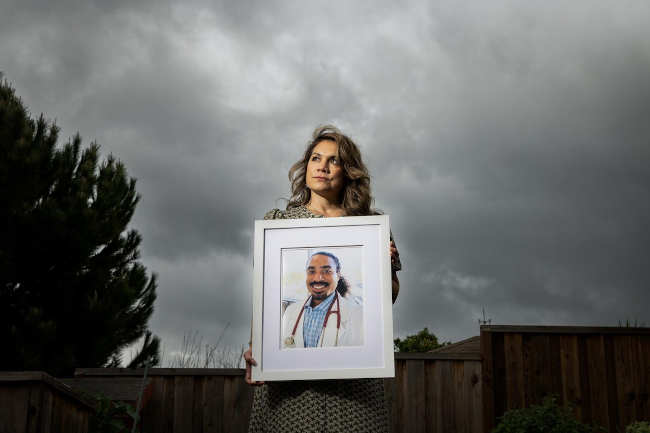
Nora Lopez holds a framed photo of her son at her home in Castro Valley on March 12, 2025. Her 29-year-old son, Dominic Lopez-Toney, was struck and killed by a semi-truck days before starting his surgical rotation at a San Joaquin hospital. Photo by Christie Hemm Klok for CalMatters
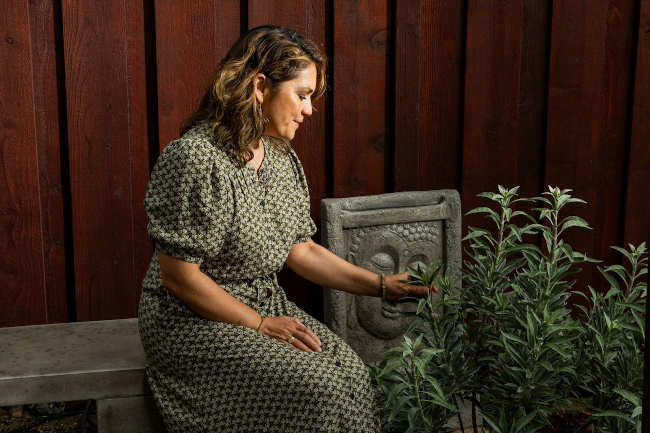
Nora Lopez has buried Dominic’s urn in her garden and planted a sage bush beside it.
Framed photos of Dominic at Nora Lopez's home in Castro Valley on March 12, 2025. Photos by Christie Hemm Klok for CalMatters
In an interview at her Castro Valley home, she talked about her only child. He was smart and caring, liked snowboarding and animals, loved food. On vacations they would take cooking classes together, Lopez said. He studied molecular and cell biology at UC Berkeley and was almost done with medical school.
She still has the dry-erase whiteboards in his old room. One is filled with his small and neat study notes; another has what appears to be a to-do list. There’s a note that says “Surgery: 600.” Lopez said that’s when he was due to start his surgical rotation in a San Joaquin hospital, just a couple of days after he died.
She said he just wanted to help people and serve the Native American community as a doctor, a future that a driver snatched away.
“It’s because of a man’s recklessness and carelessness — no regard for humanity,” she said.
While felony manslaughter is an automatic three-year loss of driving privileges, a misdemeanor typically carries no such penalty. It’s discretionary — it’s up to the DMV to decide whether to do anything. And the man who killed Lopez-Toney is far from alone in facing no apparent punishment from the DMV.
We found nearly 200 drivers with a valid license whose DMV record shows a conviction for misdemeanor vehicular manslaughter but for whom there is no suspension listed.
When shown a copy of Pacheco’s current driving report, Lopez sat in silence for several seconds.
“Does this make sense to you? It makes no sense to me,” she said. “With his record, how does he still have a license?”
‘Are we going to put that loaded gun back in their hands?’
Research on dangerous drivers appears to be thin and largely outdated.
Liza Lutzker, a researcher at UC Berkeley’s Safe Transportation Research and Education Center, said much of the focus in the traffic safety world is on creating better design and infrastructure, so people who make honest mistakes don’t end up killing someone.
“I think that the issues of these reckless drivers are a separate and complex problem,” Lutzker said. “The system we have clearly is not working. And people are paying with their lives for it.”
Jeffrey Michael, who researches roadway safety issues at Johns Hopkins University and spent three decades working at the National Highway Traffic Safety Administration, said he understands officials might be hesitant to impose harsher penalties more broadly, “for fear of the unintended consequences.”
“We live in a society where driving is really essential,” he said. But he said the findings show the agency needs more scrutiny and analysis of who is on the roads.
“These are not unresolvable problems,” he said.
Leah Shahum, executive director of the Vision Zero Network, a nonprofit promoting safe streets, said sometimes officials prioritize preserving people’s ability to drive rather than ensuring safety.
“We don’t all have the right to drive,” Shahum said. “We have the responsibility to drive safely and ensure we don’t hurt others.” She added that many people need to drive in this car-centric state. “That does not mean there can be a license to kill.”
“If we know somebody has a history of dangerous behavior,” she said, “are we going to put that loaded gun back in their hands?”
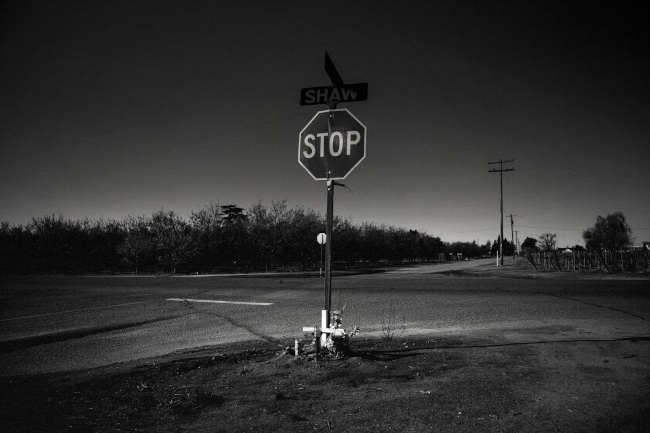
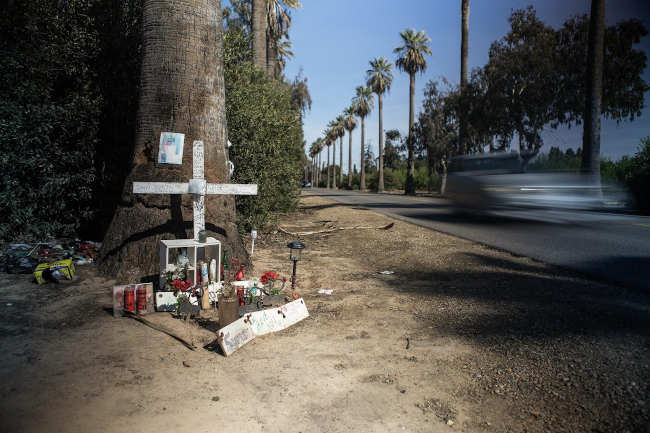
A memorial for car accident victims on a roadside outside Fresno on March 20, 2025. Photo by Larry Valenzuela, CalMatters/CatchLight Local The gun metaphor was common in the thousands of vehicular manslaughter cases we looked at across California. One prosecutor described dangerous behavior behind the wheel as akin to firing a gun into a crowd.
In letters to the court, surviving relatives and friends described the hole left behind, writing about an empty seat at a high school graduation, a photo cutout taken without fail to home baseball games.
It’s a void one young man tried to explain to authorities — the sudden, violent, blink-of-an-eye moment where life forever changes. For him, it was at 6:45 p.m. on Feb. 27, 2020, on Lone Tree Way in the Bay Area city of Antioch.
Two brothers, ages 11 and 15, were going to meet their dad at a Burger King. They crossed to the median and then waited for a break in the traffic before continuing to the other side. The older one made it across, according to court documents. His younger brother stepped into the street just as a driver gunned his car to 75 miles an hour — 30 over the speed limit.
The older boy watched as his younger brother “just disappeared.”
This is the first piece in a series about how California lets dangerous drivers stay on the road. Sign up for CalMatters’ License to Kill newsletter to be notified when the next story comes out, and to get more behind-the-scenes information from our reporting.
 How to resolve AdBlock issue?