How to resolve AdBlock issue?
Refresh this page
How to resolve AdBlock issue?
Refresh this page
Lake County News,California
  • Home
    • Registration Form
  • News
    • Education
    • Veterans
    • Community
      • Obituaries
      • Letters
      • Commentary
    • Police Logs
    • Business
    • Recreation
    • Health
    • Religion
    • Legals
    • Arts & Life
    • Regional
  • Calendar
  • Contact us
    • FAQs
    • Phones, E-Mail
    • Subscribe
  • Advertise Here
  • Login
How to resolve AdBlock issue?
Refresh this page

News

Pet Fix clinic spays and neuters over 200 pets in three days

Details
Written by: LINGZI CHEN
Published: 08 February 2025
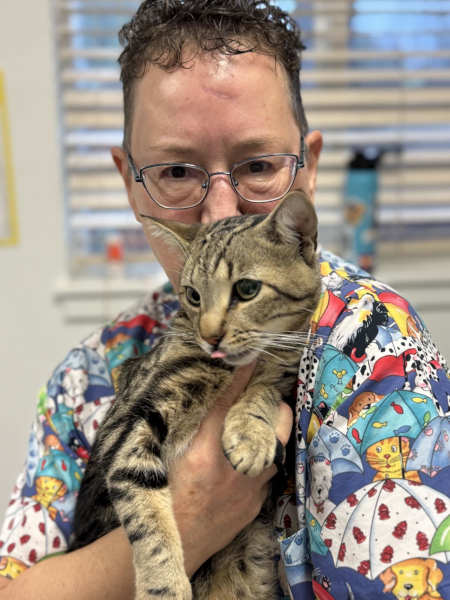
More than 200 pets received spay and neuter services during the Pet Fix in Kelseyville, California. Photo courtesy of SPCA of Lake County.

LAKE COUNTY, Calif. — Amid heavy winter rains, the first Pet Fix animal clinic spayed and neutered 203 animals over three days, from Jan. 31 to Feb. 2.

Pet Fix is a volunteer-driven partnership of three local animal care nonprofit groups:Clearlake Animal Association, Dogwood Animal Rescue and SPCA of Lake County.

The community-led effort to provide low-cost and high-volume spay and neuter services aims to address Lake County’s long concerned “overpopulation crisis” of pets, according to Pet Fix’s Facebook page.

“It means there’s going to be less dumped and abandoned animals,” SPCA president Nancy Johnson said of the clinic’s impact.

It means less feral cats, roaming dogs, and less hit by cars, she added, “Because people aren’t dumping their unwanted kittens out in the middle of nowhere.”

In addition to the surgeries, every pet that was serviced got vaccinated — a rabies, a microchip, an FVRCP for cats, or the Parvo and DHPP for dogs. With reduced risks of certain cancers in dogs, these procedures would lead to healthier pets, Johnson said.

The first Pet Fix clinic service was by appointment only and applications opened on Jan.1. The poster said there would be a $25 copay for every eligible pet and the portal would close after signing up 100 cats and 300 dogs.

“We took 300 applications for dogs to fill the 100 appointments that we had available, because we have to have specific sizes and genders and whatnot to fill,” Johnson explained. “So we have a big enough mix to get the animals that we need to make the best roster,” Johnson explained.

By Jan. 22, the clinic had been fully booked and scheduled.

Over the three days of the clinic, three vets and six registered veterinary technicians from the contractor Animal Balance, together with 25 to 30 volunteers per day, carried out the services for 203 pets brought in by their owners, Johnson said. In total, about 50 volunteers participated.

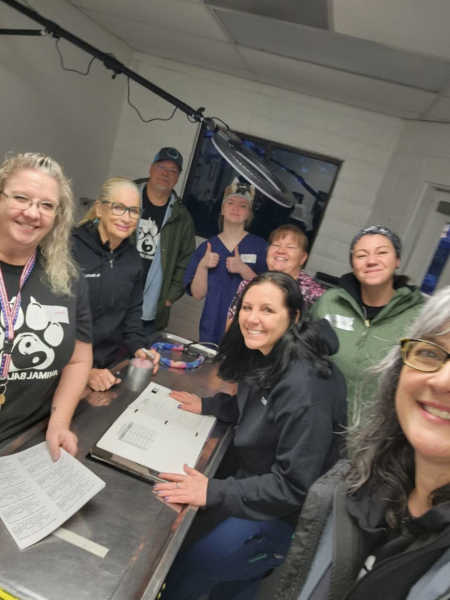
A group of volunteers who made the Pet Fix happen. Photo courtesy of SPCA of Lake County.


The ‘scaled-up’ clinic work and the county’s vet shortage

Spaying and neutering 203 animals in three days was a stretch.

“It took SPCA three months last year to do that same amount,” Johnson told Lake County News.

“There's a lot of unthought of things everywhere, from extra oxygen to more copy paper and just all the extra things that come with running a clinic,” Johnson explained of the different aspects of the work that was being “scaled up.”

“We normally do 25 in a clinic four days a month. And to scale that up to 200 animals in three days, you forget what you don’t know,” she said with a chuckle.

Looking ahead, Johnson told Lake County News that Pet Fix has four more clinics planned for this year, which means a total of 1,000 pets could have their surgeries completed this year. Dates of future clinics have yet to be determined.

“Getting this high volume span neuter done does have an impact,” said Johnson, making reference to the concerns over vet shortage.

“We figured out there’s about 8,000 owned dogs and cats in the county,” she said, adding that there are about eight vets in the whole county. “There’s no way they can service 8,000 pets.”

Lake County Animal Control, the major sponsor of the first clinic, hasn’t had a vet for several years, Johnson noted. “They can’t get a vet. Nobody wants the job.”

Sometimes people do want to bring their pets for spay and neuter services but are not able to, “because either you can’t afford it or you can’t get an appointment,” she said.

At one point, SPCA was booked out three months in advance, and Johnson stopped taking appointments. “It just doesn’t do any good to schedule people six months from now, right?”

At SPCA, the standard procedures may cost between $125 for neuter of a male dog under 50 lbs, and up to $230 for spay of a female dog over 75 pounds, according to a Pet Fix Facebook post that provides information for applicants who didn’t get the appointment at the Pet Fix’s first clinic.

“If interested, you will be responsible for the full price of the SPCA clinic, which is still significantly less than full service veterinary offices,” the post said.

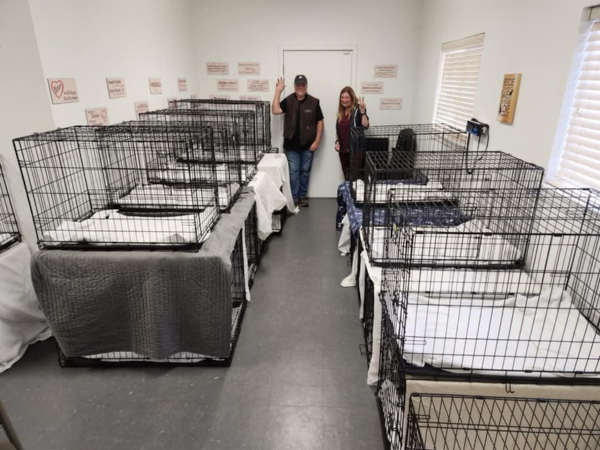
Volunteers with cages prepared for the animals that would receive care during the Pet Fix. Photo courtesy of SPCA of Lake County.


The joint effort

“It was almost a year in the making,” said Johnson of how the project came about with the three partnering agencies. “It was a lot of coordination and a lot of public help.”

Johnson explained the roles of the three partnering agencies: Dogwood and Clearlake Animal Association are handling fundraising efforts through grants and other means, whereas the SPCA contributes by providing the “boots on the ground.”

For the first clinic, Lake County Animal Care and Control contributed $37,000 to contract Animal Balance, while Kelseyville Lumber covered food costs, providing breakfast and lunch for more than 30 people each day.

The city of Clearlake donated $4,000 to purchase a new autoclave for sterilizing equipment. A couple months ago, a Facebook fundraiser for getting surgical instruments raised $2,500 in less than seven days.

The team created an Amazon wishlist of supplies and equipment and received generous donations from the community.

A fuller list of contributors can be found in SPCA’s Facebook post.

“Lake County has been amazing,” said Johnson of the community support.

So far, they have yet figured out the total value of all donations, she added.

The three-day program met with the new year’s rainstorms. Yet it was a success and a learning experience.

“We were out there in our rain slickers,” Johnson recalled. Still, “It went smoother than we expected.”

She credited Animal Balance’s check-in procedures for streamlining operations.

Learning how to do so many in such a short amount of time for Johnson was “an educational thing for us.”

When asked what they had learned, “they had a lot more surgical staff than we do; we have one vet,” she said in addition to the productive procedures.

Email staff reporter Lingzi Chen at This email address is being protected from spambots. You need JavaScript enabled to view it..

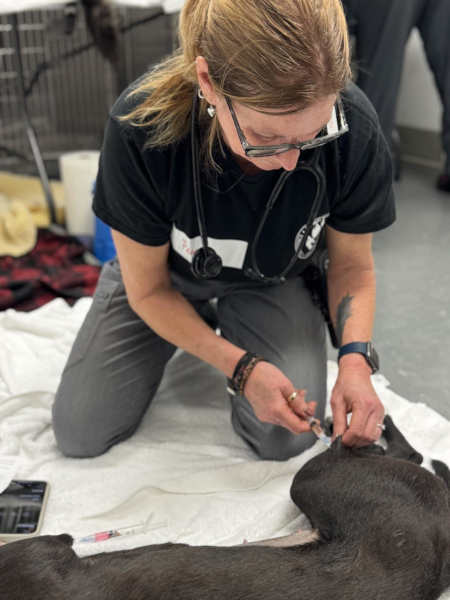
A vet works on a dog during the Pet Fix. Photo courtesy of SPCA of Clear Lake.

Napa man sentenced for killing of Oregon bicyclists

Details
Written by: LAKE COUNTY NEWS REPORTS
Published: 08 February 2025
NORTH COAST, Calif. — A Napa man will do jail time for a traffic crash in 2023 that killed an Oregon couple.

Napa County District Attorney Allison Haley on Friday announced the sentencing of Porfirio Sanchez, age 57, to one year in jail for his role in the death of Christian Deaton, 52, and his wife Michelle Deaton, 48.

On the morning of Oct. 17, 2023, Sanchez failed to properly secure the lumber load he was hauling along Silverado Trail, causing a large piece of lumber to swing out perpendicular to the truck and strike the Deatons, who were riding their bicycles alongside the road. Both bicyclists lost their lives due to the collision.

On Nov. 14, 2024, Sanchez signed an agreement in which he pled no contest to two counts of vehicular manslaughter. Sanchez agreed to serve up to four years in state prison for the crimes he pleaded to, according to the plea agreement.

During Friday’s sentencing hearing Napa County Deputy District Attorney Shashawnya Worley, who prosecuted the case against Sanchez, requested the court sentence Sanchez to four years in state prison in accordance with the plea agreement.

After hearing testimony from Mr. Deaton’s brother in which he requested leniency for Sanchez, and reading victim impact statements submitted in this case, Napa County Superior Court Judge Scott Young sentenced Sanchez to 364 days in jail.

Judge Young, however, stayed 180 of those days upon completion of 180 hours of community service related to bike safety, or other program authorized by the Napa County Probation Department.

Sanchez was additionally sentenced to two years of formal probation with terms and conditions.

“It seems that everyone in this case, generally, is requesting justice and mercy,” Judge Young stated during Friday’s sentencing. “The court is moved by the amount of grace in this courtroom by all the families.”

During the sentencing hearing, Worley said, “This case boils down to two happy, healthy lives that were cut short due to the negligence of the defendant. Their deaths have had a profound impact on their family and friends. There’s nothing I can say or do today that can bring their loved ones back, but I hope that this sentence can bring them closure.”

Bonta: Trump Administration not complying with court order to unfreeze certain federal funding

Details
Written by: LAKE COUNTY NEWS REPORTS
Published: 08 February 2025
On Friday California Attorney General Rob Bonta led a coalition of 23 attorneys general in filing a motion to enforce and a motion for preliminary injunction in NY v. Trump, the ongoing lawsuit challenging actions by President Trump, the Office of Management and Budget and federal agencies attempting to pause nearly $3 trillion in federal assistance funding allocated to the states that support critical programs and services that benefit the American people.

The coalition is seeking to preliminarily enjoin the Trump Administration’s actions to impose a funding freeze, emphasizing the widespread and irreparable harm to states, which rely on billions of dollars of critical federal assistance for public services that ensure access to education, clean air and water, and health care and that support essential infrastructure projects.

The motion further highlights the harm states face if funds under the Inflation Reduction Act, or IRA, and Infrastructure, Investment, and Jobs Act, or IIJA, also known as the Bipartisan Infrastructure Law, are not allocated as required by statute.

The Inflation Reduction Act and IIJA funding strengthens domestic energy security, reduces energy costs, diversifies our domestic energy resources, rebuilds our domestic manufacturing economy, bolsters and modernizes critical infrastructure, and creates well-paying jobs while simultaneously reducing harmful pollution.

Citing evidence of ongoing disruptions impacting disbursements to states, and federal funds that remain blocked under the IRA and IIJA despite the court’s temporary restraining order, which remains in place, the coalition also seeks to enforce the temporary restraining order to require the Trump Administration to disperse these funds.

“Let’s be crystal clear: the power of the purse belongs to Congress, not the president,” said Attorney General Bonta. “The Trump Administration’s dangerous and unconstitutional actions have created chaos and confusion across this country, and caused significant harm to states across the country and the millions of Americans who rely on federal funding, from children to the elderly. In yet another unlawful move, we have evidence that despite the Temporary Restraining Order we secured, the Trump Administration has continued to block funds needed for our domestic energy security, transportation, and infrastructure provided under the IRA and IIJA. We’re asking the court to enforce its order and ensure that the Trump Administration reinstates access to this critical funding. No one is above the law, and at the California Department of Justice, we will not waver in our commitment to uphold the law and ensure that necessary funding for critical programs and services in states across our country can continue.”

In just this fiscal year, California is expected to receive $168 billion in federal funds — 34% of the state’s budget — not including funding for the state’s public college and university system.

This includes $107.5 billion in funding for California’s Medicaid programs, which serve approximately 14.5 million Californians, including 5 million children and 2.3 million seniors and people with disabilities.

Additionally, over 9,000 full-time equivalent state employee positions are federally funded. As detailed in the preliminary injunction motion, without access to federal financial assistance, many states could face immediate cash shortfalls, making it difficult to administer basic programs like funding for healthcare and food for children and to address their most pressing needs.

As of January 2025, California has been awarded $63 billion from the IIJA and nearly $5 billion from the IRA, not including funds going to California cities, air and water districts, or other political subdivisions.

Due to ongoing disruptions impacting disbursements to states despite the court’s temporary restraining order, efforts that bolster clean energy investments, transportation, and infrastructure have been put at risk, including:

• The Home Electrification and Appliances Rebates Program, for which the IRA appropriates $4.5 billion to the Department of Energy. The rebate program, administered by state energy offices under final federal grants, subsidizes low- and moderate-income households’ purchase and installation of electric heat pump water heaters, electric heat pump space heating and cooling systems, and other home electrification projects. Thousands of California homeowners have signed up for these programs, received approvals, and even started installation in reliance on these rebates, and are stuck paying their contractors an extra $8,000 if our state energy offices cannot draw down funds. As of February 5, that remained the case: the home rebate grants were being held “for agency review.”

• The Solar for All program, administered by EPA and funded by the IRA’s Greenhouse Gas Reduction Fund, awarded $7 billion to 60 grantees to install rooftop and community solar energy projects in low-income and disadvantaged communities. These awards — all subject to final grant agreements—support the construction of cheap, resilient power in underserved neighborhoods, and provide particular protection to communities in which wildfire risk regularly causes utilities to de-energize transmission lines. As of February 5, numerous states in the coalition were unable to access their Solar For All grant accounts.

• The Climate Pollution Reduction Grant program, administered by EPA and funded by a $5 billion IRA appropriation, supports states, tribes, and local governments in planning and implementing greenhouse-gas reduction measures. For example, the regional air district covering Los Angeles received a $500 million award, subject to a final grant agreement, to clean up the highly polluting goods movement corridor between the Imperial Valley's logistics hubs and warehouses to the Port of Los Angeles. As of Feb. 5, this grant and other Climate Pollution Reduction Grants remained inaccessible.

The national air monitoring network and research program under Clean Air Act sections 103 to 105, which has been administered by EPA for the last sixty years to protect communities from dangerous pollution.

The IRA appropriated $117.5 million to fund air monitoring grants under this program to increase states’ abilities to detect dangerous pollution like particulate matter (soot) and air toxics, especially in disadvantaged communities.

These pollutants create a particular public health emergency in areas recovering from wildfires. As of Feb. 5, air monitoring grants remained inaccessible.

Amid evidence that the Trump Administration has continued to block these critical funds, in violation of the court's order, the attorneys general filed a motion to enforce to ensure that the funds are swiftly dispersed so that states can put them to use to protect for the health and well-being of their residents.

Attorney General Bonta, along with the attorneys general of New York, Rhode Island, Massachusetts and Illinois, led the attorneys general of Arizona, Colorado, Connecticut, Delaware, the District of Columbia, Hawaii, Maine, Maryland, Michigan, Minnesota, New York, Nevada, North Carolina, New Jersey, New Mexico, Oregon, Rhode Island, Vermont, Washington, and Wisconsin in filing the motions.

Is DOGE a cybersecurity threat? A security expert explains the dangers of violating protocols and regulations that protect government computer systems

Details
Written by: Richard Forno, University of Maryland, Baltimore County
Published: 08 February 2025


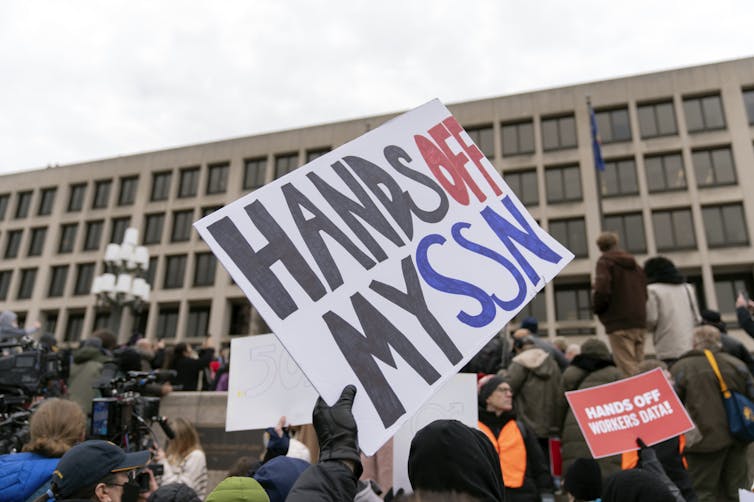
People protest DOGE’s access to sensitive personal data. AP Photo/Jose Luis Magana

As a 30-year cybersecurity veteran, I find the activities of DOGE thus far concerning. Its broad mandate across government, seemingly nonexistent oversight, and the apparent lack of operational competence of its employees have demonstrated that DOGE could create conditions that are ideal for cybersecurity or data privacy incidents that affect the entire nation.

Traditionally, the purpose of cybersecurity is to ensure the confidentiality and integrity of information and information systems while helping keep those systems available to those who need them. But in DOGE’s first few weeks of existence, reports indicate that its staff appears to be ignoring those principles and potentially making the federal government more vulnerable to cyber incidents.

Technical competence

Cybersecurity and information technology, like any other business function, depend on employees trained specifically for their jobs. Just as you wouldn’t let someone only qualified in first aid to perform open heart surgery, technology professionals require a baseline set of credentialed education, training and experience to ensure that the most qualified people are on the job.

Currently, the general public, federal agencies and Congress have little idea who is tinkering with the government’s critical systems. DOGE’s hiring process, including how it screens applicants for technical, operational or cybersecurity competency, as well as experience in government, is opaque. And journalists investigating the backgrounds of DOGE employees have been intimidated by the acting U.S. attorney in Washington.

DOGE has hired young people fresh out of – or still in – college or with little or no experience in government, but who reportedly have strong technical prowess. But some have questionable backgrounds for such sensitive work. And one leading DOGE staffer working at the Treasury Department has since resigned over a series of racist social media posts.

Wired’s Katie Drummond explains what the magazine’s reporters have uncovered about DOGE staffers and their activities.

According to reports, these DOGE staffers have been granted administrator-level technical access to a variety of federal systems. These include systems that process all federal payments, including Social Security, Medicare and the congressionally appropriated funds that run the government and its contracting operations.

DOGE operatives are quickly developing and deploying major software changes to very complex old systems and databases, according to reports. But given the speed of change, it’s likely that there is little formal planning or quality control involved to ensure such changes don’t break the system. Such actions run contrary to cybersecurity principles and best practices for technology management.

As a result, there’s probably no way of knowing if these changes make it easier for malware to be introduced into government systems, if sensitive data can be accessed without authorization, or if DOGE’s work is making government systems otherwise more unstable and more vulnerable.

If you don’t know what you’re doing in IT, really bad things can happen. A notable example is the failed launch of the healthcare.gov website in 2013. In the case of the Treasury Department’s systems, that’s fairly important to remember as the nation careens toward another debt-ceiling crisis and citizens look for their Social Security payments.

On Feb. 6, 2025, a federal judge ordered that DOGE staff be restricted to read-only access to the Treasury Department’s payment systems, but the legal proceedings challenging the legality of their access to government IT systems are ongoing.

DOGE email servers

DOGE’s apparent lack of cybersecurity competence is reflected in some of its first actions. DOGE installed its own email servers across the federal government to facilitate direct communication with rank-and-file employees outside official channels, disregarding time-tested best practices for cybersecurity and IT administration. A lawsuit by federal employees alleges that these systems did not undergo a security review as required by current federal cybersecurity standards.

There is an established process in the federal government to configure and deploy new systems to ensure they are stable, secure and unlikely to create cybersecurity problems. But DOGE ignored those practices, with predictable results.

For example, a journalist was able to send invitations to his newsletter to over 13,000 National Oceanic and Atmospheric Administration employees through one of these servers. In another case, the way in which employee responses to DOGE’s Fork in the Road buyout offer to federal employees are collected could easily be manipulated by someone with malicious intent – a simple social engineering attack could wrongly end a worker’s employment. And DOGE staff members reportedly are connecting their own untrusted devices to government networks, which potentially introduces new ways for cyberattackers to penetrate sensitive systems.

However, DOGE appears to be embracing creative cybersecurity practices in shielding itself. It’s reorganizing its internal communications in order to dodge Freedom of Information Act requests into its work, and it’s using cybersecurity techniques for tracking insider threats to prevent and investigate leaks of its activities.

Lacking management controls

But it’s not just technical security that DOGE is ignoring. On Feb. 2, two security officials for the U.S. Agency for International Development resisted granting a DOGE team access to sensitive financial and personnel systems until their identities and clearances were verified, in accordance with federal requirements. Instead, the officials were threatened with arrest and placed on administrative leave, and DOGE’s team gained access.

The Trump administration also has reclassified federal chief information officers, normally senior career employees with years of specialized knowledge, to be general employees subject to dismissal for political reasons. So there may well be a brain drain of IT talent in the federal government, or a constant turnover of both senior IT leadership and other technical experts. This change will almost certainly have ramifications for cybersecurity.

DOGE operatives now have direct access to the Office of Personnel Management’s database of millions of federal employees, including those with security clearances holding sensitive positions. Without oversight, this access opens up the possibilities of privacy violations, tampering with employment records, intimidation or political retribution.

Support from all levels of management is crucial to provide accountability for cybersecurity and technology management. This is especially important in the public sector, where oversight and accountability is a critical function of good democratic governance and national security. After all, if people don’t know what you’re doing, they don’t know what you’re doing wrong.

At the moment, DOGE appears to be operating with very little oversight by anyone in position willing or able to hold it responsible for its actions.

Mitigating the damage

Career federal employees trying to follow legal or cybersecurity practices for federal systems and data are now placed in a difficult position. They either capitulate to DOGE staffers’ instructions, thereby abandoning best practices and ignoring federal standards, or resist them and run the risk of being fired or disciplined.

The federal government’s vast collections of data touch every citizen and company. While government systems may not be as trustworthy as they once were, people can still take steps to protect themselves from adverse consequences of DOGE’s activities. Two good starting points are to lock your credit bureau records in case your government data is disclosed and using different logins and passwords on federal websites to conduct business.

It’s crucial for the administration, Congress and the public to recognize the cybersecurity dangers that DOGE’s activities pose and take meaningful steps to bring the organization under reasonable control and oversight.The Conversation

Richard Forno, Teaching Professor of Computer Science and Electrical Engineering, and Assistant Director, UMBC Cybersecurity Institute, University of Maryland, Baltimore County

This article is republished from The Conversation under a Creative Commons license. Read the original article.

The Department of Government Efficiency (DOGE), President Donald Trump’s special commission tasked with slashing federal spending, continues to disrupt Washington and the federal bureaucracy. According to published reports, its teams are dropping into federal agencies with a practically unlimited mandate to reform the federal government in accordance with recent executive orders.
  1. Space News: Property and sovereignty in space − as countries and companies take to the stars, they could run into disputes
  2. Thompson holds town hall to discuss congressional response to Trump Administration actions
  3. Lake County OES urges residents to stay informed, stay prepared
  • 453
  • 454
  • 455
  • 456
  • 457
  • 458
  • 459
  • 460
  • 461
  • 462
How to resolve AdBlock issue?
Refresh this page