How to resolve AdBlock issue?
 News
State Controller Malia M. Cohen has published the 2023 self-reported payroll data for fairs, expositions and First 5 commissions on the Government Compensation in California website.
The data covers 2,230 positions and a total of nearly $64 million in 2023 wages.
The newly published data includes 1,364 positions at 20 fairs and expositions, and 866 positions at 37 First 5 commissions.
This does not include 38 fairs and expositions, and 15 First 5 commissions that did not file their report or were noncompliant.
Among those fairs that did not file was the Lake County Fair, District Agricultural Association 49.
The controller’s website shows that this is the first time since 2013 that the Lake County Fair has not filed.
Lake County’s First 5 Commission reported $105,501 in total wages and $29,657 in total retirement and health contributions.
That includes an executive director, with total wages of $82,217 and $20,016 in health and retirement contributions; a health program support specialist, with wages of $23,284 and $9,641 in health and retirement contributions; and eight unpaid commissioners.
California law requires cities, counties and special districts to annually report compensation data to the State Controller.
Controller Cohen also maintains and publishes state government and California State University salary data.
No statutory requirement exists for superior courts, University of California, community college districts, fairs, expositions, First 5 commissions, or K-12 education providers. Their reporting is voluntary.
The site contains pay and benefit information on more than two million government jobs in California, as reported annually by each entity.
As the chief fiscal officer of California, Controller Cohen is responsible for accountability and disbursement of the state’s financial resources. The controller has independent auditing authority over government agencies that spend state funds.
The data covers 2,230 positions and a total of nearly $64 million in 2023 wages.
The newly published data includes 1,364 positions at 20 fairs and expositions, and 866 positions at 37 First 5 commissions.
This does not include 38 fairs and expositions, and 15 First 5 commissions that did not file their report or were noncompliant.
Among those fairs that did not file was the Lake County Fair, District Agricultural Association 49.
The controller’s website shows that this is the first time since 2013 that the Lake County Fair has not filed.
Lake County’s First 5 Commission reported $105,501 in total wages and $29,657 in total retirement and health contributions.
That includes an executive director, with total wages of $82,217 and $20,016 in health and retirement contributions; a health program support specialist, with wages of $23,284 and $9,641 in health and retirement contributions; and eight unpaid commissioners.
California law requires cities, counties and special districts to annually report compensation data to the State Controller.
Controller Cohen also maintains and publishes state government and California State University salary data.
No statutory requirement exists for superior courts, University of California, community college districts, fairs, expositions, First 5 commissions, or K-12 education providers. Their reporting is voluntary.
The site contains pay and benefit information on more than two million government jobs in California, as reported annually by each entity.
As the chief fiscal officer of California, Controller Cohen is responsible for accountability and disbursement of the state’s financial resources. The controller has independent auditing authority over government agencies that spend state funds.
- Details
- Written by: LAKE COUNTY NEWS REPORTS
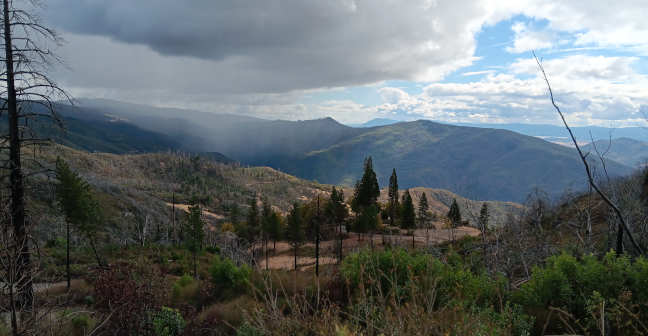
MENDOCINO NATIONAL FOREST, Calif. — The Mendocino National Forest is lifting fire restrictions beginning Wednesday, Oct. 30, at midnight.
Wet weather patterns, longer nights and cooler temperatures are reducing the potential risk for wildfires.
Beginning Wednesday, forest visitors with a valid California campfire permit may have open campfires or camp stoves outside of designated campgrounds.
Although fire danger has decreased some, there is still potential for wildfires to start. Forest officials ask everyone to practice fire safety and act responsibly to prevent wildfires.
• Campfires: Attend your campfire at all times. Ensure your fire is completely extinguished — drown with water (NOT dirt), stir with your shovel, drown again and feel for any heat using the back of your hand. Continue this process until no heat remains.
• Stoves: If using pressurized or bottled liquid fuel stoves, lanterns or heating devices, use in barren areas with at least 3 feet of clearance from grasses and other debris that may catch fire. • Prevent stoves from tipping.
• Vehicles: When traveling, ensure your chains are properly connected. The hot underside of the vehicle and dragging chains can start a fire. Stick to driving on designated roads and trails and be careful to not park your car or OHV in tall, dry vegetation, including grass.
• Spark arrestors: Ensure that all internal or external combustion engines have a spark arresting device properly installed, maintained and in effective working order.
• Smoking: Extinguish all smoking materials dead out on bare soil. Pack out all cigarette butts and filters.
• Fireworks: Fireworks are prohibited on all national forests year-round, leave them and all other pyrotechnic devices at home.
California campfire permits are available online at https://readyforwildfire.org. Visitors can check the latest alerts, orders and recreation information at https://www.fs.usda.gov/mendocino.
The Mendocino National Forest consists of 927,675 acres along northern California’s coastal range. The forest includes the Berryessa Snow Mountain National Monument, four designated wilderness areas, two designated wild and scenic rivers, Red Bluff Recreation Area, and the Chico Seed Orchard. Headquartered in Willows, the forest maintains district offices in the communities of Covelo and Upper Lake.
- Details
- Written by: LAKE COUNTY NEWS REPORTS
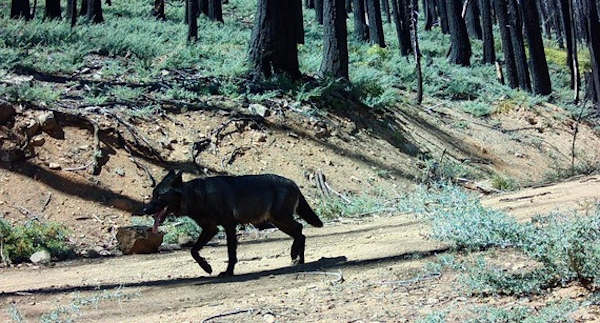
The launch of the California Wolf Project, or CAWP, within UC Berkeley’s Rausser College of Natural Resources establishes a long-term partnership with the California Department of Fish and Wildlife CDFW to advance the science and management of gray wolves (Canis lupus) in California.
With additional support from the National Geographic Society, CAWP brings together scientists, wildlife managers, and conservation communicators working with diverse stakeholders to better understand the social and ecological factors that shape wolf populations and inform management decisions.
The new project integrates UC Berkeley’s expertise in ecology, sociology, economics and environmental policy, while leveraging the university’s extensive network of agency, nonprofit, landowner and tribal relationships.
The CAWP team uses innovative and interdisciplinary methods to gather data on wolf spatial ecology, diet, predator-prey dynamics, and recolonization within California, while contributing to conflict reduction strategies for rural communities and livestock producers.
“It is exciting to see wolves back in California, but there are a lot of questions about where they fit amongst a rapidly changing landscape with new challenges for agencies and livestock producers,” said Arthur Middleton, CAWP co-lead and Goertz Professor of Wildlife Management at UC Berkeley. “We hope our growing team can provide new support to those interested in and impacted by the state’s growing wolf population.”
The gray wolf has returned to California after nearly a century of absence following their extirpation in the 1920s.
Wolves are classified as endangered both under the California Endangered Species Act and the federal Endangered Species Act. Their natural recolonization into the state began in 2011 with individuals dispersing from Oregon.
As of 2024, CDFW has reported at least seven wolf packs across California, with CAWP initially focusing on the Beyem Seyo (Plumas County), Harvey (Lassen and Shasta counties), Lassen (Lassen and Plumas counties), and Whaleback (Siskiyou County) packs.
CAWP has also started to expand its work with the Yowlumni Pack (Tulare County), with the help of CDFW's Central Region staff. CDFW continues to survey for the presence of uncollared and collared wolves, based on sighting reports and other signs of wolf activity.
California’s wolf packs utilize large expanses of habitat compared to other areas in the western United States, presenting challenges for monitoring the population and questions regarding the availability of prey.
The state and many landowners are mounting a variety of livestock protection and conflict reduction efforts while learning new lessons about their efficacy.
CAWP is a timely initiative complementing the state’s efforts with rigorous research and an outreach strategy for collaborating with local communities affected by wolf activity.
“Given the wolf population increases we’ve recorded in the last few years and the management challenges that have resulted, there’s no better time for this partnership between CDFW and UC Berkeley,” said Axel Hunnicutt, the State Gray Wolf coordinator at CDFW. “There are so many important management questions relating to the ecological, economic and social effects of wolf recolonization in the state that already impact California’s ecosystems and its people. The formation of CAWP is expanding our capacity to address these questions in earnest.”
The path of wolf recovery in California — the most populous and diverse U.S. state — has the potential to shape national, and even global, perspectives on wildlife restoration and large-scale conservation.
CAWP seeks to develop a model for how to bring universities, government agencies and local communities together around the science and practice of improving human-wildlife interactions on a shared landscape.
“The Wildlife Program at UC Berkeley is committed to fulfilling our university’s mandate to support the people, economies and nature of California with science, education and outreach. CAWP embodies those priorities and embraces the diversity of perspectives that accompany the recovery of large carnivores,” said Justin Brashares, CAWP co-lead and professor of wildlife ecology and conservation at UC Berkeley.
To read more about the return of gray wolves in California or to report a sighting, please visit wildlife.ca.gov/Conservation/Mammals/Gray-Wolf.
To learn more about the California Wolf Project, visit https://wildlife.berkeley.edu/cawolfproject/.
- Details
- Written by: Elizabeth Larson
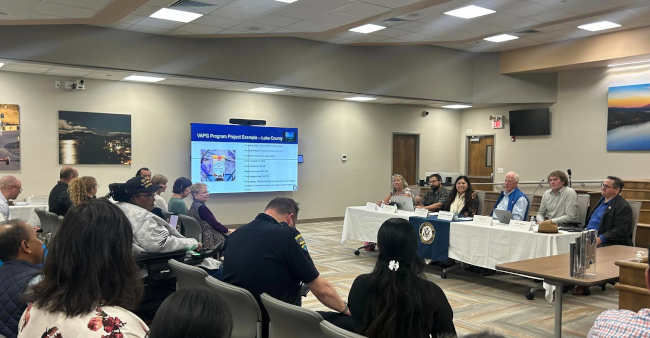
CLEARLAKE, Calif. — On Thursday, Rep. Mike Thompson (CA-04) partnered with leadership from the U.S. Department of Agriculture, Rural Development to host a roundtable with leaders from across Lake County.
During the session, Rep. Thompson and USDA Rural Development State Director Maria Gallegos-Herrera presented leaders from across Lake County with information on Rural Development programs and services that are available to qualified rural Lake County communities.
“Rural communities are the backbone of California and our country,” said Thompson. “Thank you to the USDA Rural Development team for partnering with me to bring local leaders from across Lake County together to discuss our community’s needs and connect leaders with USDA Rural Development programs that can help address those needs. Already, Lake County has received over $46.7 million in support from USDA Rural Development programs and I look forward to continuing to support our community’s development.”
USDA Rural Development provides more than 70 programs to help improve the economy and quality of life in rural communities that meet program requirements.
The agency’s programs help rural communities build infrastructure like hospitals and community centers and help rural communities increase access to utilities, affordable housing, and homeownership opportunities.
These programs come in various forms including loans, grants, loan guarantees and partnerships with local leaders.
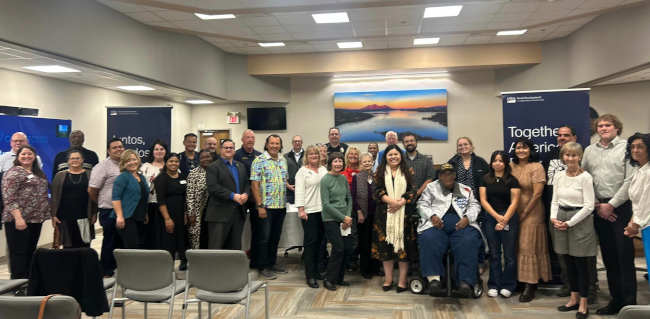
Thompson’s session in Clearlake was the fourth of five Rural Development roundtables the Congressman hosted in each of the five counties that make up the Fourth Congressional district: Lake, Napa, Solano, Sonoma and Yolo.
- Details
- Written by: LAKE COUNTY NEWS REPORTS
As fall approaches, so does respiratory syncytial virus or RSV season. This year, there are more options for those most susceptible to RSV, including a new vaccine and updated RSV vaccine guidance for seniors.
What is RSV?
RSV is a virus that can cause lung and respiratory tract infections such as bronchiolitis and pneumonia. Most RSV infections clear up by themselves in a couple of weeks, but, for some people at high risk, it can cause serious illness leading to hospitalization or death.
Who is most vulnerable to RSV?
• Premature infants, newborns and babies — especially those younger than 8 months.
• Children younger than 2 years with chronic lung disease or congenital heart disease.
• Children with neuromuscular disorders, including those who have difficulty swallowing.
• Children of Native American descent.
• Adults over 75.
• Adults 60-74 with chronic medical conditions such as diabetes, heart or lung disease.
• Anyone with a weakened immune system.
How do people contract RSV?
RSV spreads much like the common cold via droplets of saliva released into the air when sick people cough or sneeze. These droplets carry the virus, spreading it when they come in contact with our eyes, noses or mouths.
What are RSV’s symptoms?
RSV symptoms are like those of a cold: congestion, fever, cough, wheezing and a sore throat. In young babies, RSV’s only signs may be difficulty breathing, irritability and decreased activity. Older adults and babies younger than 6 months may need to be hospitalized if they have trouble breathing, become dehydrated or their symptoms worsen.
What vaccines are available to protect against RSV?
There are now three vaccines available for adults and one for those who are pregnant. This summer, the FDA approved Moderna’s mRESVIA RSV vaccine for adults.
Last year, the FDA approved Abrysvo (Pfizer) and Arexvy (GSK) to protect seniors from serious illness, and approved Abrysvo for pregnant women in their third trimester during the RSV season, to help safeguard newborns from the virus for up to 6 months. All three are single-shot vaccines.
Who should get vaccinated for RSV?
This summer, the CDC altered its recommended guidance to 75 years for all seniors who have not yet been vaccinated. It still recommends that seniors 60 to 74 get vaccinated if they are immune compromised or have chronic medical conditions and have not yet been vaccinated.
Pregnant women in their last trimester should talk to their health care provider about whether the vaccination is right for them.
How often should adults get the vaccine?
The RSV vaccine isn’t needed annually like the flu vaccine, but only once.
What should I know about RSV prevention for infants?
There is no vaccine approved for babies at this time, but there are ways to prevent them from getting very sick:
• Asking people sick with a cough and runny nose to wash their hands and avoid close contact with infants.
• Vaccinating pregnant women with Abrysvo in their third trimester to stimulate their immune system to make antibodies against RSV. The antibodies pass to the fetus, protecting babies for the first 6 months of life.
• Mothers who are not vaccinated can immunize vulnerable infants with Nirsevimab (Beyfortus), an anti-RSV antibody that can prevent serious RSV in babies. Ask your doctor if your baby should get it.
How long will the new RSV vaccine protect seniors and infants from RSV?
For adults, RSV vaccines show continued protection even two years after immunization. Based on this, the CDC recommends only one dose of the RSV vaccine for seniors right now, but this may change in the future.
In infants, we know that the vaccine given to those who are pregnant protects babies for their first 6 months of life – when they are most at risk for the virus. Beyfortus, the new monoclonal antibody injection, similarly reduces the risk of RSV in infants for about five months – or one RSV season.
Does the new RSV vaccine have any side effects?
In adults, the most frequently reported side effects have been soreness at the injection site, muscle pain, fatigue, headache and joint pain. In the combined clinical trials of the vaccine, 20 out of more than 38,000 people who received the shot reported an abnormal heart rate about two weeks after vaccination. Eight people out of a similar number of folks in the trials who did not take the vaccine said the same. In addition, six people developed rare neurological complications.
Scientists are still figuring out if these irregular heartbeats or neurological complications were linked to the vaccine, but if you have concerns talk to your doctor. What is clear is that the benefit of being protected against RSV for many people far outweighs this possible risk because we don’t have good therapies once people get seriously ill with RSV.
Can I take the RSV vaccine alongside flu or COVID-19 shots?
Yes, it is safe to get all three vaccines at the same time. However, it is up to the individual to assess if they will have a reaction to the vaccinations based on their previous history of vaccines. There is no minimum waiting time between doses.
Lorna Fernandes writes for the University of California San Francisco.
What is RSV?
RSV is a virus that can cause lung and respiratory tract infections such as bronchiolitis and pneumonia. Most RSV infections clear up by themselves in a couple of weeks, but, for some people at high risk, it can cause serious illness leading to hospitalization or death.
Who is most vulnerable to RSV?
• Premature infants, newborns and babies — especially those younger than 8 months.
• Children younger than 2 years with chronic lung disease or congenital heart disease.
• Children with neuromuscular disorders, including those who have difficulty swallowing.
• Children of Native American descent.
• Adults over 75.
• Adults 60-74 with chronic medical conditions such as diabetes, heart or lung disease.
• Anyone with a weakened immune system.
How do people contract RSV?
RSV spreads much like the common cold via droplets of saliva released into the air when sick people cough or sneeze. These droplets carry the virus, spreading it when they come in contact with our eyes, noses or mouths.
What are RSV’s symptoms?
RSV symptoms are like those of a cold: congestion, fever, cough, wheezing and a sore throat. In young babies, RSV’s only signs may be difficulty breathing, irritability and decreased activity. Older adults and babies younger than 6 months may need to be hospitalized if they have trouble breathing, become dehydrated or their symptoms worsen.
What vaccines are available to protect against RSV?
There are now three vaccines available for adults and one for those who are pregnant. This summer, the FDA approved Moderna’s mRESVIA RSV vaccine for adults.
Last year, the FDA approved Abrysvo (Pfizer) and Arexvy (GSK) to protect seniors from serious illness, and approved Abrysvo for pregnant women in their third trimester during the RSV season, to help safeguard newborns from the virus for up to 6 months. All three are single-shot vaccines.
Who should get vaccinated for RSV?
This summer, the CDC altered its recommended guidance to 75 years for all seniors who have not yet been vaccinated. It still recommends that seniors 60 to 74 get vaccinated if they are immune compromised or have chronic medical conditions and have not yet been vaccinated.
Pregnant women in their last trimester should talk to their health care provider about whether the vaccination is right for them.
How often should adults get the vaccine?
The RSV vaccine isn’t needed annually like the flu vaccine, but only once.
What should I know about RSV prevention for infants?
There is no vaccine approved for babies at this time, but there are ways to prevent them from getting very sick:
• Asking people sick with a cough and runny nose to wash their hands and avoid close contact with infants.
• Vaccinating pregnant women with Abrysvo in their third trimester to stimulate their immune system to make antibodies against RSV. The antibodies pass to the fetus, protecting babies for the first 6 months of life.
• Mothers who are not vaccinated can immunize vulnerable infants with Nirsevimab (Beyfortus), an anti-RSV antibody that can prevent serious RSV in babies. Ask your doctor if your baby should get it.
How long will the new RSV vaccine protect seniors and infants from RSV?
For adults, RSV vaccines show continued protection even two years after immunization. Based on this, the CDC recommends only one dose of the RSV vaccine for seniors right now, but this may change in the future.
In infants, we know that the vaccine given to those who are pregnant protects babies for their first 6 months of life – when they are most at risk for the virus. Beyfortus, the new monoclonal antibody injection, similarly reduces the risk of RSV in infants for about five months – or one RSV season.
Does the new RSV vaccine have any side effects?
In adults, the most frequently reported side effects have been soreness at the injection site, muscle pain, fatigue, headache and joint pain. In the combined clinical trials of the vaccine, 20 out of more than 38,000 people who received the shot reported an abnormal heart rate about two weeks after vaccination. Eight people out of a similar number of folks in the trials who did not take the vaccine said the same. In addition, six people developed rare neurological complications.
Scientists are still figuring out if these irregular heartbeats or neurological complications were linked to the vaccine, but if you have concerns talk to your doctor. What is clear is that the benefit of being protected against RSV for many people far outweighs this possible risk because we don’t have good therapies once people get seriously ill with RSV.
Can I take the RSV vaccine alongside flu or COVID-19 shots?
Yes, it is safe to get all three vaccines at the same time. However, it is up to the individual to assess if they will have a reaction to the vaccinations based on their previous history of vaccines. There is no minimum waiting time between doses.
Lorna Fernandes writes for the University of California San Francisco.
- Details
- Written by: Lorna Fernandes
LAKE COUNTY, Calif. — Effective Friday, Nov. 1, at 8 a.m., the burn permit suspension for the State Responsibility Area in the counties of Colusa, Lake, Napa, Solano, Sonoma and Yolo will be lifted.
Cal Fire Sonoma-Lake-Napa Unit Chief Matt Ryan is formally canceling the burn permit suspension and advises that those possessing current and valid agriculture and residential burn permits can now resume burning on permissible burn days.
Agriculture burns must be inspected by Cal Fire prior to burning until the end of the peak fire season.
Inspections may be required for burns other than agriculture burns. This can be verified by contacting your local air quality management district.
Cooler temperatures, higher humidity and the chance of winter weather have helped to begin to diminish the threat of wildfire.
Property owners and residents are asked to use caution while conducting debris or agriculture burns, follow all guidelines provided and maintain control of the fire at all times.
Individuals can be held civilly and/or criminally liable for allowing a fire to escape their control and/or burn onto neighboring property.
Residents wishing to burn must verify it is a permissive burn day prior to burning. Contact the Lake County Air Quality Management District at 707-994-4444 to ensure it is a permissive burn day.
Pile burning requirements
• Only dry, natural vegetative material such as leaves, pine needles and tree trimmings may be burned.
• The burning of trash, painted wood or other debris is not allowed.
• Do NOT burn on windy days.
• Piles should be no larger than four feet in diameter and in height. You can add to the pile as it burns down.
• Clear a 10-foot diameter down to bare soil around your piles.
• Have a shovel and a water source nearby.
• An adult is required to be in attendance at the fire at all times.
Safe residential pile burning of forest residue by landowners is a crucial tool in reducing fire hazards.
State, federal and local land management and fire agencies will also be utilizing this same window of opportunity to conduct prescribed burns aimed at improving forest health and resiliency on private and public lands.
For more information on burning, visit the Cal Fire website at www.fire.ca.gov.
Cal Fire Sonoma-Lake-Napa Unit Chief Matt Ryan is formally canceling the burn permit suspension and advises that those possessing current and valid agriculture and residential burn permits can now resume burning on permissible burn days.
Agriculture burns must be inspected by Cal Fire prior to burning until the end of the peak fire season.
Inspections may be required for burns other than agriculture burns. This can be verified by contacting your local air quality management district.
Cooler temperatures, higher humidity and the chance of winter weather have helped to begin to diminish the threat of wildfire.
Property owners and residents are asked to use caution while conducting debris or agriculture burns, follow all guidelines provided and maintain control of the fire at all times.
Individuals can be held civilly and/or criminally liable for allowing a fire to escape their control and/or burn onto neighboring property.
Residents wishing to burn must verify it is a permissive burn day prior to burning. Contact the Lake County Air Quality Management District at 707-994-4444 to ensure it is a permissive burn day.
Pile burning requirements
• Only dry, natural vegetative material such as leaves, pine needles and tree trimmings may be burned.
• The burning of trash, painted wood or other debris is not allowed.
• Do NOT burn on windy days.
• Piles should be no larger than four feet in diameter and in height. You can add to the pile as it burns down.
• Clear a 10-foot diameter down to bare soil around your piles.
• Have a shovel and a water source nearby.
• An adult is required to be in attendance at the fire at all times.
Safe residential pile burning of forest residue by landowners is a crucial tool in reducing fire hazards.
State, federal and local land management and fire agencies will also be utilizing this same window of opportunity to conduct prescribed burns aimed at improving forest health and resiliency on private and public lands.
For more information on burning, visit the Cal Fire website at www.fire.ca.gov.
- Details
- Written by: LAKE COUNTY NEWS REPORTS
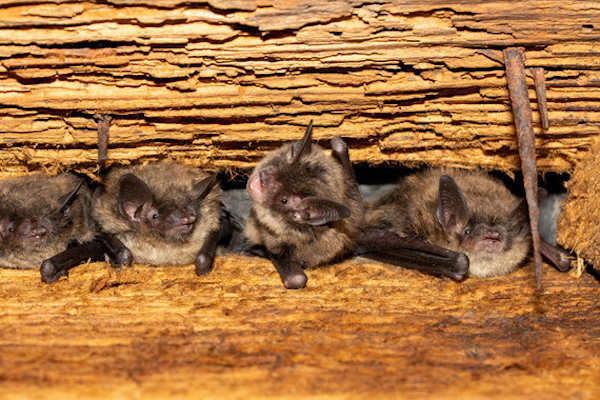
The fungus that causes white-nose syndrome in bats has been detected in several counties across California this year, although bats with visible signs of the disease have yet to be observed in the state.
White-nose syndrome has killed millions of bats across North America and decimated entire colonies.
Hibernating bats like little brown myotis, Yuma myotis and cave myotis are especially vulnerable.
While white-nose syndrome is often fatal to hibernating bats, it does not infect humans, pets, livestock or other wildlife.
White-nose syndrome develops when the fungus Pseudogymnoascus destructans invades the skin cells of bats, resulting in damage to delicate wing membranes.
The infection typically appears as white fuzz on the faces of infected bats, giving the syndrome its name.
Bats with white-nose syndrome often end winter hibernation early, when water and insect prey resources are scarce, causing them to deplete their fat reserves and become dehydrated. As a result, infected bats often perish.
In 2023, the California Department of Fish and Wildlife, or CDFW, first confirmed the definitive presence of the fungus in a bat roost in Humboldt County.
In 2024, the fungus was also confirmed to be present in Sutter, Placer, Amador and Inyo counties.
Inconclusive laboratory results suggest the fungus may also be present in Trinity, Siskiyou, Shasta, Plumas, Alpine, San Diego, and San Bernardino counties.
Additional results are still pending for several other counties around the state.
The fungus has been detected on several bat species in California, including the little brown myotis, Yuma myotis, long-legged myotis, big brown bat, Mexican free-tailed bat and Western red bat.
This is the first time a Western red bat has been reported with presence of the fungus. The positive sample was returned from a female bat captured on May 9, 2024, in Sutter County.
Both Western and Eastern red bats occur in California and can be difficult to differentiate, so CDFW used genetic sequencing to confirm this individual as Western red bat (Lasiurus frantzii, previously recognized as L. blossevillii).
While white-nose syndrome has not yet been observed in any bat in California, the presence of the fungal pathogen suggests the disease could manifest in California’s bats within the next few years. Such progression has been observed in other states, as the fungus and disease have been spreading across North America since discovery in 2006.
The fungus was first detected on the West Coast in 2016 when it was discovered on a bat in King County, Wash.
While the fungus is primarily spread from contact between bats, humans can unintentionally spread it as well. People can carry fungal spores on clothing, shoes or recreation equipment that has come into contact with the fungus at bat roosts.
To learn more about limiting the spread of white-nose syndrome, see the National White-nose Syndrome Decontamination Protocol, which was updated in March 2024.
Biologists with CDFW, the National Park Service and U.S. Fish and Wildlife Service have been sampling California’s bats for the presence of the fungus and clinical signs of white-nose syndrome since 2016 in support of national surveillance efforts led by the U.S. Geological Survey National Wildlife Health Center.
When bats at monitoring sites emerge from hibernation each spring, biologists swab their faces and wings to test for the fungus. Swabs are analyzed by the USGS National Wildlife Health Center and the Pathogen and Microbiome Institute at Northern Arizona University.
Sustained efforts to monitor bat populations will be critical to understanding and managing this devastating disease. CDFW and its partners will continue conducting white-nose syndrome surveillance and bat population monitoring across the state to assess potential impacts of the disease and inform research and management actions.
The U.S. Fish and Wildlife Service leads the collaborative national response effort for white-nose syndrome through which scientists are continuing to develop and test innovative tools to manage the disease.
California is home to 25 species of bats. A single bat can eat thousands of insects each night. California’s bats keep insect populations in check, benefiting rural, suburban and urban communities as well as a wide variety of natural landscapes that range from forests to deserts to grasslands.
The pest control services that bats provide also protect crops and benefit California’s agricultural economy — the largest in the nation. Across the country, bats contribute approximately $3.7 billion worth of insect pest control for farmers each year and their guano can be used as fertilizer to improve soil health. Robust bat populations are vital to a healthy environment and economy.
CDFW urges people to not handle wildlife, especially dead wildlife or individuals that appear sick. If you find sick or dead bats, or notice bats acting strangely, please report your sighting. Bats flying or roosting outside during the winter is an example of noteworthy behavior that can sometimes, but not always, be associated with white-nose syndrome.
You can help watch for white-nose syndrome in California by reporting bat sightings to CDFW here.
For more information about white-nose syndrome, visit https://www.whitenosesyndrome.org/.
- Details
- Written by: LAKE COUNTY NEWS REPORTS