How to resolve AdBlock issue?
News
- Details
- Written by: Lake County News reports
MENDOCINO NATIONAL FOREST, Calif. – The closure order for the North Pass Fire, number 08-12-16, was lifted at 6 p.m. Friday, which reopened all forest roads and recreation areas in the Yolla Bolly Middle Eel Wilderness and surrounding areas on the Mendocino National Forest.
Visitors to the forest should be aware that just because the fire is out and the closure is no longer in effect, many hazards still remain. Burnt stump holes, snags and other forest hazards remain a concern in the area.
“We are happy to be able to restore access to the western portion of the Forest,” said Forest Supervisor Sherry Tune. “We are asking the public to exercise caution when entering and recreating in the area- there are still several hazards out there.”
The North Pass Fire started Saturday, August 18 and consumed approximately 41,983 acres north of Forest Highway 7 between Anthony Peak and the community of Covelo.
The Mendocino National Forest lifted fire restrictions Tuesday.
Although visitors can once again have a campfire in the forest, fire season is not over. Please use caution when recreating in the forest, especially if you have a campfire.
As a reminder, for those recreating in open areas of the forest this fall:
- Be aware of current conditions before heading to the forest, including closure orders, alerts, notices and current weather.
- Be prepared for changing conditions, including the appropriate gear and layered clothing. Especially in the mountains, weather conditions can change rapidly from hot and sunny to cold and wet.
- Let someone know when you are leaving, where you are going and when you will be back.
- If camping in the open forest, select a level campsite away from dead trees or possible rolling debris. Remember to look up to identify potential hazards.
- Flash flooding and mud flows may be common in areas without vegetation.
For more information, please visit www.fs.usda.gov/mendocino or contact the Forest at 530-934-3316.
- Details
- Written by: Lake County News reports
At least once in the last 20 years, every county in California has had a federal flood disaster declared in its borders, and with winter storms looming, government agencies are urging Californians to learn their risk and prepare for the worst.
California’s first-ever Flood Preparedness Week, Oct. 15-20, launched with new educational Web site sponsored by state and federal agencies.
The flood preparedness education campaign is a joint effort by the California Department of Water Resources, the U.S. Army Corps of Engineers, the Federal Emergency Management Agency, the California Emergency Management Agency, the National Atmospheric and Oceanic Administration’s National Weather Service, and Sacramento County.
The campaign is designed to make more people aware of the many types of flood risk in California. The state is subject not only to river and coastal flooding, but also at risk of tsunami, deep floodplain, alluvial fan and debris flow flooding.
With increased awareness, families and individuals should make an effort to become better prepared for disaster. Nationally, more people die in flooding than any other natural disaster.
Throughout California Flood Preparedness Week, participating agencies will be posting information on their Facebook pages and sending out messages via Twitter about the different types of flooding
Californians should be aware of flood dangers not only where they live, but where they work and visit. Facebook friends and Twitter followers will be encouraged to visit the California Flood Preparedness Web site for more information and for practical instruction on how to prepare, including what to put in a preparedness kit and how to create a family evacuation plan.
For more information on California Flood Preparedness Week, and to learn more about California’s flood risk and preparation efforts, visit www.water.ca.gov/ca-flood-preparedness/ .
- Details
- Written by: Dennis Fordham
Financing the purchase of one’s home and refinancing one’s mortgage can each create estate planning traps for the unwary.
The traps created may be due to the name on the title or the manner in which title is held.
Let us consider two scenarios involving title that can create major problems once someone dies or becomes incapacitated.
The first is when someone lacking good credit purchases or refinances their home.
Often the only way such a person is able to secure financing is by involving another person – usually a parent or other family member – with good credit.
This person is included on title for that reason solely, even though they may not pay anything towards the purchase price or mortgage payments.
Nonetheless, that person is presumed to be legal owner of the property because they are on title.
The problems develop when the family member either dies or becomes incompetent. At death, who succeeds to that person’s ownership share? And during incompetency, how can the property be sold or refinanced?
The answers to these questions are often disturbing. That is, when the family member dies, any share that he or she owned in the home as a tenant in common will pass under his or her will to named beneficiaries or by intestacy to his heirs.
This may result in other persons, besides the original owners who involved the decedent, becoming co-owners; a result not intended at the outset when financing was considered the sole issue.
Moreover, including the real property interest in the deceased person’s estate may trigger a probate, with all the associated expense, aggravation and delay that probate entails.
In addition, if the family member is ever unable to handle his or her financial and property affairs, then it may not be possible to sell or refinance the home. A court supervised conservatorship may then become necessary.
With proper estate planning, these problems can be avoided.
First, the family member’s co-ownership interest should be held as a joint tenancy interest with the other owners of the home, or the interest should be held in the family member’s trust and left to the other co-owners at death. That way, when the family member dies, his or her undivided co-ownership interest passes without either probate or legal dispute to the other original co-owners, presumably as originally intended.
Second, the family member's incapacity planning should provide legal authority for a responsible person to control the ownership interest. That is, in the event of the family member’s incapacity, an agent under a durable power of attorney, or a successor trustee in the case of a trust, can authorize transactions, including a sale or refinancing.
A different scenario where people may unwarily step into a trap occurs when they refinance their own home.
The lender takes title temporarily out of the person’s living trust so that it is held in the person's name individually. The lien is then recorded against the title in the person’s name individually.
If title is not then reconveyed back into the living trust and the person dies holding title individually an unintended probate may then become necessary at the person’s death.
The solution is to insist, and double check, that the title company reconveys title back into one's living trust at the conclusion of the refinancing.
The foregoing illustrates how ignorance regarding the implications of title can result in unforeseen problems at the death or incapacity of a title holder.
Consultation with an attorney at the outset can allow one to avoid these problems with the appropriate means.
Dennis A. Fordham, attorney (LL.M. tax studies), is a State Bar Certified Specialist in Estate Planning, Probate and Trust Law. His office is at 55 First St., Lakeport, California. Dennis can be reached by e-mail at
- Details
- Written by: Lake County News reports
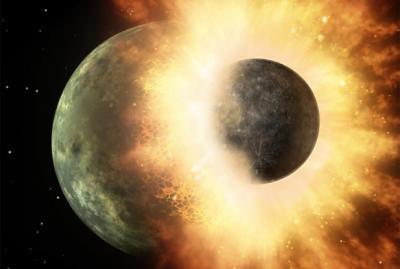
It’s a big claim, but Washington University in St. Louis planetary scientist Frédéric Moynier says his group has discovered evidence that the Moon was born in a flaming blaze of glory when a body the size of Mars collided with the early Earth.
The evidence might not seem all that impressive to a nonscientist: a tiny excess of a heavier variant of the element zinc in Moon rocks.
But the enrichment probably arose because heavier zinc atoms condensed out of the roiling cloud of vaporized rock created by a catastrophic collision faster than lighter zinc atoms, and the remaining vapor escaped before it could condense.
Scientists have been looking for this kind of sorting by mass, called isotopic fractionation, since the Apollo missions first brought Moon rocks to Earth in the 1970s, and Moynier, PhD, assistant professor of Earth and Planetary Sciences in Arts & Sciences – together with PhD student, Randal Paniello, and colleague James Day of the Scripps Institution of Oceanography – are the first to find it.
The Moon rocks, geochemists discovered, while otherwise chemically similar to Earth rocks, were woefully short on volatiles (easily evaporated elements). A giant impact explained this depletion, whereas alternative theories for the Moon’s origin did not.
But a creation event that allowed volatiles to slip away should also have produced isotopic fractionation. Scientists looked for fractionation but were unable to find it, leaving the impact theory of origin in limbo – neither proved nor disproved – for more than 30 years.
“The magnitude of the fractionation we measured in lunar rocks is 10 times larger than what we see in terrestrial and martian rocks,” Moynier said, “so it’s an important difference.”
The data, published in the Oct. 18, 2012, issue of Nature, provide the first physical evidence for wholesale vaporization event since the discovery of volatile depletion in Moon rocks, Moynier said.
The Giant Impact Theory
According to the Giant Impact Theory, proposed in its modern form at a conference in 1975, Earth’s moon was created in a apocalyptic collision between a planetary body called Theia (in Greek mythology the mother of the moon Selene) and the early Earth.
This collision was so powerful it is hard for mere mortals to imagine, but the asteroid that killed the dinosaurs is thought to have been the size of Manhattan, whereas Theia is thought to have been the size of the planet Mars.
The smashup released so much energy it melted and vaporized Theia and much of the proto-Earth’s mantle. The Moon then condensed out of the cloud of rock vapor, some of which also re-accreted to the Earth.
This seemingly outlandish idea gained traction because computer simulations showed a giant collision could have created a Earth-Moon system with the right orbital dynamics and because it explained a key characteristic of the Moon rocks.
Once geochemists got Moon rocks into the lab, they quickly realized that the rocks are depleted in what geochemists call “moderately volatile” elements. They are very poor in sodium, potassium, zinc, and lead, said Moynier.
“But if the rocks were depleted in volatiles because they had been vaporized during a giant impact, we should also have seen isotopic fractionation,” he said. (Isotopes are variants of an element that have slightly different masses.)
“When a rock is melted and then evaporated, the light isotopes enter the vapor phase faster than the heavy isotopes, so you end up with a vapor enriched in the light isotopes and a solid residue enriched in the heavier isotopes. If you lose the vapor, the residue will be enriched in the heavy isotopes compared to the starting material,” explained Moynier.
The trouble was that scientists who looked for isotopic fractionation couldn’t find it.
Extraordinary claims require extraordinary data
Asked how he felt when he saw the first results, Moynier said, “When you find something that is new and that has important ramifications, you want to be sure you haven’t gotten anything wrong.”
“I half expected results like those previously obtained for moderately volatile elements, so when we got something so different, we reproduced everything from scratch to make sure there were no mistakes because some of the procedures in the lab could conceivably fractionate the isotopes,” Moynier said.
He also worried that fractionation could have occurred through localized processes on the moon, such as fire fountaining.
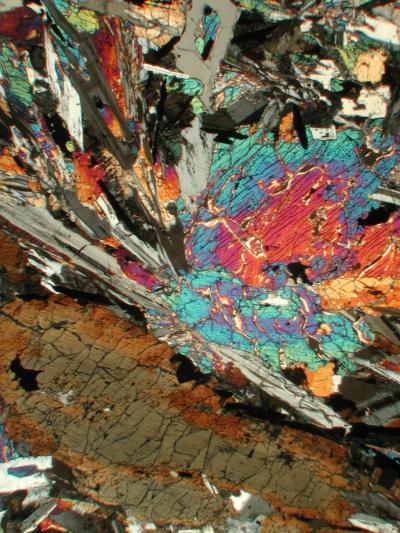
To make sure the effect was global, the team analyzed 20 samples of lunar rocks, including ones from the Apollo 11, Apollo 12, Apollo 15, and Apollo 17 missions – all of which went to different locations on the Moon – and one lunar meteorite.
To obtain the samples, which are stored in Houston at the Johnson Space Center, Moynier had to convince committee that controls access to them of the scientific merit of his project.
“What we wanted were the basalts,” Moynier said, “because they’re the ones that came from inside the Moon and would be more representative of the Moon’s composition.”
But lunar basalts have different chemical compositions, Moynier said, including a wide range of titanium concentrations. Isotopes can also be fractionating during during the solidification of minerals from a melt.
“The effect should be very, very tiny,” he said, “but to make sure this wasn’t what we were seeing, we analyzed both titanium-rich and titanium-poor basalts, which are at the two extremes of the range of chemical composition on the Moon.”
The low and high titanium basalts had the same zinc isotopic ratios.
For comparison, they also analyzed 10 Martian meteorits. A few had been found in Antarctica but the others were from the collections at the Field Museum, the Smithsonian Institution and the Vatican.
Mars, like the Earth, is very rich in volatile elements, Moynier said. “Because there is a decent amount of zinc inside the rocks, we only needed a tiny bit to test for fractionation, and so these samples were easier to get.”
What it means
Compared to terrestrial or martian rocks, the lunar rocks Moynier and his team analyzed have much lower concentrations of zinc but are enriched in the heavy isotopes of zinc.
Earth and Mars have isotopic compositions like those of chondritic meteorites, which are thought to represent the original composition of the cloud of gas and dust from which the solar system formed.
The simplest explanation for these differences is that conditions during or after the formation of the Moon led to more extensive volatile loss and isotopic fractionation than was experienced by Earth or Mars.
The isotopic homogeneity of the lunar materials, in turn, suggests that isotopic fractionation resulted from a large-scale process rather than one that operated only locally.
Given these lines of evidence, the most likely large-scale event is wholesale melting during the formation of the Moon. The zinc isotopic data therefore supports the theory that a giant impact gave rise to the Earth-Moon system.
“The work also has implications for the origin of the Earth,” Moynier pointed out, “because the origin of the Moon was a big part of the origin of the Earth.”
Without the stabilizing influence of the Moon, the Earth would probably be a very different sort of place.
Planetary sciences think the Earth would spin more rapidly, days would be shorter, weather more violent, and climate more chaotic and extreme. In fact it might have been such a harsh world, it would have been unfit for the evolution of our favorite species: us.