 How to resolve AdBlock issue?
News
- Details
- Written by: Lake County News Reports
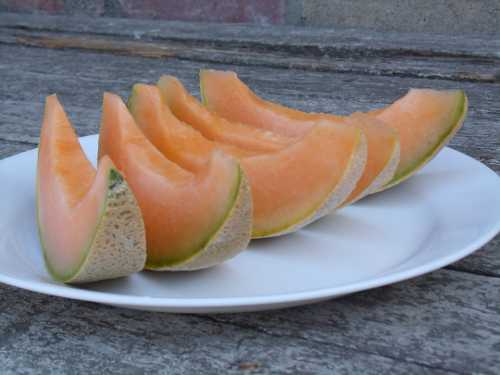
August blessed us with a rare “blue moon” – meaning the second full moon in one month – and, being scarce, I’m told the next one won’t appear till 2015.
The reason I mention this is because as I write, a nearly full post-blue moon is rising in the sky, and its massive orange presence reminds me of a perfectly round, perfectly ripe, perfectly delicious coral-colored cantaloupe.
Today’s subject – cantaloupes, not moons – has been in the news in recent weeks, and not in a good way.
Outbreaks of bacterial-related illnesses in the Midwest and some southern states have been traced to cantaloupes from a farm in Indiana.
It’s not the melons’ fault, of course – dirty pools of water and contaminated processing equipment are to blame – but such news can cast a pall on an otherwise bright and wonderful fruit.
Thankfully none of the suspect melon was distributed in our state, so enjoyment of this delectable summer delight can be had worry free.
Even so, since bacteria can grow on the surface of melons, it’s always a good idea to thoroughly wash their outside before cutting and consuming.
June through September represents the peak of the California cantaloupe season, when the melons are at their best. In some regions of the western U.S. they’re grown through December, though they likely won’t be as luscious as the ones found this month.
My local grocer had sweet and delicious cantaloupes for sale at a great price yesterday, reflecting the abundance of the season. If you can find them from local farmers, such as through an outdoor farmers’ market or in a CSA (Community Supported Agriculture) box, then all the better!
Supermarkets sell cantaloupes from other countries during our off season (they hail from Central America during the winter and from Mexico in spring), but my preference is for those grown here. Imported cantaloupes are generally thought to be inferior.
What we know in the U.S. as cantaloupe is actually a musk melon. True cantaloupes, grown in Europe, have smooth skin, unlike the grooved, netted, rough-skinned spheres we know as cantaloupes.
Cantaloupes and other melons are in the same family as cucumbers and squash, all of which grow on vines that trail along the ground.
Food historians theorize that melons originated in Persia, Afghanistan, or Armenia, and they’ve been cultivated by humans across an expanded swath of that general area – from Egypt to India – since Biblical times.
Dried, roasted melon seeds are eaten throughout the Middle East, and there is evidence that this treat was enjoyed by Chinese royalty before the birth of Christ.
By the third century, Romans were importing melons from Armenia; however, these were not the weighty melons we know today. They were approximately the size of an orange.
Melons developed and spread throughout southern Europe, and by the 1600s cantaloupes were grown in North America from Florida to New England, though they didn’t gain broad acceptance here until the 19th century.
It was after the Civil War that cantaloupes became a major commercial crop.
We can credit the French for giving us the melon – called the “Netted Gem” – which became our familiar cantaloupe. They were also the first to export the honeydew melon to our shores.
A French poet once said, “There are three things that can’t support mediocrity: poetry, wine, and melons.”
And isn’t that true? How disappointing it is to desire the sweet succulent flesh of an aromatic ripe melon, only to find that what you’ve bitten into is hard and flavorless.
My guess is that melons have become more consistently flavorful since those early days in France, as another French writer said that it takes 50 melons to find a single good one.
When an ambrosial slice of near-perfect melon is found, however, one wonders why one bothers with cookies at all.
In my opinion, eating fresh melon out of hand is the consummate way to enjoy it, but there are other methods, as well.
Agua fresca, literally fresh water, is a refreshing drink that may be made with cantaloupe or any fruit soft enough to puree (watermelon, strawberry, mango, etc.). The drink is served all over Mexico and can be replicated easily at home.
To make it with cantaloupe, use a large, ripe cantaloupe that’s peeled, seeded, and diced, and puree in a blender or food processor.
The key to agua fresca is to strain the puree through a fine sieve to eliminate the pulp. Once that’s done, add 1 ½ cups water, the freshly squeezed juice of 2 or 3 limes, and 2 to 4 tablespoons of sugar to taste.
An alternate sweetener may be used, if preferred, and while not traditional, sparkling water may be used in place of still.
A delicious cold soup of cantaloupe may be made by pureeing it in a blender and adding lemon juice and honey to taste. Ripe, peeled peaches may be pureed along with the cantaloupe, and yogurt may be blended in, if desired.
Cubes or balls of cantaloupe are a fruit salad staple and go especially well with other melons like watermelon or honeydew, raspberries, and blueberries.
Since cantaloupe marries well with a number of different herbs and spices – basil, ginger, lemongrass, mint, star anise, and tarragon, for example – interest may be added to a salad of cantaloupe by infusing such flavors into simple syrup (see procedure in the recipe below) and drizzling it over the fruit.
White wine can replace the water when you make the simple syrup to add another layer of flavor. A favorite dessert of mine is a combination of cantaloupe and honeydew in a sauce of mint-infused wine syrup.
If adding syrup to your fruit is not your thing, another option is to lightly sprinkle finely chopped mint, basil, or tarragon over the melon for a contrast in flavor.
Cantaloupe is wonderful with yogurt, and a pleasing breakfast (or refreshing snack) would be a dollop of plain yogurt over a generous slice of cantaloupe, sprinkled with chopped fresh mint, a few fresh raspberries and perhaps a drizzle of honey to taste.
Some enjoy serving cantaloupe slices wrapped in prosciutto as an appetizer as the salty, somewhat fatty quality of the meat provides contrast to the sweet freshness of the melon.
Cantaloupes are low in calories, but high in health-promoting antioxidant-rich substances called polyphenols, as well as numerous vitamins and minerals.
Cantaloupes have among the highest stores of vitamin A of all fruits, with one serving providing more than 100 percent of our daily requirement of it.
They’re rich in antioxidant flavonoids like beta-carotene, and are a good source of potassium, vitamin C, B-complex vitamins, and the mineral manganese.
They also contain zeaxanthin, an important dietary carotenoid that assists in the protection of age-related macular degeneration.
The key to picking a ripe melon is one’s nose; let the rich aroma of cantaloupe be your guide and it’ll be hard to go wrong.
Unlike some melons (watermelon and honeydew, for example), cantaloupe will ripen at home if left at room temperature for a day or more, so if you can’t find one that’s aroma-rich, it will likely happen with a bit of time.
Another clue to ripeness is that the stem end gives with a bit of pressure, and the rind of a ripe cantaloupe (meaning the layer beneath the netting) should be cream or yellow, rather than gray or green.
If a cantaloupe is ripe, it should be stored in the crisper drawer of your fridge, where it will keep for a maximum of three to four days.
Today’s recipe is a cantaloupe granita courtesy of Michael Chiarello, celebrity chef and owner of Bottega Ristaurante in Yountville, Calif.
Granita is a frozen dessert made with water, sugar, and fruit puree or another flavoring. It’s similar to sorbet, but has a coarser, more crystalline texture.
Granita is exceptionally refreshing as an after-meal palate cleanser or a treat on a hot summer day.
I especially appreciate this recipe because it’s not necessary to own an ice cream maker to prepare it. Instead, the procedure is to stir the mixture in the freezer every half hour to break up the crystals as they freeze.
This version is subtly flavored with mint, a wonderful complement to cantaloupe and other types of melon, and Chef Chiarello includes an easy tip for preparing a frosted bowl for serving.
May all your days be as sweet as the most aromatic cantaloupe! Enjoy.
Cantaloupe granita
1 ¼ cups superfine sugar
½ cup granita
¼ cup lightly packed fresh mint leaves
2 medium cantaloupes, about 4 pounds each, peeled, seeded, and cut into 1-inch cubes
Pinch gray salt
Combine the sugar and water over low heat until the sugar has dissolved. Add the mint. Remove the pan from the heat and let the syrup cool.
Purify the cantaloupe in a food processor until liquefied. Pour the fruit into a medium bowl and add the salt.
Remove the mint leaves from the cooled syrup. Add the syrup to the pureed fruit and mix well.
Pour the cantaloupe mixture into a prechilled 7 x 12 inch glass baking dish (or two glass loaf pans). Place it uncovered into the freezer.
Stir with a fork every half hour until almost completely frozen but still grainy, about three to four hours. Do not stir it past the almost frozen state or the ice crystals will become too fine and hard to scrape.
Entertaining notes: To serve, find a really interesting glass bowl and dip it in cold water. Put the bowl into the freezer for 15 minutes; repeat. The result will be a frosted glass serving bowl that looks great and sets the right backdrop for the granita.
Esther’s note: I’ve noticed that Chef Chiarello is fond of specifying the use of gray salt in many of his recipes. Gray salt is light gray to grayish-purple in color and is also known as sel gris or Celtic sea salt. From the coast of Brittany, France, it’s somewhat moist and a bit chunky. It retains all the minerals found in the sea, and of all the sea salts, it’s known for having the most magnesium. Any good quality salt (kosher or sea) may be used in its place.
This recipe by Michael Chiarello is courtesy of www.foodnetwork.com .
Esther Oertel, a freelance writer, cooking teacher, and speaker, is passionate about local produce and all foods in the vegetable kingdom. She welcomes your questions and comments and may be reached at
- Details
- Written by: Elizabeth Larson

LAKEPORT, Calif. – It was another record-breaking year for the Junior Livestock Auction.
The auction took place in two rings Saturday afternoon at the Baldwin Pavilion at the Lake County Fair.
The annual event is a fair mainstay, featuring a variety of livestock – Steers, lambs, hogs, meat goats, turkeys, rabbits and chickens – raised by local 4-H and Future Farmers of America club members.
Fair Chief Executive Officer Richard Persons said the Saturday auction set a new record for gross sales, bringing in $339,997.25 on 260 lots.
He said that was up by 12 percent over last year’s auction, the previous record sale, which had passed the $300,000 mark for the first time in the Lake County Fair’s history.
Persons said the auction usually averages 230 lots. The record lot number is 280.
Visitors can see the animals through Sunday night, when the fair wrap up.
For more information and a schedule of the final day’s events visit www.lakecountyfair.com .
Email Elizabeth Larson at

- Details
- Written by: Elizabeth Larson
LAKEPORT, Calif. – A new group of young dogs are waiting for homes at Lake County Animal Care and Control this week.
The available dogs are mixes of basset hound, pit bull Chihuahua, coonhound and shepherd.
Thanks to Lake County Animal Care and Control’s new veterinary clinic, many of the animals offered for adoption already are spayed or neutered and ready to go home with their new families.
Dogs that are adopted from Lake County Animal Care and Control are either neutered or spayed, microchipped and, if old enough, given a rabies shot and county license before being released to their new owner. License fees do not apply to residents of the cities of Lakeport or Clearlake.
If you're looking for a new companion, visit the shelter. There are many great pets hoping you'll choose them.
The following dogs at the Lake County Animal Care and Control shelter have been cleared for adoption (additional dogs on the animal control Web site not listed are still “on hold”).

Shepherd-basset hound mix
This female shepherd-basset hound mix is 3 years old.
She is nearly 38 pounds, has a short black and tan coat, and has not yet been spayed.
She’s in kennel No. 6, ID No. 34156.

Pit bull terrier mix
This male pit bull terrier mix is 1 year old.
He weighs 42 pounds, has a short black and white coat, and has not yet been altered.
He’s in kennel No. 13, ID No. 34160.

Pit bull terrier mix
This male pit bull terrier mix is 9 months old.
He weighs 34 pounds, has a short chocolate-colored coat and has not yet been neutered.
Find him in kennel No. 14, ID No. 34092.

Male Chihuahua mix
This male Chihuahua mix is 6 months old.
He weighs 5 pounds and has a short tan coat.
He’s in kennel No. 16, ID No. 34049.

‘Lucy’
“Lucy” is an 8-month-old bluetick coonhound-treeing walker coonhound.
She has a short black and white coat, has a microchip and has not yet been spayed.
Lucy is in kennel No. 30, ID No. 32171.
Adoptable dogs also can be seen at http://www.co.lake.ca.us/Government/Directory/Animal_Care_And_Control/Adopt/Dogs_and_Puppies.htm or at www.petfinder.com .
Please note: Dogs listed at the shelter's Web page that are said to be “on hold” are not yet cleared for adoption.
To fill out an adoption application online visit http://www.co.lake.ca.us/Government/Directory/Animal_Care_And_Control/Adopt/Dog___Cat_Adoption_Application.htm .
Lake County Animal Care and Control is located at 4949 Helbush in Lakeport, next to the Hill Road Correctional Facility.
Office hours are Monday through Friday, 8 a.m. to 5 p.m., and 1 p.m. to 3 p.m., Saturday. The shelter is open from 10:30 a.m. to 4:30 p.m. Monday through Friday and on Saturday from 1 p.m. to 3 p.m.
Visit the shelter online at http://www.co.lake.ca.us/Government/Directory/Animal_Care_And_Control.htm .
For more information call Lake County Animal Care and Control at 707-263-0278.
Email Elizabeth Larson at
- Details
- Written by: Lake County News reports
LAKEPORT, Calif. – The 2012 Lake County Fair is entering its final day.
The fair, which began last Thursday, will open at 11 a.m. Sunday and close at 11 p.m.
Sunday is Fiesta Latina Day. At 3 p.m. the performance starts with Irma Lopez on the Sutter Lakeside Hospital Main Stage. Banda la Tequirera will take the stage at 8 p.m.
At 7:30 p.m. the demolition derby, with a bigger purse this year for the winners, will take place at the main grandstands
Below is a guide to Sunday’s full schedule of events.
Prices are $10 for a regular ticket, $6 for a senior over age 60, and $6.00 for children ages 6 through 11. Children under 6 years old are admitted free.
For more information visit www.lakecountyfair.com or www.facebook.com/pages/Lake-County-Fair/138978582794813 .
Sunday, Sept. 2
All day features
Carnival Pay-One-Price Day, $25
Draft horse wagon rides, climbing wall, and mechanical bull at the Donley Barn.
The clothing and textile display is open in the Theatre Building.
Aunt Mary’s Art Center, in Fiesta Park, look for posted times.
Mickey the Clown, strolling balloon sculptor Fill-up and magician Ken Garr can be found performing throughout the grounds.
Walk on Contests take place at various times throughout the day. Visit the exhibit buildings to join the fun.
Scheduled events
8 a.m.: Open Rabbit Show, Mather Building
11 a.m.: Gates open
11:30 a.m.: Mark Weston Band, Sutter Lakeside Hospital Main Stage
12 p.m.: Acoustic guitarist Travis Rinker, Mediacom Gazebo Stage
1 p.m.: Hypnotism show, Academy Park Stage
1:30 p.m.: Mark Weston Band, Sutter Lakeside Hospital Main Stage
2 p.m.: Acoustic guitarist Travis Rinker, Mediacom Gazebo Stage
3 p.m.: Fiesta Latina starts – Irma Lopez, Sutter Lakeside Hospital Main Stage; Konocti Klogging Kids, Mediacom Gazebo Stage; Hypnotism show, Academy Park Stage
4 p.m.: 4-H and FFA Award Ceremony, Baldwin Pavilion
5 p.m.: Acoustic guitarist Travis Rinker, Mediacom Gazebo Stage
5:30 p.m.: os Amantes del Ritmo, Sutter Lakeside Hospital Stage
7 p.m.: Hypnotism show, Academy Park Stage
7:30 p.m.: Demolition derby presented by Lake County Tribal Health, main grandstands
7:30: Barrish & Sommers, Mediacom Gazebo Stage
8 p.m.: Banda la Tequirera, presented by Robinson Rancheria Resort and Casino
9 p.m.: Barrish & Sommers, Mediacom Gazebo Stage
10 p.m.: Buildings close
11 p.m.: Fair closes