 How to resolve AdBlock issue?
News
- Details
- Written by: Elizabeth Larson
NOTE: The unedited footage of the fire scene has some graphic language in the background. The audio can be muted.
KELSEYVILLE, Calif. – A Friday night fire destroyed a garage and several race cars belonging to a popular local race car driver and his family.
The fire, reported at about 8:45 p.m., occurred in the 5100 block of State Street in Kelseyville, according to radio traffic.
Witnesses reported seeing thick plumes of black smoke and open flames, and hearing explosions in the area. Dispatch indicated people were inside the structure when the fire was first reported.
Firefighters at the scene reported that the garage was fully engulfed when they arrived.
Lakeport Fire Chief Ken Wells, whose agency responded along with Kelseyville Fire, said the garage belonged to Lauren Snider, a driver at Lakeport Speedway and a professional auto mechanic.
Wells confirmed there were people in the garage working on cars when the fire broke out. A cause was not immediately available.
“Nobody was hurt,” said Wells.
The explosions that were reported resulted from igniting fuel and exploding motors, said Wells.
One sprint car was backed out, but Wells said the garage was a total loss, along with its contents, which he said included race cars and boats.
“They lost a lot,” he said.
No other structures were damaged, Wells said.
Kelseyville Fire sent three engines, Lakeport Fire sent one and the California Highway Patrol assisted with traffic control, according to Wells.
Firefighters remained on scene late Friday. Engines were clearing the scene at around 11 p.m., and the incident was terminated at approximately 11:10 p.m.
Email Elizabeth Larson at
- Details
- Written by: Lake County News reports
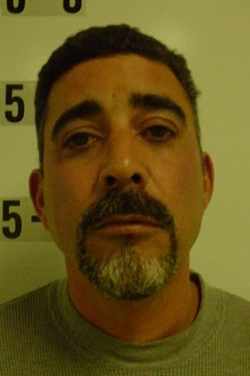
LAKE COUNTY, Calif. – A Lucerne man has been sentenced to 24 years in prison for multiple counts of sexual abuse and child molestation.
On Monday, May 21, Todd Allen Drawdy, 45, was sentenced to state prison for three counts of lewd acts with a child with force or fear, according to Sgt. Steve Brooks of the Lake County Sheriff's Office.
An additional year was added to Drawdy's sentence to run concurrently for a probation violation as Drawdy was on informal, misdemeanor probation for annoying and molesting a minor in a previous case, Brooks reported.
Detectives with the Lake County Sheriff’s Major Crimes Unit arrested Drawdy on Nov. 30, 2011, after they obtained evidence that he had molested at least one young girl beginning when she was 10 years old and continuing for the next five years, according to Brooks.
Brooks said detectives obtained phone call recordings in which Drawdy admitted to some of the allegations while speaking to a member of the victim’s family.
The Lake County District Attorney’s Office declined to handle the case due to a potential conflict, as Lake County News has reported.
The California Attorney General’s Office assumed the case and worked with Lake County Sheriff’s Office detectives to locate several more victims, Brooks said.
The charges carried a potential sentence of 30 years to life in prison. The California Attorney General’s Office and the defense made a plea agreement in April, according to Brooks.
The California Attorney General's Office did not return a call seeking comment on the case Friday.
- Details
- Written by: Dr. Tony Phillips
On Monday, June 4, there's going to be a full Moon. According to Native American folklore it’s the Strawberry Moon, so-called because the short season for harvesting strawberries comes during the month of June.
This strawberry’s going to have a bite taken out of it.
At 3 a.m. am Pacific Daylight Time, not long before sunrise on June 4, the Moon passes directly behind our planet.
A broad stretch of lunar terrain around the southern crater Tycho will fall under the shadow of Earth, producing the first lunar eclipse of 2012.
At maximum eclipse, around 4:04 am PDT, 37 percent of the Moon's surface will be in the dark.
Because only a fraction of the strawberry moon is shadowed, astronomers call this a partial eclipse. But it's totally beautiful.
The eclipse is visible in North and South America, Australia, eastern parts of Asia and all across the Pacific Ocean.
On the Atlantic side of the United States, the eclipse occurs just as the Moon is setting in the west – perfect timing for the Moon illusion.
For reasons not fully understood by astronomers or psychologists, low-hanging Moons look unnaturally large when they beam through trees, buildings and other foreground objects.
In fact, a low Moon is no wider than any other Moon – cameras prove it – but the human brain insists otherwise.
The eclipsed Moon, hanging low in the west at daybreak on June 4, will seem extra-large to US observers east of the Mississippi. The fact that the extra size is just an illusion in no way detracts from its visual appeal.
The Sun-Earth-Moon alignment that causes this eclipse is the second of three rapid-fire celestial line-ups.
First there was the annular solar eclipse of May 20, when the Moon moved between Earth and the sun to turn our star into a “ring of fire.”
The lunar eclipse of June 4 reverses the order of the Earth and Moon, so that the Moon is eclipsed instead of the Sun.
Finally, we have the transit of Venus on Tuesday, June 5, and Wednesday, June 6, when the second planet moves directly between the Earth and sun.
Backyard astronomy doesn't get much better than this.
Wake up before dawn on June 4 and savor the sweet eclipse of the Strawberry Moon.
Dr. Tony Phillips works for the National Aeronautics and Space Administration.
- Details
- Written by: Dennis Fordham
A trustee is required to keep complete and adequate records for both tax and non tax reasons under California and federal laws.
First, a trustee has a duty to account to beneficiaries, and to report information about trust assets, liabilities and finances when requested by a beneficiary with a current vested interest.
Second, a trustee has duties to pay required taxes and report to federal, state, and local taxing authorities. California charitable trusts also must notify and report to the California Attorney General.
Records to maintain fall into three broad categories: (1) legal documents; (2) a trustee’s log (diary); and (3) financial, asset and tax documents.
Let us consider each category.
A trustee should keep all original legal documents and correspondences. The record keeping system entails document folders and an index. The original trust document and all its amendments and any restatements should be preserved.
Likewise any other legal documents pertinent to settling the trust – like promissory notes, court orders, tax documents, accountings and correspondences to beneficiaries, attorneys, accountants and others – should be kept.
The foregoing only works to the extent that matters are documented. Hence trustee, or his or her attorney, will not rely simply on oral communications with beneficiaries but will follow up in writing to document oral communications.
A trustee should keep a chronological trustee log (diary) from the very outset. Entries should detail all time spent (on a daily basis), discretionary decisions, meetings, travel and out of pocket expenses in furtherance of trustee duties.
A detailed log will show the basis for all discretionary trustee decisions: The legal authority relied upon; the professional advice that was obtained; and the critical information and documents that were considered in making the judgment.
For example, consider a trustee with discretionary authority over whether or not to keep paying a beneficiary’s college tuition.
The trustee will diary his or her consideration of the beneficiary’s academic performance, extenuating circumstances, and any other factors relevant to deciding whether the beneficiary is likely to complete a degree.
The importance of a detailed trustee log becomes all too apparent if and when a beneficiary ever challenges a trustee’s actions or objects to the amount of trustee’s fees.
The reasonableness of trustee fees depends in part on the time, effort and complexity involved. The trustee diary should document such factors.
A formal trust accounting to beneficiaries discloses all trust assets and transactions (i.e., receipts of income, payment of expenses, disposition of assets, and distributions to beneficiaries).
In order to have the information necessary to prepare an accounting that meets California legal requirements, a trustee will need to keep all inventories, appraisals, invoices, income receipts, bank statements, canceled checks, check ledger, tax returns, a trustee log, any prior accountings, and anything else with relevant information.
For example, take a payment to a contractor for a repair to a residence owned by the trust to get it ready for sale.
The accounting will need to say what repairs were made, to what residence and whether or not the contractor is related to the trustee; in addition to showing the amount and date of the payment. A contractor’s invoice, with this information, is, therefore, a necessary document to keep.
How long a trustee preserves the records varies.
For tax reasons records are usually kept three years after the filing of a tax return, but some records must be kept for up to seven years.
For non tax reasons, beneficiaries have three years from receipt of an accounting to file objections; this can be reduced to 180 days by the trust instrument (with a special warning notice provided with the accounting).
Dennis A. Fordham, attorney (LL.M. tax studies), is a State Bar Certified Specialist in Estate Planning, Probate and Trust Law. His office is at 55 First St., Lakeport, California. Dennis can be reached by e-mail at