 How to resolve AdBlock issue?
News
- Details
- Written by: Lake County News reports
LAKE COUNTY, Calif. – April 22-28 marks National Crime Victims’ Rights Week, a time to honor crime victims and the nation’s progress in advancing their rights.
This year’s theme – “Extending the Vision: Reaching Every Victim” – celebrates the vision behind that progress and the ideal of serving all victims of crime.
Lake County Victim-Witness will observe National Crime Victims’ Rights Week with several special events and programs.
Over the weekend, McGruff the crime dog took part in the Children’s Festival at Library Park in Lakeport; on Tuesday, April 24, Victim-Witness will host an annual noon barbecue for law enforcement and service providers; and on Wednesday, April 25, Middletown Rancheria and Sunrise Special Services will host a training for the District Attorney’s Office, Victim-Witness Division on “From Report Through Court” and the impact of AB 109 on victims of crime at Twin Pine Casino in Middletown.
The vision that launched the victims’ rights movement emerged more than 30 years ago. Then, as now, crime victims endured physical and emotional wounds, costly financial burdens, an often hostile criminal justice system and an alarming public tendency to blame them for the crimes against them.
Victims often were excluded from courtrooms, disrespected by officials and afforded few rights.
They began organizing to confront these challenges and to promote fair, compassionate and respectful responses to victims of crime.
Since the 1980s, the nation has made dramatic progress in securing rights, protections and services for victims of crime.
Every state has enacted victims’ rights laws and 32 states have constitutional victims’ rights amendments.
All states have victim compensation funds, and more than 10,000 victim service agencies have been established throughout the country.
The Office for Victims of Crime, U.S. Department of Justice, supports a range of programs for crime victims, and seeks to extend those services to those who are underserved.
Yet there is still so much to do, according to advocates.
Victims’ rights are not universal and are often not enforced. Only a fraction of victims receive crime victim compensation, which is usually limited to victims of violent crime.
More than 50 percent of crimes are not reported and fewer than 20 percent of victims receive needed services.
The victim services system is fragmented and uncoordinated, and agencies are struggling to keep their doors open in the face of budget cuts.
Yet victim advocates have not lost their resolve.
“Our commitment to ‘extend the vision’ and ‘reach every victim’ will overcome every challenge that confronts us now,” said Joye E. Frost, acting director, Office for Victims of Crime, U.S. Department of Justice. “The vision, determination, and passion for justice that inspired our history will help us transform the future for every victim of crime.”
Each community can encourage its members to participate in the week’s events and find ways to help victims of crime.
For additional information about National Crime Victims’ Rights Week and how to help victims in your community, please contact Lake County Victim-Witness at 707-262-4282, or visit their Facebook page at Victim/Witness Division of the Lake County District Attorney’s Office.
For more ideas on how to volunteer, visit the Office for Victims of Crime Web site, www.crimevictims.gov .
- Details
- Written by: Lake County News Reports
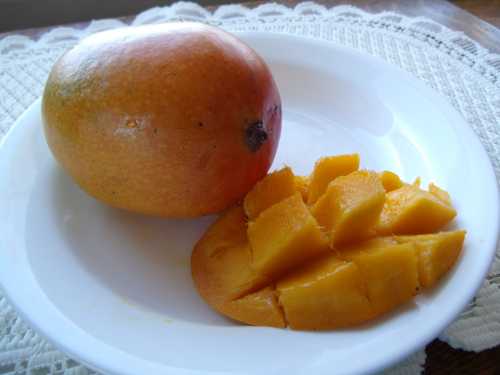
My heart always skips a beat when I see mounds of rosy golden mangoes piled high at the market. If they’re ripe enough to emit a sweet, tropical smell, my knees get weak.
They were on sale the other day, no doubt because they were ready for immediate consumption and not likely to last much longer on the shelves.
This, of course, is a perfect scenario for an avid mango fan like me, and I was happy to relieve the market of a hefty armload of the perfectly ripe fruit.
Inside the smooth skin that covers each weighty oval, bright orangey gold flesh drips with succulent flavor: part juicy peach, part tropical sunset.
Can you tell I love them?
Mangoes are native to India, but have spread to grow in tropical and subtropical regions around the world. Mexico is currently one of the biggest exporters of mangoes.
They’ve been cultivated for about 4,000 years and are said to be one of the world’s most popular fruits.
Mangoes are the national fruit of India, Pakistan, and the Philippines, and Bangladesh has chosen the tree on which they grow as its national tree.
Mangoes are distant relatives of pistachios and cashews, and they contain the same rash-inducing chemical found in poison sumac and poison ivy.
While not as common as reactions from the aforementioned plants, susceptible people may get contact dermatitis from the skin, sap, leaves or stems of mangoes.
In fact, during their primary ripening season, mangoes are the most common source of plant dermatitis in Hawaii.
Mangoes are beloved in cuisines around the world, particularly in India and Southeast Asia.
Mangoes are made into pickles, curries and chutneys. Green mangoes are often used in salads, sometimes with fish sauce, vinegar or hot sauce.
Dried mango is used in granola, trail mix and fruit bars, and sweet spears of it are sold in bulk at many markets.
Juices, smoothies, and ice creams are made with mango, and mangoes mixed with condensed milk are a favorite topping for shaved ice in the Philippines and elsewhere in Asia.
Perhaps you’ve tried coconut sticky rice with mango at a Thai restaurant at the end of a meal? In my opinion, the fresh mango in this dessert is a perfect vibrant foil to the gooey sweetness of the rice.
Mangoes may be used in recipes in place of peaches, such as in cold summer soups or warm cobblers.
A ripe mango should give a bit when touched, similar to a peach. While many mangoes turn from green to shades of gold, orange, or rosy red as they ripen, some types can be ripe while green.
If mangoes are not ripe when purchased, they should ripen at home if left at room temperature. This may take up to a week, but if you’re in a hurry, placing them in a paper bag hastens the process.
When mangoes are ripe, store them in the fridge to avoid their becoming overly ripened.
Once your mango is perfectly ripe and ready to eat, there’s the problem of how to best remove the flesh.
I recommend using a sharp knife to cut lengthwise as close to the middle as possible, avoiding the hard, white, flat pit within.
Do this on both sides, and then cut around the pit to get that last circle of flesh off.
At this point, you can scrape the flesh from the skin with a spoon if using for a smoothie or eating out of hand.
Otherwise, score the flesh in a crosshatch pattern. Flip the skin inside out to expose cubes of mango ready for cutting from the skin.
If you’re a “show me” person and learn best by seeing, there are scores of step-by-step instructions using photos or videos on the Internet. I’ve listed one such link at the end of the column.
As to nutrition, mangoes are full of it.
They’re rich in dietary fiber, vitamins, minerals, and antioxidant compounds.
A one-cup serving provides 100 percent of our vitamin C requirement and 35 percent of vitamin A, both important antioxidants. They’re full of more than 20 other nutrients, including potassium, vitamin E and vitamin B-6.
Scientific studies have shown them to be beneficial in a number of areas, including protection against colon, breast, leukemia and prostate cancers.
Today’s recipe is a tropical quinoa salad inspired by a friend’s sweet concoction of avocado, mango and sweetened condensed milk.
Mine is not intended to be a tropical dessert, as hers was; rather, it’s a healthy and nutritious side dish.
Its grain-like base, quinoa, is high in protein – a full 18 percent – and the protein it offers is complete, unlike many plant foods.
Lime, cilantro, peanut oil and mint combine to give the salad a tropical taste and island feel.
While I use two types of quinoa in the salad for color contrast, feel free to use the type, or combination of types, you like best.
Two other recipes are offered in addition to my salad: a mango chutney that’s fabulous with fish or chicken, and a healthy, tasty mango smoothie, perfect for breakfast on a warm spring morning.
And before I go, did you know that Indian paisley patterns were originally inspired by the shape of mangoes? I sure hope that doesn’t make you salivate the next time you spy vintage clothing from the 1960s. I can’t guarantee that I won’t.
Tropical quinoa salad with mango
¼ cup red quinoa
¼ cup traditional quinoa
½ teaspoon salt
1 cup water (for cooking quinoa)
Juice and zest of one lime
Juice and zest of ½ orange
2 tablespoons peanut oil
1 small clove garlic, crushed with a pinch of salt
¼ teaspoon cumin
2 scallions, thinly sliced, whites and greens
About 2 tablespoons each of chopped fresh cilantro and mint
½ mango, diced
½ cup diced pineapple (optional)
½ avocado, diced
¼ cup toasted almonds, chopped (or toasted slivered almonds)
Combine quinoa, salt, and water in pot and bring water to a boil. Cover pot and simmer until all water is absorbed into quinoa and grain becomes tender, about 10 to 15 minutes. Remove from heat and transfer quinoa to a large serving bowl to cool.
Combine juices, zest, oil, garlic, and cumin in small bowl. Mix well and pour over quinoa while it is still a bit warm.
Add scallions, mint, cilantro, mango, pineapple and avocado to salad. Toss to mix well.
Just before serving, add almonds to salad. (This helps them stay crunchy.)
If making ahead of time, salad will keep well in fridge several hours. If making the night before, dress quinoa, but add fruit and herbs the next day.
This recipe makes enough for at least four.
Recipe by Esther Oertel.
Mango salsa
1 cup diced fresh mango
1/3 cup roasted red peppers, drained and diced
1/3 cup diced red onion
1 jalapeño pepper, seeded, minced
2 tablespoons fresh mint, chopped
1 tablespoon fresh lime juice
Combine all ingredients and chill. Serve with grilled fish or chicken.
This recipe is courtesy of about.com and makes 1 ½ cups of salsa.
Mango, orange and ginger smoothie
1 cup orange juice
½ large mango
1 ¼ teaspoons ginger juice (see note below)
4 ice cubes
Optional: ½ ripe banana (about 2 ounces peeled banana)
Combine the orange juice, mango, ginger juice and ice cubes in a blender.
Blend until frothy and smooth. If you want a thicker drink, add the banana. Serve right away for the best flavor.
Note: To make the ginger juice, grate about 2 teaspoons ginger. Place on a piece of cheesecloth. Gather together the edges of the cheesecloth, hold over a bowl and twist to squeeze out the juice. Ginger combines very well with mango and contributes a host of antioxidant and anti-inflammatory phytochemicals. (Esther’s note: You can add a smaller quantity of grated ginger directly to the blender in lieu of its juice.)
This recipe makes one large or two small servings and is courtesy of the New York Times at www.nytimes.com .
Check out this site for instructions on how to cut a mango: http://www.mango.org/how-cut-mango .
Esther Oertel, a freelance writer, cooking teacher, and speaker, is passionate about local produce and all foods in the vegetable kingdom. She welcomes your questions and comments and may be reached at
- Details
- Written by: Lake County News reports
LAKEPORT, Calif. – The county’s animal shelter this week has several small dogs available for adoption.
Chihuahua, Pomeranian and Yorkshire Terrier mixes – all of which fit comfortably on one’s lap – are the featured small breeds. To make sure the big dogs are represented, a Shar Pei-Laborador Retriever mix also is available.
Thanks to Lake County Animal Care and Control’s new veterinary clinic, many of the animals offered for adoption already are spayed or neutered and ready to go home with their new families.
Dogs that are adopted from Lake County Animal Care and Control are either neutered or spayed, microchipped and, if old enough, given a rabies shot and county license before being released to their new owner. License fees do not apply to residents of the cities of Lakeport or Clearlake.
If you're looking for a new companion, visit the shelter. There are many great pets hoping you'll choose them.
The following dogs at the Lake County Animal Care and Control shelter have been cleared for adoption (additional dogs on the animal control Web site not listed are still “on hold”).

Female Chihuahua mix
This tiny female Chihuahua mix is 5 months old.
She has a short, black and brown coat, weighs 4 pounds and is spayed.
She is in kennel No. 15, ID No. 32365.

Yorkshire Terrier mix
The male Yorkshire Terrier mix is 10 months old.
He has tan coloring and weighs nearly 8 pounds.
Find him in kennel No. 18, ID No. 32493.

Shar Pei-Labrador Retriever mix
This male Shar Pei-Labrador Retriever mix is 1 year old.
He has a short black coat, weighs near 66 pounds and has been neutered.
He is in kennel No. 20, ID No. 32476.

Male Pomeranian mix
This male Pomeranian mix is 6 years old.
He has tan coloring and a long coat, weighs 11 pounds and has been neutered.
Find him in kennel No. 34, ID No. 32380.

‘Beau’
Beau is a 5-month-old male Chihuahua mix.
He weighs 6 pounds, has a short, tri-colored coat and is neutered.
Beau is in kennel No. 25, ID No. 32335.

‘Delilah’
Delilah is a 7-month-old female Chihuahua mix.
She weighs 6 pounds and has a short, tan and white coat. She is spayed.
Delilah is in kennel No. 22, ID No. 32336.
Adoptable dogs also can be seen at http://www.co.lake.ca.us/Government/Directory/Animal_Care_And_Control/Adopt/Dogs_and_Puppies.htm or at www.petfinder.com .
Please note: Dogs listed at the shelter's Web page that are said to be “on hold” are not yet cleared for adoption.
To fill out an adoption application online visit http://www.co.lake.ca.us/Government/Directory/Animal_Care_And_Control/Adopt/Dog___Cat_Adoption_Application.htm .
Lake County Animal Care and Control is located at 4949 Helbush in Lakeport, next to the Hill Road Correctional Facility.
Office hours are Monday through Friday, 8 a.m. to 5 p.m., and 1 p.m. to 3 p.m., Saturday. The shelter is open from 10:30 a.m. to 4:30 p.m. Monday through Friday and on Saturday from 1 p.m. to 3 p.m.
Visit the shelter online at http://www.co.lake.ca.us/Government/Directory/Animal_Care_And_Control.htm .
For more information call Lake County Animal Care and Control at 707-263-0278.
- Details
- Written by: Lake County News reports
CLEARLAKE OAKS, Calif. – The Clearlake Oaks/Glenhaven Business Association is sponsoring the 29th Annual Catfish Derby, from noon Friday, May 18, through noon Sunday, May 20.
Known by many as “the biggest catfish tournament west of the Mississippi,” the event features an Adult Derby and a Kids Derby for those under 16 years old.
The grand prize winner of the Adult Derby will receive a cash prize of $4,000 – based on minimum of 350 adult entries – and the winner of the Kids Derby will receive a Nintendo Wii System. In addition, each child entrant will receive a commemorative t-shirt.
Derby headquarters will be located at the Clearlake Oaks Fire Station, 12655 East Highway 20, and will be open daily from 8 a.m. to 11 p.m.
Derby headquarters also will be open for preregistration from noon to 11 p.m. on Thursday, May 17. No registrations will be accepted after 11 p.m. on Friday.
Registration for the Adult Derby is $45 – $40 for those who preregister by Thursday. Registration for the Kids Derby is $10.
Proceeds from the event benefit community projects.
For applications, call 888-CL-DERBY, 707-998-1006; for information, 707-998-3795, www.clearlakeoaks.org .