 How to resolve AdBlock issue?
News
- Details
- Written by: Lake County News reports

The NASA/ESA Hubble Space Telescope has produced the most detailed image so far of Messier 9, a globular star cluster located close to the center of the galaxy.
This ball of stars is too faint to see with the naked eye, yet Hubble can see over 250,000 individual stars shining in it.
Messier 9 is a globular cluster, a roughly spherical swarm of stars that lies around 25,000 light-years from Earth, near the center of the Milky Way, so close that the gravitational forces from the galactic center pull it slightly out of shape.
Globular clusters are thought to harbor some of the oldest stars in our galaxy, born when the universe was just a small fraction of its current age.
As well as being far older than the sun – around twice its age – the stars of Messier 9 also have a markedly different composition, and are enriched with far fewer heavier elements than the sun.
In particular, the elements crucial to life on Earth, like oxygen and carbon, and the iron that makes up our planet’s core, are very scarce in Messier 9 and clusters like it. This is because the universe’s heavier elements were gradually formed in the cores of stars, and in supernova explosions.
When the stars of Messier 9 formed, there were far smaller quantities of these elements in existence.
Messier 9, as its name suggests, was discovered by the great French astronomer Charles Messier in 1764.
Even through the most advanced telescopes of the day, none of the stars in the cluster could be seen individually.
Messier, seeing only a faint smudge, therefore classified the object as a nebula – or “cloud” in Latin.
It was only later in the 18th century that astronomers, most notably William Herschel, began to spot stars within the cluster.
The contrast between Messier’s equipment and the tools at the disposal of today’s astronomers is stark.
Hubble’s image, the highest resolution image yet made of Messier 9, is able to resolve individual stars, right into the crowded center of the cluster.
More than 250,000 of them are neatly focused on the detector of Hubble’s Advanced Camera for Surveys, in an image which covers an area no bigger than the size of the head of a pin held at arm’s length.
As well as showing the individual stars, Hubble’s image clearly shows the different colors of the stars.
A star’s color is directly related to its temperature – counter-intuitively, perhaps, the redder it is, the cooler it is; and the bluer it is, the hotter.
The wide range of stellar temperatures here is clearly displayed by the broad palette of colors visible in Hubble’s image of Messier 9.
Messier 9’s neighborhood is interesting too, and is marked by two vast and dark nebulae. These pitch-black clouds of interstellar dust are known as Barnard 259 (to the south-east of Messier 9) and Barnard 64 (to the west), and are clearly visible in wide-field images of the cluster.
The Hubble Space Telescope is a project of international cooperation between ESA and NASA.
- Details
- Written by: Lake County News reports
Almost all the sediment-associated chemical concentrations found in 131 of the nation's rivers that drain to the Atlantic, Pacific and Gulf Coasts are lower than worldwide averages, according to a new study by the U.S. Geological Survey.
These coastal rivers are a significant pathway for the delivery of sediment-associated chemicals to the world’s coastal zones and oceans.
"I hope that the results of this new study will remind everyone that it is not only river water that can transport chemicals and pollutants, but also the associated sediment load," said USGS Director Marcia McNutt. "Our citizens expect high environmental quality as compared with worldwide averages, but clean water alone will not suffice if river sediments are host to toxic heavy metals and concentrated organics that can produce dead zones."
Though overall levels are better than worldwide averages, about half the rivers draining to the Atlantic Ocean have elevated concentrations of nutrients and trace and major elements in their sediment. About a quarter of the rivers draining to the Pacific Ocean and the Gulf of Mexico also have elevated levels.
"Suspended sediment and sediment-associated chemical concentrations and transport are not well quantified in most U.S. coastal rivers." said Dr. Arthur J. Horowitz, USGS research chemist and lead author on the study. "This study is the most comprehensive study to date that documents the chemical make-up of sediment in coastal rivers across the entire nation, and serves as a baseline comparison for understanding whether conditions are improving or getting worse. These baselines also may be used in the future to assess the impacts of climate change."
The U.S. coastal zone is a major economic resource and has substantial esthetic value. At the same time, these waters are under considerable environmental pressure from increasing population densities, urbanization, and various forms of commercial exploitation.
Historically, sediment erosion and flow was viewed solely as a physical, engineering issue. Sediment-associated chemical quality has added a major new driver for monitoring suspended sediment.
Suspended sediment in rivers often accounts for a significant portion of the chemical constituents transported downstream to coastal zones and oceans.
For example, in the Mississippi River Basin, suspended sediment accounts for the annual transport of at least 75 percent of the nutrient phosphorus, other major elements and trace elements, 50 percent of the carbon and 30 percent of the nitrogen delivered to the Gulf of Mexico.
This study examined concentrations and annual fluxes for trace elements, major elements and total nitrogen, phosphorus, carbon, organic carbon, inorganic carbon, and sulfur for 131 coastal river basins.
Other major findings include:
- Elevated concentrations of trace elements like copper, zinc, lead and mercury frequently occur in association with present or former industrial areas and urban centers, particularly along the northeast Atlantic coast.
- Elevated carbon and nutrient concentrations occur in sediment all along both the Atlantic and Gulf coasts, but primarily occur in rivers in the urban Northeast and Southeast, as well as in Gulf Coast “blackwater” streams, which are loaded with organic matter, because they drain swamps and marshes.
- Elevated calcium, manganese, potassium, and sodium distributions tend to reflect local geology, whereas elevated titanium, sulfur, iron and aluminum concentrations are ubiquitous, possibly because they have substantial natural, as well as anthropogenic, sources.
This study was completed as part of the USGS Climate and Land Use Change Mission Area.
- Details
- Written by: Lake County News Reports
I conducted a little survey on Facebook recently.
Since two major holidays are celebrated this time of year – Easter and Passover – I asked which fruit, veggie, nut, grain, herb or spice comes to mind when they think of the holiday they celebrate.
Of the dozens of varied answers, three people mentioned cloves.
Readers who cook a traditional Easter ham today will have homes smelling deliciously of clove if they’ve studded the meat with this powerful spice.
Other than eyesight, smell is arguably the most powerful human sense.
A whiff of a passing fragrance can evoke strong memories from the past, and cloves, with their strong and pleasant scent, are no doubt responsible for many.
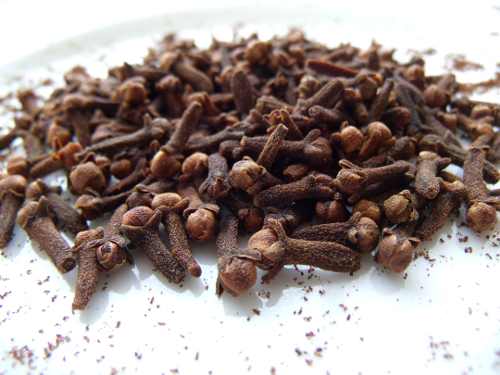
Cloves are the dried buds of an evergreen tree native to the Maluku (formerly Spice) Islands of Indonesia.
The immature flowers begin light pink in color and later turn bright red, which is when they’re harvested.
The name derives from a Latin word, clavus, meaning nail. The buds do resemble small, irregularly shaped nails, and the stem end is sharp enough to pierce meat and the flesh of fruit.
Cloves were highly prized in Roman times, and there are records from ancient China indicating that courtiers placed cloves in their mouths when addressing the emperor so as not to offend him with their breath.
This spice is beloved around the world and has been part of the cuisine of many a nation since ancient times.
Cloves are popular as a flavoring in the cuisines of both northern and southern India. There are dozens, if not hundreds, of recipes for the northern Indian spice blend, garam masala, but cloves will nearly always be a component.
Dried cloves are a key ingredient in masala chai, a spiced Indian tea that was the inspiration for the chai tea sold in the U.S., which also contains cloves.
In Vietnamese cuisine, cloves often are used to flavor the broth of Pho, a noodle dish.
In Mexico, cloves are most often used in combination with cinnamon and cumin to season savory dishes.
Because the Dutch at one time controlled the Indonesian spice trade, cloves are used in the Netherlands on a widespread basis, including in cheese and traditional stews and to flavor speculoos, a shortcrust biscuit traditionally served at Christmas.
In Europe and the U.S., cloves are perhaps most often used in sweet foods, such as gingerbread or pumpkin pie.
Chinese five-spice powder, the only spice blend used in China, is a combination of cloves, cinnamon, fennel, star anise and Szechuan pepper.
A variety of other spice blends rely on cloves, such as quatre epice (four spices in French), which contains white peppercorns, nutmeg and ginger in addition to cloves.
Quartre epice is used to flavor charcuterie such as sausages or terrines, or to add peppery spice to beef stews cooked with red wine. A sweet version contains allspice in place of peppercorns and is used in rich cakes and puddings.
Cloves add flavor to bean and lentil dishes, pickled beets, pork roasts, cranberry sauce, mulled cider or wine, chutney, and a variety of other foods.
They pack a strong flavor punch, so it’s not necessary to use many when cooking, whether in whole or powdered form. A few whole cloves or a pinch of powder will usually do the trick. The longer they stand in warm foods, the more intense their flavor grows.
Tom Stobart, author of “The Cook’s Encyclopedia” (1980), says that the addition of a clove to beef stock or to a stew gives it a richness whose source will be unidentified.
He opines, “As a flavoring, cloves are best when kept below the level of recognition.”
I can agree with this! An otherwise perfectly beautiful stew was ruined the other evening by overly strong clove flavor when I added too many to the pot. (One or two would’ve done the trick, but I added three or four.)
Try studding a clove or two into a generous slice of orange peel as a secret flavoring for the next beef stew you cook. (But don’t make my mistake and go overboard.)
Another thing: Since whole cloves don’t dissolve in liquid, it’s a good idea to utilize a “vehicle” for cloves when flavoring dishes with them for easy removal.
For savory dishes such as stews, soups, or broths, a whole, peeled onion can be studded with them.
They can be inserted into the rind of orange slices for hot cider or mulled wine. This helps one avoid biting into a whole clove when dining, which can be an unpleasant experience.
Cloves are considered a nutrient dense spice, full of phytonutrients (nutrients derived from plant material that have been shown to be necessary for sustaining human life), as well as traditionally-recognized nutrients like manganese, omega-3 fatty acids, vitamin K, dietary fiber, vitamin C, calcium and magnesium.
They’ve been used in medicinal applications throughout the world since ancient times, such as in Indian Ayurvedic and Chinese medicines.
Modern scientific research has shown them to be an effective anti-inflammatory, thanks to their active component, eugenol.
Eugenol also has anti-microbial properties, and is a mild anesthetic. For these reasons, this compound is used in a variety of applications in dentistry, as well as an ingredient in mouthwashes and throat sprays.
Studies also indicate this component of cloves may be effective in the prevention of toxicity from certain environment pollutants, digestive tract cancers, and joint inflammation.
The flavor in whole cloves typically lasts longer than when it’s ground, and airtight containers help preserve its pungency in either case.
Interestingly, if whole cloves are fresh, they’ll float vertically in a cup of water. Stale cloves will typically sink or float horizontally.
There are many interesting recipes that include cloves, and today I’ve included two, a sweet one, chocolate spice cookies, and a savory one, curried chickpea salad. I hope you enjoy them.
And before I go, did you know Clove Chewing Gum, made by Adams, first came to market during Prohibition? It became popular as a breath freshener to cover the smell of alcohol.
Perhaps they got their inspiration from the courtiers in the Chinese emperor’s court.
Curried chickpea salad
2 tablespoons vegetable oil
2 onions, medium sized, minced
2 cloves garlic, minced
2 teaspoons fresh ginger root, finely chopped
6 whole cloves
½ teaspoon ground cinnamon
1 teaspoon ground coriander
1 teaspoon cayenne pepper
1 teaspoon ground turmeric
2 – 15 ounce cans garbanzo beans, drained and rinsed
¼ cup water
Salt to taste
1 cup chopped fresh cilantro
Heat oil in a large frying pan over medium heat, and fry onions until tender.
Stir in garlic, ginger, cloves, cinnamon, cumin, coriander, cayenne and turmeric. Cook for one minute over medium heat, stirring constantly.
Mix in garbanzo beans and the water. Continue to cook and stir until all ingredients are well blended and heated through. Add salt to taste and remove whole cloves.
Remove from heat. Stir in cilantro just before serving, reserving one tablespoon for garnish.
This salad is wonderful when served slightly warm. It may also be served cold.
Esther’s note: To peel ginger before mincing, use the back of a spoon, which can easily navigate the bumps and knobs on the root.
This recipe is courtesy of “Cookography” at www.cookography.com .
Chocolate spice cookies
½ cup natural cocoa powder (not Dutch cocoa)
2/3 cup unbleached all-purpose flour
¼ cup granulated sugar
½ cup finely ground almonds
½ teaspoon ground cinnamon
½ teaspoon ground cloves
1 teaspoon baking soda
¼ cup honey
¼ cup molasses
¼ cup dry red wine (or water)
For glaze:
1 cup confectioner’s sugar
¼ cup water
Preheat oven to 325 degrees Fahrenheit.
Blend cocoa powder, flour, sugar, almonds, spices and baking soda. Mix lightly to combine.
Add honey, molasses and wine, and mix until a smooth, sticky dough forms. Allow to stand for one minute to absorb the liquid, then refrigerate for 30 minutes.
Turn the dough onto a generously floured surface, and pat into a 6 x 10-inch rectangle about ¼ inch thick. Flour the dough lightly, and roll it once or twice with a rolling pin to even it out.
Cut the dough into 2-inch squares. With a dry pastry brush, wipe off any excess flour.
Line a sheet pan with parchment paper or a silicone liner, and transfer squares to the pan. Bake for 15 minutes.
Remove pan from oven and let sit for one minute. Then, lift the parchment paper (with the cookies on it) and place it on a cooling rack.
While the cookies are still warm, combine confectioner’s sugar and ¼ cup water in a small bowl. Stir until smooth to make a glaze. Paint the surface of each cookie using a pastry brush; the glaze will soak in. In a minute or two, paint on a second coat of glaze.
Allow the cookies to cool completely; they will remain chewy on the inside.
This recipe makes 15 cookies. Leftovers should be stored in an airtight container.
Esther’s note: To grind almonds, use a coffee grinder dedicated for cooking purposes (such as for grinding spices) or a food processor. Be careful not to over grind into almond butter.
Recipe is courtesy of “The Perfect Pantry” at www.perfectpantry.com .
Esther Oertel, a freelance writer, cooking teacher, and speaker, is passionate about local produce and all foods in the vegetable kingdom. She welcomes your questions and comments and may be reached at
- Details
- Written by: Lake County News Reports
CLEARLAKE, Calif. – The upcoming Heron Festival slated for Saturday, May 5, at Redbud Park in Clearlake, offers a unique opportunity for visitors to travel in to Anderson Marsh on pontoon boats and enjoy excellent speakers and presentations, including one by renowned wildlife photographer Phillip Greene.
The annual Heron Festival, presented by the Redbud Audubon Society, is returning to the south part of Clear Lake this year, where it was born 18 years ago.
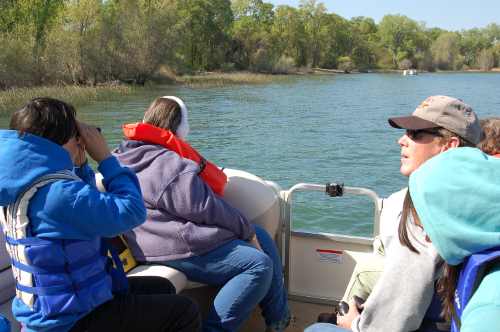
Pontoon Boat passengers will enjoy a wonderful trip on Cache Creek, through Anderson Marsh, to view great-blue herons, egrets, and much more including double-crested cormorant and osprey, Western and Clark’s grebes and a variety of other ducks.
Each boat carries about 10 people and is accompanied by an experienced Redbud Audubon birding guide who shares expertise on birds and wildlife observed on the trip.
The boat rides last about 90 minutes and cost $20 per person.
Given the popularity of the rides, advance reservations are advised and may be made by going to www.heronfestival.org or by calling 707-263-8030.
The festival is only one day this year, and one of the featured speakers will be Philip Green, internationally known photographer of herons and egrets.
His spectacular photos and lecture focus on the nesting cycle of herons, with special emphasis on mating behaviors, nest building, and fledging. His presentation will be at 11 a.m. at the festival event tent at Redbud Park.
Many other activities are planned for the Heron Festival, including a nature fair, children’s activities, and “Raptor Speak – a live owls and hawks presentation by Native Bird Connections,” that will give visitors a rare opportunity to see raptor behavior up close.
For a complete schedule of activities or to reserve your space for a boat ride go to www.heronfestival.org or call 707-263-8030.