 How to resolve AdBlock issue?
News
- Details
- Written by: Lake County News reports
As the one-year anniversary of the devastating Japanese tsunami arrived this month, engineers from the USC Viterbi School of Engineering Tsunami Research Center are working with the State of California to better understand the damaging currents caused by tsunamis.
Funded by the California Geological Survey, the California Emergency Management Agency, and the Federal Emergency Management Agency, USC researchers will use hydrodynamic computer modeling and historical tsunami data to evaluate the currents generated by tsunamis and their effect within California ports and harbors.
Results from the study will be used to determine safe depths for evacuation, to map zones that might be prone to higher or lower currents under tsunami conditions (to inform how ships and boats are moved and evacuated), and to create hazard maps for ports, harbors and marinas. Work will begin in the next few weeks and last through the end of 2012.
Currents caused by the Japanese tsunami of March 2011 caused millions of dollars of damage at 27 harbors along the California coast, particularly in Santa Cruz and Crescent City.
In Santa Barbara, swirling currents lasted for more than 24 hours, with the strongest surges taking place long after the original currents.
According to Associate Professor Patrick Lynett and Adjunct Research Professor Jose Borrero of the USC Sonny Astani Department of Civil and Environmental Engineering, who will conduct the study, these tsunami-induced “phantom currents” are not well understood.
Even in moderate-sized tsunamis, currents can rip large boats from their moorings. During the Indian Ocean tsunami in 2004, at locations very far from the earthquake itself, large ships were ripped from their moorings and pushed around the harbor by surges occurring many hours after the tsunami first arrived.
A similar effect occurred in Crescent City in November 2006, when a magnitude 8.3 earthquake off of Russia's Kuril Island caused a moderate tsunami.
The currents caused by the waves were strongest some three hours after tsunami arrival and caused $20 million in damage to Crescent City harbor. Repairs from that event had not yet been completed when the Japan tsunami struck.
“Imagine an oil tanker or cargo ship torn loose and out of control in the Port of LA or San Francisco Bay,” warned Dr. Lynett, USC's John and Dorothy Shea Early Career Chair in Civil Engineering. “The problem could escalate very quickly.”
“California is being proactive in its effort to re-evaluate certain elements of its tsunami preparedness based on lessons learned from the Japan event,” said Dr. Borrero. “During the Japan tsunami, even though we knew how big the waves were going to be, we severely underestimated the strength and duration of the currents.”
“Fortunately, this is a hazard that can be dealt with,” said Rick Wilson of the California Geological Survey.
Wilson's agency and the federal and state emergency management agencies are funding Lynett and Borrero to look at this issue as part of USC's ongoing initiative to provide tsunami expertise to the State.
Lynett and Borrero have been working together gathering data on this phenomenon and to applying advanced computer models to quantify the extent and duration of these late arriving and potentially damaging surges.
Said Lynett, “We have the tools available to understand this problem and make the right call in the future.”
In an article published earlier this month in the journal Earth and Planetary Science Letters, Lynett and Borrero described observations of these currents at several locations both within California and internationally and describe their efforts to understand them.
For more information about that paper, visit www.sciencedirect.com/science/article/pii/S0012821X12000696 .
- Details
- Written by: Lake County News reports

KELSEYVILLE, Calif. – The service of a search warrant by the Sheriff’s Narcotics Task Force has resulted in two arrests, the seizure of LSD, 116 pounds of processed marijuana, $36,946 and a firearm.
Arrested were 45-year-old Elizabeth Anne Lango and Brandon Scott Augsburger, 28, both of Kelseyville, according to Sgt. Steve Brooks.
On March 2 the Lake County Sheriff’s Narcotics Task Force received information from the Wisconsin Department of Justice and the Drug Enforcement Administration that they had served search warrants in Lake Winnebago, Wis., and Kimberly, Wis., according to Brooks.
Their investigation revealed that 43-year-old Spencer Breitreiter of Kelseyville and Paul Van Wychen of Wisconsin were responsible for transporting multiple pounds of marijuana from California to Wisconsin, Brooks said.
Agents recovered approximately 5 pounds of processed marijuana and $200,000 in cash. Brooks said both Van Wychen and Breitreiter were arrested in Wisconsin.
During a search of Breitreiter’s property in Wisconsin a rental agreement for a storage unit in Kelseyville was discovered. Brooks said the rental agreement was made out to Lango.
He said Lake County Sheriff’s narcotics detectives responded to the storage unit. They deployed a narcotics detection K9 which alerted to the unit. A search warrant also was secured for Lango, her home and storage unit.
On March 2 at approximately 6:40 p.m., Lake County Sheriff’s narcotics detectives served the search warrant at Lango’s residence, located on Montezuma Way in Kelseyville, Brooks said. Upon entry to the residence Lango and Augsburger were detained without incident.
During a search of the residence detectives seized 47 immature marijuana plants, approximately 20 pounds of processed marijuana, a sheet of suspected LSD containing approximately 100 dosage units, a 20 gauge shotgun, digital scales and $16,812 in cash, Brooks reported.
He said detectives also located a bank account in Lango’s name that contained $20,134 which was also seized pending asset forfeiture proceedings.
Lango denied any knowledge of the storage unit that was in her name. Brooks said detectives forced entry into the storage unit and located a Lexus parked inside.
After making entry into the Lexus detectives discovered 96 pounds of processed marijuana. Brooks said most of the marijuana was packaged in vacuum sealed bags.
Paperwork found inside the vehicle linked Lango, Breitreiter and Augsburger to the vehicle, according to Brooks. Additional paperwork found at the residence linked Lango to recent trips to the state of Wisconsin.
Lango and Augsburger were both arrested for possession of a controlled substance for sale, possession of marijuana for sale and being armed while in the commission of a felony, Brooks said. They were transported to the Lake County Hill Road Correctional Facility and booked.
The Sheriff’s Narcotics Task Force can be contacted through its anonymous tip line at 707-263-3663.

- Details
- Written by: Lake County News reports
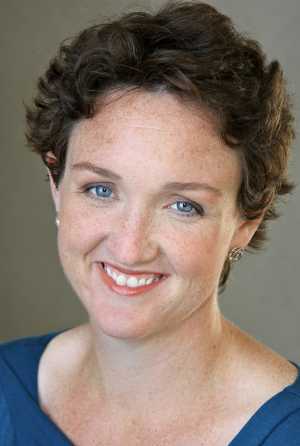
SACRAMENTO – California Attorney General Kamala Harris on Friday announced the appointment of Professor Katherine Porter of the University of California, Irvine School of Law as the California monitor of the commitment by the nation's five largest banks to perform as much as $18 billion worth of homeowner and borrower benefits in the state.
Attorney General Harris' decision to appoint a California monitor was made independent of the national settlement, and Professor Porter's role is focused exclusively on ensuring compliance in California.
This California commitment is part of a national federal-state mortgage settlement penalizing robo-signing and other servicing and foreclosure misconduct that is currently pending approval in a federal court in Washington, D.C.
Upon approval of the settlement, California's monitor will assist the Attorney General's Office in holding the banks accountable for their commitments to the state and ensuring that the promised benefits are delivered to homeowners in full and on time.
“Hundreds of thousands of California homeowners will benefit from the commitments of up to $18 billion extracted from mortgage lenders. We must enforce full and timely compliance with these commitments, and the appointment of Professor Porter as our California monitor is central to that enforcement,” said Harris. “Professor Porter's wealth of experience and knowledge will protect the interests of homeowners and ensure the settling banks deliver on their promises.”
“I will work hard to make sure banks hold up their promises to change troubling practices so that families and communities across California see the benefits of the settlement,” said Professor Porter. “Part of repairing the damage of the mortgage crisis is restoring public confidence that our largest financial institutions will treat consumers fairly and follow the law.”
Katherine Porter is a professor at University of California, Irvine School of Law. She specializes in commercial and consumer law, including mortgage foreclosures and bankruptcy, and just released a book, “Broke: How Debt Bankrupts the Middle Class.”
In 2007, Porter authored an empirical study that offered some of the first systemic evidence of the problems in mortgage servicing that harmed homeowners.
She has worked with other government entities, including the Federal Trade Commission and the Consumer Financial Protection Bureau, on issues relating to mortgage servicing.
Upon approval of the settlement, Professor Porter will verify the extent and timeliness of lenders meeting their obligations to California homeowners.
Using information obtained by the national monitor of the mortgage settlement, former North Carolina Commissioner of Banks Joseph Smith, Professor Porter will review lender filings, homeowner reports and complaints, and other compliance documents to ensure that benefits committed by the banks are performed and result in meaningful relief to California borrowers.
She will regularly report the results of her findings to the Attorney General's Office.
The appointment of Professor Porter as the state's monitor is one of a series of enforcement mechanisms to ensure transparent compliance with the national settlement and the separate California agreement.
Bank of America, Wells Fargo, and JP Morgan Chase will face significant financial penalties if they do not meet their guarantee of a minimum of $12 billion in principal reductions and short sales for homeowners within the state.
Unlike the larger national agreement, which is only enforceable in a federal court in Washington, D.C., the agreement reached with California empowers Attorney General Harris to enforce the penalty provisions in California state court.
California secured the estimated $18 billion in borrower benefits and relief as part of a national multistate settlement to penalize robo-signing and other bank servicing and foreclosure misconduct.
The agreement comes after California departed from the multistate negotiations last September when the relief to California was estimated at $4 billion.
Harris insisted on more relief for the most distressed homeowners, on stronger enforcement provisions, and that California and other states preserve key investigations into mortgage misconduct.
California's separate commitment also creates important incentives to ensure that banks will reduce the principal mortgage balance of underwater homeowners in California's hardest-hit counties and that the principal reductions in these and other California communities will occur within the first year of the settlement.
Professor Porter will ensure that both the California-specific and national settlements are properly implemented in the state.
“The California commitment provides a path for thousands of struggling homeowners in California to retain their homes, while preserving our ability to investigate banker crime and predatory lending,” added Attorney General Harris. “This is one important stride in our ongoing efforts to address the mortgage and foreclosure crisis that has devastated too many California communities.”
Attorney General Harris earlier this month joined Assembly Speaker John A. Pérez, Senate President pro Tem Darrell Steinberg and other state legislators to unveil the California Homeowner Bill of Rights, designed to protect homeowners from unfair practices by banks and mortgage companies and to help consumers and communities cope with the state's urgent mortgage and foreclosure crisis.
The legislation would make permanent and available to everyone the interim reforms agreed to as part of the California commitment, including a single point of contact for mortgage-holders and restrict the unfair and inherently deceptive system of dual-track foreclosures.
State legislators authoring key components of the Homeowner Bill of Rights include Assemblymembers Wilmer Carter, Mike Davis, Mike Eng, Mike Feuer, Holly Mitchell, Nancy Skinner, Senate President pro Tem Darrell Steinberg, and Senators Mark DeSaulnier, Loni Hancock, Mark Leno and Fran Pavley.
Harris also continues her work to have the Federal Housing Finance Agency authorize Fannie Mae and Freddie Mac – holders or guarantors of over 60 per cent of California mortgages – to participate in targeted programs of principal reduction that will benefit struggling homeowners, stabilize the country's housing market, and benefit taxpayers.
The state's Mortgage Fraud Strike Force continues its work to crack down on all forms of mortgage misconduct. Earlier this month, three prominent attorneys were arrested and are accused of running a loan modification scam.
- Details
- Written by: Lake County News reports
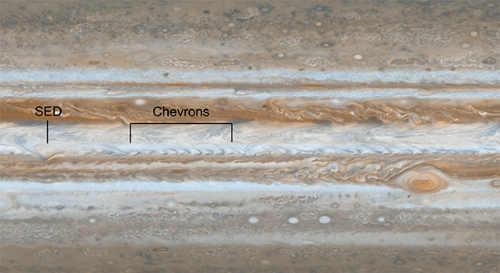
New movies of Jupiter are the first to catch an invisible wave shaking up one of the giant planet's jet streams, an interaction that also takes place in Earth's atmosphere and influences the weather.
The movies, made from images taken by NASA's Cassini spacecraft when it flew by Jupiter in 2000, are part of an in-depth study conducted by a team of scientists and amateur astronomers led by Amy Simon-Miller at NASA's Goddard Space Flight Center in Greenbelt, Md., and published in the April 2012 issue of Icarus.
"This is the first time anyone has actually seen direct wave motion in one of Jupiter's jet streams," said Simon-Miller, the paper's lead author. "And by comparing this type of interaction in Earth's atmosphere to what happens on a planet as radically different as Jupiter, we can learn a lot about both planets."
Like Earth, Jupiter has several fast-moving jet streams that circle the globe.
Earth's strongest and best known jet streams are those near the North and South Poles; as these winds blow west to east, they take the scenic route, wandering north and south.
What sets these jet streams on their meandering paths-and sometimes makes them blast Florida and other warm places with frigid air-are their encounters with slow-moving waves in Earth's atmosphere, called Rossby waves.
In contrast, Jupiter's jet streams "have always appeared to be straight and narrow," said co-author John Rogers, who is the Jupiter Section Director of the British Astronomical Association, London, U.K., and one of the amateur astronomers involved in this study.
Rossby waves were identified on Jupiter about 20 years ago, in the northern hemisphere. Even so, the expected meandering winds could not be traced directly, and no evidence of them had been found in the southern hemisphere, which puzzled planetary scientists.
To get a more complete view, the team analyzed images taken by NASA's Voyager spacecraft, NASA's Hubble Space Telescope, and Cassini, as well as a decade's worth of observations made by amateur astronomers and compiled by the JUPOS project.
The movies zoom in on a single jet stream in Jupiter's southern hemisphere.
A line of small, dark, v-shaped "chevrons" has formed along one edge of the jet stream and zips along west to east with the wind.
Later, the well-ordered line starts to ripple, with each chevron moving up and down (north and south) in turn. And for the first time, it's clear that Jupiter's jet streams, like Earth's, wander off course.
"That's the signature of the Rossby wave," said David Choi, the postdoctoral fellow at NASA Goddard who strung together about a hundred Cassini images to make each time-lapse movie. "The chevrons in the fast-moving jet stream interact with the slower-moving Rossby wave, and that's when we see the chevrons oscillate."
The team's analysis also reveals that the chevrons are tied to a different type of wave in Jupiter's atmosphere, called a gravity inertia wave.
Earth also has gravity inertia waves, and under proper conditions, these can be seen in repeating cloud patterns.
"A planet's atmosphere is a lot like the string of an instrument," said co-author Michael D. Allison of the NASA Goddard Institute for Space Studies in New York. "If you pluck the string, it can resonate at different frequencies, which we hear as different notes. In the same way, an atmosphere can resonate with different modes, which is why we find different kinds of waves."
Characterizing these waves should offer important clues to the layering of the deep atmosphere of Jupiter, which has so far been inaccessible to remote sensing, Allison adds.
Crucial to the study was the complementary information that the team was able to retrieve from the detailed spacecraft images and the more complete visual record provided by amateur astronomers.
For example, the high resolution of the spacecraft images made it possible to establish the top speed of the jet stream's wind, and then the amateur astronomers involved in the study looked through the ground-based images to find variations in the wind speed.
The team also relied on images that amateur astronomers had been gathering of a large, transient storm called the South Equatorial Disturbance.
This visual record dates back to 1999, when members of the community spotted the most recent recurrence of the storm just south of Jupiter's equator.
Analysis of these images revealed the dynamics of this storm and its impact on the chevrons. The team now thinks this storm, together with the Great Red Spot, accounts for many of the differences noted between the jet streams and Rossby waves on the two sides of Jupiter's equator.
"We are just starting to investigate the long-term behavior of this alien atmosphere," said co-author Gianluigi Adamoli, an amateur astronomer in Italy. "Understanding the emerging analogies between Earth and Jupiter, as well as the obviously profound differences, helps us learn fundamentally what an atmosphere is and how it can behave."
The Cassini-Huygens mission is a cooperative project of NASA, the European Space Agency, and the Italian Space Agency. NASA's Jet Propulsion Laboratory, Pasadena, Calif., manages the mission for NASA's Science Mission Directorate, Washington, D.C. JPL is a division of the California Institute of Technology, Pasadena.
For information about Cassini, visit http://www.nasa.gov/cassini and http://saturn.jpl.nasa.gov .