 How to resolve AdBlock issue?
News
- Details
- Written by: Dr. Tony Phillips
Comets are icy and fragile. They spend most of their time orbiting through the dark outskirts of the solar system safe from destructive rays of intense sunlight. The deepest cold is their natural habitat.
Last November amateur astronomer Terry Lovejoy discovered a different kind of comet.
The icy fuzzball he spotted in the sky over his backyard observatory in Australia was heading almost directly for the sun.
On Dec. 16, less than three weeks after he found it, Comet Lovejoy would swoop through the sun’s atmosphere only 120,000 kilometers above the stellar surface.
Astronomers soon realized a startling fact: Comet Lovejoy likes it hot.
"Terry found a sungrazer," said Karl Battams of the Naval Research Lab in Washington DC. "We figured its nucleus was about as wide as two football fields – the biggest such comet in nearly 40 years.”
Sungrazing comets aren't a new thing. In fact, the orbiting Solar and Heliospheric Observatory (SOHO) watches one fall toward the sun and evaporate every few days.
These frequent kamikaze comets, known as “Kreutz sungrazers,” are thought to be splinters of a giant comet that broke apart hundreds of years ago.
Typically they measure about 10 meters across, small, fragile, and easily vaporized by solar heat.
Based on its orbit, Comet Lovejoy was surely a member of the same family – except it was 200 meters wide instead of the usual 10.
Astronomers were eager to see such a whopper disintegrate. Even with its extra girth, there was little doubt that it would be destroyed.
When Dec. 16 came, however, "Comet Lovejoy shocked us all," said Battams. "It survived, and even flourished.”
Images from NASA's Solar Dynamics Observatory showed the comet vaporizing furiously as it entered the sun's atmosphere – apparently on the verge of obliteration – yet Comet Lovejoy was still intact when it emerged on the other side.
The comet had lost its tail during the fiery transit – a temporary setback. Within hours, the tail grew back, bigger and brighter than before.
"It's fair to say we were dumbfounded," said Matthew Knight of the Lowell Observatory and the Johns Hopkins Applied Physics Lab. "Comet Lovejoy must have been bigger than we thought, perhaps as much as 500 meters wide."
That would make it the biggest sungrazer since Comet Ikeya-Seka almost 40 years ago.
With a tail that stretched halfway across the sky, Ikeya-Seki was actually visible in broad daylight after it passed through the sun's atmosphere in October 1965.
In Japan, where observers spotted the over-heated comet only half a degree from the sun, it was described as 10 times brighter than the Full Moon.
Comet Lovejoy wasn't that bright, but it was still amazing.
Only a few days after it left the sun, the comet showed up in the morning skies of the southern hemisphere.
Observers in Australia, South America, South Africa and New Zealand likened it to a search light beaming up from the east before dawn.
The tail lined up parallel to the Milky Way and, for a few days, made it seem that we lived in a double-decker galaxy.
Astronauts on the International Space Station also witnessed the comet.
ISS Commander Dan Burbank, who has seen his share of wonders, even once flying directly through the Northern Lights onboard the space shuttle, declared Comet Lovejoy “the most amazing thing I have ever seen in space.”
An armada of spacecraft including SOHO, the Solar Dynamics Observatory, NASA's twin STEREO probes, Japan’s Hinode spacecraft, and Europe's Proba2 microsatellite recorded the historic event.
"We've collected a mountain of data," said Knight. "But there are some things we're still having trouble explaining."
For instance, what made Lovejoy's tail wiggle so wildly when it entered the solar corona? Perhaps it was in the grip of the sun's powerful magnetic field.
What caused Lovejoy to lose its tail inside the sun's atmosphere—and then regain it later? “This is one of the biggest mysteries to me,” said Battams.
And then there is the ultimate existential puzzle: How did Comet Lovejoy survive at all?
As January unfolds, the “Comet that liked it Hot” is returning to the outer solar system, still intact, leaving many mysteries behind.
“It’ll be back in about 600 years,” said Knight. “Maybe we will have figured them out by then.”
Dr. Tony Phillips works for the National Aeronautics and Space Administration.
Follow Lake County News on Twitter at http://twitter.com/LakeCoNews, on Tumblr at www.lakeconews.tumblr.com, on Google+, on Facebook at www.facebook.com/pages/Lake-County-News/143156775604?ref=mf and on YouTube at www.youtube.com/user/LakeCoNews .
- Details
- Written by: Lake County News reports

A highly specialized NOAA jet typically used to study hurricanes will fly over the north Pacific Ocean during the next two months gathering data that will enhance winter storm forecasts for the entire North American continent.
From its temporary base at U.S. Coast Guard Air Station Barbers Point in Honolulu, NOAA’s high-altitude, twin-engine Gulfstream IV-SP aircraft will deploy special sensors to collect information where the jet stream and moisture from the ocean interact and breed potentially powerful winter storms that impact North America several days later.
Data on wind speed and direction, pressure, temperature and humidity from the sensors will be monitored and quality checked by meteorologists aboard the aircraft.
NOAA then will use the information to predict the location and intensity of high winds, destructive surf conditions, severe weather and flooding rainfall caused by winter storms.
“These atmospheric observations, combined with satellite and other data, have proven to significantly enhance four-to-seven day winter weather forecasts” said Capt. Barry Choy, chief science officer for the National Centers for Environmental Prediction (NCEP), part of NOAA’s National Weather Service. “Improved forecasts mean longer warning lead times for the public, emergency managers, air carriers, utility companies and others to prepare for significant winter storms, protect lives and property and minimize economic impacts.”
The mission will take the Gulfstream IV north, east and west of Hawaii, and occasionally as far as Alaska. Data gathered in the upper atmosphere by the NOAA aircraft, which flies at 45,000 feet, will be supplemented by data collected at lower altitudes by a U.S. Air Force Reserve weather reconnaissance plane. The flight tracks for both aircraft will be developed by NCEP.
“Together, these flights will help forecasters paint a detailed three-dimensional picture of weather systems over Pacific regions where more accurate information is needed for computer weather forecast models,” said Jack R. Parrish, flight director and meteorologist with NOAA’s Office of Marine and Aviation Operations.
Based at the NOAA Aircraft Operations Center, located at MacDill Air Force Base in Tampa, Fla., the Gulfstream IV is part of the NOAA fleet of aircraft and ships operated, managed and maintained by the NOAA Office of Marine and Aviation Operations.
Follow Lake County News on Twitter at http://twitter.com/LakeCoNews, on Tumblr at www.lakeconews.tumblr.com, on Google+, on Facebook at www.facebook.com/pages/Lake-County-News/143156775604?ref=mf and on YouTube at www.youtube.com/user/LakeCoNews .
- Details
- Written by: Lake County News reports
It's estimated that these projects, which underwent rigorous environmental review, will generate thousands of construction jobs and power local economies. If all of these projects were built today, California would have enough renewable power to meet the state’s 33 percent goal, the Governor's Office reported.
The agreement broadens the state and federal partnership to formally include transmission projects and bring in new partners, including the California Independent System Operator, the California Public Utilities Commission and the California State Lands Commission.
The agreement also renews a mutual commitment to landscape level planning efforts. The partnership, launched in 2009, works through a senior-level Renewable Energy Policy Group (REPG) to expedite review and processing of proposed projects.
“Now that our successful partnership has demonstrated that advancing renewable energy projects in California can be done, and can done in the right way, it is essential to ensure that transmission facilities to get this power to market are also part of the equation,” said Secretary Salazar.
He added, “As part of today’s agreement, which will expand our partnership on renewable energy, Interior and California will identify needed transmission projects to track, troubleshoot and shepherd. What’s happening in California is nothing short of a revolution – clean energy is creating jobs, powering our economies, and making believers out skeptics.”
“California has made tremendous progress in permitting renewable projects, and now we need to make sure the transmission lines that deliver this clean energy are built as quickly as possible,” said Governor Brown. “Putting these construction projects on a fast track will put people back to work and keep California a leader in renewable energy.”
The secretary and governor signed the memorandum of understanding on renewable energy at a solar project being built by Recurrent Energy in Elk Grove, a Sacramento metropolitan area community.
One of North America’s largest solar development companies, Recurrent Energy’s three Sacramento-area projects have generated more than 220 jobs during construction.
Earlier on Friday, Salazar, Interior Deputy Secretary David J. Hayes and the governor discussed critical California water issues, reflecting their commitment to advancing the Bay Delta Conservation Plan and to taking action that will improve the health of the San Francisco Bay Delta ecosystem and the reliability of California’s water supply.
The REPG shepherded the renewable energy projects through a complex set of environmental reviews in time for appropriate proposals to take advantage of the American Recovery and Reinvestment Act grants, federal loan guarantees and production and investment tax credits. In 2012, the Policy Group will focus on the seven renewable energy and transmission projects in California on lands administered by Interior’s Bureau of Land Management (BLM), BLM’s “priority projects” (www.blm.gov/wo/st/en/prog/energy/renewable_energy/2012_priority_projects.html) also will focus on additional projects on private lands, including five solar, one wind, and one geothermal.
Nationwide, Salazar has approved 27 commercial-scale renewable energy projects on public lands, or the transmission associated with them, since 2009, including 16 solar projects, four wind farms and seven geothermal facilities. Together these projects represent more than 6,500 megawatts, 12,500 jobs and when built, will power about 2.3 million homes.
The Desert Renewable Energy Conservation Plan is another major component of Interior’s and California's renewable energy planning efforts. When completed, it is expected to further these objectives and provide binding, long-term endangered species permit assurances, while facilitating the review and approval of renewable energy projects in the Mojave and Colorado deserts in California.
The expanded partnership supports state and federal goals.
In April 2011, Governor Brown signed Senate Bill No. 2X which increased California’s renewable energy portfolio standard to 33 percent of all retail electricity sales by 2020.
The Obama Administration has encouraged the expanded use of renewable energy and launched initiatives to spur the development of these resources on U.S. public lands, most of which are managed by the Department of the Interior – which manages one-fifth of the land in the United States – and most of it in the West, including California.
Salazar’s Secretarial Order 3285A1, one of his first directives as Secretary, established a policy encouraging the production, development, and delivery of renewable energy as one of the department’s highest priorities and directed Interior agencies to work collaboratively with other federal agencies, states, tribes, local communities and private landowners to encourage the timely and responsible development of renewable energy and associated transmission, while protecting and enhancing the nation’s water, wildlife, cultural and other natural resources.
Follow Lake County News on Twitter at http://twitter.com/LakeCoNews, on Tumblr at www.lakeconews.tumblr.com, on Google+, on Facebook at www.facebook.com/pages/Lake-County-News/143156775604?ref=mf and on YouTube at www.youtube.com/user/LakeCoNews .
- Details
- Written by: Elizabeth Larson
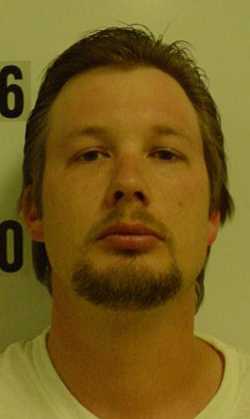
CLEARLAKE, Calif. – A Clearlake man convicted last year of molesting his stepdaughter continuously over a three-year period was sentenced on Friday to 41 years in state prison.
Christopher Adam Sanders, 31, received the sentence from Judge Stephen Hedstrom in Lake County Superior Court’s Clearlake division on Friday afternoon.
Sanders was convicted by a jury in May 2011 of five felonies – a count of committing a lewd act with a child, two counts of lewd act with a child by duress, and one count each of continuous sexual abuse of a child and statutory rape.
The abuse started when the girl was 11 years old in 2005 and continued for three years, ending in December 2008, according to the investigation. Sanders was arrested in January 2009 following a Clearlake Police investigation.
Prosecutor Ed Borg said a nurse testified at trial about physical evidence that was consistent with the victim’s report of abuse.
Borg said Sanders must serve 85 percent of his sentence before being eligible for parole. According to the probation report submitted for the case, that will make Sanders approximately 69 years old when he becomes eligible for release.
When and if Sanders is released, he will have to register as a sex offender, Borg said.
Sanders’ attorney, Mitch Hauptman of Lakeport, did not respond to a request seeking comment on the sentencing.
Sanders originally had been scheduled for sentencing last July, but the process encountered numerous delays after Sanders dismissed attorney Chris Andrian of Santa Rosa, who had represented him at trial.
Borg said that at one point he was in discussions with Andrian for a plea agreement that would have had Sanders admitting to the two counts of committing a lewd act with a child by duress, with the rest of the charges dropped. That would have resulted in a sentence of between six and 16 years.
However, a final deal wasn’t reached, Sanders was convicted at trial, Andrian was dismissed and Sanders hired Hauptman to explore seeking a new trial. Late last year, however, Hauptman concluded that he would not pursue that new trial option.
Part of the case’s tragedy, said Borg, was the strains that it put on the girl’s relationship with her mother. For a time, she lived with a guardian as a result.
Borg credited the Clearlake Police Department and then-Officer Tim Hobbs – who has since been promoted to sergeant – for doing “an outstanding job” on the investigation that formed the case’s foundation.
Within 12 hours of receiving the victim’s initial report in January 2009, the Clearlake Police Department had completed the investigation and had Sanders in custody, Borg said.
The victim was not present at the Friday sentencing but had submitted a victim impact statement to the court that was included in the probation report, Borg said. The girl’s mother and her guardian also submitted victim impact statements.
In sentencing Sanders, Hedstrom chose the upper sentencing terms for each of the counts, finding that the factors of aggravation – the girl’s age, Sanders’ position of trust and the crime’s sophistication and planning – significantly outweighed the mitigating factor of Sanders having no previous criminal convictions, Borg said.
Borg said not having previous convictions is not unusual in offense cases, where defendants often are having their first brush with the law.
Also weighing in the decision was the duration and frequency of the offense, with the young victim – 17 at the time at the time of trial – taking the stand and testifying that the offenses happened multiple times per week over the three-year period, Borg said.
While Sanders had taken responsibility for the abuse and expressed remorse, Hedstrom gave those factors less weight because they came after Sanders was convicted, according to Borg.
Hedstrom, who presided over the trial, talked about the young victim at the sentencing. He noted that she was very courageous and strong during the trial, and Borg said he agreed with that assessment.
“This was extremely difficult for her, to get up and confront him and talk about the things that he had done to her,” said Borg, adding it was “a great example of courage.”
He said the young victim reported the abuse after she spoke with a friend who had reported being raped.
The friend, a 13-year-old girl, had reportedly been raped by 18-year-old Austin Duncan on Jan. 1, 2009, in an incident in Lucerne, as Lake County News has reported.
Once the girls convinced each other to report what had happened to them, the cases moved quickly. Sanders would be arrested Jan. 5, 2009, with Duncan arrested the following day, according to jail records.
Borg also prosecuted Duncan, who reached an agreement to plead no contest to one count of committing lewd and lascivious acts on a child under the age of 14, with the remaining charges – another lewd and lascivious count, two counts of forcible rape and one count of forcible sexual penetration – dismissed.
Duncan later attempted to withdraw that plea and was sentenced to six years in prison by Judge Richard Martin on Sept. 27, 2010. The First Appellate District Court upheld the sentence last August.
The cases, said Borg, should offer hope to victims.
“They can come forward and we will take them seriously,” he said.
E-mail Elizabeth Larson at