 How to resolve AdBlock issue?
News
- Details
- Written by: Lake County News Reports
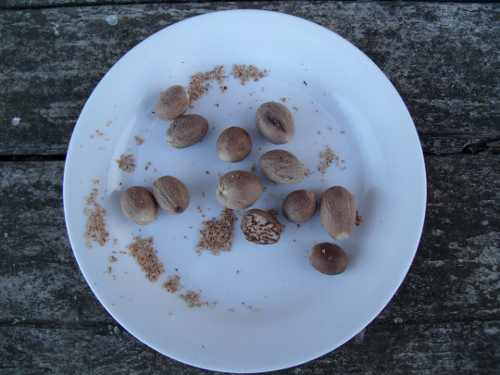
From just looking at them, one would never guess that modest little nutmeg seeds were the purveyors of much sought-after flavor. But they are.
Beyond their wrinkled brown skin lies such pleasant pungency that for centuries, European countries fought bloody wars over control of the crop.
The source of this spice is the nutmeg tree, an evergreen that’s native to the Banda Islands in the Moluccas, or Spice Islands, of Indonesia.
The nutmeg seed is encased in a mottled, yellow edible fruit, similar in size to a small peach. When split in half, the fruit reveals a bright crimson, lacy covering over a dark, shiny nut-like pit. Within this pit lies the brown-colored nutmeg seed.
The nutmeg tree is the only tropical plant that’s the source of two spices.
The red, net-like aril covering the pit is also collected and then dried to make another spice, mace, which has a warm taste and, not surprisingly, a fragrance similar to nutmeg.
When dried, the color lightens to orange or gold. Whole mace consists of flat, dried segments of the aril.
Nutmeg is often combined with cinnamon, cloves and ginger in baked goods such as cakes, cookies and sweet breads. These spices also marry to flavor mulled cider or wine and work together to flavor pumpkin pie.
Without its companions, nutmeg is used to flavor foods as diverse as apples, potatoes, mushrooms and lamb. It’s wonderful with cheeses of all types, particularly creamy ones, such as ricotta.
It’s used in cream sauces (especially in Bechamel, one of the mother sauces in French cuisine), and is the major flavor component of eggnog.
Personally, I like to flavor my coffee with it. A light sprinkling on top after I’ve lightened it with half and half is just perfect. (It’s also a great trick if the flavor of the coffee I’ve purchased somewhere is disappointing.)
Until the early 16th century, Arabs were the exclusive importers of nutmeg. The Portuguese controlled the trade for the following century, with the Dutch taking over in 1602.
The Dutch were particularly cautious about allowing cultivation of the trees by others, even coating nutmeg seeds with lime prior to exportation to hinder sprouting. At one point, they burned nutmeg trees that had spread to neighboring islands.
Despite this, the French were able to smuggle nutmeg seeds (along with clove seedlings) to start plantations on the island of Mauritius, off the east coast of Africa near Madagascar.
In the late 18th century, the British took over the Moluccas and spread nutmeg’s cultivation to other East Indian islands, and eventually to the Caribbean.
Nutmeg cultivation was so successful in Grenada that it’s dubbed Nutmeg Island, with its flag carrying an image of nutmeg in one corner.
Nutmeg was a much-used spice in the cuisine of Medieval Europe. It was also used medicinally and as a preservative.
In Elizabethan times, nutmeg was thought to ward off the plague, making it immensely popular and exorbitantly expensive. This may have spurred on the practice of unscrupulous traders selling artificial nutmeg seeds carved out of wood.
In later years, the U.S. state Connecticut got its nickname from this practice. The moniker “the Nutmeg State” (with its residents being called “nutmeggers”) comes from deceptive traders who created “wooden nutmeg,” a term which came to represent any form of fraud.
Semi-solid, reddish brown nutmeg butter is obtained from the fruit by expression. It tastes and smells like nutmeg and is similar to cocoa butter.
Nutmeg’s essential oil is used in foods, as well as in products like toothpaste and cough syrup. It’s also used widely in the cosmetic and pharmaceutical industries. In traditional medicine the essential oil was used as a remedy for nervous and digestive disorders.
In addition to its popularity in Europe, nutmeg is used in the cuisines of India, the Middle East, Greece (where its name translates to “musky nut”), Japan (where curries include it), and, of course, the Caribbean.
Because the flavor of ground nutmeg fades fairly quickly, I recommend purchasing whole nutmegs and grating only what is needed for your recipe. Nutmeg graters are available for this purpose, or you could use the finest part of a cheese grater.
Better yet, I highly recommend investing in a multi-purpose tool such as the Microplane zester, as it not only grates nutmeg wonderfully, but zests citrus fruits, and grates ginger and chocolate.
Today’s recipe is a simple pumpkin soup flavored with nutmeg. Any type of milk may be used (dairy, soy, or almond, for example), but if you’d like a richer soup, substitute half and half or cream for some of the milk. If desired, the pumpkin may be steamed, rather than roasted, but I like the flavor that roasting brings to the table.
If desired, other veggies, such as carrots, onions, or sweet potatoes, may be substituted for some of the pumpkin and roasted with it to add a twist to the recipe.
I didn’t want to leave you with just that, however. Since I love nutmeg with pasta dishes, I’ve included a recipe for gnocchi with vegetables and cheese that’s flavored with nutmeg. That, too, is a very simple recipe, wonderful for a quick dinner.
It calls for zucchini and cherry tomatoes, but feel free to substitute any seasonal veggies for the summer ones.
And a final word before I leave: California has its own version of a nutmeg tree, the Torreya californica, also known as the California nutmeg, a conifer that grows in the Pacific coastal ranges and the foothills of the Sierras.
While it’s not closely related to true nutmeg, it bears a nut-like seed that was used by American Indians for food.
Enjoy the recipes, and don't forget to stop and smell the nutmeg!
Roasted pumpkin soup with nutmeg
A two-pound pumpkin (one intended for baking, such as a sugar pumpkin)
Olive or other vegetable oil
3 cups milk, any variety
Maple syrup to taste (start with 2 teaspoons or so)
1 teaspoon salt
1/8 teaspoon nutmeg (or more to taste)
Preheat oven to 425 degrees F.
Seed, cube and peel the pumpkin and place in a baking dish or roasting pan. Drizzle with oil.
Bake pumpkin in preheated oven until soft but not blackened, about 40 minutes.
Mash roasted pumpkin.
Meanwhile, heat the milk until very hot, but not scalded.
Stir mashed pumpkin into hot milk, using an immersion blender or potato masher to combine until smooth. Cook over medium heat until heated through.
Add the salt, maple syrup and nutmeg. Adjust for taste.
Makes about six servings.
Gnocchi with zucchini ribbons and nutmeg
1 pound gnocchi
1 pound zucchini, cut lengthwise into long, thin ribbons
1 pint cherry tomatoes
¼ teaspoon grated nutmeg
2 tablespoons butter
2 medium shallots, cut into small dice
½ cup grated or shredded fresh Parmesan
½ cup chopped fresh Italian parsley
Salt and pepper to taste
Bring a large saucepan of water to boil. Cook gnocchi until they float, about three to five minutes. Drain.
Melt butter in a large skillet over medium-high heat. Cook until the butter is beginning to brown, about two minutes.
Add shallots and zucchini and cook, stirring often, about three minutes.
Add tomatoes, salt, nutmeg, and pepper and continue cooking, stirring often, until the tomatoes are just starting to break down.
Stir in Parmesan and parsley. Add the gnocchi and toss to coat.
Recipe courtesy of www.dishbase.com. It serves four as a side dish or two.
Esther Oertel, a freelance writer, cooking teacher, and speaker, is passionate about local produce and all foods in the vegetable kingdom. She welcomes your questions and comments and may be reached at
Follow Lake County News on Twitter at http://twitter.com/LakeCoNews, on Tumblr at www.lakeconews.tumblr.com, on Google+, on Facebook at www.facebook.com/pages/Lake-County-News/143156775604?ref=mf and on YouTube at www.youtube.com/user/LakeCoNews .
- Details
- Written by: Lake County News reports
Dogs will be showcased on Sundays, with cats appearing on Mondays.
If you're looking for a new companion, visit the shelter. There are many great pets hoping you'll choose them.
The following dogs at the Lake County Animal Care and Control shelter have been cleared for adoption.
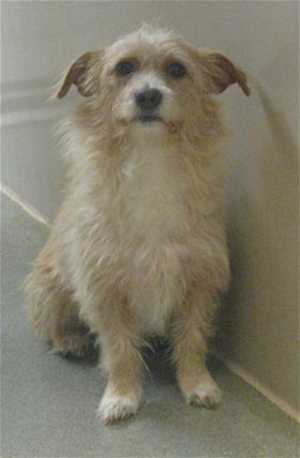
Oliver
Oliver is a 3-year-old male wirehaired terrier mix.
He weighs 16 pounds and is not neutered.
Oliver is located in kennel No. 16, ID No. 31123.
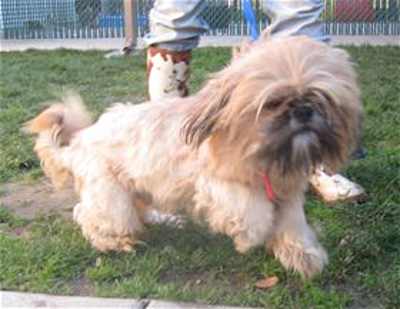
Chewbacca
Chewbacca is a 2-year-old male Pekingese/Shih Tzu mix.
He weighs 14 pounds and is not neutered.
Chewbacca is located in kennel No. 16, ID No. 31124.
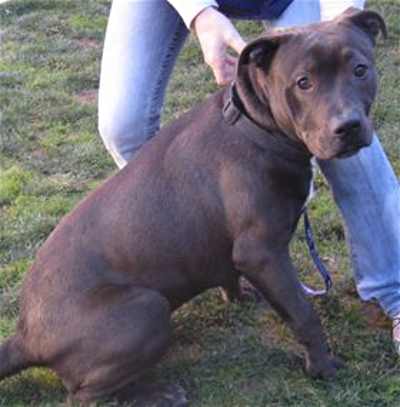
Matombo
Matombo is a 10-month-old male pit bull terrier mix.
He weighs 62 pounds and is not neutered.
Matombo is located in kennel No. 17, ID No. 31231.
Adoptable dogs also can be seen at http://www.co.lake.ca.us/Government/Directory/Animal_Care_And_Control/Adopt/Dogs_and_Puppies.htm or at www.petfinder.com.
Please note: Dogs listed at the shelter's Web page that are said to be “on hold” are not yet cleared for adoption.
To fill out an adoption application online visit http://www.co.lake.ca.us/Government/Directory/Animal_Care_And_Control/Adopt/Dog___Cat_Adoption_Application.htm.
Lake County Animal Care and Control is located at 4949 Helbush in Lakeport, next to the Hill Road Correctional Facility.
Office hours are Monday through Friday, 8 a.m. to 5 p.m., and 1 p.m. to 3 p.m., Saturday. The shelter is open from 10:30 a.m. to 4:30 p.m. Monday through Friday and on Saturday from 1 p.m. to 3 p.m.
Visit the shelter online at http://www.co.lake.ca.us/Government/Directory/Animal_Care_And_Control.htm.
For more information call Lake County Animal Care and Control at 707-263-0278.
Follow Lake County News on Twitter at http://twitter.com/LakeCoNews, on Tumblr at www.lakeconews.tumblr.com, on Google+, on Facebook at www.facebook.com/pages/Lake-County-News/143156775604?ref=mf and on YouTube at www.youtube.com/user/LakeCoNews .
- Details
- Written by: Lake County News reports
The fire at Highway 29 and Hofacker Lane near Lower Lake was first reported just after 2 p.m. Saturday, according to radio reports.
Cal Fire and Lake County Fire Protection District responded to the fire, which was reported contained just before 3 p.m., when a dozer line and hose line completely encircled it.
Reports from the scene indicated the fire burned six acres. No cause was given.
Firefighters also responded to another blaze reported on Calpine property on Cobb Mountain at about the same time. That fire later was reported to be a permitted control burn.
Follow Lake County News on Twitter at http://twitter.com/LakeCoNews, on Tumblr at www.lakeconews.tumblr.com, on Google+, on Facebook at www.facebook.com/pages/Lake-County-News/143156775604?ref=mf and on YouTube at www.youtube.com/user/LakeCoNews .
- Details
- Written by: Lake County News reports

An engine firing on Jan. 11 will be the biggest maneuver that NASA's Mars Science Laboratory spacecraft will perform on its flight between Earth and Mars.
The action will use a choreographed sequence of firings of eight thruster engines during a period of about 175 minutes beginning at 3 p.m. Pacific Standard Time. It will redirect the spacecraft more precisely toward Mars to land at Gale Crater.
The trajectory resulting from the mission's Nov. 26, 2011, launch intentionally misses Mars to prevent the upper stage of the launch vehicle from hitting the planet. That upper stage was not cleaned the way the spacecraft itself was to protect Mars from Earth's microbes.
The maneuver is designed to impart a velocity change of about 12.3 miles per hour (5.5 meters per second).
"We are well into cruise operations, with a well-behaved spacecraft safely on its way to Mars," said Mars Science Laboratory Cruise Mission Manager Arthur Amador, of NASA's Jet Propulsion Laboratory, Pasadena, Calif. "After this trajectory correction maneuver, we expect to be very close to where we ultimately need to be for our entry point at the top of the Martian atmosphere."
The mission's schedule before arrival at Mars on Aug. 5 in Pacific Daylight Time includes opportunities for five more flight path correction maneuvers, as needed, for fine tuning.
The Jan. 11 maneuver has been planned to use the spacecraft's inertial measurement unit to measure the spacecraft's orientation and acceleration during the maneuver.
A calibration maneuver using the gyroscope-containing inertial measurement unit was completed successfully on Dec. 21.
The inertial measurement unit is used as an alternative to the spacecraft's onboard celestial navigation system due to an earlier computer reset.
Diagnostic work continues in response to the reset triggered by use of star-identifying software on the spacecraft on Nov. 29.
In tests at JPL, that behavior has been reproduced a few times out of thousands of test runs on a duplicate of the spacecraft's computer, but no resets were triggered during similar testing on another duplicate.
The spacecraft itself has redundant main computers. While the spacecraft is operating on the "A side" computer, engineers are beginning test runs of the star-identifying software on the redundant "B side" computer to check whether it is susceptible to the same reset behavior.
The Mars Science Laboratory mission will use its car-size rover, Curiosity, to investigate whether the selected region on Mars inside Gale Crater has offered environmental conditions favorable for supporting microbial life and favorable for preserving clues about whether life existed.
On Jan. 15, the spacecraft operations team will begin a set of engineering checkouts. The testing will last about a week and include tests of several components of the system for landing the rover on Mars and for the rover's communication with Mars orbiters.
The spacecraft's cruise-stage solar array is producing 780 watts. The telecommunications rate is 2 kilobits per second for uplink and downlink. The spacecraft is spinning at 2.04 rotations per minute.
The Radiation Assessment Detector, one of 10 science instruments on the rover, is collecting science data about the interplanetary radiation environment.
As of 9 a.m. Pacific Standard Time on Saturday, Jan. 7, the spacecraft will have traveled 72.9 million miles of its 352-million-mile flight to Mars. It will be moving at about 9,500 miles per hour relative to Earth and at about 69,500 miles per hour relative to the sun.
JPL, a division of the California Institute of Technology in Pasadena, manages the Mars Science Laboratory mission for the NASA Science Mission Directorate, Washington.
More information about Curiosity is online at www.nasa.gov/msl and at http://mars.jpl.nasa.gov/msl.
You can follow the mission on Facebook at www.facebook.com/marscuriosity and on Twitter at www.twitter.com/marscuriosity.
Follow Lake County News on Twitter at http://twitter.com/LakeCoNews, on Tumblr at www.lakeconews.tumblr.com, on Google+, on Facebook at www.facebook.com/pages/Lake-County-News/143156775604?ref=mf and on YouTube at www.youtube.com/user/LakeCoNews .