 How to resolve AdBlock issue?
News
- Details
- Written by: Dr. Tony Phillips
Waking up before sunrise can be tough to do, especially on a weekend.
However, on Saturday, Dec. 10, you might be glad you did. A total eclipse of the Moon will be visible in the early morning skies of western Northern America.
The action begins around 4:45 a.m. Pacific Standard Time when the red shadow of Earth first falls across the lunar disk.
By 6:05 a.m. Pacific Time, the Moon will be fully engulfed in red light.
This event – the last total lunar eclipse until 2014 – is visible from the Pacific side of North America, across the entire Pacific Ocean to Asia and Eastern Europe.
For people in the western United States the eclipse is deepest just before local dawn. Face west to see the red Moon sinking into the horizon as the sun rises behind your back. It’s a rare way to begin the day.
Not only will the Moon be beautifully red, it also will be inflated by the Moon illusion.
For reasons not fully understood by astronomers or psychologists, low-hanging Moons look unnaturally large when they beam through trees, buildings and other foreground objects.
In fact, a low Moon is no wider than any other Moon (cameras prove it) but the human brain insists otherwise. To observers in the western USA, therefore, the eclipse will appear super-sized.
It might seem puzzling that the Moon turns red when it enters the shadow of the Earth – aren’t shadows supposed to be dark?
In this case, the delicate layer of dusty air surrounding our planet reddens and redirects the light of the sun, filling the dark behind Earth with a sunset-red glow.
The exact hue (anything from bright orange to blood red is possible) depends on the unpredictable state of the atmosphere at the time of the eclipse.
As Jack Horkheimer (1938-2010) of the Miami Space Transit Planetarium loved to say, "Only the shadow knows."
Atmospheric scientist Richard Keen of the University of Colorado might know, too. For years he has studied lunar eclipses as a means of monitoring conditions in Earth's upper atmosphere, and he has become skilled at forecasting these events.
"I expect this eclipse to be bright orange, or even copper-colored, with a possible hint of turquoise at the edge," he predicted.
Earth's stratosphere is the key: "During a lunar eclipse, most of the light illuminating the moon passes through the stratosphere where it is reddened by scattering," he explained. "If the stratosphere is loaded with dust from volcanic eruptions, the eclipse will be dark; a clear stratosphere, on the other hand, produces a brighter eclipse. At the moment, the stratosphere is mostly clear with little input from recent volcanoes."
That explains the brightness of the eclipse, but what about the "hint of turquoise"?
"Light passing through the upper stratosphere penetrates the ozone layer, which absorbs red light and actually makes the passing light ray bluer,” said Richard Keen. “This can be seen as a soft blue fringe around the red core of Earth's shadow."
Look for the turquoise near the beginning of the eclipse when the edge of Earth's shadow is sweeping across the lunar terrain, he advised.
A bright red, soft turquoise, super-sized lunar eclipse: It’s coming on Saturday, Dec. 10. Wake up and enjoy the show.
For an interactive visibility map, visit http://shadowandsubstance.com/.
Dr. Tony Phillips works for the National Aeronautics and Space Administration.
Follow Lake County News on Twitter at http://twitter.com/LakeCoNews, on Tumblr at www.lakeconews.tumblr.com, on Facebook at http://www.facebook.com/pages/Lake-County-News/143156775604?ref=mf and on YouTube at http://www.youtube.com/user/LakeCoNews.
- Details
- Written by: Lake County News reports
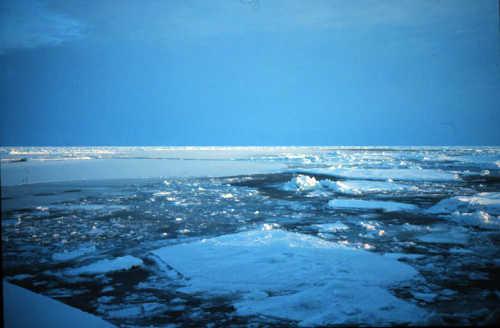
An international team of scientists who monitor the rapid changes in the Earth’s northern polar region say that the Arctic is entering a new state – one with warmer air and water temperatures, less summer sea ice and snow cover, and a changed ocean chemistry.
This shift also is causing changes in the region’s life, both on land and in the sea, including less habitat for polar bears and walruses, but increased access to feeding areas for whales.
Changes to the Arctic are chronicled annually in the Arctic Report Card, which was released Thursday, Dec. 1.
The report is prepared by an international team of scientists from 14 different countries.
“This report, by a team of 121 scientists from around the globe, concludes that the Arctic region continues to warm, with less sea ice and greater green vegetation,” said Monica Medina, National Oceanic and Atmospheric Administration principal deputy under secretary of commerce for oceans and atmosphere.
“With a greener and warmer Arctic, more development is likely,” said Medina. “Reports like this one help us to prepare for increasing demands on Arctic resources so that better decisions can be made about how to manage and protect these more valuable and increasingly available resources.”
Among the 2011 highlights are:
Atmosphere: In 2011, the average annual near-surface air temperatures over much of the Arctic Ocean were approximately 2.5° F (1.5° C) greater than the 1981-2010 baseline period.
Sea ice: Minimum Arctic sea ice area in September 2011 was the second lowest recorded by satellite since 1979.
Ocean: Arctic Ocean temperature and salinity may be stabilizing after a period of warming and freshening. Acidification of sea water (“ocean acidification”) as a result of carbon dioxide absorption has also been documented in the Beaufort and Chukchi seas.
Land: Arctic tundra vegetation continues to increase and is associated with higher air temperatures over most of the Arctic land mass.
In 2006, NOAA’s Climate Program Office introduced the State of the Arctic Report which established a baseline of conditions at the beginning of the 21st century.
It is updated annually as the Arctic Report Card to monitor the often-quickly changing conditions in the Arctic. Peer-review of the scientific content of the report card was facilitated by the Arctic Monitoring and Assessment Program.
The Report Card tracks the Arctic atmosphere, sea ice, biology, ocean, land and Greenland.
This year, new sections were added, including, greenhouse gases, ozone and ultraviolet radiation, ocean acidification, Arctic Ocean primary productivity and lake ice.
The Arctic Report Card can be found at www.arctic.noaa.gov/reportcard/.
Follow Lake County News on Twitter at http://twitter.com/LakeCoNews, on Tumblr at www.lakeconews.tumblr.com, on Facebook at http://www.facebook.com/pages/Lake-County-News/143156775604?ref=mf and on YouTube at http://www.youtube.com/user/LakeCoNews.
- Details
- Written by: Lake County News reports
U.S. Geological Survey scientist Paul Bedrosian, along with colleagues Michael Becken, Oliver Ritter and Ute Weckmann from the GFZ German Research Centre for Geosciences, Potsdam, Germany, used an electromagnetic geophysical method to image subsurface conductivity within the crust.
"Segmentation of the San Andreas fault was first identified more than 40 years ago based on distinct patterns of seismicity. This work links mantle fluids, possibly resulting from ancient subduction along the California coast, and their interaction with the crust, as the driver behind the observed differences. This is really exciting as it illustrates how past structure and tectonics effects present-day dynamics along the San Andreas fault," said Bedrosian.
Fluid influx is implicated as a driving force behind the processes that ultimately define seismic segmentation. The findings may help to explain why motion along the fault results in earthquakes on some segments and less harmful creep on others.
"Decades ago USGS researchers explored the strong dependence of water on the strength of the rocks in the deep crust and upper mantle, with the firm conviction that this effect would be key to understanding fault mechanics," said USGS Director Marcia McNutt.
"Now finally with new technology available to map the in situ distribution of water at depths inaccessible to geologic observation, we have an excellent example of how an investment in basic research will pay off in a very practical understanding of a long-standing mystery that affects lives and property,” McNutt added.
The area studied is a transition zone between segments of locked and creeping behavior along the San Andreas fault, and includes a zone of pronounced seismic tremor.
The data provide evidence of fluids migrating into the creeping section that appear to originate from a region that is also responsible for stimulating tremors.
The results are consistent with the hypothesis that high fluid pressures play a crucial role in the weakening of faults.
"Understanding how large and possibly dangerous fault systems, like the San Andreas fault, work in all their complexity is a grand challenge,” said Weckmann. “The San Andreas fault is a key natural laboratory for studying large transform faults, as many geo-scientific methods are tested here to provide different pieces of the puzzle. I hope that our results will trigger similar research along other major active fault systems around the world.”
The article may be read in full online at www.nature.com/nature/journal/v480/n7375/full/nature10609.html.
Follow Lake County News on Twitter at http://twitter.com/LakeCoNews, on Tumblr at www.lakeconews.tumblr.com, on Facebook at http://www.facebook.com/pages/Lake-County-News/143156775604?ref=mf and on YouTube at http://www.youtube.com/user/LakeCoNews.
- Details
- Written by: Elizabeth Larson
The National Weather Service issued another wind advisory for Lake County that will be in effect until 6 p.m. Saturday.
Forecasters said northeast winds of 20 to 35 miles per hour with gusts of wind up to 45 miles per hour will be possible. It’s expected to be the windiest during the day on Saturday.
Lake County also is under a hazardous weather outlook for winds and lower temperatures.
The National Weather Service is predicting daytime temperatures in the high 50s and nighttime temperatures in the mid to high 30s into the first part of next week, with nighttime temperatures dipping into the low 30s in the week’s latter half.
The winds that have hit California over the past week have left hundreds of thousands of utility customers without power at various times, including a small number in Lake County, according to Pacific Gas & Electric.
By Friday afternoon PG&E said it had restored power to 90 percent of the 500,000 customers in Northern and Central California impacted by the outages.
However, the company’s last update on Friday said 51,000 of its customers still were without power, mainly in the Chico, Santa Cruz and Fresno areas.
PG&E reported late Friday that as many as 49 customers in the Nice area were impacted by an outage that had started shortly before 5 p.m.
The outage was expected to be resolved by 10 a.m. Saturday once a transformer is replaced, PG&E said.
E-mail Elizabeth Larson at