 How to resolve AdBlock issue?
News
- Details
- Written by: Elizabeth Larson
EPA Region 9's Emergency Response Division – which recently completed a cleanup at Abbott Mine in 2007 and at Elem Colony in December 2006 – is handling the cleanup.
Chuck Lamb, chairman of the Clear Lake Environmental Action Network (CLEAN), said that the cleanup is not an emergency; the emergency response division is so named because it can mobilize quickly and perform the work with less red tape.
This latest cleanup will be about 10 percent of the size of the Elem Colony cleanup, which removed contaminated mine wastes from residential yards and roadways, said Rick Sugarek, the EPA's project manager on the Sulphur Bank project.
EPA reported that it plans to remove contaminated mine waste from areas along Sulphur Bank Mine Road and Ward Road and several residential properties located to the south and west of the Sulphur Bank Mercury Mine Superfund Site near Clearlake Oaks.
The Sulphur Bank Mercury Mine began operations in the mid-1800s. The miners dug for sulfur and mercury, ingredients used for gold mining and gunpowder, according to a report on the mine by University of California, Davis researchers.
The mine closed in 1957, leaving approximately 3.5 million cubic yards of production waste scattered in four major waste piles on the 220-acre mine property, according to the EPA.
Miners also left behind a 90-foot deep, flooded open pit mine known as Herman Impoundment. Contaminated water flows from Herman Impoundment through waste rock into Clear Lake contaminating the sediments and the Clear Lake ecosystem.
The EPA added the mine to the National Priorities List in 1990, and has conducted extensive field investigations to determine the nature and extent of contamination at the site.
The agency has conducted a number of cleanup actions at the mine property to prevent erosion of mine wastes into Clear Lake, to control discharges of contaminated surface water from the mine, and to seal several improperly abandoned geothermal wells on the property.
Keith Takata, the EPA's Superfund director for the Pacific Southwest region, said abandoned mines like Sulphur Bank too often leave behind “a toxic legacy that continues to threaten the health of the people and natural resources of the area.”
Sugarek said the cleanup will take about six weeks.
The area slated for cleanup was once home to miners who worked in the mine, said Sugarek. “It's basically a private residential area now.”
In the 1940s and 1950s roads in the area were built up with contaminated mine waste, said Sugarek. More recently, mine waste was used in some of the residential driveways and to repair potholes.
“We found mine waste in very specific locations,” he said.
Lamb said the EPA began conducting testing and taking samples in the area – along roads and the shoreline, and on private properties – at the request of area residents.
Final analysis of soil samples around homes and in roadways showed elevated mercury and arsenic levels at 13 locations, the EPA reported.
Lamb said that the EPA informed residents of the findings and planned to deal with 12 of the sites immediately. One site, said Lamb, is more complex and will require additional analysis before action is taken.
Without the removal action, the EPA is concerned that residents may be exposed to harmful levels of mercury and arsenic that are present in mine waste that was used as construction material in the residential area.
People can be exposed to mercury and arsenic by breathing air with contaminated dust or mercury vapor, incidental ingestion of contaminated soil or ingestion of contaminated water and food, the agency reported.
The EPA reported that it will spend approximately $800,000 to remove the contaminated material to prevent hazardous substances from coming into direct contact with area residents and from reaching Clear Lake.
Crews will work through March to excavate approximately 2,500 cubic yards of contaminated soil and transport it to the disposal site at the Sulphur Bank Mercury Mine. Clean soil will then be used to replace the contaminated soils that EPA excavates.
Sugarek said the contaminated soil is fairly shallow – between 6 and 12 inches deep. “We ought to be able to get in there and get it down straightaway,” said Sugarek.
Because of concerns for cultural resources, Sugarek said an archaeologist from the firm Pacific Legacy surveyed the area within the last few weeks.
One of the homes in the area is more than 50 years old, and therefore is a potential historic resource, along with a nearby rock wall, said Sugarek.
The archaeologist found some other historic materials which Sugarek said aren't in the work area, although they're not sure if those items are actually intact or have been previously disturbed. So a second archaeologist is taking a look at them.
At Elem, EPA relocated tribal members for several months while the extensive cleanup was underway. The agency excavated contaminated soil that the Bureau of Indian Affairs had used to build roads on the property in the early 1970s. They also replaced some housing and laid new water pipes.
However, no one will need to be relocated in this instance, Sugarek said.
Instead, EPA will use air monitoring and control dust by wetting down the area during work, said Sugarek. They'll coordinate with property owners to give them access to the property.
“If I can speak for our community, we are once again impressed with the EPA's concern for our well being and we continue to appreciate the responsible and professional manner in which these cleanups have been conducted,” said Lamb.
Elem Colony cleanup still raising issues
However, there is still controversy in some quarters about the Elem Colony cleanup.
“The issue is ongoing,” said Sugarek.
Some tribal members and archaeologist John Parker have accused the EPA of failing to follow National Historic Preservation Act guidelines during the six-month Elem cleanup.
Parker has accused the agency of failing to protect the area's cultural resources and excavating in a manner that damaged the archaeological record.
The result, Parker alleges, is the loss of 8,000 years of cultural history, which he currently estimates is work $70 million. Previously, he had put the damage at $40 million.
Ray Brown Sr., tribal chair of the Elem Colony, says he's “80-percent happy” with the cleanup.
“Overall what they did there was a lot better than what was there,” said Brown.
However, Brown said the tribe's general membership voted in favor of suing the EPA over the cleanup.
“They don't know what they're getting into,” said Brown. “It's really not practical for us to even get it started.”
He said he didn't think attempting a lawsuit against the government was worth it. “I'm against it.”
For its part, EPA has responded that it complied with the National Historic Preservation Act guidelines as far as was required by the Comprehensive Environmental Response, Compensation and Liability Act (CERCLA), the 1980 legislation that created the Superfund program.
On Dec. 11 the Advisory Council on Historic Preservation sent Takata a letter suggesting that EPA could have done a better following the National Historic Preservation Act.
Sugarek said his interpretation of the letter is that it asks, “How do we make sure that we protect cultural resources in future projects if the procedures that they set up are cumbersome. How do we do it?”
He said EPA still owes the council a response. “We need to have some internal discussions first.”
National Historic Preservation Act sometimes don't work in the context of cleanup emergencies, said Sugarek.
E-mail Elizabeth Larson at
{mos_sb_discuss:2}
- Details
- Written by: Lake County News Reports

MORE PHOTOS HAVE BEEN ADDED TO THIS STORY.
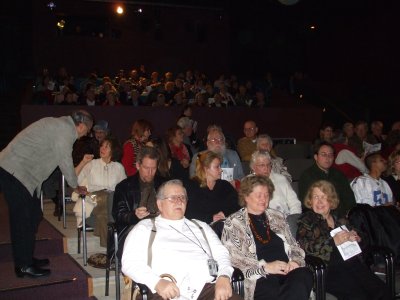
LAKEPORT – While it was only a "temporary" grand opening at the Soper-Reese Community Theater on Saturday night, when the lights went down and the performers took the stage for the Winter Music Fest, the excitement in the audience was palpable.
The event provided Lake County residents with their first glimpse of the dream of a state-of-the-art performing arts center coming true.
"It's exciting," said Joan Holman, mistress of ceremonies for the evening, who also will be starring in the upcoming production of The Solid Gold Cadillac which opens in March.
"I remember scraping gum off the floor and cleaning years ago ... we've come a long way," Holman said.
A long way indeed. The lobby has been refurbished, the auditorium gutted and repaired, the building water-proofed from flooding, plus there's a new roof, heating and air conditioning, a sprinkler system, interior paint and more.
However, the theater is not finished yet.
"This is just the interlude," said Mike Adams, who leads the construction subcommittee. “We still have a lot more to do."
Adams is hoping the community will continue to step up and support the reconstruction efforts.
The 16th annual Winter Music Fest Vaudeville 2008, presented by the Lake County Arts Council, was held at the Soper-Reese for the first time this weekend and "coming home at last," was the theme for the evening as volunteers, sponsors and donors were thanked at a champagne reception before the performances began.
John Ross, chair of the renovation committee, held up a list of the community members and businesses who have donated their time, talents and money to make the event and the future of a top-notch performing arts venue in Lake County a reality. Ross thanked them all.
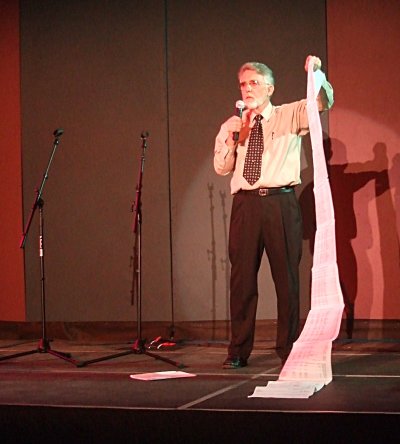
"I feel the excitement in the air tonight," said local actor and business owner Martin Squier. "There's a sense of finding a home for entertainers to perform and the community to enjoy."
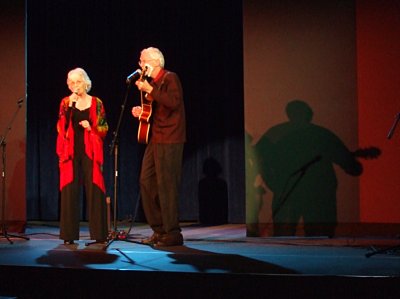
The nearly sold-out show on Saturday evening had 17 different acts with as many different styles of singing.
From ragtime to pop, show tunes to Flamenco, folk songs to love songs and more – and the audience loved them all, especially the musical antics of Bert Hutt (who even played the spoons) and pianist David Neft, who kept the audience entertained between performers.

Now that the first stage of the reconstruction effort has been fully paid for and completed, fundraising will continue for the second and final phase.
Upcoming performances at the theater include The Poetry Out Loud competition in February and a play, The Solid Gold Cadillac, in March.
Donations to support the reconstruction efforts of Soper-Reese can be sent to: Soper-Reese Fund, P.O. Box 756, Lakeport, 95453. Contributions are tax-deductible. For more information on the theater or to schedule a private tour, please call Nina Marino at 279-4082.
E-mail Terre Logsdon at
{mos_sb_discuss:5}





- Details
- Written by: Elizabeth Larson
- Details
- Written by: Lake County News Reports
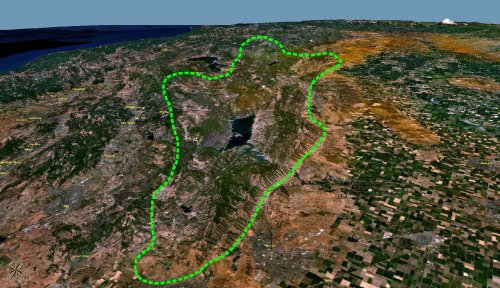
LOWER LAKE – At a presentation on Saturday, Jan. 19, more than 50 people gathered to learn what a Natural Conservation Area designation would mean to 800,000 acres, which may include a large portion of Lake County.
The Sierra Club Lake Group hosted the town hall at the Brick Hall in Lower Lake.
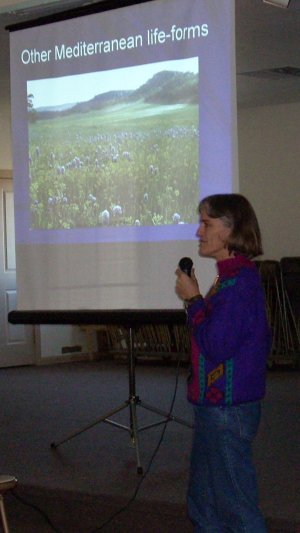
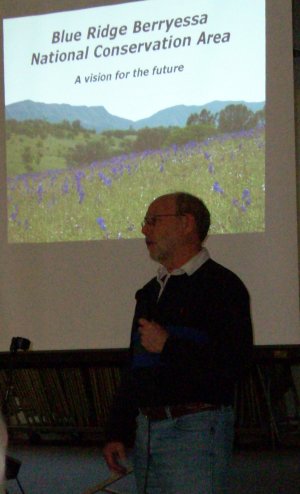
Victoria Brandon – chair of the Sierra Club Lake Group and board member of Tuleyome, a nonprofit organization that advocates and protects the Cache Creek and Putah Creek regions – introduced two speakers to give an overview of why a Natural Conservation Area designation would be beneficial to Lake County.
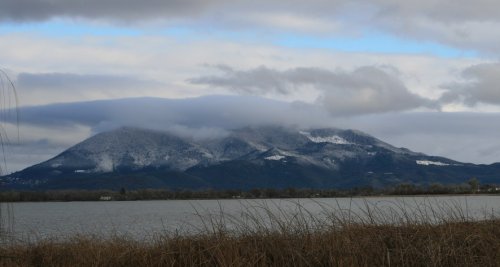
The proposed Natural Conservation Area runs from Fairfield and Vacaville in Solano County to the south, west to Middletown, east to Rumsey and along the mountains of the Northshore up into Mendocino National Forest and possibly to include the Snow Mountain Wilderness, although the exact boundaries have not yet been determined.
“I think it’s wonderful, and I support the concept. I hope we can make it happen,” said District 1 Supervisor Ed Robey, who attended the town hall event.
The proposed Natural Conservation Area would include a large portion of Lake County’s District 1.
Bob Schneider, president of Tuleyome, which was instrumental in ensuring that Cache Creek was designated as a California Wild and Scenic River, said the Natural Conservation Area designation would “protect agricultural lands, provide new opportunities for recreation, conservation and stewardship and support the local economies of the adjacent communities.”
A Natural Conservation Area designation, “will have no effect on local jurisdiction or on water rights,” Schneider said.
The public lands in the proposed Natural Conservation Area, according to Dr. Susan Harrison, an expert on botany and serpentine soils with the Department of Environmental Science and Policy, are listed as one of the world’s 25 biodiversity “hot spots.”
Harrison gave an overview of the unique environmental factors – the Mediterranean climate, the topography and soil types – that make designating this area as a Natural Conservation Area critical for conservation.
The designation will not affect private lands within the area unless landowners choose to participate in some way, it will only affect public lands, the speakers explained.
“If we’re going to protect this region,” Schneider said, “We’re going to have to preserve the agricultural heritage,” but private land owner participation is voluntary.
One way a Natural Conservation Area designation can assist private landowners within the the area is by providing conservation easements to ranchers because “ranchers benefit from and play a critical role in sustaining the regional landscape,” Schneider explained and they are, “increasingly jeopardized by development,” in this area.
According to research by the California Department of Finance, the fast growing counties of Yolo, Napa, Lake, Colusa and Solano, which all have lands in the proposed Natural Conservation Area, are expected to grow by 28 percent. That means an increase of 200,000 residents by 2020, which will severely impact the agricultural and wild lands within the proposed Natural Conservation Area according to Tuleyome’s Web site.
Schneider told the audience that there would be an economic benefit for the Natural Conservation Area designation because it is a national-level designation and the entire Blue Ridge Berryessa Natural Conservation Area can be promoted as a destination for recreation and tourism.
What a Natural Conservation Area designation does, Schneider explained, is to create a formal name for the geographic area, Congressional recognition of the region, establishes a public advisory committee and will provide funding for multiple agencies (National Forest Service, U.S. Bureau of Land Management, U. S. Bureau of Reclamation, California Department of Parks and Recreation, County governments) to come together and develop a regional management plan for the public lands.
For more information on the Natural Conservation Area proposal, visit http://tuleyome.org/projects/campaigns/blueridge/index.html; to see a slide show of photos taken in the proposed area, visit http://tuleyome.org/docs/EarthDaySlideshow.swf.
E-mail Terre Logsdon at
{mos_sb_discuss:2}
LCNews
Award winning journalism on the shores of Clear Lake.
 |
 |
 |
 |
 |