 How to resolve AdBlock issue?
News
- Details
- Written by: Elizabeth Larson
Lake County Registrar of Voters Diane Fridley on Friday gave an update on those county residents who have come forward so far to file a Form 501.
Called a “declaration of intentions,” the candidates must fill out the Form 501 before they can begin to solicit funds for a campaign, said Fridley.
With Supervisor Ed Robey not seeking reelection in 2008, as Lake County News was first to report earlier this year, a big field of potential candidates is forming.
Fridley said so far Voris Brumfield, Jim Comstock, Scott Fergusson, Susanne La Faver and Bobby MacIntyre have filed their Forms 501 for the District 1 seat.
Also up for election in 2008 are Supervisor Anthony Farrington's and Supervisor Rob Brown's seats for Districts 4 and 5, respectively.
Fridley said no one has filed a declaration of intention so far to run against Farrington. In District 5, Robert Stark has filed his form to begin a campaign against Brown.
However, Fridley pointed out that the election season hasn't even technically begun.
She said an individual isn't officially a candidate – even those who are incumbents – until they file all the necessary paperwork and follow the required steps.
From Dec. 28 through Feb. 21, candidates will begin gathering signatures in lieu of paying a filing fee to run for office, said Fridley.
The fee to run, said Fridley, is based on 1 percent of the annual salary of the position they're seeking.
In this year's budget supervisors make $4,807.46 a month, or $57,689.52 annually. That would mean the fee would be just under $600.
However, enough signatures can replace the fee. Fridley said, on average, four signatures equal $1 of the fee, meaning each candidate would need to collect about 2,400 signatures.
If a candidate decides not to collect signatures, they can simply pay the fee and collect nomination signatures.
The nomination period to officially file to run for supervisor will then run from Feb. 11 through March 7, 2008, said Fridley.
“Once someone files as a candidate for supervisor and files their declaration of candidacy, they can't withdraw. their name will be on the ballot,” said Fridley.
If there is an eligible incumbent who doesn't file for office by March 7, as is expected to be the case in District 1, the nomination period will be extended until March 12, said Fridley.
The supervisorial primary will be held in June.
E-mail Elizabeth Larson at
{mos_sb_discuss:2}
- Details
- Written by: Elizabeth Larson
The surprise is that the state Administrative Office of the Courts suggests that the trial be moved to Southern California.
On Friday morning District Attorney Jon Hopkins and defense attorney Stuart Hanlon were in Judge Arthur Mann's court to hear what alternate counties could host the trial, which Hopkins estimated will take about eight weeks.
The 23-year-old Hughes is being tried for murder in the deaths of Rashad Williams and Christian Foster, who he was allegedly accompanying during a residential robbery in Clearlake Park on Dec. 7, 2005.
Williams and Foster were shot by homeowner Shannon Edmonds as they ran from his home, but Hughes is being held responsible for their deaths under the provocative act theory.
On Nov. 15, after weeks of jury selection, the judge assigned to the Hughes case – retired Alameda Superior Court Judge William McKinstry – granted Hanlon's change of venue motion.
McKinstry cited the number of potential jurors who were dismissed for various reasons as the basis for his concern that Hughes might not receive a fair trial in Lake County.
Although Mann had not received a formal written report from the Administrative Office of the Courts by Friday, Hopkins said Mann reported that he had a conversation with an official who proposed the trial be moved either to Los Angeles or San Diego County.
Neither Hopkins nor Hanlon welcomed the proposal for those counties, based largely on concerns of distance and additional cost.
“I have a real problem because it's so far away,” said Hanlon.
Hanlon said he proposed Solano, Alameda or San Francisco counties, wanting to avoid counties with less diverse populations.
In the case of Solano, it has the highest per capital population of black residents of any county in the state. “I think Solano would be really good,” said Hanlon. “They don't want it but that's not the issue.”
Alameda and San Francisco also are diverse. However, Hanlon added, “We all know San Francisco is not the best place because of the media.”
Hanlon said it will be up to Mann to decide where the trial may go, and convenience to the parties has to be a consideration.
“The cost and expense of moving the case that far is humongous,” said Hanlon.
Hopkins also was concerned about the distance involved in moving the trial so far south.
As to where he wants to see the trial move, he said, “I would like to be close and also not in the counties that have had a lot of publicity in the case, and the Bay Area has.”
Hopkins suggested Yolo or Sacramento counties would be better choices, and considerably closer for all parties. Hanlon agreed that a Sacramento Valley location would be preferable.
Said Hopkins, “I'm actually surprised that they're having trouble finding a court to accommodate a two-month trial.”
Official explains reasons for suggesting LA, San Diego
Brad Campbell, supervising analyst for the Administrative Office of the Courts, told Lake County News he had spoken directly with Judge Mann about the possibility of moving the trial to either Los Angeles or San Diego counties.
Campbell said Judge Mann should have his official report on the change of venue early next week.
It's been difficult to find a place to host the case, said Campbell.
“We had other courts that would be able to do it but not until much later in the year,” said Campbell, explaining that late spring would be the earliest some of the alternate courts could take the trial based on their caseloads.
In Los Angeles and San Diego, Campbell said they were looking at having the trial on the calendar as soon as January or February. “You want to get a case on schedule as quickly as you can.”
Hanlon, however, said he was not available in either January or February, so the trial can't be held then. He suggested late spring would be better.
Hopkins said they'll be back in court on Jan. 4, 2008, at which time they'll discuss the change of venue location.
Campbell said if the defense and prosecution can't agree on where to hold the trial, Mann must schedule a McGowan hearing, in which the two sides will make their arguments about where they want the trial to go.
State and local responsibilities
Campbell said the county and state will share the expenses for moving the trial.
While trial courts are funded by the state, the home or “sending” court bears the cost of any extraordinary costs, including daily transcripts and extra security, said Campbell. The receiving court won't bear any charges.
Lake County would have to share costs of having Hughes housed at a jail facility in the county where the trial is held, said Campbell. The county won't have to pay for defense costs, he added.
As to the number of changes of venues he works on, Campbell said the number is very small – only about two to three across California each year.
E-mail Elizabeth Larson at
{mos_sb_discuss:2}
- Details
- Written by: Elizabeth Larson
Ivan Garcia Oliver, 29, was arraigned in Lake County Superior Court on Friday on a felony charge of possessing a weapon in jail, said Chief Deputy District Attorney Richard Hinchcliff.
Hinchcliff also is prosecuting Oliver for the Nov. 20 murder of Michael Anthony Dodele, 67, of Lakeport.
Oliver is alleged to have stabbed Dodele multiple times in the chest with a knife, as Lake County News has reported.
Sheriff Rod Mitchell said Friday that Oliver was found with a plastic toothbrush that had been sharpened on one end and had a makeshift handle created out of paper on the other.
“It was very plainly what we would consider a shank,” said Mitchell.
On Thursday afternoon Lake County Sheriff's Detective Corey Paulich arrested Oliver on the weapons possession charge in addition to a felony charge of damaging jail property in an amount less than $400, according to jail records. Hinchcliff said he is not pursuing that second charge against Oliver.
Jail staff were preparing to move Oliver from one secure area of the jail – called an administrative segregation unit – to another when the item was discovered, said Mitchell.
When “high risk” inmates are moved from one area to another, Mitchell said it's standard practice for officers to thoroughly search the new destination, then to search the inmate, including changing out clothes, in order to make sure no illegal items are taken with them.
In this case, Correctional Officer Jeremy Wichlaz was searching Oliver when he noticed that Oliver was holding something high up between his legs, said Mitchell.
If Wichlaz had been more cursory in his inspection, the item may have been missed, said Mitchell. “I really have to give accolades to the correctional officer.”
Oliver refused to grant detectives an interview or explain why he allegedly made the weapon, said Mitchell, so they don't know his motives for having it.
Mitchell said there was no legitimate reason for Oliver to have made or hidden the weapon, which could have been used to seriously hurt an officer or another inmate. He said there is no reason to believe any threats have been made against Oliver.
The sheriff called the weapon a “sophisticated effort.”
Mitchell said he's seen many weapons fabricated by inmates. “This was as good an edged weapon as an inmate can make with a toothbrush.”
He added, “All of that leads me to be exceedingly grateful that none of my officers were hurt by him.”
Jail officers will now increase the frequency of their inspections when it comes to Oliver and any items he may have access to, including legal pencils, and his comb and toothbrush, said Mitchell. “His actions have increased the level of scrutiny that we will apply to him in our routine procedures.”
Hinchcliff said he's uncertain yet if he will try Oliver on the weapons possession charge separately from the murder case.
At the time of his arrest for the Dodele murder, Oliver was on parole from San Diego County, according to Lake County Sheriff's officials.
Steve Walker, a spokesman for the San Diego County District Attorney's Office, told Lake County News that Oliver was convicted in June of 2003 on one felony count of assault with a deadly weapon with force likely to cause great bodily injury. He was sentenced to four years in prison.
Walker said that Oliver and two other men had left a restaurant without paying their bill. When a security guard confronted them, Oliver stabbed the guard multiple times with a knife.
At the time of his sentencing Oliver had no prior record, said Walker.
Oliver was released on parole in 2005 after having served less than two years in state prison, according to state parole spokesman Jerome Marsh.
A week after his arrest for the Dodele murder Oliver was indicted on federal charges stemming from a March 2005 incident in which he and his half-brother, Guillermo Garcia, are alleged to have dumped hazardous materials into a San Diego County creek.
Oliver is due to be arraigned on those federal charges next month, according to Hinchcliff.
E-mail Elizabeth Larson at
{mos_sb_discuss:2}
- Details
- Written by: Elizabeth Larson
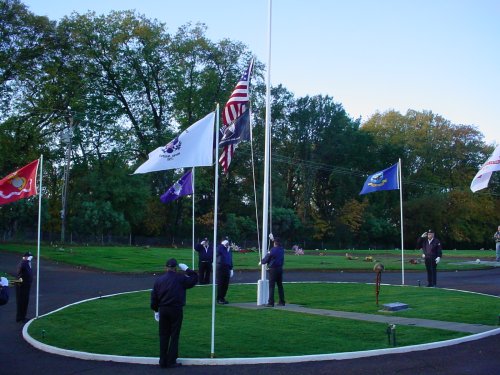
LAKEPORT – A special ceremony to honor the county's veterans will be held this Saturday.
For the first time, Christmas wreaths will be laid at the Veterans Circle at Hartley Cemetery at 9 a.m. Saturday, Dec. 15. The ceremony will take place concurrently with wreath-laying ceremonies around the country that day, scheduled for noon Eastern Standard Time.
Lakeport resident Slick Hultquist is working with local veterans groups on the Saturday ceremony.
Hultquist recently heard about the Worcester Wreath Co. – based in Harrington, Maine – which each year supplies wreaths to Arlington National Cemetery.
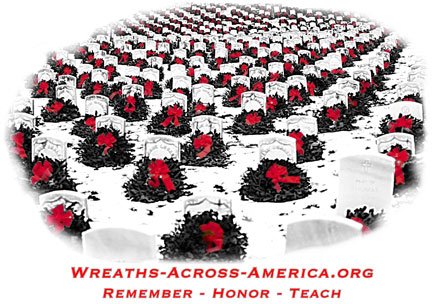
The company's Web site reported that the effort began in 1992; each year they supplied more than 5,000 wreaths to adorn the headstones of fallen veterans.
In 2006, the company launched Wreaths Across America, and began doubling its wreath donation to Arlington, now sending 10,000 each year, its Web site reported.
Besides the Arlington wreaths, the company reported that beginning in 2006 it donated another 2,500 wreaths to the Maine Veterans Cemetery at Togus, and more than 1,800 ceremonial wreaths to more than 200 other state and national veterans cemeteries across the country.
This year, the company reported that it added 24 veterans cemeteries on foreign soil and US ships sailing in all seven seas to their donations.
On Dec. 10, 51 wreaths were donated for special wreath-laying ceremonies at each state capitol and the US Capitol, according to the company.
Hultquist said he emailed the company and sent a picture of Veterans Circle. Hultquist then got a call back from the company.
“They said they were so impressed that they're sending us seven [wreaths],” said Hultquist.
The wreaths were due to arrive Wednesday.
Hultquist said the ceremony will be informal. He will lay a wreath at the base of the flagpole, and a member of each of the military's five branches also will lay a wreath during the Saturday ceremony, he explained. A bugler will then play “Taps.” United Veterans Council Chaplain Woody Hughes also will lead a prayer.
“It's basically a show of respect,” said Hultquist.
All of the local veterans groups have been invited to participate, said Hultquist.
Dean Gotham, president of Vietnam Veterans of America Chapter 951, said Thursday his group will be represented at the morning ceremony, and he anticipates other local veterans groups also will take part.
Veterans Circle, said Gotham, was dedicated on Veterans Day 2006.
Originally meant to be a final resting place for indigent vets, Gotham said the rules for burial in the special area have since been changed. Restrictions on indigent status were so strict that nobody could qualify, he said.
No one has yet been buried there, he said. However, under the new rules, it is open to all veterans, but is for cremated remains only.
Hultquist said he plans to organize a wreath laying next year as well.
Hartley Cemetery is located at 2552 Hill Road East in Lakeport.
E-mail Elizabeth Larson at
{mos_sb_discuss:2}




