 How to resolve AdBlock issue?
News
THIS ARTICLE HAS BEEN UPDATED, WITH THE DATE FOR THE NEXT ORDINANCE READING CORRECTED.
LAKEPORT – The City Council voted to forward an ordinance changing the city's right-of-way rules to a public hearing on Aug. 21.
City Engineer Scott Harter presented four possible resolutions to the council, meant to address how improvements on a property parcel trigger expensive – sometimes exorbitant – right-of-way improvement costs, including curb, gutter and sidewalk installation.
John Magee and wife Jennifer Fox brought the issue of unreasonably high right-of-way costs to the council's attention at its Feb. 6 meeting.
The couple wants to renovate their 100-year-old, 1,000-square-foot home on Ninth Street. Homes next to them don't have curb and gutter for most part, they said.
Their property includes four frontages – almost an entire block, Harter stated at the time – which could end up costing them more than their property is worth, which they estimate is about $350,000.
Even if the city deferred the right-of-way improvements until later, Magee said he and Fox couldn't pay them.
City Community Development Director Richard Knoll at the February called Fox and Magee's situation "the classic example of how our right-of-way ordinance doesn't work very well in some cases."
It was then that Knoll suggested rewriting the ordinance.
He also had suggested adding a "hardship waiver." The versions of the ordinance Harter took to the council Tuesday included a stipulation that the city manager can defer right-of-way improvements if they cause an undue hardship, but the ordinance does not state whether or not the deferral would have a time limit or would be permanent.
All of the sample ordinances suggested raising the valuation threshold that triggers right-of-way improvements from $26,000 to $45,000 over a three-year period.
Harter said, based on that value, it would allow a homeowner to add the equivalent of about 400 square feet to their home, a reasonable amount of property improvements before a property owner incurred the burden of right-of-way improvements.
The new $45,000 valuation and the three-year period would allow homeowners to stage their improvements over time, Harter explained.
Two of the sample resolutions included staff recommendations on specific exemptions for improvements made to increase energy conservation (energy efficient windows, solar, high efficiency heating and cooling, as examples); improvements to accommodate accessibility needs of the owner/occupant; and improvements meant to elevate the home within a floodplain to meet current standards.
Councilman Jim Irwin wanted a mechanism included in the ordinance that would prioritize fixing sidewalks on Main Street rather than in "isolated" areas of the city. It's also along Main Street that Irwin's father is developing his Victorian Village townhouse subdivision.
Harter said he and City Attorney Steve Brookes discussed it and decided that policy could increase the city's financial burdens.
Brookes explained after the meeting that if the city had a property owner's right-of-way obligation in another part of town go toward Main Street, the city itself would be obligated to make right-of-way improvements on that property owner's land in exchange.
Irwin questioned the solar/energy efficiency exemption. Councilman Buzz Bruns agreed the exemption should be removed, saying solar is extremely expensive. Mayor Roy Parmentier said more exemptions meant fewer sidewalks in the city.
Irwin also appeared poised to request the removal of the exemption of accessibility improvement projects until Knoll said they have one such project pending now, to add a wheelchair ramp to a woman's home.
In addition, Irwin questioned reducing the five-year valuation period to three.
When Irwin again attempted to broach the idea of right-of-way improvements being added first to Main Street, City Manager Jerry Gillham cautioned Irwin that it wasn't a good idea in the long-term.
"I think we're creating more machinations and more internal legal turmoil than the idea justifies," said Gillham.
Gillham said there aren't many right-of-way improvements that come through the city; Harter reported the number ranges between five and 10 annually.
If it's not a big deal, Irwin asked, then why the ordinance?
Councilman Bob Rumfelt moved to approve a version of the ordinance that kept the length of time for improvements at five years and removed the energy conservation improvements exemption.
The council approved the ordinance's first reading 5-0. It will be scheduled for a public hearing at the council's Sept. 4 meeting, after which it likely will be adopted.
E-mail Elizabeth Larson at
{mos_sb_discuss:3}
- Details
- Written by: Elizabeth Larson
INDIAN VALLEY – A Dixon man sustained major injuries in a Monday afternoon ATV crash in the Indian Valley area.
The crash occurred just after 2 p.m. Monday, as Lake County previously reported.
California Highway Patrol Officer Adam Garcia reported Tuesday that Tyler Bensen, 22, crashed his ATV and was taken by a private vehicle to the Wilbur Springs Cal Fire station.
Bensen was subsequently flown to UC Davis Medical Center with a broken collar bone.
Garcia said that because Bensen was transported from the accident site, CHP had not been able to locate the scene.
No further information on the collision's cause was available.
E-mail Elizabeth Larson at
{mos_sb_discuss:2}
- Details
- Written by: Elizabeth Larson
LAKE COUNTY – A San Jose woman who traveled around Northern California earlier this summer – with a stop to visit Clear Lake – has contracted West Nile Virus.
Test results delivered Aug. 2 confirmed the 48-year-old woman had contracted a mild form of West Nile Virus, said Joy Alexiou, Santa Clara County's public information officer.
The woman took a three-week camping trip during the mid to latter part of July, said Alexiou, traveling all around Northern California with some friends.
One of her stops was in Lake County, said Alexiou.
“We don't know exactly where she got it,” Alexiou said of the virus.
Although this is their second human case of West Nile Virus this season – the other was diagnosed shortly before this one – Alexiou said, in the woman's case, “We're confident that she did not get it in our county.”
On July 3, the woman – who just recently had returned from her camping trip – started to feel ill, said Alexiou. But it wasn't until later in the month that doctors began testing for the virus. “My guess is she didn't go to her doctor right away,” said Alexiou.
The symptoms the victim reported included a fever, body aches, fatigue and a body rash, said Alexiou. Health officials aren't sure the rash was related to the case of West Nile, however.
Luckily, the woman's case of West Nile was the mild – not the severe – form, said Alexiou. The severe form, she added, includes severe inflammation of the brain and spinal cord, and can lead to death.
In mild cases, the symptoms match the San Jose woman's, and also sometimes include nausea and vomiting, Alexiou said.
Alexiou said Santa Clara County notified the state but didn't contact Lake County's health officials, which Dr. Craig McMillan, Lake County's public health officer, confirmed.
The reason Lake wasn't contacted, McMillan said, is likely “because the West Nile Virus is everywhere.”
West Nile has symptoms that resemble other diseases, like meningitis, a fact which the county's doctors are aware of, said McMillan.
The Santa Clara West Nile victim “probably thought it was something else” before she finally went to see a doctor, McMillan said.
So far, 2007 has proved to be a heavy year for West Nile cases statewide. So far there have been 64 human cases – more than tripling last year's figure of 20, according to the California West Nile Virus Web site. So far four people have died from the disease.
This year, the disease has been found in 42 counties, versus 43 in 2006. In 2006, there were 13 horse cases 299 dead birds, 349 mosquito samples, 83 sentinel chickens and no cases of squirrels with the virus, the California West Nile Virus Web site reported.
In comparison, this year there have been five horses diagnosed with West Nile, 502 dead birds, 402 mosquito samples, 66 sentinel chickens and seven squirrels, according to the state.
Here in Lake County, there have been no West Nile cases in humans, horses, chickens or squirrels, the West Nile Virus Web site reported. There have, however, been five mosquito samples that tested positive.
McMillan said he's “happily surprised” by those very low numbers. “That doesn't mean it's not out there,” he cautioned.
Alexiou said the woman is recovering but still feeling very tired. “If you get it you're down for a while,” she added, noting victims need weeks, sometimes months, of recovery time.
E-mail Elizabeth Larson at
{mos_sb_discuss:2}
- Details
- Written by: Elizabeth Larson
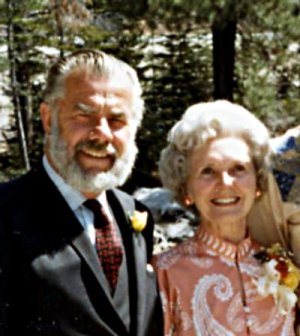
LAKE COUNTY – The Lake County Historical Society is pleased to announce a private donation of $100,000 has been pledged to the Ely Stage Stop and Country Museum.
In August, the Ely Stage Stop and Country Museum Project will receive a donation of $100,000 from the Kettenhofen Family Foundation, a charitable foundation established and funded by the estates of Ernest and Polly Kettenhofen who owned the S-Bar-S Ranch from approximately 1960 to 2000. Ernest died in 1996; Polly died in 2006.
The Kettenhofen Family Foundation called for the donation recipients to be selected by remaining family members, so in looking for a charity in Lake County, the family discovered the Ely Stage Stop Project through the Lake County Historical Society web site.
Randy Ridgel, president of the Lake County Historical Society, expressed gratitude on behalf of the Society to the Kettenhofen family for the very generous donation.
Linda Marshik, daughter of the Kettenhofens, said, "We recognized the building as the one our father had told us used to be the Stage Stop at the Lost Springs Ranch, later called the S-Bar-S."
She said the family had been looking for a charity but hadn't expected to find a project that would be so fitting of the family's past connection to Lake County and be a long-term asset for Lake County.
"We were so pleased to learn about the Beckstoffer family's generous donation of the building and land for the project," Marshik said.
Andrew Beckstoffer of Beckstoffer Vineyards donated both the historic structure, considered by some to be the oldest "stick-built" building in Lake County dating to the late 1850s, as well as the five-acre parcel for the new site.
On July 29, the historic Ely Stage Stop structure was relocated just across Highway 29 to the future site of the museum, at 9921 Highway 281, approximately one mile north of Kit's Corner, in Kelseyville. The site features dramatic views of Mt. Konocti and overlooks the former S-Bar-S Ranch.
Ridgel said the society intends to use the Kettenhofen family funds for physical improvements such as building and foundation work in the early stages of the project, and also for future conservation efforts.
He said these efforts may include "old history" in the form of an operating windmill to pump water to supply the museum, as well as "new history" in the form of solar power to supply the museum with electricity.
Once completed, the Ely Stage Stop and Country Museum will be owned by the county and will provide a permanent home for the Lake County Historical Society. The site will function as a historical and agricultural visitor center with reconstructed old barns, displays of farm equipment, as well as agricultural demonstrations and living history exhibits.
Opportunity to give back
Acknowledging the generosity and hard work of others that had brought the project to this point, Marshik said the family felt fortunate that the timing of the Ely Stage Stop Project gave them a chance to give something back to Lake County.
Marshik said, "Our parents believed you should always give something back" and Lake County was a place they cherished. She said that although family members now reside from San Diego to Vancouver, British Columbia, they each carry warm memories of the beauty of Lake County.
"It was at the center of many years of our family gatherings and the hub of activities," Marshik said.
She recalled memories of hiking, hunting, and birdwatching, blackberry picking, rock collecting and star-gazing, even water-skiing and county fairs.
"My father also had a keen interest in the history of the land and the stories of the people who had been on the land before," Marshik said.
She said the members of the Kettenhofen family agree that their parents, Ernest and Polly, would be truly happy at the chance to help with the Ely Stage Stop Project.
"We know it's a huge undertaking, and it has already taken an impressive amount of work with a great deal more to come," Marshik said. "The donation from our parents' estate comes with our warm wishes for the project's future success."
Monetary contributions as well as donations of farm equipment and old barns are still being sought.
Anyone interested in contributing to the project may contact Greg Dills, chairman of the Ely Stage Stop and Country Museum Project for the Lake County Historical Society at 707-263-4180, extension 12.
For more information, contact Eric Seely at the Lake County Administrative Office at 707-263-2580.
{mos_sb_discuss:2}
- Details
- Written by: Editor