News
The Little Hoover Commission will meet Thursday, May 29, at 2 p.m. to consider a draft report on the Governor’s proposed Reorganization Plan, which would create a Housing and Homelessness Agency and a Business and Consumer Services Agency.
The commission may also take up a draft report on public-philanthropic partnerships.
By law, the Governor’s Reorganization Plan was submitted to the Commission for “study and recommendation.”
The commission held two days of hearings on the proposal, and met on May 13 to discuss the plan and provide guidance to staff about the contents of the report.
The draft report, which reflects that guidance, recommends approval of the plan, although also recommends that the Legislature pursue companion legislation to modify the plan in some respects.
The draft report has not been approved by the Commission, and is still subject to modification by the commission.
The draft report and other background material provided to Commissioners can be accessed here.
The commission may also take up a draft report on the state’s role in public-philanthropic partnerships, a topic on which the commission recently held hearings. The draft report can be accessed here.
The meeting will be held principally via Zoom. Members of the public are free to attend the publicly noticed physical location – Basement Conference Room (Level B1) of the Senator Building at 1121 L Street in Sacramento – but no Commissioners are expected to attend in person. Commission staff will be present at that site.
The Zoom login details (also below) and the full information packet for the meeting may be accessed here.
Visit the 2025 Reorganization study page for the governor's proposal and all of the commission’s background materials.
- Details
- Written by: Little Hoover Commission
LAKE COUNTY, Calif. — In collaboration with CalRecycle, Lake County Code Enforcement is offering residents of Glenhaven, Clearlake Oaks, Spring Valley, Double Eagle, Elem and Clearlake Park the opportunity to participate in two free dump days.
This program is designed to assist residents in the removal of trash, debris, household garbage, and other waste materials from their properties at no cost.
The events will take place from 8 a.m. to 1 p.m. Saturday, May 31, and Saturday, June 7, at the Clearlake Oaks Moose Lodge, 15900 Almond Lane by the roundabout at Highways 20 and 53.
What Is accepted: Household trash, general garbage, metal, appliances, mattresses, tires (separated from rims/wheels), furniture, rugs, clothing, household items, electronics and computer equipment.
What is NOT accepted: Hazardous materials, paint, oil, green waste (vegetation), construction materials. (Some items can be taken to the Clearlake Recycle Center. See website for details.)
How can I help?
• Organize a neighborhood cleanup.
• Have a truck? Volunteer to pick up items from people in need of assistance (see below).
• Adopt a beach or road for cleanup.
Volunteers to help those needing assistance: If you are unable to make the drive to the dump day for any reason, please call 707-666-1232 and let the volunteers know your address, what things you have to be dumped, and what assistance you require. While not all accommodations can be made, volunteers (working with county staff) will help as much as possible.
Questions: If you have any questions or would like to volunteer, please contact Lake County Code Enforcement at 707-263-2309 and request to speak with Damien Marks. Staff can direct you on what items you can or can’t bring, what times you can bring your items, and any other information. You can also email
As part of the CalRecycle grant, the county will also be cleaning up habitual dump sites in Clearlake Oaks including Stubbs Road, Mountainview Road, Sulphur Bank Drive and Junction Plaza.
Two prior events were successfully held in Nice (March) and Lucerne (April), bringing in more than 850,000 pounds of trash.
- Details
- Written by: Elizabeth Larson
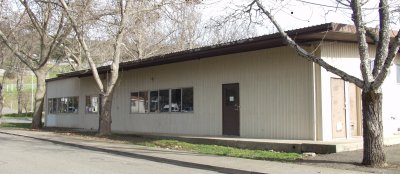
The training is free and will take place from 10 a.m. to 4 p.m.
Light snacks and refreshments will be provided, along with training materials at no cost.
For more information or to register for tutor training, please call 707-263-7633 or email
Tutors are in high demand at the Library Literacy Program, with more volunteer tutors needed in the Clearlake and Middletown areas, bilingual Spanish tutors for the English as a Second Language Program, and tutors available and willing to tutor at the Lake County Jail.
Hosted by Literacy Program Coordinator Georgina Marie Guardado, and facilitated by Lake County Literacy Coalition Board Member Pam Klier, participants will learn useful techniques for teaching adults to read and write.
No experience is needed, and ongoing support and workshops are provided for tutors. Upon completion of the training, tutors will be matched with adult learners in a variety of settings around the county. Those who would like to help adults improve their literacy skills are encouraged to attend.
A recent survey of adult skills indicated 26% of Lake County adults have literacy skills at level one or below.
Many adults want to improve their reading and writing skills so they can access better jobs, further their own education, advocate for their children, and overall improve their way of life.
Through hard work and perseverance, adult learners can change their own, and their family’s lives, for the better. Becoming a tutor can help someone to a better future.
Learn more about the Literacy Program online at https://www.lakecountyca.gov/836/Literacy-Program.
- Details
- Written by: Georgina Marie Guardado
According to the National Highway and Traffic Safety Administration, or NHTSA, distracted driving killed 3,275 people in 2023.
But smartphones themselves may help to curb this risky behavior through “do not disturb” features that can block or limit use while driving.
New research from the AAA Foundation for Traffic Safety found that when activated, this feature can be effective in reducing smartphone interactions when driving.
“Distracted driving continues to be a major traffic safety concern as we’ve all witnessed how smartphones can lead to distraction and risky driving, but it’s possible these devices could help us to prevent it,” said Doug Johnson, spokesperson with AAA Northern California. “Increasing the use of ‘Do Not Disturb’ technology requires more than building awareness. It requires behavior-focused strategies, smarter automation, consistent reinforcement through social norms, and possibly small incentives.”
Study insights: Driver interaction with ‘do not disturb’
Researchers examined why drivers avoid using “do not disturb” features and how to overcome their objections.
Drivers cited limited access to music and navigation as reasons not to activate “do not disturb” features. This misconception shows a lack of understanding of the technology. Current smartphone-blocking features allow music and navigation to be used when activated.
Other barriers mentioned by drivers included lack of awareness about the feature, forgetting to turn it on, and fear of missing important calls or texts while driving.
Despite this resistance, many drivers favor “do not disturb” features that automatically turn on during stressful situations like heavy rain, snow, or traffic. This suggests that drivers are more inclined to use this feature to reduce distraction when there are greater demands on their attention.
Additionally, the study revealed that younger drivers (age 18 – 24) -- a group more likely to use their phones when behind the wheel – are also more knowledgeable about “do not disturb” features than older generations. However, they also tend to believe they can use their phone safely while driving, suggesting this group may not feel these features are necessary.
AAA recommends the following to encourage the use of “do not disturb” features while driving:
• Increase awareness through targeted public education campaigns.
• Integrate education of “do not disturb” features into driver training and licensing programs.
• Improve automatic activation and situational awareness features (i.e., recognizing when the user is a passenger versus a driver).
• Use reminders and incentives to encourage drivers to use “do not disturb” features.
• Address misconceptions through in-app messaging.
• Leverage influencers to promote the use of this technology, especially to younger audiences.
- Details
- Written by: AAA Foundation for Traffic Safety
How to resolve AdBlock issue?