News
- Details
- Written by: Lingzi Chen
LAKE COUNTY, Calif. — The Board of Supervisors this week will take up a slate of fiscal and policy matters, including adopting the final 2025-26 budget, considering $60,000 in support for business groups, increasing $350,000 for a Behavioral Health contract and imposing a temporary ban on new cannabis cultivation permits.
The board will meet beginning at 9 a.m. Tuesday, Sept. 23, in the board chambers on the first floor of the Lake County Courthouse, 255 N. Forbes St., Lakeport.
The meeting can be watched live on Channel 8, online at https://countyoflake.legistar.com/Calendar.aspx and on the county’s Facebook page. Accompanying board documents, the agenda and archived board meeting videos also are available at that link.
To participate in real-time, join the Zoom meeting by clicking this link.
The meeting ID is 865 3354 4962, pass code 726865. The meeting also can be accessed via one tap mobile at +16694449171,,86533544962#,,,,*726865#. The meeting can also be accessed via phone at 669 900 6833.
At 10:15 a.m., the board will consider a one-time combined $60,000 allocation from the county — $26,000 for the Lake County Economic Development Corp., or EDC, and $34,000 for the Lake County Chamber of Commerce — to stabilize funding while the two organizations “share an executive director” and reduce costs, according to the staff report.
The EDC has not received its usual $109,000 from the US Department of Agriculture Rural Business Development Grant, awarded since 2019. If the grant comes through, the staff report said it will repay the $26,000 to the county, and explore ways to return the full $60,000.
The allocation would come from the county’s $900,000 economic development impact fee deferral program, reducing it to $840,000.
The financial difficulty of the Lake County Chamber came up during the county’s budget hearings in June.
Supervisor Brad Rasmussen said the chamber “can’t sustain running that visitor center” since the transfer of transient occupancy tax to the Tourism Improvement District. “What’s at risk is that the visitor center may close,” Rasmussen said.
He added that an annual $50,000 allocation to the chamber will need discussion.
Supervisor Bruno Sabatier said at the same hearing, “A group to support businesses that can't run their own business and needs us to support them financially to run their business, seems a little bit on the awkward side.”
On Sept. 2, Amanda Martin, hired in December 2024 as chief executive officer of the chamber, announced her resignation after nine months in the role.
At 10:30 a.m., the board will discuss a presentation about the outcome of the 2025 Clear Lake Hitch community science spawner observation program, which trained community volunteers to observe and collect data about the hitch.
At 11 a.m., the board will consider the final recommended budget for fiscal year 2025-26.
The staff report noted adjustments to budget, project and position allocation, as the county has received new funds since the June hearings, such as $6,493,892 in Fund Balance Available and $12,506,226 in American Rescue Plan Act, also known as the State and Local Fiscal Recovery Funds.
At 1 p.m., the board will consider establishing an ad hoc committee to develop agriculture road standards.
In 2019, the board clarified that outdoor cannabis cultivation should follow agricultural rather than commercial road standards. However, broader discussion raised the need for consistent road standards across all agricultural activities such as pears, walnuts and winegrapes.
The proposed ad hoc committee would include representatives from local agriculture, fire districts, the Lake County Winegrape Association and the Farm Bureau.
Staff proposes that the committee function as a temporary working group, not subject to the Brown Act, coordinated by Community Development, and aligned with the timeline for updating cannabis regulations.
At 2 p.m., the board will consider an ordinance amendment that temporarily bans new commercial cannabis cultivation applications and halt the process of incomplete applications.
“In response to declining permitted cannabis cultivation and an increasing backlog of incomplete applications,” the staff report said, “the ordinance would temporarily prohibit the acceptance of new commercial cannabis cultivation applications and halt the process of applications not deemed complete as of the ordinance’s effective date.”
This measure, once approved, will remain in effect until Jan. 1, 2026.
“This action would allow staff to focus on processing existing complete applications while supporting the development of a comprehensive, updated cannabis ordinance,” the staff report said.
At 2:30 p.m., the board will consider impacts of recent and pending withdrawals from the county treasury pool and potential changes to county investment policy.
County fire districts have utilized the county treasurer both for treasury operations and for investment. However, the Lake County Fire Protection District Board of Directors approved on August 20 to withdraw from the county’s treasury pool to pursue independent investments, while still seeking to use some county treasurer services.
“While we recently have had a district leave the pool entirely, this is the first we have encountered a district attempting to stay partially in…” the staff report said.
The partial participation creates instability for the pool, which is structured for all participants to share risks and rewards equally, according to the staff report. The county is now evaluating protective measures to safeguard schools and other agencies dependent on the pool.
In the untimed items, the board will consider raising a Behavioral Health service contract from $25,000 to $375,000 — 15 times the original amount.
The county entered into an agreement with Redwood Community Services Inc. on July 1, to operate the Phoenix House Crisis Residential Treatment Facility. “Service demand has exceeded initial projections, requiring an increase in contract funding,” the staff report said.
Despite overseeing tens of millions in service contracts, Behavioral Health has leaned on General Fund loans, citing cash flow challenges associated with Medi-Cal reimbursement. The board last week granted the department a nine-month extension on a $2 million loan in a 4-1 vote, with Sabatier opposed.
The full agenda follows.
CONSENT AGENDA
5.1: Adopt proclamation declaring September 26, 2025, as Native American Day in Lake County.
5.2: Adopt proclamation declaring the second Monday in October as Indigenous Peoples’ Day in Lake County.
5.3: Approve second amendment of agreement between the County of Lake and 4LEAF Inc. to extend term to October 1, 2027, and increase compensation by $60,000, for a total compensation not to exceed $200,000, for building permit processing and inspection services, and authorize the chair to sign.
5.4: Adopt resolution setting rate of pay for election officers for the November 4, 2025, statewide special election.
5.5: Adopt resolution to accept the funding in the agreement between the County of Lake and the California Housing and Community Development Department.
TIMED ITEMS
6.1, 9:02 a.m.: Public input.
6.2, 9:03 a.m.: Pet of the week.
6.3, 9:05 a.m.: Presentation of proclamation declaring September 26, 2025, as Native American Day in Lake County.
6.4, 9:10 a.m.: Presentation of proclamation declaring the second Monday in October as Indigenous Peoples’ Day in Lake County.
6.5, 9:15 a.m.: UCCE Water and Climate Advisor Program update – Dr. Laura Garza Díaz.
6.6, 9:30 a.m.: Hearing, consideration of request for hearing regarding code enforcement abatement activity at 6782 and 6792 Marin Street, Nice (APNs 031-173-38 & 41); property owner and appellant: Jessica Northcutt.
6.7, 10 a.m.: Hearing, consideration of request for hearing regarding code enforcement activity at 7180 Dodge Road, Nice (APN 032-091-18); property owner: Diana Anglero.
6.7(b), 10:15 a.m.: Addendum, consideration of support in the amount of $26,000 for the Lake County Economic Development Corporation and $34,000 for the Lake County Chamber of Commerce.
6.8, 10:30 a.m.: Presentation from Lake County Watershed Protection District/Water Resources staff on the 2025 Clear Lake Hitch Community Science Spawner Observation Program – summary and outcomes.
6.9, 11 a.m.: Public hearing, consideration of the final recommended budget for fiscal year 2025-26 for the County of Lake and special districts governed by the Board of Supervisors.
6.10, 1 p.m.: Consideration of request for board direction regarding establishment of ad hoc committee for development of agriculture road standards.
6.11, 1:30 p.m.: Consideration of Western Region Town Hall presentation to the Lake County Board of Supervisors.
6.12, 2 p.m.: Public hearing, consideration of an ordinance on the processing of commercial cannabis cultivation permits within the unincorporated area of the County of Lake.
6.13, 2:30 p.m.: Consideration of impacts resulting from recent and pending withdrawals from county treasury pool and potential changes to county investment policy.
NON-TIMED ITEMS
7.1, Supervisors’ weekly calendar, travel and reports.
7.2, Consideration of response to the 2024-25 Lake County Civil Grand Jury final report.
7.3, Consideration of approval of Amendment No. 1 to the agreement between the County of Lake and Redwood Community Services, Inc. Phoenix House Crisis Residential Treatment Facility for fiscal year 2025-26.
CLOSED SESSION
8.1, Conference with legal counsel, significant exposure to litigation pursuant to Gov. Code section 54956.9(d)(2), (e)(1), one potential case.
Email staff reporter Lingzi Chen at
- Details
- Written by: Kara Manke
A new UC Berkeley-led study demonstrates how two mitigation strategies — home hardening and defensible space — can have a major impact on wildfire destructiveness.
Since January’s wildfires flattened entire neighborhoods in Los Angeles, displacing 12,900 households and causing an estimated $30 billion in losses, California’s many other fire-prone communities have been eager for solutions to better protect themselves.
A new UC Berkeley-led study provides these communities and their lawmakers with actionable data on how wildfire mitigation strategies can reduce the destructiveness of wildfires by as much as 50%.
One option to reduce wildfire damage is home hardening, which describes a variety of structural modifications that homeowners can use to make their houses less susceptible to fire.
These include using fire-resistant siding and roofing materials, covering vents to prevent embers from entering the home, and upgrading to double-paned tempered glass windows that are less likely to break in a fire.
Another strategy, defensible space, refers to a vegetation-free “buffer zone” around a home or structure. Because renovating existing homes is not always easy or cheap, data on the effectiveness of these measures is key to justifying future investment.
In the study, the researchers used state-of-the-art wildfire simulation tools, combined with real-world data from five of the most destructive fires that occurred in California before 2022, to quantify the impact of these strategies.
It found that home hardening and defensible space together can double the number of homes and other structures that survive a blaze. Notably, they also demonstrated that just removing the vegetation within a 5-foot perimeter of homes — the subject of California’s proposed Zone Zero regulations — could reduce structure losses by 17%.
“I view this as really powerful evidence that the mitigation measures that are available to us, hardening and defensible space, actually have some real-world effectiveness,” said study senior author Michael Gollner, associate professor of mechanical engineering at Berkeley.
These strategies may further prevent loss and death by slowing the spread of fire, giving residents more time to evacuate and emergency responders more time to arrive at the scene, Gollner said.
“We can’t always change the spacing between structures or the exposure from flames and embers,” Gollner said. “But even within those limitations, we still have the power to cut the destruction in half, if not more. That is very powerful.”
The study was published online today (Aug. 28) in the journal Nature Communications, and was supported by grants from the California Department of Forestry and Fire Protection (CAL FIRE) through the Forest Health program, the Gordon and Betty Moore Foundation and the National Science Foundation.
Investment in mitigation pays off
To measure the impact of wildfire mitigation strategies, a research team led by Gollner and Berkeley postdoctoral scholar Maryam Zamanialaei took advantage of Cal Fire’s unique damage inspection database, or DINS, which includes data from on-the-ground surveys of all structures that were damaged or destroyed in major California wildfires since 2013.
The study focused on the 2017 Tubbs and Thomas fires, 2018 Camp fire, 2019 Kincade fire and 2020 Glass fires. To build a comprehensive data set, researchers then added information from a variety of other geospatial sources to better define the spacing between each building, the construction materials used and the density of vegetation surrounding each structure.
A unique aspect of the study was the use of state-of-art simulation tools to model how wildfire might have spread through each community, allowing researchers to account for fire exposure to each structure.
By applying advanced machine learning techniques to the combined dataset, they developed a data-driven model that predicts structure survivability with 82% accuracy and disentangles how factors such as structure spacing, fire exposure, construction materials and defensible space combine to influence risk.
“We wanted to identify the risk factors that make a structure susceptible to loss,” Zamanialaei said.
“It’s possible that a well-protected home may have a low chance of survival because of everything around it,” Gollner added. “The model allows us to tune in to see the impact of each factor and how they interplay.”
Their research identified structure separation distance as the most influential factor driving structure loss, especially in densely built areas where wildfire is spread from building to building. Flame length also emerged as a critical contributor.
In addition, construction features such as exterior siding and window materials substantially contributed to the vulnerability of structures. The findings highlight how building arrangement and exposure to flames, combined with ignition resistance, all contribute to wildfire risk.
However, for mitigation strategies to work best, they need to be adopted by everyone in a fire-prone community, Gollner said. As the fierce debates over Zone Zero regulations illustrate, it can be challenging to cultivate the social and political will to implement these changes on a large scale.
“Much of what you can do to prevent these fires from spreading through the whole community happens on an individual’s property and depends on what your neighbor does,” Gollner said. “This is a really challenging social, economic and political problem that requires a lot of groups working together.”
He hopes that the study further highlights the importance — and positive impact — of this challenging work.
“We need to justify the investments we’re making in mitigation, and I was glad to see that for many of them, we do see significant payback in terms of risk reduction,” Gollner said.
Additional co-authors of the study include Daniel San Martin of the Universidad Técnica Federico Santa María; Maria Theodori and Dwi Purnomo of UC Berkeley; Ali Tohidi, Arnaud Trouvé and Yiren Qin of the University of Maryland; and Chris Lautenberger of Cloudfire.
Kara Manke writes for the UC Berkeley News Center.
- Details
- Written by: Elizabeth Larson
LUCERNE, Calif. — A vehicle crash in Lucerne late Sunday night resulted in a power outage in the town.
The crash involving an SUV and a power pole occurred shortly before 11:20 p.m. Sunday at Highway 20 and Ogden Road.
The power went out in town at 11:17 p.m., according to Pacific Gas and Electric’s online outage map.
The California Highway Patrol reported that two women were in the vehicle. Information on injuries was not immediately available.
The person who reported the crash told authorities the vehicle had hit more than one pole.
Fire units arriving at the scene reported that power lines were down. A hard closure of the roadway was set up while PG&E worked on repairs.
Initially, PG&E reported that 3,212 customers were out of power. Within an hour, that was reduced to 1,461 customers.
Shortly before 2 a.m., PG&E said 184 customers still had the lights out, with power expected to be restored by 6:30 a.m. Monday.
Email Elizabeth Larson at
- Details
- Written by: Elizabeth Larson
LAKE COUNTY, Calif. — Lake County Animal Care and Control has many new kittens waiting to be adopted.
The kittens and cats at the shelter that are shown on this page have been cleared for adoption.
Call Lake County Animal Care and Control at 707-263-0278 or visit the shelter online for information on visiting or adopting.
The shelter is located at 4949 Helbush in Lakeport.
Email Elizabeth Larson at
- Details
- Written by: Lingzi Chen
LAKE COUNTY, Calif. — A recent ranking placed Woodland Community College first among California community colleges and fourth nationwide.
On Aug. 12, WalletHub, a personal financing consultant firm, released its 2025 community colleges ranking, which considers factors including affordability, education and career outcomes.
Out of 653 community colleges across the country, Woodland Community College ranked 64th in cost and financing, 94th in education outcomes and 91st in career outcomes.
While it did not lead in individual categories, its healthy overall performance placed it at the top in California and fourth in the nation.
The analysis uses data from the National Center for Education Statistics, Campaign for Free College Tuition, U.S. Department of Education, and Council for Community and Economic Research.
The national top community college in the ranking, State Technical College of Missouri, delivers one of the best education and career outcomes. However, it ranks 367 in cost and financing.
“As a college, our staff, faculty, and students are honored to be recognized for their mission-focused and student-centered efforts,” Woodland Community College President Lizette Navarette told Lake County News in an email.
“This achievement reflects our dedication to affordability, academic excellence, and advancing student success while fostering a caring and supportive campus culture,” said an email from Korinda Ebenhack, dean of the college’s Lake County campus and Colusa County Center.
Woodland Community College has three campuses: the main campus in Woodland, the Colusa County Center in Williams, and the Lake County campus, which has been located in Clearlake since 1974.

While California is among the most expensive states, Woodland Community College is ranked more affordable than over 80% of all community colleges analysed in the study.
Typically, the college charges residents a state-mandated enrollment fee of $46 per unit, plus a $10 student health fee except for high school dual enrolled students. For nonresidents or foreign students, it would be $365 per unit.
Various financial aid programs are available to help students in need pay for school.
“Many students wind up paying no tuition, because almost every student is eligible for financial aid or for the Cal Grant,” Ebenhack told Lake County News in a late-2024 phone interview. “If they qualify for a support program like EOP [Education Opportunity Program], they get extra funding so they can get books paid for.”
In the school year 2024-25, the total amount of financial aid disbursed is reported to be $7,569,048, with over $5.5 million coming from grants. Some 567 degrees and 415 certificates are awarded, with 208 degrees for transfer for the school year.
The school now has a 7,655-student headcount with an average age of 23. Among all students, 2,278 are high school students, and 2,540 are full-time equivalent students.
The student body consists mostly of minority ethnicities: 52% Latinx, 23% White, 11% Asian and 3% Black.
Woodland offers programs and credentials across five fields of study: arts, communication and culture; business, hospitality and entrepreneurship; natural resources and the environment; social justice and public service; and science and technology.
Find out more about the college at their official website.
Email staff reporter Lingzi Chen at
- Details
- Written by: Elizabeth Larson
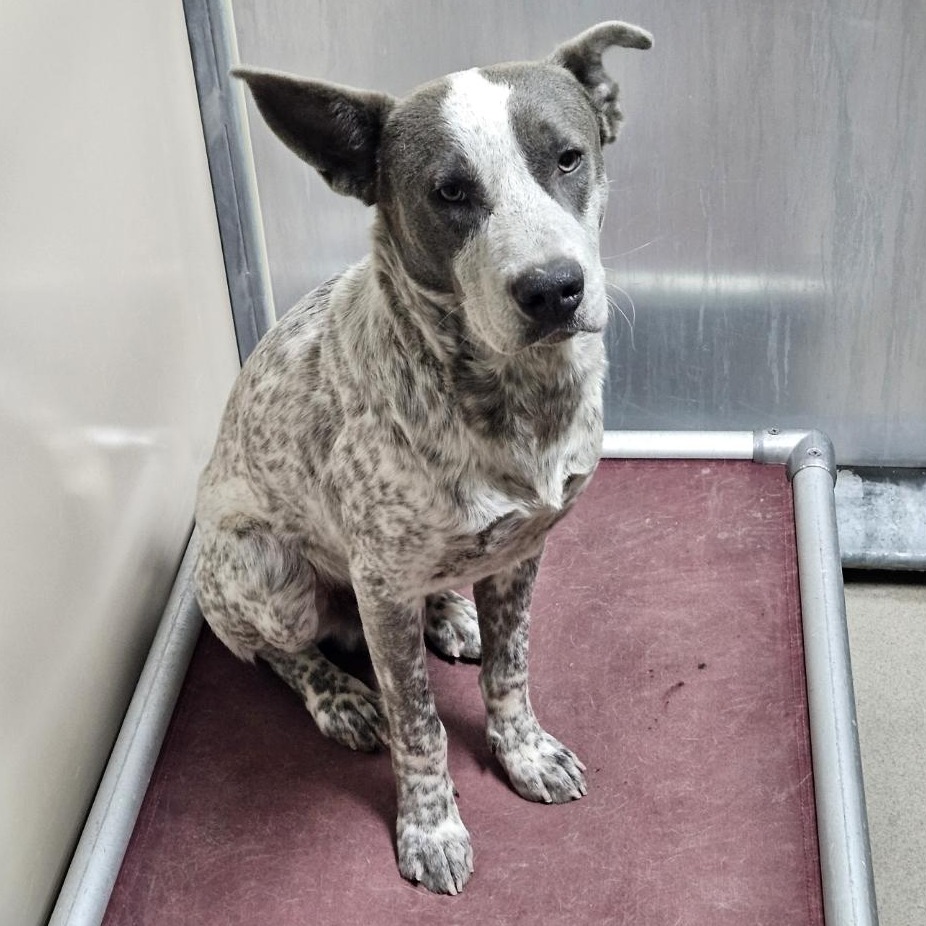
LAKE COUNTY, Calif. — Lake County Animal Care and Control has more dogs waiting this week for new homes.
The dogs available for adoption this week include mixes of cattle dog, Chihuahua, German shepherd, Labrador Retriever, pit bull terrier, terrier and shepherd.
Dogs that are adopted from Lake County Animal Care and Control are either neutered or spayed, microchipped and, if old enough, given a rabies shot and county license before being released to their new owner. License fees do not apply to residents of the cities of Lakeport or Clearlake.
Those animals shown on this page at the Lake County Animal Care and Control shelter have been cleared for adoption.
Call Lake County Animal Care and Control at 707-263-0278 or visit the shelter online for information on visiting or adopting.
The shelter is located at 4949 Helbush in Lakeport.
Email Elizabeth Larson at
- Details
- Written by: LAKE COUNTY NEWS REPORTS

With the school year just getting into full swing, California State Parks, First Partner Jennifer Siebel Newsom and the California Natural Resources Agency are inviting all fourth graders in California public schools to download the free California State Park Adventure Pass.
The pass opens the door to California’s stunning natural landscapes and rich cultural heritage, granting students and their families a year of free entry to 54 state parks full of sandy beaches and desert canyons, majestic redwood forests and eye-opening historic sites.
Championed by the First Partner, whose California for All Kids initiatives support children’s physical, mental and social-emotional well-being, and the Newsom Administration’s Outdoors for All initiative, the California State Park Adventure Pass expands the opportunity for fourth graders and their families to enjoy the benefits of connecting with nature, each other and their communities.
The pass for this school year’s fourth graders is valid until Aug. 31, 2026.
To date, more than 89,000 passes have opened new doors and fostered a love of state parks for California fourth graders.
“As a mom, I know how much time in nature shapes a child’s health, happiness, and love for the outdoors,” said First Partner Jennifer Siebel Newsom. “The California State Park Adventure Pass has opened the door for more kids and families to experience the joy and benefits of our beautiful state parks. I encourage all public school fourth graders and their families to take advantage of this opportunity, and to explore all the incredible natural treasures California has to offer!”
“California’s state parks are true wonders of nature and human history,” said State Parks Director Armando Quintero. “The Adventure Pass is an invitation to fourth graders and their families to discover the world of California. It’s your home.”
“California’s natural treasures belong to all of us,” said California Natural Resources Agency Secretary Wade Crowfoot. “By opening our parks to public school fourth graders at no cost, we’re investing in healthier kids, stronger communities, and the next generation of stewards who will care for the Golden State’s wealth of natural and cultural resources.”
Obtaining a free California State Park Adventure Pass online is simple:
• Have a parent and/or guardian visit com or call (800) 444-7275 (Spanish-speaking customer service available).
• If they don’t already have a ReserveCalifornia account, they can set up a profile by providing their name, address, phone number and email address.
• After completing the form, the free pass will be sent to their email right away and can be used immediately to enjoy any of the 54 participating parks.
• Individuals who do not have access to a smartphone, computer or printer, and/or do not have an email address, can request a pass by visiting a State Parks Pass Sales Office or by calling (800) 444-7275.
There are 54 picturesque state parks that fourth graders and their families can visit once they have the pass, including Anderson Marsh State Historic Park in Lower Lake and Clear Lake State Park in Kelseyville.
Why was the California State Park Adventure Pass program established?
Made possible by Assembly Bill 148, the program was signed by Gov. Newsom in July 2021.
The pass is valid for the one-year period during which the child is a fourth grader or fourth-grade equivalent and attends a public school, from September 1 to August 31 of that year.
The pass is also a good educational tool for California fourth-grade teachers, who can encourage students with the Adventure Pass to extend their classroom learning into state parks and explore these living classrooms. For full terms and conditions, click here.
The Outdoors for All initiative champions the right of all Californians to have access to recreational opportunities and enjoy the cultural, historic, and natural resources found across the state.
Too many Californians cannot access either public outdoor spaces or the state’s array of museums, and cultural and historical sites.
The state is prioritizing efforts to expand all Californians’ access to parks, open space, nature and cultural amenities. This priority requires focusing funding and programs to expand opportunities to enjoy these places. Doing so advances Governor Gavin Newsom’s strong personal commitment to building a “California for All.”
Outdoors for All Pass Programs
In addition to the California State Park Adventure Pass, all Californians can check out a California State Parks Library Pass by using their library cards to access more than 200 participating state park units. The Library Pass program is also available to tribal libraries throughout the state.
Families receiving California Work Opportunity and Responsibility for Kids, or CalWORKs, individuals receiving Supplemental Security Income and income-eligible Californians 62 and over can apply for the Golden Bear Pass with their smartphone or other web-based device in just minutes and have access to more than 200 California state park units.
The Golden Bear Pass is also available to participants of California’s Tribal Temporary Assistance for Needy Families, or TANF, program.
For more information on all three State Park Pass programs, please visit parks.ca.gov/OutdoorsForAll.
- Hepatitis B shot for newborns has nearly eliminated childhood infections with this virus in the US
- Space News: 50 years ago, NASA sent 2 spacecraft to search for life on Mars – the Viking missions’ findings are still discussed today
- Lake County Continuum of Care to host community conversation on local unhoused crisis Sept. 24
How to resolve AdBlock issue?