 How to resolve AdBlock issue?
News
- Details
- Written by: Lake County News reports
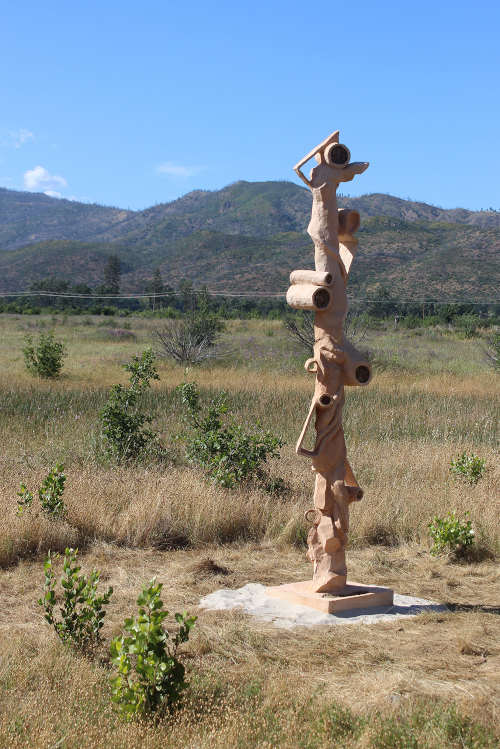
MIDDLETOWN, Calif. – Artists and community members interested in participating in the EcoArts Sculpture Walk at Trailside Park in Middletown are encouraged to submit proposals by Tuesday, April 20.
For this 15th year of the Sculpture Walk, the primary purpose remains supporting revitalization of the land, and mending of damaged ecosystems within a local natural preserve that was damaged in the 2015 Valley fire.
Work should relate to the natural environment and integrate the spirit and materials of the park and of Lake County. Trees and flora are coming back with vitality.
All proposals will be juried. Artists may request to lead a workshop at the park to help with creation of new work. Some stipends are available.
Artwork will remain in the park through the duration of the exhibit through November and may not damage the park environment in any way.
Work that has restorative effects on the environment and is not susceptible to extreme weather changes may be selected to remain on view beyond the regular season.
An in-person or google-satellite visit to the park prior to submitting an application is encouraged.
Trailside Park is open from dawn to dusk daily and located at 21435 Dry Creek Cutoff. Videos of work from 2019 and an application are available at www.MiddletownArtCenter.org/ecoarts
The application fee $20; no one is turned away for lack of funds.
Submissions are due by April 20; installation is May 14 through May 29.
A public opening reception will be held June 12.
Those with questions or needing a little more time, are requested to email
Find out more about exhibits, opportunities, events, classes and all the good things happening at Middletown Art Center at www.middletownartcenter.org.
- Details
- Written by: Redbud Audubon Society
Editor’s note: This is part of a series of articles on creating a bird-friendly community in Lake County as part of Bird Appreciation Month.
LAKE COUNTY, Calif. – Predation by domestic cats is the No. 1 direct, human-caused threat to birds in the United States and Canada.
In the United States alone, outdoor cats kill approximately 2.4 billion birds every year.
Although this number may seem unbelievable, it represents the combined impact of tens of millions of outdoor cats.
Seven thousand years ago, the European and African wild cat was domesticated to reduce the number of rats and mice that resided in settlements.
Over time, the process of domestication changed the wild cat into a separate species: domestic or house cat (Felis catus).
Today’s domestic cats have four classifications: Indoor, limited-range, free-range or community and feral. Feral cats have no owners.
In Lake County all dogs and cats should have attached to its body a current license tag. And if someone feeds community or feral cats it is unlawful unless that person first obtains from the director of Animal Control a cat colony permit (free roaming and/or confined cats) and agrees to three conditions: 1) water/feed 2) spayed, neutered, rabies vaccinated all 8 weeks and up and ear clipped 3) testing for FIV/FELV and take action for the infected cats.
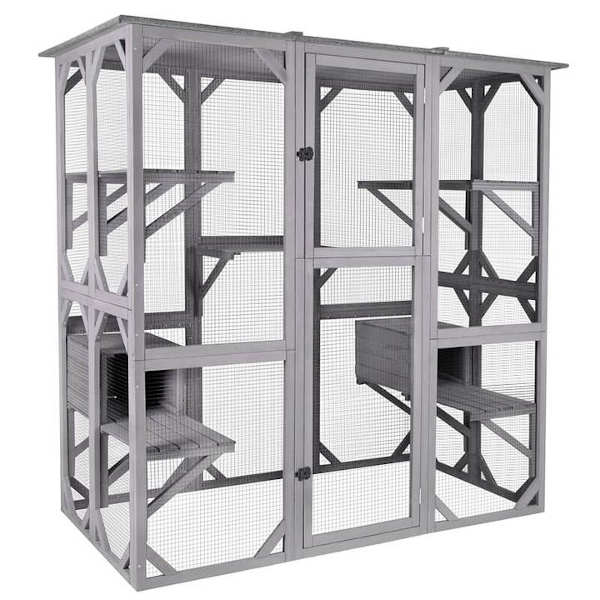
Show your cat how much it is loved, and at the same time protect birds and wildlife, by providing fresh air and outdoor enrichment in a “catio” or cat enclosure/patio. Life expectancy for an indoor cat can reach 15 years compared to a feral cat’s three to five years.
A catio, or cat patio, allows your cat to explore the sights, sounds and smells of the great outdoors.
Anyone with a window can have a catio. The window box catio is a good choice for single-cat homes and for owners just beginning to dip their toes into the world of catio living.
A balcony catio, porch catio or an outdoor run all could be exciting for your favorite feline. There are even pop-up and portable catios.
You can find ideas in so many styles – simple to unbelievably extravagant at retailers and on-line.
Here are a few sites you might enjoy:
How to build a catio plans: https://spca.bc.ca/news/how-to-build-a-catio, www.catiospaces.com, www.homedepot.com, www.habitathaven.com and www.purrfectfence.com.
- Details
- Written by: William Petri, University of Virginia
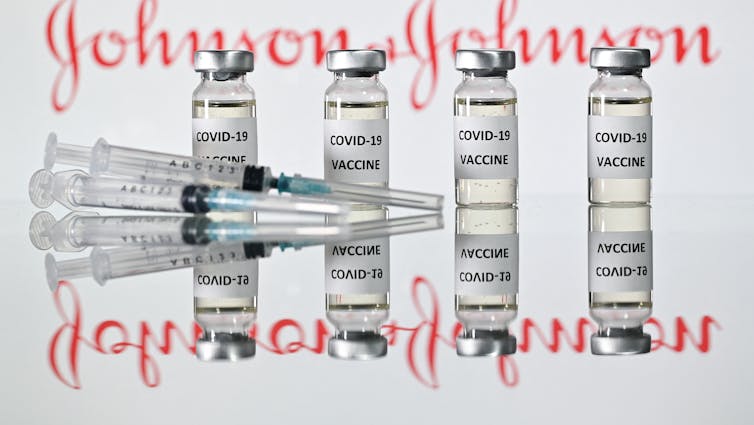
A panel of experts met on April 14, 2021, to review evidence on blood clots that have been reported in seven people after they received the one-dose Johnson & Johnson COVID-19 vaccine. The panel, the Advisory Committee on Immunization Practices, or ACIP, advises the Centers for Disease Control and Prevention on immunization. It delayed voting on a recommendation to the CDC so that members can further evaluate risk and data. The clotting, which resulted in one woman’s death, led the CDC and FDA on April 13, 2021, to pause use of the J&J vaccine. Dr. William Petri, an infectious disease physician and immunologist at the University of Virginia School of Medicine, answers questions to help put this development in context.
What is this potential side effect of the J&J vaccine for COVID-19?
The potential side effect is a blood clot in the veins that drain blood from the brain. This is called central venous sinus thrombosis. In the vaccine-associated cases of this, platelets in blood, which are important for making clots, have been lower than normal. This same side effect has been seen in the AstraZeneca COVID-19 vaccine that also uses an adenovirus to deliver the coronavirus spike glycoprotein. In the case of the AstraZeneca vaccine, the clotting disorder has been linked to antibodies against platelet factor 4 (PF4) that are apparently induced by the adenovirus backbone of the vaccine. This antibody causes the clotting disorder by activating platelets to clot.
It is important to note that this disorder, called vaccine-induced immune thrombotic thrombocytopenia, is not a problem with the mRNA-based Pfizer and Moderna COVID-19 vaccines.
How many people have experienced this possible reaction?
As of April 13, 2021, about one in a million: Six cases out of the 6.8 million doses of the J&J vaccine administered in the U.S. These six cases all occurred in women ages 18-48, and from 6 to 13 days after vaccination. That’s about half as likely as getting struck by lightning in a year. A seventh case was included in the ACIP review on April 14.
What do I do if I got the J&J shot?
The CDC and FDA are recommending that people who have received the J&J vaccine within the last 3 weeks who develop severe headache, abdominal pain, leg pain or shortness of breath should contact their health care provider.
This type of blood clot is treatable with the use of blood thinners or anticoagulants. If a patient has low platelets, however, a doctor would not prescribe the widely used anticoagulant heparin but instead another kind of blood thinner. Untreated, these blood clots can be fatal.
What are the CDC and FDA specifically recommending for the J&J vaccine?
Because of this rare occurrence, even though it has not been shown to be due to the vaccine, the CDC and FDA have recommended a pause in use of the J&J vaccine until these cases can be further reviewed.
What are the next steps?
The CDC convened a meeting of the Advisory Committee on Immunization Practices on April 14, 2021. The ACIP is an independent board of 15 scientific and medical experts selected by the health and human services secretary that advises the CDC on vaccines for children and adults. People with ties to vaccine manufacturers are excluded from the ACIP membership because of potential conflict of interest.
On April 14, ACIP reviewed the available evidence but did not vote on recommendations because panel members expressed concern that the panel needs more time to evaluate data and risks. The vaccine has been given to 3.8 million people in the past two weeks. Therefore, not enough time has passed to see whether other people might also experience these serious clots. The panel is expected to meet again within a week to 10 days.
Is this similar to what happened with the AstraZeneca vaccine in Europe?
A similar rare problem of blood clotting with low platelets in the cerebral venous sinus and also in the abdominal veins and arteries has been seen in connection with the use of the AstraZeneca COVID-19 vaccine used in Europe. There, 182 cases were reported in 190 million doses – again, roughly 1 in 1 million people vaccinated. The European Medicines Agency investigated this and concluded that central venous sinus thrombosis with low platelets should be listed as a possible “very rare side effect” of the AstraZeneca vaccine.
On April 13, 2021, Johnson & Johnson announced it was delaying the rollout of its vaccine in Europe in response to the U.S. review.
What is the take-home message?
The U.S. has a total of three vaccines authorized under emergency use authorization for COVID-19, and this side effect has not been observed in the other two vaccines, developed by Moderna and Pfizer. The Moderna and Pfizer vaccines do not use the same technology used in the J&J and AstraZeneca vaccines. So vaccination against COVID-19 can continue, while efforts are made to determine if the clotting disorder is related by chance or a true, but extremely rare, side effect of the J&J vaccine.
I believe it is a testament to the emphasis by the CDC and FDA on vaccine safety that J&J vaccinations have been paused while this is studied by independent scientists and medical experts.
This article was updated on April 14, 2021 to add additional research and the ACIP committee meeting.
William Petri, Professor of Medicine, University of Virginia
This article is republished from The Conversation under a Creative Commons license. Read the original article.
- Details
- Written by: Mikayla Mace Kelley and Rani Gran
Like boot prints on the Moon, NASA's OSIRIS-REx spacecraft left its mark on asteroid Bennu. Now, new images — taken during the spacecraft's final fly-over on April 7 — reveal the aftermath of its historic encounter with the asteroid.
The spacecraft flew within 2.3 miles of the asteroid — the closest it has been since the Touch-and-Go, or TAG, sample collection event on Oct. 20, 2020.
During TAG, the spacecraft's sampling head sunk 1.6 feet into the asteroid's surface and simultaneously fired a pressurized charge of nitrogen gas, churning up surface material and driving some into the collection chamber.
The spacecraft's thrusters also launched rocks and dust during the maneuver to reverse course and safely back away from the asteroid.
Comparing the two images reveals obvious signs of surface disturbance. At the sample collection point, there appears to be a depression, with several large boulders evident at the bottom, suggesting that they were exposed by sampling.
There is a noticeable increase in the amount of highly reflective material near the TAG point against the generally dark background of the surface, and many rocks were moved around.
Where thrusters fired against the surface, substantial mass movement is apparent. Multiple sub-meter boulders were mobilized by the plumes into a campfire ring–like shape — similar to rings of boulders seen around small craters pocking the surface.
Jason Dworkin, the mission's project scientist at NASA’s Goddard Space Flight Center in Greenbelt, Maryland, noticed that one boulder measuring 4 feet across on the edge of the sampling site seemed to appear only in the post-TAG image. “The rock probably weighs around a ton, with a mass somewhere between a cow and a car.”
Dante Lauretta, of the University of Arizona and the mission's principal investigator, later pointed out that this boulder is likely one of those present in the pre-TAG image, but much nearer the sampling location, and estimates it was thrown a distance of 40 feet (about 12 meters) by the sample collection event.
In order to compare the before and after images, the team had to meticulously plan this final flyover.
"Bennu is rough and rocky, so if you look at it from a different angle or capture it at a time when the sun is not directly overhead, that dramatically changes what the surface looks like. These images were deliberately taken close to noon, with the Sun shining straight down, when there's not as many shadows,” said Dathon Golish, a member of the OSIRIS-REx image processing working group, headquartered at the University of Arizona.
"These observations were not in the original mission plan, so we were excited to go back and document what we did," Golish said. "The team really pulled together for this one last hurrah."
The spacecraft will remain in Bennu's vicinity until departure on May 10, when the mission will begin its two-year return cruise back to Earth. As it approaches Earth, the spacecraft will jettison the Sample Return Capsule, or SRC, that contains the sample from Bennu.
The SRC will then travel through Earth’s atmosphere and land under parachutes at the Utah Test and Training Range on Sept. 24, 2023.
Once recovered, the capsule will be transported to the curation facility at NASA’s Johnson Space Center in Houston, where the sample will be removed for distribution to laboratories worldwide, enabling scientists to study the formation of our solar system and Earth as a habitable planet. NASA will set 75% of the sample aside for future generations to study with technologies not invented yet.
The OSIRIS-REx mission is the first NASA mission to visit a near-Earth asteroid, survey the surface, and collect a sample to deliver to Earth.
NASA's Goddard Space Flight Center in Greenbelt, Maryland, provides overall mission management, systems engineering, and the safety and mission assurance for OSIRIS-REx. Dante Lauretta of the University of Arizona, Tucson, is the principal investigator, and the University of Arizona also leads the science team and the mission's science observation planning and data processing.
Lockheed Martin Space in Denver built the spacecraft and provides flight operations. Goddard and KinetX Aerospace are responsible for navigating the OSIRIS-REx spacecraft. OSIRIS-REx is the third mission in NASA's New Frontiers Program, which is managed by NASA’s Marshall Space Flight Center in Huntsville, Alabama, for the agency’s Science Mission Directorate in Washington, D.C.
For more information about OSIRIS-REx visit https://www.nasa.gov/osiris-rex.
Mikayla Mace Kelley works for the University of Arizona, Tucson, and Rani Gran for NASA’s Goddard Space Flight Center in Greenbelt, Maryland.