 How to resolve AdBlock issue?
News
- Details
- Written by: REDBUD AUDUBON SOCIETY
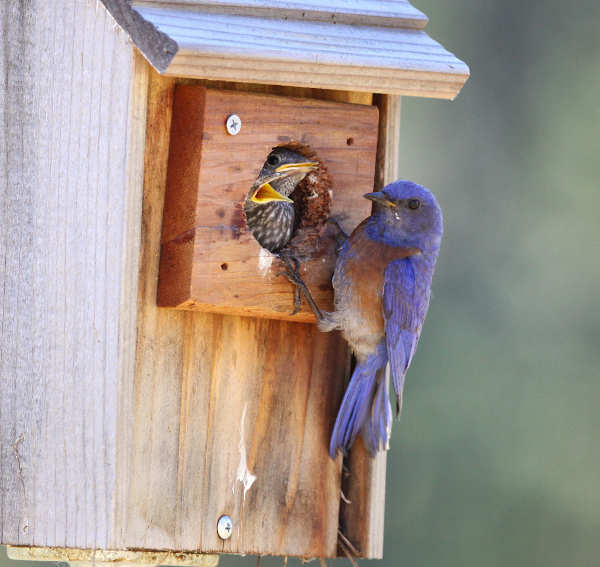
LAKE COUNTY, Calif. – Lake County is home to an amazing number of bird species.
As of December 2019, 321 species of birds have been identified in Lake County.
No matter where you live in the county – whether in one of our towns, along the lake shoreline, or out in the country – it is possible to create a bird-friendly yard or habitat. Even apartments with balconies can be a place to attract birds.
One of the first things to look at when embarking on creating a bird-friendly yard is to think about what birds need: food and water, shelter and safety.
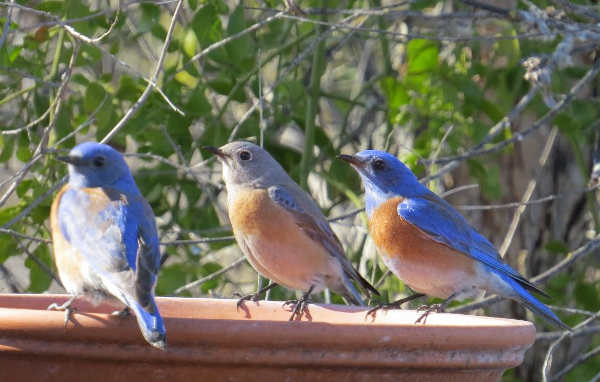
If you want to start providing the very basics for birds, simply provide a bird bath. A bird bath is simple. It isn’t necessary to buy an expensive one (although they are usually very pretty) but simply putting out a shallow saucer, like those used underneath potted plants is fine.
Birds don’t require or like deep water, just a few inches is needed, and they usually prefer sloping sides. Just remember to change or refresh the water every other day at least. Soon you will be seeing birds visit your yard or your apartment balcony to take advantage of fresh water.
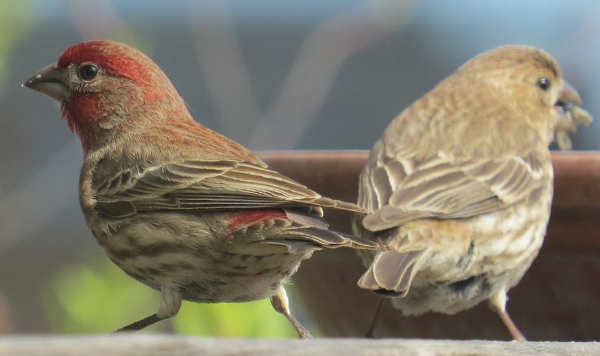
There are a variety of different seed types that birds will eat. Observant nature watchers know that birds migrate during the winter and so the birds in your yard will vary depending on the time of year.
In fall and winter you will be seeing white-crowned and golden-crowned sparrows and Oregon Juncos that won’t be here in the summer. These birds are generally ground feeders, but will eat at a hanging feeder too. Millet, safflower and black-oiled sunflower seeds are usually the main ingredients of premium bird seed that can be purchased at local feed stores.
Lake County’s year-round birds like the California quail and mourning dove enjoy ground feeding and will appreciate the millet or mixed bird seed too. Black-oiled sunflower seeds are popular among many birds like oak titmice, scrub jays, woodpeckers, doves, grosbeaks and nuthatches. Suet is very popular too, especially during the winter months.
Thistle seed is a good choice for finches. Insects are essential dietary components for almost 96 percent of North American terrestrial bird species. This is one of the reasons the mixed seed and suet blocks are excellent.
Even better are the native insects that live in the trees and on the shrubbery in your yard. Please avoid spraying your trees and shrubs if at all possible. Birds need bugs and if you give them a chance, birds will help establish a balance in your yard so you can avoid the use of insecticide.
Some of the main things to remember when feeding birds is to avoid overcrowding at feeders and to keep the feeders clean. Occasionally people will be encouraged to take their feeders down if there is a disease outbreak, such as Salmonella, which occurred recently when pine siskins were unusually abundant and were bringing the illness to bird feeding locations. Fortunately, that seems to have passed and we can once again resume feeding the birds.
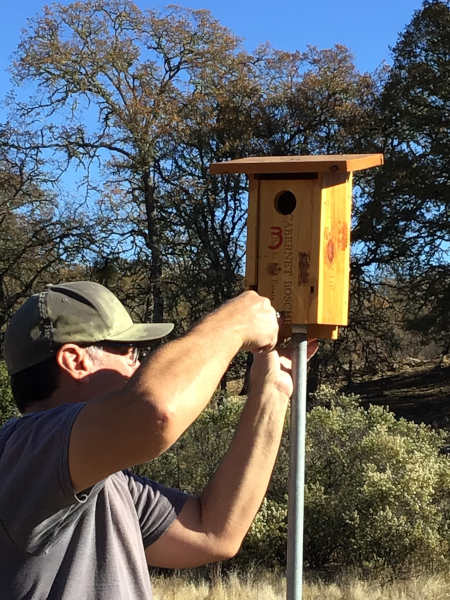
Birds need shelter and homes. If your property is large enough, place bird houses for cavity-nesting birds like swallows, bluebirds, titmice and woodpeckers. Contact Redbud Audubon Society at
Creating a predator-safe location for your birdhouse is important, otherwise you will be setting up the nesting bird pair for their eggs and chicks to become prey. It is also important to clean out the birdhouses every year.
Try to provide as much shelter for birds as you safely can. With the high fire danger now present here, this needs to be carefully thought out. Shelter and nesting habitat should be a distance from the home and can consist of native less-flammable shrubbery. Birds need places such as dense thickets for nesting, perching, and for escaping predators like raptors or cats.
Planting native plants and shrubs is especially valuable for birds. Toyon and elderberry are excellent examples of two native shrubs that produce berries for birds to eat, but all shrubs do not have to be a native plant although they tend to do better in Lake County’s dry climate.
Safety is also an issue for songbirds. If you have free-roaming cats, consider enclosing an area for them or simply keep them inside. Windows, especially large plate-glass windows can be another hazard. Try not to place your feeders in direct flight line with a large window.
There are also techniques to prevent birds from hitting windows. These “bird strikes,” kill millions of birds every year.
Check out these websites for information on preventing bird strikes, creating bird-friendly habitat, nest box placement and more: www.allaboutbirds.org, www.audubon.org or www.NestWatch.org.
In recognition of Bird Appreciation Month in Lake County, the Redbud Audubon Society is providing articles suggesting ways to improve the life of birds here.
- Details
- Written by: Lake County News reports
This award will support the efforts of the Tribes Kudi Ta’Weno – Eastern Pomo name for “Good Earth Medicine” – Garden Collective.
The goals of this project are to provide the Robinson Rancheria Tribal Elders Sheecome with healthy nutritious organic vegetables and fruit, and to provide a scaffold to food security.
The garden will be primarily maintained and managed by the Elders Sheecome, although all tribal members are encouraged to participate.
The Tribe’s Education Department will be key partners with the Elders Sheecome, providing the tribal youth an opportunity to learn from and work alongside the elders.
There will be a blessing ceremony at both the beginning of the planting season in the spring and at fall harvest. The fall season will culminate in a harvest feast for the tribal community, featuring food grown in the garden.
The garden design will incorporate not only the growing of crops, but also a modest walking trail for viewing and exercise purposes.
As one tribal member, Marion Quitiquit, said, “We need to develop a wellness program for a healthier life and growing a garden will help us.”
A one-acre site of farmland, groundwater and a small tractor is already available to get this project off the ground.
The tribe has established partnerships with the local Tribal Health Clinic and North Coast Opportunities, who will continue and expand their existing support of the tribe’s health goals in this project, with activities such as nutritional trainings, gardening classes and potential supply donations.
This project is supported by the six-member tribal council and signed off by our Tribal Chairman Beniakem Cromwell.
Robinson Rancheria is located in Nice, California and comprises 40 acres of trust land and an estimated 790 acres in fee land.
Historically, this area was the center of the traditional homeland of the Eastern Pomos, descendants of who represent the significant majority of our present-day tribal membership.
The mission of Robinson Rancheria is “Honoring our ancestors by preserving and practicing culture, asserting tribal sovereignty through economic development while improving the lives of all tribal members.”
This project supports the mission by creating a collective garden, which will improve the lives of the tribe’s membership by providing a healthy food source and strengthening food sovereignty.
The project will be administered through the Robinson Rancheria Environmental Department and will work closely with the Elders Sheecome in ensuring all project tasks are reported and completed.
With this funding the Kudi Ta’ Weno Garden Collective infrastructure will be established and become sustainable for decades to come.
Each season will provide new opportunities for learning about healthy living, both physically and spiritually.
Robert Quitiquit, Garden Consultant and Elder Tribal Member will be coordinating and working with volunteers to plant the garden. For further questions, please contact Temashio Anderson, environmental director, at
- Details
- Written by: DENNIS FORDHAM

Over time, people may change their testamentary intentions and revoke prior wills and execute new wills.
Such revocations may be either partially or wholly effective in invalidating a prior will.
Let us discuss revocation of wills and how even a revoked will may sometimes be revived.
In California, a will can be revoked by a testator (“person making the will”) so long as he or she is of sound mind (Estate of Lang (1884) 65 Cal 19) and acts intentionally and voluntarily, i.e., without any duress, menace, fraud, or undue influence (Section 6104 Probate Code).
A testator can revoke his or her own will, in whole or in part, by physical acts or by, “[a] subsequent will which revokes the prior will or part expressly or by inconsistency” (section 6120(a) Probate Code).
In California, under section 6120 of the Probate Code, a will can be revoked by, “[b]eing burned, torn, canceled, obliterated, or destroyed with the intent and for the purpose of revoking it, by either the (1) testator or (2) another person in the testator’s presence and by the testator’s direction.” Depending on the facts and circumstances, physical revocation can either wholly or partially revoke the will.
Under section 6124 of the Probate Code, a “lost will” is presumed to have been destroyed by the testator with the intention to revoke the will, “[i]f the testator’s will was last in the testator’s possession, the testator was competent until death, and neither the will nor the duplicate original of the will can be found after the testator’s death, … . This is a presumption affecting the burden of producing evidence.”
The “lost will” presumption can be overcome by producing substantial evidence contrary to the decedent destroying the will. For example, producing evidence that other persons besides the decedent had access to and motive to destroy the decedent’s will.
California allows a lost will to be probated in certain circumstances. Under section 8223 of the Probate Code, “[t]he petition for probate of a lost or destroyed will shall include a written statement of the testamentary words or their substance.” A photocopy of the will can be attached to the petition and otherwise a statement of will’s contents. If a duplicate original will can be found, then the will is not lost and the duplicate original can be probated.
Next, a revoked will can be restored or revived under special circumstances. Under section 6123(a) of the Probate Code, if a will is revoked by a later will the revoked will can be revived if the testator subsequently revokes the later will with the intention to revive the earlier will.
Also, under the Doctrine of Dependent Relative Revocation, a will that is revoked in connection with the execution of a newer will is presumed to be revoked on the condition that the newer will is valid and effective (Estate of Marx (1917), 174 Cal. 762). When applicable, the earlier revoked will becomes effective at least to the extent that the provisions of the later will are invalid or ineffective (Estate of Kaufman (1945) 25 Cal 2d 854).
People who execute handwritten (holographic) wills may unintentionally create a situation where an earlier will is probated because the holographic will is inadequate. Consider a handwritten will that makes specific gifts, but does not distribute the decedent’s entire estate.
Depending on the facts and circumstances an earlier will may be revived to avoid a partial intestacy of the decedent’s estate, i.e., where assets are distributed to heirs instead of to beneficiaries under the decedent’s will(s).
Having an attorney draft one’s will and revoke any earlier wills may provide better peace of mind that unintended outcomes are avoided.
Dennis A. Fordham, attorney, is a State Bar-Certified Specialist in estate planning, probate and trust law. His office is at 870 S. Main St., Lakeport, Calif. He can be reached at
- Details
- Written by: Richard Pildes, New York University
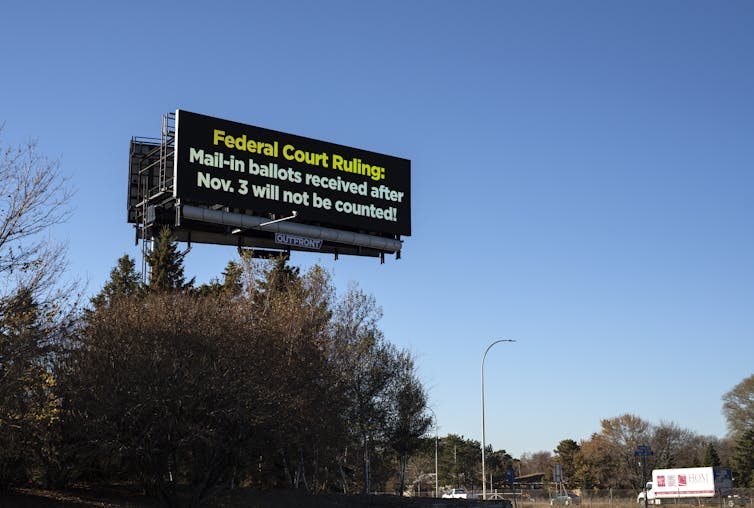
One of the most heavily contested voting-policy issues in the 2020 election, in both the courts and the political arena, was the deadline for returning absentee ballots.
Going into the election, the policy in a majority of states was that ballots had to be received by election night to be valid. Lawsuits seeking an extension of these deadlines were brought around the country for two reasons: First, because of the pandemic, the fall election would see a massive surge in absentee ballots; and second, there were concerns about the competence and integrity of the U.S. Postal Service, particularly after President Trump appointed a major GOP donor as the new postmaster general.
The issue produced the Supreme Court’s most controversial decision during the general election, which prohibited federal courts from extending the ballot-receipt deadlines in state election codes. Now that the data are available, a post-election audit provides perspective on what the actual effects of these deadlines turned out to be.
Perhaps surprisingly, the number of ballots that came in too late to be valid was extremely small, regardless of what deadline states used, or how much that deadline shifted back and forth in the months before the election. The numbers were nowhere close to the number of votes that could have changed the outcome of any significant race.
Changing deadlines in Wisconsin
Take Wisconsin and Minnesota, two important states that were the site of two major court controversies over these issues. In both, voters might be predicted to be the most confused about the deadline for returning absentee ballots, because those deadlines kept changing.
In Wisconsin, state law required absentee ballots to be returned by Election Night. The federal district court ordered that deadline extended by six days. But the Supreme Court, in a 5-3 decision, blocked the district’s court order and required the deadline in the state’s election code to be respected.
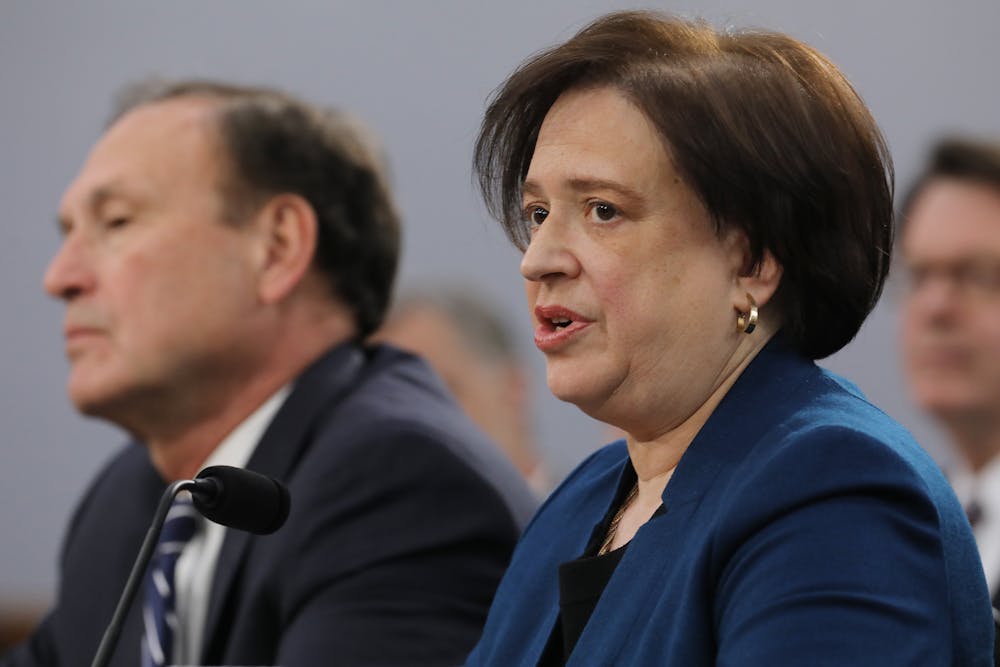
Writing for the three dissenters, Justice Elena Kagan invoked the district court’s prediction that as many as 100,000 voters would lose their right to vote, through no fault of their own, as a result of the majority’s ruling that the normal state-law deadline had to be followed. Commentators called this a “disastrous ruling” that “would likely disenfranchise tens of thousands” of voters in this key state.
The post-election audit now provides perspective on this controversy that sharply divided the court. Ultimately, only 1,045 absentee ballots were rejected in Wisconsin for failing to meet the Election Night deadline. That amounts to 0.05% ballots out of 1,969,274 valid absentee votes cast, or 0.03% of the total vote in Wisconsin.
If we put this in partisan terms and take Biden as having won roughly 70% of the absentee vote nationwide, that means he would have added 418 more votes to his margin of victory had these late-arriving ballots been valid.
Changing deadlines in Minnesota
The fight over ballot deadlines in Minnesota was even more convoluted. If voters were going to be confused anywhere about these deadlines, with lots of ballots coming in too late as a result, it might have been expected to be here.
State law required valid ballots to be returned by Election Night, but as a result of litigation challenging that deadline, the secretary of state had agreed in early August that ballots would be valid if they were received up to seven days later.
But a mere five days before the election, a federal court pulled the rug out from under Minnesota voters. On Oct. 29, it held that Minnesota’s secretary of state had violated the federal Constitution and had no power to extend the deadline. The original Election Night deadline thus snapped back into effect at the very last minute.
Yet it turns out that only 802 ballots, out of 1,929,945 absentees cast (0.04%), were rejected for coming in too late.
Even though voting-rights plaintiffs lost their battles close to Election Day in both Wisconsin and Minnesota, with the deadlines shifting back and forth, only a tiny number of ballots arrived too late.
Where deadlines didn’t change
What happened in states that had a consistent policy throughout the run-up to the election that required ballots to be returned by Election Night?
Among battleground states, Michigan provides an example. Only 3,328 ballots arrived after Election Day, too late to be counted, which was 0.09% of the total votes cast there.
Finally, Pennsylvania and North Carolina were two states in which litigation did succeed in generating decisions that overrode the state election code and pushed ballot-receipt deadlines back – in Pennsylvania by three days, in North Carolina by six days.
These decisions provoked intense political firestorms in some quarters, particularly regarding Pennsylvania. The Pennsylvania Supreme Court’s three-day extension of the deadline became the primary justification that some Republican senators and representatives offered on Jan. 6 for objecting to counting the state’s Electoral College votes.
How many voters took advantage of these extended deadlines? In North Carolina, according to information that the state Board of Elections provided to me, 2,484 ballots came in during the additional six days after Election Day that the judicial consent decree added. That comes to 0.04% of the total valid votes cast in the state.
In Pennsylvania, about 10,000 ballots came in during the extended deadline window, out of the 2,637,065 valid absentee ballots. That’s 0.14% of the total votes cast there. These 10,000 ballots were not counted in the state’s certified vote total, but had they been, Biden would likely have added around 5,000 votes to his margin of victory, given that he won about 75% of the state’s absentee vote.
These are not the numbers of ballots, of course, that would have come in late had the courts refused to extend the deadline in these two states. They show the maximum number that arrived after Election Day when voters had every right to return their ballots this late. Even so, those numbers are still far lower than the 100,000 that had been predicted in Wisconsin.
But had the statutory deadlines remained in place in Pennsylvania and North Carolina, there is no reason to think the number of late absentees would have been much different from those in similar swing states like Michigan, where the statutory deadlines remained fixed and 0.09% of ballots arrived too late.
Highly engaged voters
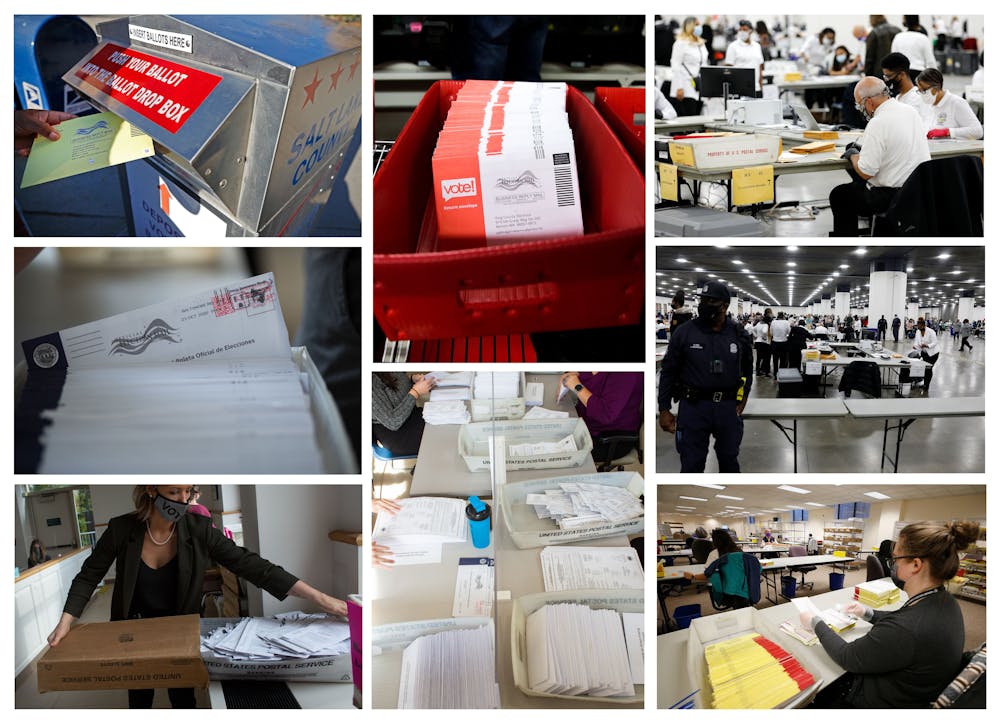
The small number of absentee ballots that came in after the legal deadlines occurred despite a massive surge in absentee voting in nearly all states. What explains that?
Voters were highly engaged, as the turnout rate showed. They were particularly attuned to the risk of delays in the mail from seeing this problem occur in the primaries. Throughout the weeks before the election, voters were consistently returning absentee ballots at higher rates than in previous elections.
The communications efforts of the Biden campaign and the state Democratic parties, whose voters cast most of these absentee votes, got the message across about these state deadlines. Election officials did a good job of communicating these deadlines to voters. In some states, drop boxes that permitted absentee ballots to be returned without using the mail might have helped minimize the number of late arriving ballots, though we don’t have any empirical analysis on that.
In a highly mobilized electorate, it turns out that the specific ballot-return deadlines, and whether they shifted even late in the day, did not lead to large numbers of ballots coming in too late.
That’s a tribute to voters, election officials, grassroots groups – and to the campaigns.
Richard Pildes, Professor of Constitutional Law, New York University
This article is republished from The Conversation under a Creative Commons license. Read the original article.