 How to resolve AdBlock issue?
News
- Details
- Written by: Chelsea Gohd
What’s up for October? A supermoon takes over, the Draconid meteor shower peeks through, and the Orionid meteors sparkle across the night sky.
The evening of Oct. 6, look up and be amazed as the full moon is bigger and brighter because - it's a supermoon!
This evening, the moon could appear to be about 30% brighter and up to 14% larger than a typical full moon. But why?
Supermoons happen when a new moon or a full moon coincides with "perigee," which is when the moon is at its closest to Earth all month.
So this is an exceptionally close full moon! Which explains its spectacular appearance.
And what timing - while the supermoon appears on Oct. 6, just a couple of days before on Oct. 4 is "International Observe the Moon Night"!
It's an annual, worldwide event when Moon enthusiasts come together to enjoy our natural satellite.You can attend or host a moon-viewing party, or simply observe the Moon from wherever you are.
So look up, and celebrate the moon along with people all around the world!
The supermoon will light up the sky on Oct. 6, but if you luck into some dark sky between Oct. 6 and 10, you might witness the first of two October meteor showers — the Draconids!
The Draconid meteor shower comes from debris trailing the comet 21P Giacobini-Zinner burning up in Earth's atmosphere
These meteors originate from nearby the head of the constellation Draco the dragon in the northern sky and the shower can produce up to 10 meteors per hour!
The Draconids peak around Oct. 8, but if you don't see any, you can always blame the bright supermoon and wait a few weeks until the next meteor shower — the Orionids!
The Orionid meteor shower, peaking Oct. 21, is set to put on a spectacular show, shooting about 20 meteors per hour across the night sky.
This meteor shower happens when Earth travels through the debris trailing behind Halley's Comet and it burns up in our atmosphere.
The full duration of the meteor shower stretches from Sept. 26 to Nov. 22, but your best bet to see meteors is on Oct. 21 before midnight until around 2 am.
This is because, not only is this night the shower's peak, it is also the October new moon, meaning the moon will be between the Earth and the Sun, making it dark and invisible to us.
With a moonless sky, you're much more likely to catch a fireball careening through the night.
So find a dark location after the sun has set, look to the southeast sky (if you're in the northern hemisphere) and the northeast (if you're in the southern hemisphere) and enjoy!
Orionid meteors appear to come from the direction of the Orion constellation but you might catch them all across the sky.
You can stay up to date on all of NASA's missions exploring the solar system and beyond at science.nasa.gov.
Chelsea Gohd works for NASA's Jet Propulsion Laboratory.
- Details
- Written by: Elizabeth Larson

LAKE COUNTY, Calif. — The union representing staff at eight different Sutter hospitals and medical centers across Northern California — including Sutter Lakeside in Lakeport — said frontline health care workers in those facilities have voted to strike.
SEIU-United Healthcare Workers West, or SEIU-UHW, issued a statement on Friday evening regarding the strike vote.
“The workers overwhelmingly approved the strike with a 96% vote in support, citing bad faith bargaining by Sutter executives,” the union reported. “Workers have not yet chosen dates and will continue trying to bargain with Sutter executives at upcoming sessions on October 9 and 10.”
Union member health care workers at Sutter Health facilities in Oakland, Santa Rosa, Roseville, Berkeley, Lakeport, Vallejo, Antioch, Castro Valley and San Francisco were involved in the vote.
The union said the strike votes apply to job classes including nursing assistants, respiratory therapists, licensed vocational nurses, environmental services, cooks and technicians.
Lake County News was not immediately able to reach Sutter Lakeside on Friday night for comment on the potential strike.
In August and September, SEIU-UHW members in Lakeport and the seven other hospitals slated for strike held a series of rolling pickets, including a march and rally at Sutter Health’s Sacramento Medical Center that the union said “drew over 1,000 frontline healthcare workers calling for safer staffing, fair pay, and investment in underserved communities across the giant healthcare system.”
At the time of the Aug. 12 picket in Lakeport — the first such action at the hospital in over three years — Sutter officials told Lake County News that the union had announced pickets after just one week of bargaining.
“While we respect the right to demonstrate, these pickets are not impacting patient care. Our hospitals and clinics remain open and fully operational, and we continue to provide safe, high-quality care to the communities we serve. We remain focused on reaching a fair agreement through continued collaboration at the bargaining table,” the hospital’s August statement said.
On Friday, the union statement on the anticipated strike included a statement from union member Nikki Moorer of Sutter Solano.
“We don’t want to go on strike, but we feel like we have to,” said Moorer. “We need management to stop bargaining in bad faith and listen to us to fix working conditions and short staffing. Procedures get canceled, and patients are sent home because there aren’t enough staff to properly stock the equipment we need. That’s not care. That’s a crisis.”
The union workers supporting the strike vote said that Sutter’s management has refused to invest in the staff who make that mission possible.
“Turnover has forced employees to take on multiple roles and work longer hours as experienced caregivers leave for higher-paying jobs. Staffing shortages are stretching the remaining workforce thin and putting patient care at risk. Despite this, Sutter executives refuse to listen to frontline healthcare workers to negotiate for a contract to help solve these problems,” the union statement said.
The union has faulted Sutter for the pay amounts of its top executives, including Sutter Health CEO Warner Thomas, who earned over $11 million in 2023. They’ve accused Thomas of refusing to invest in staffing and patient care.
Email Elizabeth Larson at
- Details
- Written by: LAKE COUNTY NEWS REPORTS
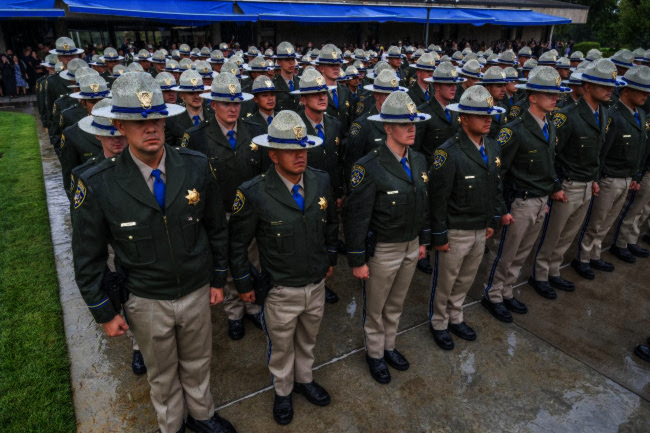
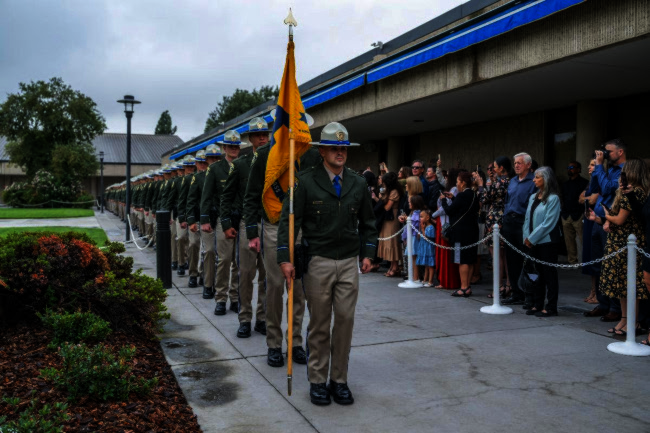
In the largest graduation since December 2009, the California Highway Patrol on Friday welcomed 146 new officers, underscoring the Department’s enduring commitment to public safety and public service in California.
After 26 weeks of rigorous training at the CHP Academy in West Sacramento, these newly sworn officers are prepared to carry forward the CHP’s mission of Safety, Service and Security, which not only strengthens the department today but also builds a stronger foundation for the generations of officers to come.
“Today’s graduates embody the heart of service and sacrifice that defines our profession. These men and women have chosen the path of dedication to others, and we are proud to welcome them into the ranks of law enforcement as they begin their journey to protect and serve California’s communities with integrity and compassion,” said Commissioner Sean Duryee.
These new officers will now report to one of the CHP’s 102 Area offices across California to start their law enforcement careers, protecting and serving communities throughout the state's 58 counties.
The graduates bring a broad range of skills and experiences to the department, reflecting their diverse backgrounds. Among them are former college athletes, military veterans and correctional officers, as well as others with prior public safety experience.
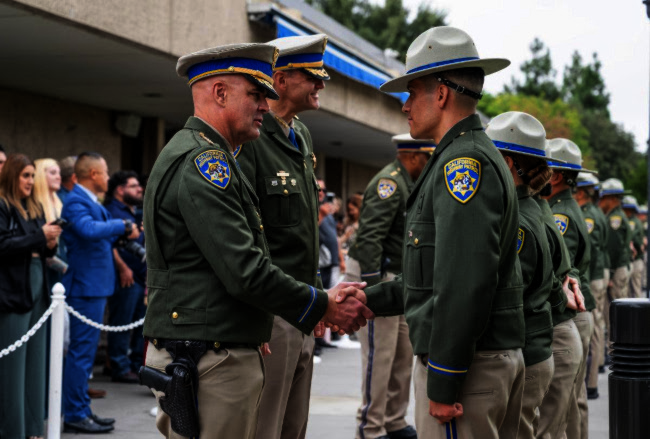
During academy training, cadets receive instruction in traffic enforcement, crash investigation, defensive tactics, firearms, emergency vehicle operations and community policing.
The curriculum also focuses on legal responsibilities, communication, ethics and cultural awareness to prepare cadets to serve California’s diverse population.
Following Friday’s graduation ceremony, nearly 300 cadets remain at the CHP’s live-in training facility, and an additional 160 cadets are set to start instruction on Oct. 13 as part of the department’s ongoing efforts to enhance public safety across the state.
The CHP continues to actively recruit dedicated individuals who are ready to make a difference in communities throughout California. A career with the CHP offers comprehensive training, competitive benefits and opportunities for professional growth and advancement.
To learn more about joining the CHP, please visit www.CHPMadeForMore.com to take the first step towards a rewarding career in law enforcement.
- Details
- Written by: LAKE COUNTY NEWS REPORTS
The California Department of Fish and Wildlife, or CDFW, has announced the State Wildlife Action Plan 2025 update is complete.
It can be found at the CDFW State Wildlife Action Plan, or SWAP, web page.
California’s SWAP, which is mandated by Congress and updated at least every 10 years, provides a comprehensive wildlife conservation strategy that is achieved through various conservation projects executed statewide.
Public and tribal input significantly shaped the plan. In March 2025, the SWAP Team held two public webinars, four conservation partner meetings, and two inter-tribal listening sessions.
In conjunction with these meetings, a public draft review generated over 160 comments from nearly 20 organizations, tribes, and the public.
Since 2005, CDFW and partners have implemented SWAP conservation strategies with funding support from the U.S. Fish and Wildlife’s State Wildlife Grant, or SWG, program, which has awarded CDFW with nearly $71 million since 2000. This year marks the SWG program’s 25th anniversary.
CDFW uses SWG funds to develop and implement its SWAP and to support wildlife conservation projects across the state.
Funded projects must support strategies outlined under SWAP, whether it’s to benefit a species or to implement a SWAP goal or conservation strategy.
This funding is critical to species that aren’t protected and non-game species that often lack adequate funding sources.
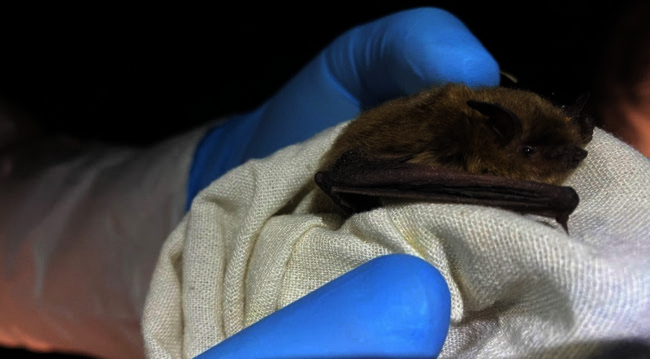
Conservation efforts benefitting from SWAP and SWG funding include the White-Nose Syndrome Response Project, established to monitor California’s bat population for the deadly disease that could wipe out entire colonies of these small mammals; bats play a critical role in protecting agricultural lands from pests.
Another SWG funded project has successfully established a new population of Unarmored Threespine Stickleback fish in Southern California; this unique species’ range has been significantly reduced due to human development. These and other conservation highlights can be found on CDFW’s SWAP web page.
At its heart, SWAP is a non-regulatory blueprint to conserve California’s fish and wildlife, and their habitats. It combines the latest science and conservation priorities with recommended actions and tools.
SWAP 2025 includes updated information on the current health of California’s fish, wildlife and plant resources.
Explore SWAP 2025 to learn about CDFW’s conservation tools, as well as habitat and wildlife monitoring efforts.
Questions about SWAP can be directed to the CDFW SWAP Team at