 How to resolve AdBlock issue?
News
- Details
- Written by: Elizabeth Larson
The meeting will take place beginning at 6 p.m. Thursday, Jan. 28.
The physical meeting location in the boardroom at the Lakeport Unified District Office, 2508 Howard Ave., will be limited to the board of trustees and selected senior administration to ensure recommended guidelines for social distancing are practiced.
All other members of the public can participate in the public session of the meeting via Zoom: https://lakeportusd.zoom.us/j/86090868306.
The agenda can be found here.
At its Jan. 14 meeting, the board accepted the resignation letter of Superintendent Jill Falconer, effective June 30, as part of its consent agenda.
During Thursday evening’s meeting, the school board will discuss the process to select Falconer’s successor.
Falconer, who had worked in the district for 25 years by the time of her hire as superintendent in 2019, told Lake County News that she plans to retire in June.
“Originally the plan was to be able to care for my husband after a heart transplant. Things don’t always go as planned, but I decided that life is always shorter than we expect and I wanted to be available to help care for my new grandchild,” she said.
Her husband of 36 years, Todd Falconer – a veteran of the United States Air Force, pilot, local businessman and gentleman farmer – died Jan. 2 while awaiting a heart transplant.
The couple met while attending college at California State University, Chico. After his service in the Air Force, they moved to Lake County, where they raised their family and Jill Falconer built a long and respected career in education.
In May of 2019, the Lakeport Unified School Board hired Falconer as superintendent – then the principal of Clear Lake High School – after she topped a field of nine finalists.
Since then, she’s helped the board navigate the challenges of school closures in response to COVID-19 while working to address the concerns of teachers, staff, students and families regarding reopening schools.
Board members on Thursday will consider proposals from two consultants to assist in the new superintendent search – Education Leadership Solutions of Kelseyville and Leadership Associates of Santa Barbara.
The Konocti Unified School District hired Education Leadership Solutions, headed up by founder and chief executive officer Dr. C. Richard Smith, to oversee its search for a superintendent two years ago.
That search resulted in the hire of Superintendent Dr. Rebecca Salato in May 2019, just a week before Lakeport Unified hired Falconer, as Lake County News has reported.
Also on Thursday, Falconer will update the board on the full implementation of stage two hybrid learning, which will see most students return to school for in-person instruction, and the board will consider the district’s revised calendar for the 2020-21 school year.
Email Elizabeth Larson at
- Details
- Written by: Elizabeth Larson
The main impacts of the storm were felt across Lake County and much of the rest of the state on Tuesday and Wednesday.
Locally, high winds, rain and snow led to road closures and power outages that were still being resolved on Wednesday night and into Thursday.
The National Weather Service’s Eureka office told Lake County News that it had received reports of 8 inches of snow in Kelseyville; 6 inches in Cobb; 4.5 inches in Hidden Valley Lake; 2 inches in Clearlake, the Clearlake Riviera and Spring Valley; and 1 inch in Lower Lake.
Lake County Public Works crews on Wednesday were plowing snow and clearing roads, from Lower Lake to Kelseyville to Upper Lake.
Stormy conditions are far from over.
The forecast calls for up to half an inch of rain on Thursday, along with light winds.
Rain also is expected on Friday and Saturday, and from Sunday through Tuesday. In the higher elevations, especially in the northern part of the county, snow also is in the forecast on Tuesday.
On Wednesday, conditions are forecast to be clear and sunny.
Temperatures over the next several days are anticipated to range from the high 30s to low 40s at night, and from the high 40s and low 50s during the daytime.
Email Elizabeth Larson at
- Details
- Written by: Lake County News reports
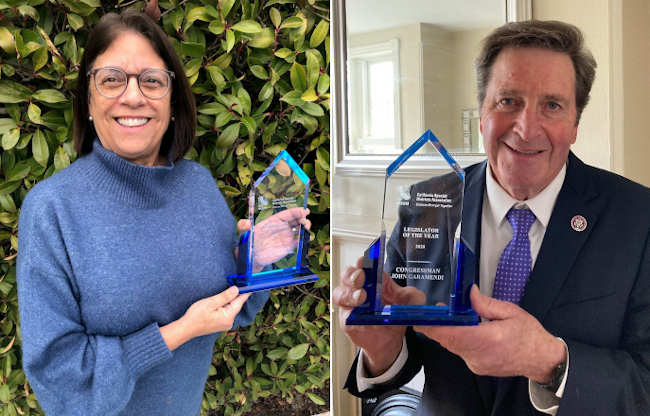
NORTHERN CALIFORNIA – On Wednesday, special districts throughout California recognized Representative John Garamendi (D-Walnut Grove) and Assemblymember Cecilia Aguiar-Curry (D-Winters) as their Legislators of the Year at a virtual event.
This is the first year that the California Special Districts Association, or CSDA, has chosen to recognize both a state and federal lawmaker with this distinction.
Garamendi was selected for his drafting of legislation to include special districts in future COVID-19 relief funding, as well as formally defining special districts in federal code.
Aguiar-Curry was honored for her leadership as chair of the California State Assembly Local Government Committee, consistent support of local authority measures and her efforts to coordinate with local governments throughout the COVID-19 pandemic.
In 2020, both lawmakers went above and beyond in their support of communities served by special districts, the association said.
There are just over 2,000 independent special districts in California. They are community formed, owned and governed local governments that serve virtually every Californian with specialized local services ranging from fire protection, water, sewer, and trash, to parks, mosquito abatement, libraries, ports, harbors, electricity, and others that cities and counties don’t always provide.
“Rep. Garamendi has long been an advocate in helping special districts, and particularly water agencies, fulfill their mission of delivering reliable resources to our communities,” said Cary Keaton, general manager for the Solano Irrigation District.
“Cecilia understands the natural resource challenges people in her district face. She has been consistently supportive of our work to provide our communities with technical assistance to improve forest health, watersheds and agricultural sustainability,” said Heather Nichols, executive director of the Yolo County Resource Conservation District.
On June 1, Garamendi introduced H.R. 7073, the “Special Districts Provide Essential Services Act.”
The legislation specifically includes special districts in COVID-19 relief funding. Special districts were excluded from direct access to Coronavirus Aid, Relief, and Economic Security, or CARES, Act funding for state and local governments.
This bill is also the first legislation to propose a codified definition of special districts in federal law, the lack of which had been a reason for their previous exclusion.
In the 116th Congress, 43 members of Congress cosponsored H.R. 7073, and it received the support of a national coalition of more than 80 organizations. A bipartisan U.S. Senate bill, S. 4308, was later introduced in companion with Representative Garamendi’s legislation.
The Special Districts Provide Essential Services Act will be reintroduced early in the 117th Congress as part of ongoing efforts for districts to gain access to critical relief funding. If communities served by special districts ultimately secure relief funding, it will be, in large part, thanks to Garamendi’s leadership, the association reported.
In presenting CSDA’s Legislator of the Year award to Representative Garamendi, Ryan Clausnitzer, president of CSDA’s Board of Directors said, “We are so fortunate to have a member of Congress who understands the value that special districts bring to a community and is willing to advocate for their equitable access to funding for all communities.”
“I am honored to be the first Member of Congress to receive CSDA’s Legislator of the Year Award,” said Garamendi. “We must support all of California’s communities and the front-line workers who deliver our essential services by working to secure COVID-19 relief for state and local governments including special districts.”
The association said Aguiar-Curry has a strong understanding of the challenges faced by special districts and other local governments. She has long guarded against overly burdensome mandates that make it harder for local governments to do their jobs.
They also credited her for advocating in favor of improving local governments’ ability to fund new housing and infrastructure.
In 2020, as the pandemic broke, she convened representatives from CSDA, League of California Cities, California State Association of Counties and rural counties through regular conference calls. These calls provided a venue for associations to discuss COVID-19 response measures, communicate with state agencies, and relay the critical needs of their members.
“Assemblymember Aguiar-Curry’s guidance throughout her tenure in the Assembly and most recently during the pandemic has made a difference in the communities our special districts serve. Our members and their residents are better off for her leadership,” said Neil McCormick, CSDA’s chief executive officer.
In her acceptance, Aguiar-Curry said, “I’m honored for this recognition and gratified to be able to help my local government colleagues during these times of crisis. As Chair of the Assembly Local Government Committee, and a former Mayor and Councilmember, it is important to me to help shape policy empowering local government leaders with the flexibility they need to continue to provide essential services to Californians in rural and urban communities alike.”
CSDA invites the public to get to know the special district leaders from the over 2,000 special districts throughout the state who provide essential services to local communities. For more information visit www.districtsmakethedifference.org.
- Details
- Written by: Timothy Callaghan, Texas A&M University and Matt Motta, Oklahoma State University
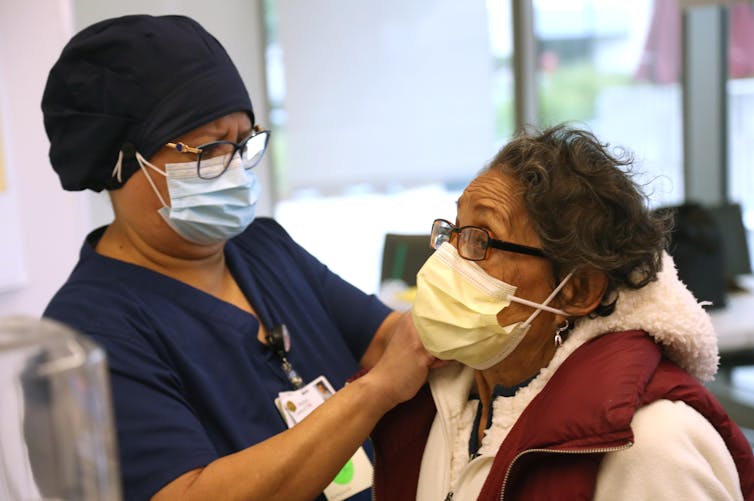
Today, more Americans hope to receive a COVID-19 vaccine than current vaccine supply will allow. Consequently, although President Joe Biden’s initial promise to dole out 100 million vaccine doses in 100 days would require a ramp-up in vaccine allocation, some consider the promise to be insufficient to meet current levels of demand and put the pandemic’s spread into decline.
The current mismatch between vaccine demand and supply, however, may be short-lived. Despite concerns about lagging vaccine allocation for front-line health care workers and other vulnerable groups, health experts are optimistic that public demand for a COVID-19 vaccine will remain high in coming months as more vaccine doses become available.
While it is clear that many political leaders expect public demand for a coronavirus vaccine to be strong, whether or not expectations can live up to reality is an open question. In fact, there is some evidence to suggest instead that large segments of both the public and health care workers do not intend to get vaccinated against COVID-19.
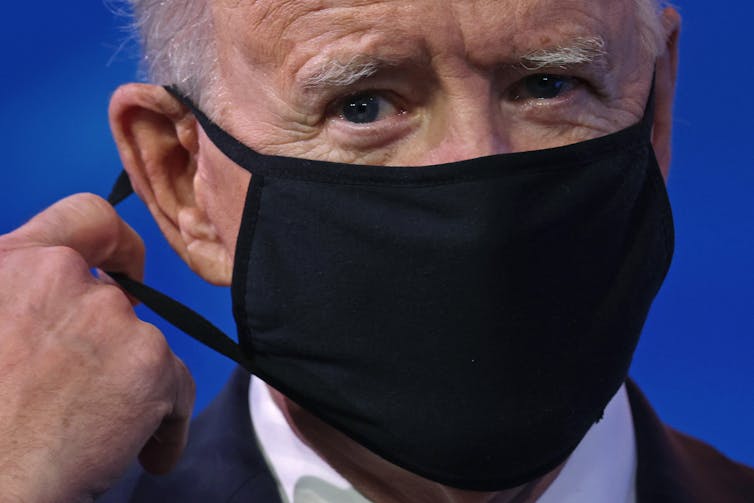
Figuring out whether or not some people are less likely to get vaccinated – and their reasons for not getting vaccinated – can help political leaders and health professionals better anticipate vaccine demand. If some social, political and other demographic groups are more (or less) likely to intend to get vaccinated than others, demand for a vaccine may be higher (or lower) in vaccine distribution networks that primarily service vaccine-hesitant groups.
Additionally, understanding why some individuals are more likely to refuse vaccination than others can help inform health communication efforts to increase vaccine uptake. For example, if some Americans intend to refuse to get vaccinated due to concerns that the vaccine is not safe, health communicators can target these groups with easy-to-understand information about how scientists determined that the vaccine is safe.
In a recent peer-reviewed study, we provide important insight into what public demand for a coronavirus vaccine could actually look like, once most Americans have the opportunity to get vaccinated. Just as important, we detail reasons certain Americans do not intend to get vaccinated.
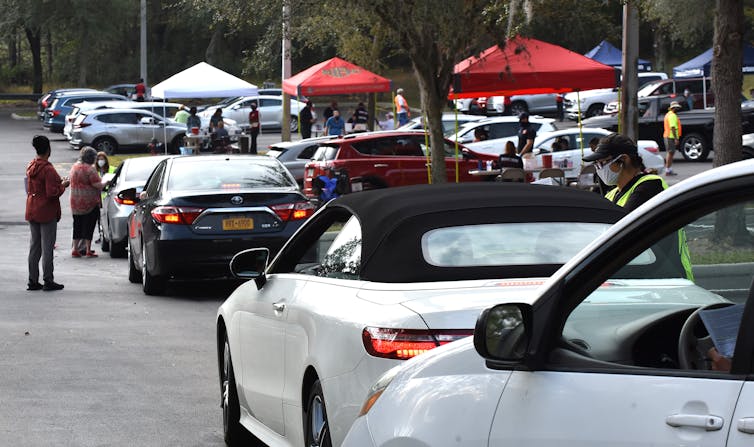
Some Americans more likely to get vaccinated
We studied Americans’ COVID-19 vaccination intentions in a large, demographically representative online survey of 5,009 U.S. adults, conducted in June 2020. We measured vaccination intentions by asking respondents whether or not they would pursue getting vaccinated for the coronavirus if a COVID-19 vaccine became available.
Our study found that almost a third (31.1%) of respondents did not intend to pursue vaccination. This is concerning, given that recent epidemiological estimates suggest that up to 70% of Americans must become immune to COVID-19 in order to put the pandemic’s spread into decline.
We also found strong differences in vaccination intention between key demographic groups. Notably, we found that 35.7% of women (vs. 26.3% of men), 42.9% of Black people (vs. 28.6% of white people), and 37.8% of conservatives (vs. 33.4% of independents and 24.1% of liberals) intended to forgo vaccination.
Why will some people refuse a COVID-19 vaccine?
Our study provides new insights into the reasons that some Americans do not intend to get vaccinated against COVID-19. We found that concerns about the safety and effectiveness of the vaccine were the most consistent reasons for forgoing vaccination. We also found that portions of the American public did not intend to pursue vaccination because they lack health insurance, lack the financial resources they believe they need to be vaccinated or because they have already had COVID-19.
Our study also found considerable evidence that the reasons for not vaccinating were not the same for everyone. For example, women were more likely than men to say they would forgo vaccination due to concerns about safety and effectiveness. Additionally, we found that Black people were more likely to skip vaccination than white people due to perceived safety and effectiveness issues as well as concerns related to the cost of vaccinating and a lack of health insurance.
[Deep knowledge, daily. Sign up for The Conversation’s newsletter.]
What this all means for vaccine uptake
Together, our findings point to two key takeaways as the U.S. pushes to rapidly vaccinate its population against COVID-19. First, political leaders and public health experts need to recognize that what appears to be considerable public demand for the COVID-19 vaccine right now may be more modest in the coming months, as more Americans have the opportunity to get vaccinated. In its place, experts will be faced with the new challenge of convincing hesitant groups to get vaccinated in order to reach herd immunity and end the pandemic.
Second, our results demonstrate that in these efforts to vaccinate the hesitant, a one-size-fits-all approach to health communications will be insufficient. While health communications aimed at emphasizing the safety and effectiveness of the vaccine will be important, for some groups, it will be just as important to emphasize that Americans can be vaccinated against COVID-19 for free, regardless of insurance status. Developing these communications and identifying appropriate messengers to deliver this information will be vital to stopping the pandemic.
Timothy Callaghan, Assistant Professor, Texas A&M University School of Public Health, Texas A&M University and Matt Motta, Assistant Professor of Political Science, Oklahoma State University
This article is republished from The Conversation under a Creative Commons license. Read the original article.