 How to resolve AdBlock issue?
News
- Details
- Written by: Lake County News reports

CLEARLAKE, Calif. – Santa Claus is coming to town this week.
Santa will be visiting Clearlake on Friday, Dec. 18, via a “Santa drive-around,” spearheaded by the Rotary Club of Clear Lake.
He’ll be riding on a Lake County Fire Protection District Fire engine and will be joined by the Clearlake Police Department, a Konocti Unified School District decorated school bus with principals and teachers, and a fire department ambulance as part of his convoy.
They will start out from near Highway 53 on Lakeshore Drive. at 3 p.m., and continue down Lakeshore Drive to Olympic Drive where they’ll make a right and continue down Olympic to the Fire Department.
Community members are invited to join in welcoming Santa to the city.
- Details
- Written by: Jason R. McKnight, Texas A&M University
Editor’s Note: With the Food and Drug Administration issuing emergency use authorization for a vaccine to limit the spread of coronavirus, you might have questions about what this means for you. If you do,
I hear that I might still have to wear a mask even after I get vaccinated. Why?
It will likely be the continued recommendation that everyone wear a mask when in public even after receiving the vaccination for COVID-19. While these vaccines appear to be highly effective in preventing infection from the disease, even at 95% efficacy, that means approximately 5% of people receiving the vaccination may still become infected. Wearing a mask helps decrease the transmission of the virus in those situations in which the vaccine does not prevent the illness.
Further, continuing to wear a mask may help prevent the spread of other respiratory illnesses, which can help prevent overwhelming the health care system, as we are already seeing during the pandemic. Finally, it is possible that some individuals receiving the vaccine may have an asymptomatic infection, and wearing a mask also helps prevent the spread of illness in that situation.
If I get the Pfizer vaccine for the first dose, how can I make sure I get the Pfizer vaccine the second time?
The distribution of the Pfizer vaccine is meant to match the need for the second dose. The clinic, hospital or pharmacy where you are vaccinated will keep a record of the vaccine that you received, as will you, to help ensure that your second dose matches the first dose.
How will public health experts track the safety of the vaccine as it rolls out to bigger groups of people?
Public health experts as well as the vaccine manufacturers will continue to track the safety of the vaccine in multiple ways. First, the people who are vaccinated in the clinical trials will continue to be followed to ensure there are no long-term safety issues. Further, there is what is called a phase IV post-marketing surveillance trial, which will allow many people who are vaccinated to be followed long term to ensure no safety complications arise and to ensure that the vaccine remains as effective as originally thought.
How will I know when it’s my turn to get a vaccine?
To know when it is your turn to be vaccinated, contact either your state department of health or your health care provider. They will be receiving updates and further information about who is to be vaccinated and when. If you have questions about the vaccine and timing of administration, contact your health care provider.
Where will I get a vaccine?
While the exact distribution of vaccines is not yet solidified, and is dependent on the state in which you reside, most vaccines will likely be sent to hospital systems, health care providers’ offices, and some pharmacies. To find out the nearest location where you can be vaccinated, contact your local health department or your health care provider.
[Deep knowledge, daily. Sign up for The Conversation’s newsletter.]
Jason R. McKnight, Clinical Assistant Professor, Primary Care and Population Health, Texas A&M University
This article is republished from The Conversation under a Creative Commons license. Read the original article.
- Details
- Written by: Lake County News reports
Instead of collecting responses from households like the 2020 Census, Demographic Analysis uses current and historical vital statistics records and other data to estimate the size of the U.S. population.
By releasing these estimates ahead of the first results from the 2020 Census, Demographic Analysis offers an independent measure of the population for comparison with the official census counts.
Based on varying assumptions about the population, Demographic Analysis produced three different estimates for the size of the U.S. population on April 1, 2020:
– Low: 330,730,000;
– Middle: 332,601,000;
– High: 335,514,000.
“The Census Bureau goes to great lengths to ensure the quality of our work,” said Dr. Ron Jarmin, Census Bureau deputy director and chief operating officer. “Demographic Analysis is a valuable resource to help us analyze the completeness of the 2020 Census population count.”
Demographic Analysis estimates are developed using birth and death records, data on international migration, and Medicare records. The range accounts for the levels of uncertainty in the input data and methods used to produce the estimates.
For example, birth and death estimates are regarded as relatively precise since they’re based on the National Vital Statistics System which is very accurate and complete. However, there is greater uncertainty in the estimates of international migration because administrative records are not available to produce those estimates. Instead, we use data from the Census Bureau’s American Community Survey and other sources to estimate international migration.
“Demographic Analysis enables us to utilize already existing data, such as current and historical administrative records and survey data, to estimate the size of the population,” said Dr. Eric Jensen, senior technical expert for Demographic Analysis in the Population Division. “We have done Demographic Analysis since the 1960 Census, and over time our estimates have benefited not only from methodological improvements, but improvements to the available administrative records.”
The final 2020 Census results will be compared against the 2020 Demographic Analysis estimates to produce estimates of potential net coverage error by age, sex, broad race and Hispanic origin groups. A report detailing the 2020 Demographic Analysis estimates of net overcounts and undercounts is planned for release in 2021.
Additionally, in 2021 and 2022, the Census Bureau plans to produce new, experimental sets of estimates, including:
– Estimates for the Hispanic and non-Hispanic populations by sex for ages 0 to 39 (expanded from ages 0 to 29 released today) in 2021.
– Estimates for young children (ages 0 to 4) will be available for the first time at the state and county levels in 2022. These estimates will incorporate current birth records, which are not yet available from local jurisdictions.
– Estimates for the population ages 0 to 17 for White, Black or African American, American Indian and Alaska Native, Asian, Native Hawaiian and Other Pacific Islander, and Two or More Races, and by Hispanic origin in 2022. These estimates incorporate race detail available in both birth and death records since 2003.
The Demographic Analysis estimates are one of two methods used to measure coverage in a census and help understand what population groups may have been undercounted or overcounted.
The other method is part of the Coverage Measurement Program and uses information from the Post-Enumeration Survey, an independent Census Bureau survey, to estimate how many people and housing units were missed or counted erroneously in the 2020 Census. Coverage estimates from the Post-Enumeration Survey are scheduled to be available in November 2021.
The Census Bureau said it is working hard to process 2020 Census data in order to deliver complete and accurate state population counts as close to the Dec. 31, 2020, statutory deadline as possible.
Demographic Analysis highlights
In addition to the estimates of the total population for the nation, 2020 Demographic Analysis also provides national-level estimates of the U.S. population by age, sex, broad race and Hispanic origin groups.
Specifically, estimates are available for the number of people who are:
– Black alone/non-Black alone by sex for ages 0 to 85 and above.
– Black alone or in combination/non-Black alone or in combination by sex for ages 0 to 85 and above (expanded from 0 to 29 in the 2010 Demographic Analysis).
– Hispanic/non-Hispanic by sex for ages 0 to 29 (expanded from 0 to 19 in 2010).
These estimates can only be produced in limited race detail because they rely on historical records and measures of race that have changed over time.
Other highlights from the release include, in order of low, middle and high estimates:
– The median age of the U.S. population was estimated to be 38.4, 38.5 and 38.7, respectively.
– The percentage of the U.S. population estimated to be Black alone was 13.5, 13.7 and 13.9, respectively.
– The percentage of the population estimated to be Black alone or in combination with other races was 14.9, 15.1 and 15.4, respectively.
– The sex ratio (number of males per 100 females) for the total population was 98.1 in the low and high series and 98.2 in the middle series. The sex ratio for the population under the age of 30 was 104.2 in the low series and 104.3 in the middle and high series.
– For the population under the age of 30, the percentage estimated to be Hispanic was 23.0, 24.6 and 26.0, respectively. Demographic Analysis estimates of the population by Hispanic origin are not produced for all ages because the Hispanic origin option was not widely available on birth and death records until the 1990s.
Demographic Analysis only estimates the national population for these demographic categories, so its estimates cannot be compared to more detailed 2020 Census data that will show the population in states, cities, counties, census tracts and at the block level.
The complete tables can be found on the 2020 Demographic Analysis home page.
- Details
- Written by: Elizabeth Larson
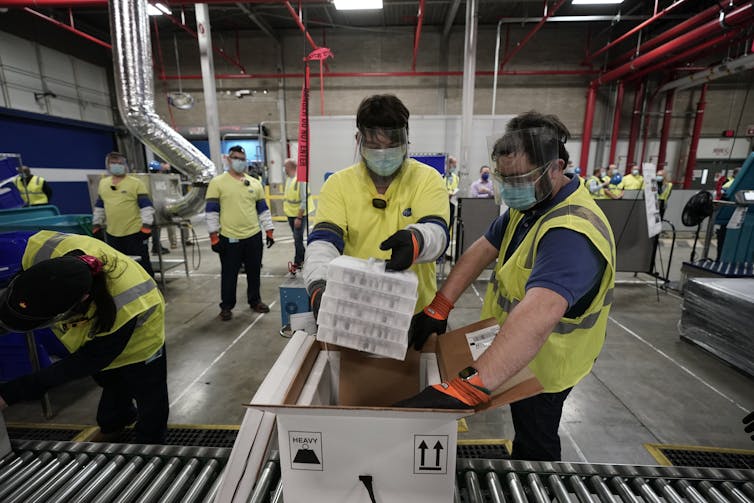
LAKE COUNTY, Calif. – As the historic rollout of the COVID-19 vaccine takes place across California and the nation, Lake County is set to be among the first group of counties in the state to receive doses of the vaccine this week.
The Food and Drug Administration on Friday issued the first emergency use authorization for the Pfizer-BioNTech COVID-19 vaccine, the first COVID-19 vaccine for individuals above age 16. The vaccine has a 95 percent efficacy rate and is administered in two doses about a month apart.
Separately, on Sunday, the Western States Scientific Safety Review Workgroup completed its concurrent review of the federal process and confirmed the Pfizer COVID-19 vaccine is safe and efficacious and provided its confirmation to the governors of California, Nevada, Oregon and Washington.
“We have all the confidence in the efficacy and safety of these vaccines,” Gov. Gavin Newsom said in a Monday appearance at Kaiser Permanente Los Angeles Medical Center, where some of the new vaccine doses were delivered.
The development of the vaccine in under a year, using new mRNA technology, has been hailed by many as a historic scientific achievement. Dr. Mark Ghaly, secretary of the California Health and Human Services Agency, called it “a moment of hope for all Californians.”
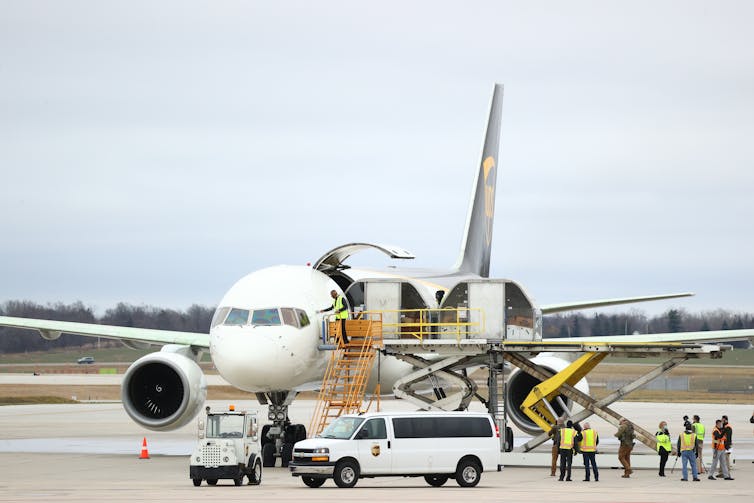
The approval by the FDA cleared the way for the vaccine to be distributed nationwide, and on Monday the state of California received the first 33,150 doses of 327,600 doses Pfizer has committed to provide, Newsom said.
The first doses arrived at four sites in Los Angeles, San Diego, San Francisco and Eureka, with 24 more sites to get the vaccine on Tuesday, to be followed by the vaccine going to another five sites on Wednesday, Newsom said.
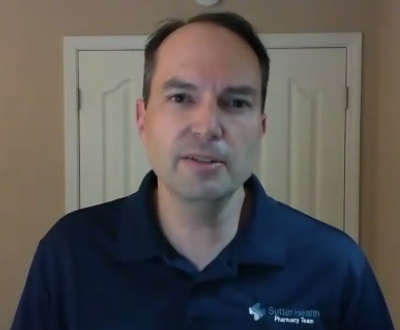
On Monday, Ryan Stice, Sutter Health vice president of pharmacy, told reporters that the vaccine is expected to arrive early this week.
“There are 24 counties that are receiving the vaccine initially,” he said, with a cascading list of counties to receive doses after that initial group.
Stice said the quantity of vaccine filtering in by county is based on potential risk factors and equity.
Lake County is in that critical first group. Public Health Officer Dr. Gary Pace said the state has a formula for who gets how many doses in this first round. Lake was set to receive 475 doses based on that formula, but given that the smallest shipping container is 975, Pace said the county is getting the full number.
On Thursday, the FDA’s Vaccines and Related Biological Products Advisory Committee will meet to discuss a second vaccine to fight COVID-19. The committee will discuss the emergency use authorization for the vaccine developed by Moderna Inc., which is for individuals 18 years and older.
The governor said Moderna is expected to deliver 672,600 doses of its vaccine, potentially within the next week or so following approval.
Newsom said that puts the state on track to receive 2.1 million to 2.16 million doses of COVID-19 vaccine by the end of the calendar year.
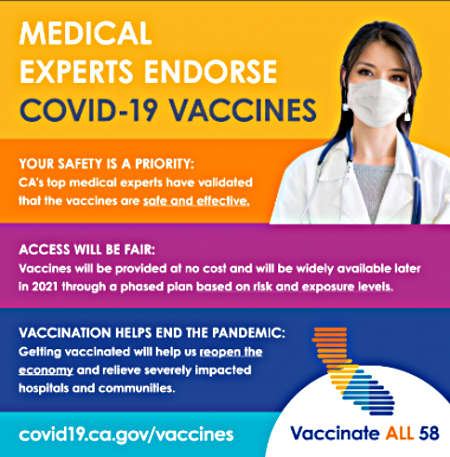
State officials said the vaccines will be administered in phases by prioritizing groups according to risk and level of exposure.
The first tier of vaccinations will focus on California’s essential health care workers and those who are most vulnerable in long-term care settings, in accordance with the California Department of Public Health Allocation Guidelines for COVID-19 Vaccine During Phase 1A.
Newsom said California has 2.5 million health care workers.
What Newsom said is the “fresh air of progress” comes at a critical time for California.
He said that on Monday the state received as many doses of the COVID-19 vaccine as there were new cases reported – 33,000.
Over the past seven days, Newsom said California has averaged 31,000 new cases a day, with an average of 159 deaths a day. The state’s positivity rate, at 3.5 percent six weeks ago, is now over 10.6 percent.
He urged Californians to continue to be vigilant. Pointing to the situation in San Joaquin County, which is running out of beds and moving into surge capacity, Newsom said that’s the situation expected to develop in other parts of the state in the coming weeks, with the state preparing with thousands of contract workers hired and 11 sites developed to take additional patients across the state.
Despite the good news of the vaccine, Newsom said Monday, “We are in the midst of the worst moment of this pandemic.”
Statewide cases on Monday rose above 1.61 million, with 21,200 deaths, according to online reports posted by Public Health departments across California.
In Lake County, where cases have spiked in recent weeks, nearly 100 new cases were reported on Monday – Public Health does not issue reports on the weekend – with the local caseload now standing at 1,306, with 22 deaths.
Both Newsom and Ghaly urged Californians to continue to be vigilant and use precautions, including staying home and using masks, because of the rising spread of the virus.
Newsom on Monday also announced the launch of the “Vaccinate All 58” campaign to educate Californians about the vaccine and how it will be administered.
How the vaccine works
In a Monday webinar with journalists hosted by Poynter, Dr. Paul Offit, director of the Vaccine Education Center at Children’s Hospital of Philadelphia, explained how the COVID-19 vaccine works.
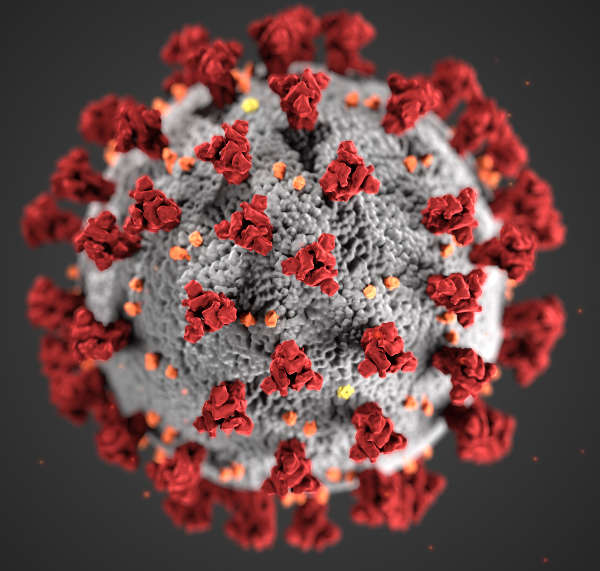
It uses messenger RNA, or mRNA, which is something Offit said everyone has in their body. He said mRNA is a small piece of genetic material in the cytoplasm of our cells that instructs the cells to make a protein. It’s not a novel process, as the body is making proteins all the time.
Offit said using mRNA for vaccines isn’t a new strategy; it’s similarly been used to vaccinate against malaria, tuberculosis and zika.
Normally, when you’re given a vaccine, you get a protein as part of a live attenuated virus. However, Offit said this new vaccine doesn’t give a protein but rather the genetic material that teaches the body to make the protein that triggers an immune response.
The CDC said that the new COVID-19 mRNA vaccines “give instructions for our cells to make a harmless piece of what is called the ‘spike protein.’ The spike protein is found on the surface of the virus that causes COVID-19.”
The vaccines can’t give someone COVID-19 because they don’t use the live virus that causes the illness, the CDC said.
The agency also reported that the COVID-19 vaccines do not affect or interact with the DNA of those vaccinated in any way, as the mRNA never entered the nucleus of the cell where DNA is located. Instead, “the cell breaks down and gets rid of the mRNA soon after it is finished using the instructions.”
Officials and medical professionals have emphasized that the COVID-19 vaccines are being held to the same rigorous and effectiveness standards as other vaccines.
Offit said COVID-19 is a single-stranded RNA virus, like mumps and influenza.
He said the question remains: What is COVID-19 going to act more like? Will it be like the flu, which mutates so much that it needs a yearly vaccine with four different strains – one that doesn’t mutate and three that do – or the mumps, which mutates but has had the same vaccine for decades?
Offit is predicting COVID-19 will remain a single serotype– defined as a variation in a species of virus – like the mumps, allowing the vaccine to remain effective over time.
Those who have had the virus shouldn’t skip getting inoculated against it. Over the weekend, the CDC said people who have gotten sick from COVID-19 may still benefit from being vaccinated.
“At this time, experts do not know how long someone is protected from getting sick again after recovering from COVID-19. The immunity someone gains from having an infection, called natural immunity, varies from person to person. Some early evidence suggests natural immunity may not last very long,” the CDC said.
The CDC also emphasized that the vaccination can protect people from getting sick. “While many people with COVID-19 have only a mild illness, others may get a severe illness or they may even die. There is no way to know how COVID-19 will affect you, even if you are not at increased risk of severe complications.”
So far, the vaccines being approved aren’t for children under age 16, mostly because the number of children who have died is small. However, Offit said children will need to be vaccinated, because this year as many children died of COVID-19 as the flu.
“We need to study children first,” he said.
He said AstraZeneca is working on a vaccine that can vaccinate children as young as age 5.
Offit said the last year – which has seen COVID-19 being sequenced and now the development of vaccines – has been a “technological tour de force.”
However, he cautioned, “Now comes the hard part,” pointing out that mass production and distribution of the vaccine to those who need it will be very difficult.
Still, Offit said he’s optimistic it can be done. If the nation succeeds in the COVID-19 vaccination effort, Offit believes that by next Thanksgiving there will be a dramatic drop in the number of cases, hospitalizations and deaths, “and we can get our lives back together again.”
Vaccine heading to Lake County
In Lake County, local officials are working on plans to deliver the vaccine to those first in line.
“At this point, we are getting the first round of vaccine,” said Pace, noting that the hospitals, pharmacies partnering with skilled nursing facilities and Lake County Tribal Health also are expected to receive vaccine supplies.
Pace said that with such a rapid vaccine rollout, “Everything is very much a moving target.”
He said he will be meeting with the state at 1 p.m. Tuesday to discuss more of the specifics.
As of Monday, Pace said he wasn’t sure about when the vaccine would be arriving this week. When it does arrive, he said the county will distribute it through the framework – initiated by the CDC and finalized by the California Department of Public Health – which prioritizes acute care hospital workers, emergency medical workers and nursing homes in the first tier.
That framework, which can be found here, focuses on all levels of health care workers. Newsom said Monday that teachers are a priority and that discussions are underway regarding their place in the queue. He said discussions also are planned for food supply and frontline workers.
“Essential workers are in the second tier,” said Pace. “We will need to vaccinate all who are interested in the first tier before going down the list. We also need to collaborate with neighboring counties to make sure the first tiers are covered. We transfer many patients out of county for medical care. If they are COVID positive and being cared for at a hospital in a neighboring county where they don’t have enough vaccine to cover their staff, it seems important to help them get what they need.”
Seniors will be in the second tier with essential workers, he said.
Once the top tier vaccinations are complete, Pace said they will provide the vaccine through the usual pathways to get people vaccinated – medical providers, pharmacies, and likely some vaccine clinics or drive-thrus.
Beyond this initial round of vaccinations, Pace said his agency already is lining up more supply. “The plan for further ordering is weekly orders. We have another 100 scheduled to come in next week.”
Stice said the Sutter Health network has 900 pharmacy professionals who have been preparing since the end of August to receive the vaccine, with another 300 people have been working constantly just on preparing for the rollout coming this week.
He said the original vaccine rollout plan was more state-based, but that then shifted to a local county health department-based distribution approach.
As for making sure the vaccine is distributed appropriately, Stice said Sutter will track the incoming vaccine to make sure it’s equitably distributed across the network.
Asked about how many Sutter employees will receive the vaccine, Stice didn’t offer numbers but instead said that the driving factor in who receives the vaccine is based on their interaction with patients.
“Instead of breaking it down by what letters are after your name, we really turned it around to, how do you interact with a patient and what is your risk,” he said.
He said the network has an internal review process for the vaccine and also has been working to deal with the logistical challenges of a vaccine that needs to be stored at -70 degrees Celsius, or -94 degrees Fahrenheit.
“We really built a big mitt on our side in order to catch as many vaccine doses that are available to us,” he said.
Stice said he’s been in constant communication with the administration at Sutter Lakeside Hospital in Lakeport about the rollout.
Laurie Allen, spokesperson for Adventist Health Clear Lake, said the hospital is deferring to Lake County Public Health as it manages the receipt and distribution of the Pfizer vaccine.
“Our protocol for distribution will be rolling out the vaccine in a voluntary phased approach with our associates,” Allen said.
In the late summer, Lake County saw two major outbreaks at Lakeport skilled nursing facilities.
Pace said those facilities all have arrangements with pharmacy partners, and that the vaccine will be available to them by Dec. 28.
He said if Public Health has doses left over after giving the vaccine to the hospitals and emergency medical services, they likely will begin using it at the skilled nursing facilities.
Email Elizabeth Larson at