 How to resolve AdBlock issue?
Three injured in Saturday Blue Lakes crash
UPPER LAKE, Calif. – A collision near Blue Lakes on Saturday afternoon resulted in two people being flown out of county to a trauma center and a third going to a local hospital.
The crash took place on Highway 20 west of Irvine Avenue at 1:55 p.m., according to a report from the California Highway Patrol.
The report said that 25-year-old Frederico P. Ramirez of Lower Lake was driving a 1996 Ford Taurus westbound on Highway 20, with 47-year-old Maria Ramirez-Sepulveda of Clearlake riding as his passenger.
Driving eastbound on Highway 20 in a 2009 Honda Fit was Margaret F. Ward, 90, of Clearlake, the CHP said.
Ward's vehicle went into the opposing lane as she was traveling through a moderate curve. The CHP said she traveled into Ramirez's path. Ramirez attempted to stop but could not avoid the collision.
The CHP said the front of Ward's Honda hit the left side and front of the Ford, causing major damage to both vehicles.
Highway 20 was closed for approximately 30 minutes for emergency personnel on scene who were evaluating injuries, the report stated.
An air ambulance transported Ward to Santa Rosa Memorial Hospital where where she was treated for moderate injuries and further evaluated by hospital personnel. The CHP said she had numerous lacerations on her head and arms.
Ramirez-Sepulveda, who lost consciousness as a result of the crash, also was transported via air ambulance to Santa Rosa Memorial Hospital with major injuries, including a suspected head injury.
A Northshore Fire ambulance took Frederico Ramirez to Sutter Lakeside Hospital. The CHP said he had minor injuries, including lacerations to his head and arms.
The CHP said Ramirez-Sepulveda was not wearing her seatbelt, but both Ward and Frederico Ramirez were using their safety equipment.
CHP Officer Steve Curtis is investigating the collision.
The Veggie Girl: Blueberry bliss
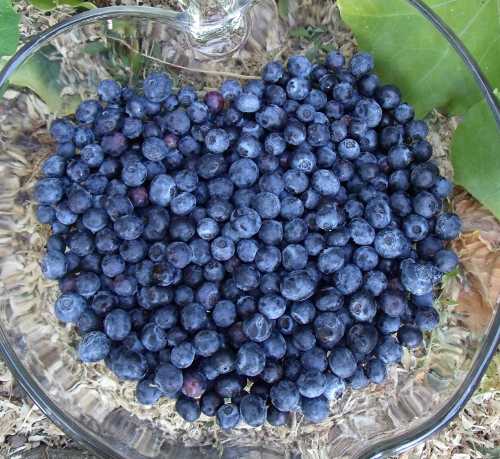
Like deeply-hued jewels, indigo blueberries are punctuation marks among the reds, yellows and oranges of other brightly-colored fruits in a summer salad.
Second only to strawberries in our adoration, beloved blueberries are abundant during their peak of season in June and July, giving us ample opportunity to scatter them over such summer fare.
When I entered a market the other day, I saw a produce clerk stacking endless plastic tubs of these gems onto a display. My heart skipped a beat, and then skipped one again when I saw that they were on sale for a wonderful price.
Needless to say, I scooped up four pints for my cart. I would’ve taken more (there were plenty), but I knew that these somewhat delicate berries wouldn’t hold up well to hoarding (unless frozen, of course).
Blueberries, related to huckleberries, bilberries and cranberries, are native to North America.
They were enjoyed by American Indians year-round long before European settlers and explorers arrived. They gathered them fresh in forests and bogs, preserving a good amount for their use after harvest was over.
They added sun-dried blueberries to soups and stews, and made a jerky called sautauthig (pronounced SAW-taw-teeg) from berries and meat, which they ate throughout the year.
They rubbed meats with a powder made from dried blueberries, and produced a dye for baskets and cloth from the dark pigment.
Known to them as star berries because of the star-like points on the blossom end of the berry, they were also used medicinally, making a tea from their leaves and using blueberry juice to treat coughs.
It is said that a favorite pudding-like dish made from corn and blueberries was shared by American Indians at the first Thanksgiving meal.
Today the U.S. is by far the largest supplier of both cultivated and wild blueberries in the world.
Most of the blueberries sold fresh in markets today are hybridized berries, bred for their plump size and juicy taste.
These cultivated berries are also known as highbush blueberries, as the bushes on which they’re grown can be as high as 12 feet; however, when cultivated, they normally range between four to seven feet high.
In contrast, lowbush blueberries are those which are often referred to as wild blueberries. In their native state, they’re normally lower than two feet tall.
Wild blueberries are never cultivated, but are harvested in the wild. These smaller, nutritionally more powerful berries are rarely marketed fresh; rather, they’re packaged and sold as frozen berries.
One caveat about blueberries, however: Buying organic is highly recommended.
According to the 2011 report, “A Shopper’s Guide to Pesticides,” blueberries grown in the United States are among the 12 foods on which pesticide residue has most frequently been found. Blueberries rank number ten on this list of the “dirty dozen.”
In addition, studies have shown that organically grown blueberries have impressively higher levels of antioxidants than their conventionally grown counterparts.
The health benefits of blueberries – phytonutrient superstars that they are – are legion.
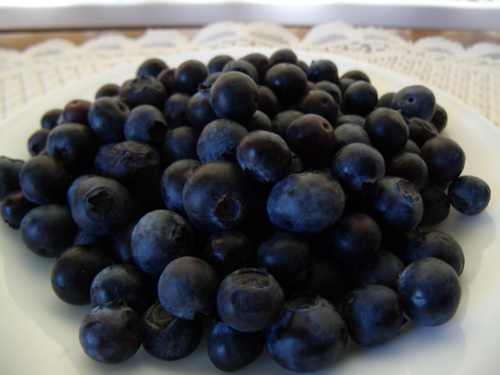
They contain significant amounts of antioxidants, as well as no less than 16 phytonutrients, all of which work to protect the body from disease.
They’re an excellent source of bone-healthy vitamin K and have very good stores of free radical-scavenging vitamin C and manganese.
They’re also a good source of heart-healthy fiber.
In addition to whole body antioxidant support, studies have shown that blueberries contribute to cardiovascular health, lowered blood pressure, eye health, protection against cancer and healthy blood sugar levels.
Studies have also reflected their benefit to the improvement of cognitive abilities, including memory restoration in older people.
Choose berries that are firm, with a uniform hue and a whitish self-protective “bloom” on the skin’s surface. You may gently shake the container to see if berries move freely; if not, this may indicate that they’re soft or moldy.
Fresh berries are fragile and should be handled with care. Wash them briefly and carefully just before use, so as not to prematurely remove the bloom from the berries.
Berries should be stored in the fridge in a covered container, where they’ll keep for up to three days. Berries at room temperature will likely spoil quickly.
Recent research has shown that the antioxidant properties of blueberries are not reduced by freezing – good news – though a slight change in texture may occur.
Wonderful vinaigrette dressings, marinades, and sauces are made with blueberries. They’re a favorite in muffins, and they do well in some savory applications, such as being cooked with pork or utilized in a fresh green salad with salmon.
Lemon and cinnamon are wonderful matches for this berry. Try them in a lemon scone, or in yogurt with cinnamon, for example.
This flavor combination was the inspiration for today’s recipe, blueberry-ricotta pancakes, which might be nice for a hearty Father’s Day brunch. They were a hit in a culinary class I offered on breakfast foods.
They’re wonderful topped with lemon syrup, and a recipe for that is included below.
My best wishes to all fathers today. May you be honored and blessed.
Blueberry-Ricotta Pancakes
This recipe makes about 12-14 pancakes.
Ingredients
2 egg whites
2 tbsp butter, melted
1 - 2/3 cup buttermilk
1 - 2/3 cup all-purpose flour
1 - 3/4 tsp baking powder
1 - 3/4 tsp baking soda
1 pinch (1/8 tsp) of salt
1 tbsp sugar
1/2 cup ricotta cheese
¼ - ½ tsp cinnamon
A few handfuls of fresh blueberries
Procedure
Sift the flour, baking powder, baking soda and salt into a large bowl.
Pour the buttermilk, butter and sugar into the dry ingredients and mix until incorporated.
Whip the egg whites into stiff peaks and gently fold them into the batter using a spatula.
Mix the cinnamon with the ricotta and add in tablespoon sized drops to the batter, lightly mixing in.
Heat a large frying pan or griddle to medium high heat. Using a ladle scoop about 3/4 of a cup of batter onto the heated surface. Drop as many blueberries as you'd like onto the surface of the pancake (about 5 – 7 works well).
When you see bubbles across the surface and the bottom of the pancake is golden, flip & cook until lightly golden.
Serve with lemon syrup (recipe follows).
Notes: I recommend whole milk ricotta for this recipe, but part-skim will work. If fresh blueberries are unavailable or are of poor quality, frozen blueberries will work. (Add them to the pancakes while still frozen.) Maple syrup may be used in place of the lemon syrup; if so, a little lemon zest can be added to the batter, if desired.
I found the inspiration for this recipe on a food blog called “Our Sweet Life” at www.sweetlifekitchen.com . Their recipe in turn was inspired by one they saw on a Food Network show that featured the BLD Restaurant in Los Angeles. I tweaked it just a bit by adding cinnamon to the ricotta, changing the whole milk to buttermilk and creating a lemon syrup to accompany it.
Lemon syrup
This recipe makes about 1 – 1/2 cups.
Ingredients
1 – ½ cup sugar
Finely grated zest of 1 lemon
1 cup water
Juice of 1-2 lemons, strained, depending upon juiciness and taste
Procedure
Combine the sugar and water in a small saucepan and bring to a boil.
Reduce to a simmer and add the zest and juice.
Cook until slightly thickened but pourable, about 10 minutes.
Notes: The syrup will keep for up to twp weeks if refrigerated in an airtight container. Start with the juice of one lemon and adjust with more as needed. The syrup can also be used as a topping for baked goods, such as lemon-poppy seed bread, or as a refreshing beverage when mixed with sparkling water and ice.
Esther Oertel, a freelance writer, cooking teacher, and speaker, is passionate about local produce and all foods in the vegetable kingdom. She welcomes your questions and comments and may be reached at
Chacewater receives 'Golden State Winery of the Year' honor
KELSEYVILLE, Calif. – The oldest and most prestigious wine competition in North America has named Chacewater Wine Co. the Golden State Winery of the Year.
The California State Fair announced the winners of its Commercial Wine Competition after judging 2,890 wine entries from almost 700 California wineries.
This is first time in the competition's 150-year history that this prestigious award has been given to a Lake County winery.
“You have to have multiple high scoring wines to win Winery of the Year,” said California State Fair Chief Wine Judge GM “Pooch” Pucilowski. “Chacewater's Lake County Chardonnay scoring Double Gold, Best in the State is impressive considering there were 302 entries in that category."
Chacewater Wine Co. will be presented with the Golden State Winery of the Year award at the "California's Grape & Gourmet" event on Aug. 18 at Cal Expo in Sacramento.
The competition ranked Chacewater Wine Co. the best winery in the state, having achieved the highest average rating.
Chacewater's 2010 Chardonnay was awarded a Double Gold medal and won Best Chardonnay.
Chacewater wines also received two gold medals, five silvers and two bronze medals in addition to three Best in Class awards.
“I am thrilled to see our hard work of the last year be recognized by such a big honor and numerous high ranking awards,” said winemaker Mark Burch.
Chacewater Wine Co. released its first seven wines in July of 2011 and six more wines in March of 2012.
Chacewater's wines are crafted from grapes grown by select Lake County grape growers as well as from organic and sustainably farmed grapes from their Estate Sierra Foothills vineyard.
The company's wines have been awarded Gold and Double Golds from this year's San Francisco Chronicle Wine Competition and Chacewater's 2010 Zinfandel and 2009 Malbec received a Best in Class and Gold Medal award at last month's Los Angeles International Wine Competition.
Visit Chacewater online at http://chacewaterwine.com/ .
Helping Paws: Big dogs and some little dogs, too
LAKEPORT, Calif. – A variety of big dog breeds and a few little ones, too, are available for adoption at the county's animal shelter this week.
Mixes of breeds at the shelter include husky, Doberman, Rottweiler, Thai Ridgeback, Shih Tzu, miniature pinschers and dachshund.
Thanks to Lake County Animal Care and Control’s new veterinary clinic, many of the animals offered for adoption already are spayed or neutered and ready to go home with their new families.
Dogs that are adopted from Lake County Animal Care and Control are either neutered or spayed, microchipped and, if old enough, given a rabies shot and county license before being released to their new owner. License fees do not apply to residents of the cities of Lakeport or Clearlake.
If you're looking for a new companion, visit the shelter. There are many great pets hoping you'll choose them.
The following dogs at the Lake County Animal Care and Control shelter have been cleared for adoption (additional dogs on the animal control Web site not listed are still “on hold”).

Miniature pinscher mix
This male miniature pinscher mix is 3 years old.
He has a short brown coat and weighs just over 7 pounds.
Find him in kennel No. 13, ID No. 33185.

'Zak'
“Zak” is 2-year-old male Australian Shepherd-hound mix.
He has brown brindle coloring, a long coat and weighs 40 pounds. He has been neutered.
Zak is in kennel No. 14, ID No. ID: 33177.
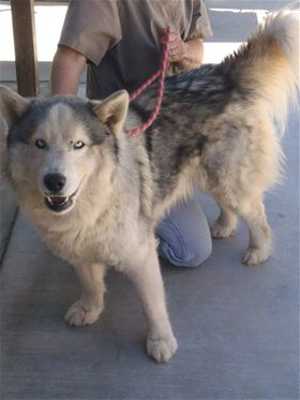
'Nanook'
“Nanook” is a 3-year-old male husky mix.
He has blue eyes, a long black and white coat, and weighs 55 pounds. Nanook has not yet been altered.
Find him in kennel No. 16, ID No. 33211.

Dachshund mix
This female dachshund mix is 1 year old.
She has a short black and tan coat, and weighs 16 pounds.
She is in kennel No. 17, ID No. 32993.

'Shelby'
“Shelby” is a 10-year-old female Australian Shepherd mix.
She has a short, black and blue merle coat and weighs nearly 63 pounds.
She is in kennel No. 19, ID No. 32125.

Pit bull puppy
This male pit bull terrier mix puppy is 9 weeks old.
He has blue eyes, a short chocolate and white coat, and weighs 23 pounds.
He is in kennel No. 21, ID No. 33191.
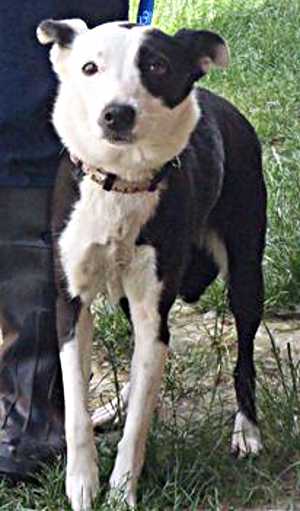
Border collie mix
This male border collie mix is 1 year old.
He has a short black and white coat and weighs 23 pounds.
Find him in kennel No. 22, ID No. 33062.

'Corrie'
“Corrie is a 4-year-old male Rottweiler-Doberman Pinscher mix.
He has a short black and tan coat, has a docked tail, weighs 98 pounds and has been neutered.
Find him in kennel No. 23, ID No. 33210.

Shepherd-Doberman Pinscher mix
This male shepherd-Doberman Pinscher mix is 9 years old.
He has a short tan and white coat, a short tail, weighs nearly 78 pounds and has been neutered.
He's in kennel No. 30a, ID No. 33159.

Shih Tzu mix
This male Shih Tzu mix is 6 years old.
He has a long white coat and a short tail, weighs nearly 24 pounds and has been neutered.
Find him in kennel No. 31, ID No. 33160.

Boxer mix
This female boxer mix is 1 year old.
She has a short coat, weighs 36 pounds and has not yet been altered.
She is in kennel No. 32, ID No. 33122.

Thai Ridgeback mix
This male Thai Ridgeback is 1 year old.
He has a short tan coat, weighs nearly 12 pounds and is not yet altered.
He's in kennel No. 33a, ID No. 33120.

Male terrier mix
This male terrier mix is 1 year old.
He has a short tan coat, weighs 10 pounds and has not yet been neutered.
Find him in kennel No. 33b, ID No. 33121.
Adoptable dogs also can be seen at http://www.co.lake.ca.us/Government/Directory/Animal_Care_And_Control/Adopt/Dogs_and_Puppies.htm or at www.petfinder.com .
Please note: Dogs listed at the shelter's Web page that are said to be “on hold” are not yet cleared for adoption.
To fill out an adoption application online visit http://www.co.lake.ca.us/Government/Directory/Animal_Care_And_Control/Adopt/Dog___Cat_Adoption_Application.htm .
Lake County Animal Care and Control is located at 4949 Helbush in Lakeport, next to the Hill Road Correctional Facility.
Office hours are Monday through Friday, 8 a.m. to 5 p.m., and 1 p.m. to 3 p.m., Saturday. The shelter is open from 10:30 a.m. to 4:30 p.m. Monday through Friday and on Saturday from 1 p.m. to 3 p.m.
Visit the shelter online at http://www.co.lake.ca.us/Government/Directory/Animal_Care_And_Control.htm .
For more information call Lake County Animal Care and Control at 707-263-0278.
Email Elizabeth Larson at




