How to resolve AdBlock issue?
Boaters’ assistance over Memorial Day weekend needed to combat invasive mussels
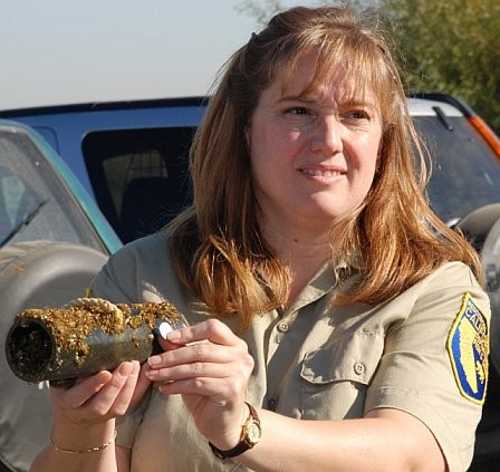
A California interagency effort battling the spread of invasive quagga and zebra mussels urges boaters to remain especially vigilant over the three-day Memorial Day weekend.
Those who launch vessels at any body of water are subject to watercraft inspections, and are encouraged to clean, drain and dry their motorized and non-motorized boats, including personal watercraft, and any equipment that comes into contact with the water before and after recreating at a waterway.
“Quagga and zebra mussels present a serious threat to our aquatic environment,” said Department of Fish and Game (DFG) Director Charlton H. Bonham. “These invasive mussels can be detrimental to the state’s waters, boats and recreational opportunities. Preventing their introduction is the best way to protect our aquatic resources.”
Quagga and zebra mussels, non-native freshwater mussels native to Eurasia, multiply quickly and encrust watercraft and infrastructure, and compete for food with native and sport species.
These mussels can be spread from one body of water to another attached to nearly anything that has been in an infested waterbody, or via standing water from an infested waterbody entrapped in boat engines, bilges, live-wells and buckets.
To ensure watercraft is clean, drained and dry, many local agencies are conducting boat inspections. DFG has posted the list of these inspections on its website ( www.dfg.ca.gov/invasives/quaggamussel ) along with additional information about the invasive mussels and what you can do to help prevent their spread in California.
Boaters should call ahead to check for restrictions prior to visiting their destination.
For information on Lake County's rules, visit http://www.nomussels.com/ .
To prevent spreading invasive mussels and to breeze through an inspection, before arriving at a waterbody boaters should have inspected all exposed surfaces, removed all plants and organisms, drained all water, including that contained in lower outboard units, live-wells and bait buckets, and allowed the watercraft to thoroughly dry.
Watercraft should be kept dry for at least five days in warm weather and up to 30 days in cool weather, between launches in different bodies of fresh water. These measures are essential to safeguard California waterways.
DFG has also developed a short video demonstrating the ease of implementing the clean, drain and dry, prevention method, available at www.facebook.com/CaliforniaDFG .
In addition, a detailed guide to cleaning vessels of invasive mussels is available on the Department of Boating and Waterways Web site at www.dbw.ca.gov/PDF/BoatingQuaggaGuide.pdf .
Travelers are also advised to be prepared for inspections at California Department of Food and Agriculture Border Protection Stations. Inspections, which can also be conducted by DFG and the Department of Parks and Recreation, include not only a check of boats and personal watercraft, but also trailers and all onboard items. Contaminated vessels and equipment are subject to quarantine or impoundment.
Quagga mussels were first detected in the Colorado River system in January 2007 and were later found in San Diego and Riverside counties. They are now known to be in 24 waters in the Golden State, all in Southern California. Zebra mussels were discovered in San Justo Reservoir in San Benito County in January 2008.
Both species can attach to and damage virtually any submerged surface. They can:
- Ruin a boat engine by blocking the cooling system and causing it to overheat;
- Jam a boat’s steering equipment, putting occupants and others at risk;
- Require frequent scrapping and repainting of boat hulls;
- Colonize all underwater substrates such as boat ramps, docks, lines and other underwater surfaces, causing them to require constant cleaning;
- Cost the owners of these items a lot of money.
A multiagency effort that includes DFG, the Department of Boating and Waterways, Department of Water Resources and State Parks has been leading an outreach campaign to alert the public to the quagga and zebra mussel threats.
A toll-free hotline at 1-866-440-9530 is available for those seeking information on quagga or zebra mussels.
Dry conditions require caution for Memorial Day weekend; fire officials concerned over fire danger
Memorial Day weekend is often the kickoff for summer vacations and outdoor activities. However, Cal Fire is urging caution this holiday weekend due to the increasing fire danger throughout California.
“Recent fire activity including a 7,000 acre fire just over the border in Nevada, really serves as a reminder, that the conditions are ripe for wildfires,” said Chief Ken Pimlott, director of Cal Fire. “Cal Fire crews have already responded to over twice as many fires this year compared to last year at the same time.”
The lack of rainfall across California has set the stage for an increased potential of major wildfires. Coupled with this weekend’s increase in outdoor activities, firefighters will be on high alert.
Cal Fire is asking Californians and visitors to the state to be extra vigilant while recreating in the outdoors.
Cal Fire asks that everyone remember the following important steps this holiday.
Camping
- Obtain necessary permits needed for campfires.
- Clear away grass, leaves and other debris within a 10-foot perimeter of any campfire.
- Have a responsible person in attendance at all times.
- Ensure all campfires are completely extinguished before leaving.
- When barbequing, never leave the grill unattended.
Wildfires are not the only danger posed by the outdoors; drownings also dramatically increase during the Memorial Day weekend.
In California, drowning is the leading cause of death among children under 14, and every year Cal Fire responds to water rescues across the state, many of which tragically claim the lives of both adults and children.
In the water
- Always wear a life jacket!
- Children should always be supervised by a responsible adult.
- Never swim alone.
- Drinking and swimming is just as dangerous and drinking and driving.
For more ways to be safe during the Memorial Day weekend visit the Cal Fire Web site at www.fire.ca.gov .
New information preempts proceedings in Braden and Lopez trial
LAKEPORT, Calif. – The trial of two Clearlake Oaks men accused of fatally shooting a child and wounding five others last summer hit another delay on Thursday morning as the result of new information in the case.
Following a delay of more than an hour due to a late juror, visiting Yolo County Judge Doris Shockley convened the trial of Paul William Braden, 22, and Orlando Joseph Lopez, 24, at about 10:15 a.m.
The two men are accused of shooting into a group of people in Clearlake on the night of June 18, 2011, killing 4-year-old Skyler Rapp and wounding his mother, stepfather and other family members and friends.
Jurors would hear no testimony Thursday morning.
Shockley immediately announced that she would be dismissing jurors for the day.
“Literally this morning some information has come to light that must be investigated before we can continue the case,” Shockley said.
Just what that information was not disclosed by the court on Thursday.
Shockley ordered the jurors to be prepared to return on Friday, although testimony may not continue until next week, when only one day of proceedings is expected due to the Memorial Day holiday and a court furlough day on Friday, June 1.
The judge told the jurors that the delay was “frustrating but essential.”
Once the jurors were dismissed and had cleared the courtroom, Shockley briefly discussed the case with District Attorney Don Anderson, Lopez’s defense attorney Stephen Carter and Braden’s defense attorney Doug Rhoades.
Referring to another issue that had stopped testimony last week, Carter said there had been a late discovery regarding Anderson’s notes from meeting with a former codefendant in the case, Kevin Stone, who has been expected to resume testimony on Thursday morning.
When Stone briefly was on the stand last week he had stated that he had met with Anderson several times beginning early last November as they worked out a plea agreement to lesser charges.
Carter said they had gone through those notes and determined that none of it needed to be kept out of testimony.
Although it was a discovery violation, Carter said it was a “no harm, no foul” situation. The matter ultimately was resolved with a stipulation.
Rhoades said Braden was “similarly situated” regarding the issue of Anderson’s notes.
“I believe that's all that we can address, at least at this point,” said Shockley.
The attorneys were to spend the rest of Thursday working on the issue that led to the stoppage.
The attorneys in the case are to meet with Shockley in chambers at 3:30 p.m. Thursday to decide if they can proceed with testimony on Friday.
Email Elizabeth Larson at
State says record number of schools in financial jeopardy; local schools face challenges
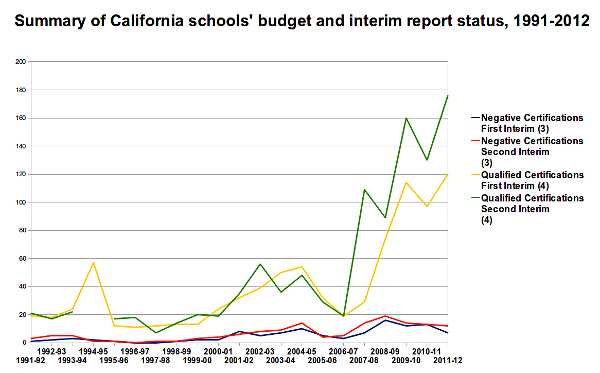
LAKE COUNTY, Calif. – A state report issued this week shows that more schools than ever are experiencing budgetary difficulties as a result of California’s economic struggles.
This week California Superintendent of Public Instruction Tom Torlakson released the state’s Second Interim Status Report for the 2011-12 fiscal year, which lists school districts considered to be in financial jeopardy.
This latest report lists the highest number of financially troubled educational agencies in state history – 188 – up by 61 from the First Interim Status Report for 2011-12 issued in February, and up 45 from the Second Interim Report for 2010-11 issued a year ago.
Torlakson said the listed districts serve an estimated 2.6 million of California’s 6.2 million school students.
"The deep cuts this budget crisis has forced – and the uncertainties about what lies ahead – are taking an unprecedented and unacceptable toll on our schools,” Torlakson said.
Approximately 1,037 local educational agencies – which include school districts, county offices of education and joint powers agencies – are tracked in the twice a year reports, according to the California Department of Education.
The most recent report covered the financial and budgetary status of the districts for the period ending Jan. 31 and so predate Gov. Jerry Brown’s May Revision, which the state said may mean the agencies’ financial status has changed since the financial certifications were collected in April.
The list of financially struggling districts “is growing tremendously throughout the state and more and more districts are finding themselves in a tough situation,” said Lake County Superintendent of Schools Wally Holbrook.
Local educational agencies receive a positive certification if they meet their financial obligations for the current and two subsequent fiscal years, the California Department of Education explained.
Most Lake County districts appeared to have fallen within the positive certification category in this latest report.
However, Upper Lake Union Elementary, which has a $4.3 million budget, was among 176 districts and local educational agencies statewide given a “qualified” certification, because the state ruled that it may not meet its financial obligations for the current or two subsequent fiscal years.
Kelseyville Unified and Konocti Unified had been given qualified status in the First Interim Status Report in February, but were not listed in this week’s followup report.
No local districts were among the 12 educational agencies given the most serious classification, “negative,” which designates the inability to meet financial obligations for the remainder of the current year or for the subsequent fiscal year. In such cases, the local county office of education can intervene in the district's finances.
Snapshot in time
Tina Jung, a spokesperson for the California Department of Education, told Lake County News that the status report is a snapshot in time that gives both the state superintendent and the educational agencies a sense of their fiscal status. That allows districts the chance to begin making adjustments.
Holbrook said that’s the case with Upper Lake Elementary, which has submitted a third interim report that’s in the process of being reviewed.
Michelle Buell, Lake County Office of Education Fiscal Services director, said of Upper Lake Elementary, “They made reductions that leveled out their shortfall.”
Local school districts are now developing their 2012-13 budgets, which Buell said are due to the Lake County Office of Education by July 1.
Buell and Holbrook also have assisted Kelseyville Unified over the last few years when it appeared on three straight reports under the qualified status.
Holbrook said Kelseyville developed a fiscal stability plan. “We did provide some resources for them to help them do that,” he said. “The result of that has been pretty positive.”
A growing problem
California Department of Education data shows that the number of schools going into qualified or negative status has grown dramatically in recent years.
The state began tracking educational agencies’ financial certificates in the 1991-92 fiscal year.
Jung pointed out that the numbers of districts in financial jeopardy remained small for some time, other than a brief spike to 55 in 1994-95. Then, in 2002-03 – around the time of the dotcom crash – the numbers jumped up to 56.
The number of financially troubled districts then receded. In 2006-07, those districts totaled 19 statewide, but in the following 2007-08 fiscal year – at the same time the recession hit – the number jumped to 109.
Federal stimulus money making its way into the state’s school districts in 2008-09 saw a slight drip to 89 districts, said Jung. The number of districts in financial jeopardy nearly doubled to 160 the following year, the data showed.
“Obviously, it’s tied to the economy,” said Jung.
Holbrook said that even with districts that have been conservative and financially stable, the potential for slipping into qualified or negative status is increasing.
“It’s going to be a serious problem for all of us,” he said.
Jung said Torlakson issued a state of emergency immediately after entering office last year, and is encouraging voters to support the governor’s ballot initiative to raise taxes to help education this November.
Holbrook said the initiative won’t fix the situation, but it may help by allocating resources the way they were originally intended.
As for more dollars for classrooms, “we’re just not going to see them,” he said.
Holbrook said he had a chance to listen to the governor speak about the initiative on Monday. “He’s not totally satisfied with that initiative but he thinks it’s the best thing given the situation that we’re in at this point in time.”
Holbrook said there is the possibility that transportation funding will be restored to schools but that they can actually use the money for other needs.
“In our area it’s really tough for our districts not to provide transportation,” he said.
If that funding flexibility takes place, “that’s going to cause all kinds of debates,” said Holbrook, with some districts possibly having to choose between transportation or keeping an additional teacher in the classroom.
“Those are just really difficult choices,” Holbrook said.
LAKE COUNTY SCHOOL DISTRICTS IN QUALIFIED STATUS, 1998-2012
Second interim status report, 2011-12
Upper Lake Union Elementary; $4.3 million budget
First interim status report, 2011-12
Kelseyville Unified; $14.7 million budget
Konocti Unified; $28.3 million budget
Second interim status report, 2010-11
Kelseyville Unified; $14.5 million
First interim status report, 2010-11
Kelseyville Unified; $14.5 million
Second interim status report, 2009-10
Upper Lake Union Elementary; $3.31 million
First interim status report, 2009-10
Upper Lake Union Elementary; $4.53 million
Second interim status report, 2008-09
Lake County Office of Education; $18.85 million
First interim status report, 2008-09
Konocti Unified; $28.29 million
Lakeport Unified; $14.83 million
Upper Lake Union High; $4.90 million
Upper Lake Union Elementary; $4.98 million
Second interim status report, 2003-04
Upper Lake Union High; $3 million
First interim status report, 2003-04
Upper Lake Union High; $3 million
Second interim status report, 2002-03
Upper Lake Union High; $3 million
Second interim status report, 2001-02
Upper Lake Union High; $3 million
First interim status report, 2001-02
Upper Lake Union High; $3 million
Second interim status report, 2000-01
Upper Lake Union High; $3 million
First interim status report, 2000-01
Upper Lake Union High; $3 million
Second interim status report, 1998-99
Upper Lake Union High; $2 million
First interim status report, 1998-99
Upper Lake Union High; $2 million
Email Elizabeth Larson at