 How to resolve AdBlock issue?
New wellness center hosts first Pomo language workshop
LAKEPORT, Calif. – The Circle of Native Minds Wellness Center held its first workshop on Pomo Language for the Native community on April 11 at its new facility in Lakeport.
The workshop was presented by the California Indian Museum & Cultural Center (CIMCC) based in Santa Rosa.
“It is a good feeling to be part of the museum language program,” said Pomo elder and museum board member Wilbur Augustine. “Language is a part of us. It is what we were born with.”
An opening prayer was done by Thomas Leon Brown, the center's tribal outreach and engagement specialist.
Fifteen people attended with members from Upper Lake Rancheria, Elem Indian Colony, Robinson Rancheria, Sherwood Valley Rancheria and other natives not affiliated with a tribe.
The presenter was CIMCC Executive Director Nicole Lim, who discussed the recently completed comprehensive assessment of Pomo languages, which resulted in the Pomo Language Status report. The center will use this information as a guide to develop and start its program.
Lim discussed the necessity of understanding the historical loss of the Pomo language.
“Several outside factors have contributed to the historical loss of language within Pomo communities,” Lim said. “The vitality of many indigenous languages was destroyed by federal policies that targeted Native peoples and cultures for extermination. The loss of tribal lands, and genocide of whole communities, disrupted the continuity of native languages and cultures.”
During the mid to late 1800s, the federal government sought to “assimilate” native peoples. Many Indian children were removed from their families and tribes and placed in boarding schools.
At the boarding schools the English language was the only language that was allowed to be spoken. Federal officials believed that if they erased tribal languages they would also erase tribal customs, traditions, cultures and way of life.
In the 1950s, the federal government set forth the termination acts and the relocation program. Termination was applied to 40 California Indian tribes, essentially erasing their governmental authority and the trust status of their lands.
Relocation provided government-sponsored job training and housing assistance off reservations in the urban centers of Oakland, San Francisco and Los Angeles. Hundreds of families were encouraged to move away from their communities and into the city where the government had hoped their cultural distinctiveness would disappear.
“Despite these efforts tribal and cultural heritage was not destroyed,” said Lim. “The overwhelming ability of native people to prevail over the forces of genocide and colonization is a true testament to the Indian community’s strength and character. It goes without saying that damage has been done, but by working together native peoples can heal and revitalize the wealth of our culture.”
The Elder’s Talking Circle will focus its language program toward native youth, ages 5-18 years. The vision is to have a drop-in for “fun, language and learning” after school program. Of course, all age groups will be welcomed.
The Elder’s Talking Circle is very interested in talking to any native person who is interested in serving as a volunteer at the center or to discuss the possibility of teaching a traditional art.
Please contact the center at 707-263-4880 for further information.
Early Sunday crash kills Clearlake woman
LOWER LAKE, Calif. – The California Highway Patrol is continuing its investigation into a fatal early Sunday crash near Lower Lake that took a Clearlake woman’s life.
The crash, which is believed to have happened between 5 a.m. and 7 a.m., occurred on Highway 29 just north of Highway 53, according to an initial collision report from CHP Officer Greg Buchholz of the Clear Lake Area office.
The two people involved – a 27-year-old male driver and a 31-year-old female passenger, both from Clearlake – were not named in the CHP report.
Buchholz’s report explained that the male subject was driving his 1984 Chevy El Camino southbound on Highway 29 near Bell Park Road and north of Highway 53 at an unknown speed when, for an unknown reason, he allowed the vehicle to go off the side of the right side of the road.
The vehicle went down an embankment and struck a walnut tree, the report stated.
The driver walked away from his vehicle and back up to Highway 29, the report said. He reported that on the highway he received a ride from an unknown party who to took him to the Tower Mart in Lower Lake.
The man’s parents were contacted and responded to the Tower Mart, and they took the young man to St. Helena Hospital Clearlake, the report explained.
At approximately 8:55 a.m. the hospital contacted the CHP advising the male driver was there and that he had been involved in a traffic collision, according to the report.
Buchholz’s report said the driver could not give an exact location where the collision had occurred or if there was anyone with him in the vehicle at the time. The man sustained major injuries in the crash.
The Lake County Sheriff’s Office found the vehicle at approximately 9:14 a.m., Buchholz reported.
The female victim was found in the right front seat area of the vehicle. Buchholz said she had sustained fatal injuries and was pronounced dead at the scene. She was not wearing a seat belt.
Alcohol and/or drugs may have been involved in the crash, and a blood sample was taken from the driver, Buchholz reported.
He said the collision investigation has continued throughout the day and was still ongoing early Sunday evening.
The Veggie Girl: Chickpea chitchat
Years ago, when I was a young, ambitious woman working in the San Francisco financial district, I had my first taste of hummus.
It was the specialty of an Armenian deli across the street from the black monolith in which I worked. They packed it fresh in to-go tubs side-by-side with hummus’ frequent companion, tabouleh, a salad made from, among other things, bulgur wheat and copious amounts of parsley.
I’m not sure why I ordered hummus the first time, but one bite into it, I was hooked. I still am. It remains a favorite lunch or dinner staple in my home.
It was years before I made my own batch of hummus. I tweaked a recipe a bit and found I could make hummus that wasn’t too far from that first delicious mouthful from the deli.
If you’ve never had hummus, it’s a hearty spread made from today’s subject, chickpeas. Often served with pita bread, it hails from the Middle East. The earliest known recipe, “hummus kasa,” is from medieval Egypt.
Hummus, by the way, is the Arabic word for chickpea.
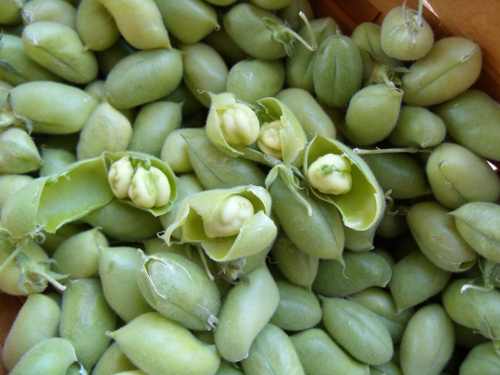
I recently had another new chickpea experience: eating them raw out of the pod. They’re delicious that way, and I highly recommend trying them if you happen upon them in that state.
Not surprisingly, their flavor is reminiscent of peas eaten fresh from the pod.
Chickpeas, also known as garbanzo beans or ceci beans, are legumes. One of the earliest cultivated vegetables, remains dating back 7,500 years have been found in the Middle East.
By the Bronze Age, they were known in Italy and Greece.
In classical Greece, they were a staple in cuisine, including being used in desserts and eaten raw in their green state.
The ancient Romans worked with several varieties, cooking them into a broth or roasting them as a snack.
The Apicius, a collection of Roman cookery recipes dating back to the late fourth or early fifth century, has a number of entries featuring chickpeas.
Albertus Magnus, a 13th century German friar, bishop, philosopher and theologian, mentions using red, white and black varieties. (Obviously, he was a cook, as well.)
Charlemagne (who, as far as I know wasn’t a cook, merely an emperor) felt chickpeas were important enough to list as growing in each imperial province in his eighth century domain.
There are two main kinds of chickpea: desi, with smaller, darker seeds and a rough coat, and kabuli, with larger, lighter-colored seeds and a smooth coat.
Kabuli-type chickpeas are about twice as large as the desi type, and are the ones most typically found in the U.S. on supermarket shelves.
The desi type, which are sometimes irregularly shaped and range in color from light tan to almost back, are far more popular in other areas of the world, representing 80 to 90 percent of the garbanzo beans consumed worldwide.
Of the two, desi-type chickpeas have higher fiber content and therefore a very low glycemic index, making them good for those with blood sugar problems.
In addition, desi-type chickpeas are likely the earliest form of chickpea, since they closely resemble seeds found on archaeological sites, as well as the seeds of the wild plant ancestor of chickpeas, which grows only in Turkey.
Many of us know chickpeas only as a topping, along with kidney beans and beets, on a salad bar line, but they have a rich and varied place in cuisines throughout the world.
There’s the Middle East, of course, since that’s from where they hail.
Besides hummus, they’re ground and made into falafel, deep-fried balls most often served with a yogurt-based sauce in pita bread or wraps.
They’re also roasted with spices there (some with a candy coating) for snacking.
There are copious ways they’re used in Indian cuisines, and in vegetarian regions there they serve as one of the major sources of protein.
Cooked chickpeas show up in stews, salads and curries in India, and chickpea flour, also known as gram flour, is a staple food and the basis for many popular dishes there.
Unripe chickpeas are picked out of their pods for snacks in India (as well as in the Levant area of the Middle East), and the plant’s green leaves are used in salads.
Gram flour is popular elsewhere in the world, including in Burma, where it’s used to make “Burmese tofu;” in Sicily, where it coats meats or vegetables which are deep fried into chickpea fritters; throughout the Mediterranean region, where it’s made into flatbread; and in many other areas of the world, including northern Italy, southern France, Gibraltar, Argentina, Uruguay, Algeria and India, where it’s made into thin pancakes.
And in the Philippines, whole chickpeas are preserved in syrup and eaten as sweets.
Like all legumes, chickpeas are rich in fiber and protein. For this reason, they’re beneficial in regulating blood sugar.
There’s a added boon for those who wish to lose weight. Studies show that satiety after meals is increased by the addition of garbanzo beans to dishes.
At 12.5 grams of fiber per cup (that’s 50 percent of our recommended daily intake), chickpeas support digestive tract function. In fact, the type of fiber particular to garbanzo beans – with two-thirds of it insoluble – is especially healthful for the colon.
Chickpeas are a remarkable food in terms of their antioxidant composition. Not only are they full of antioxidant nutrients such as vitamin C, vitamin E and beta-carotene, they contain concentrated supplies of phytonutrients, plant material necessary for good health.
An increasing number of studies show that garbanzo beans reduce the risk of heart disease, in part because of their antioxidant makeup.
If you’d like to get more of these delightful, buttery tasting, nutty beans into your diet, try tossing them on a salad (in my opinion, they’re particularly good with Greek salads) or into the next soup or stew you make.
You can also throw together a batch of hummus, which makes a fantastic lunch to go when paired with pita bread or raw veggies like celery, pepper, jicama or carrots.
My recipe is below, in case you’d like to try your hand at this. If not, most markets now carry premade hummus, unlike my years in San Francisco.
And just for good measure, I’ve included a fabulous-sounding recipe for roasted garbanzo beans. Be warned: they may be addicting!
As a final note, be sure you plan to soak dried chickpeas for at least four hours before cooking them. Even with soaking, they’ll take one to two hours to become tender. Check to be sure they don’t get overcooked, as they’ll fall apart easily, if so.
And before I go, did you know ground-roast chickpeas are sometimes used as a coffee substitute in Europe?
This practice was first written about by a German author in 1793.
They were grown in some areas of Germany for this purpose during the First World War, and, believe it or not, they’re still occasionally used for this purpose today.
As much as I love chickpeas, I really don’t want them in my morning coffee. Do you?
Esther’s hummus bi tahini
2½ to 3 cans garbanzo beans, drained (save liquid from one can)
Juice of three fresh lemons
¼ - ½ cup tahini *
¼ - ½ cup olive oil
3 cloves garlic, squeezed
3 tablespoons cumin
Salt and pepper to taste
Combine garbanzo beans, lemon juice, olive oil and tahini in food processor fitted with steel blade and process until pureed. If needed, add additional garbanzos, tahini, olive oil or the reserved liquid from garbanzos to adjust consistency. Add garlic and cumin and process briefly until just blended. Add salt and pepper to taste.
*Tahini is a sesame paste that can be found in gourmet and natural foods markets. Some supermarkets carry it. I recommend the version packaged in glass jars as opposed to metal cans; it makes a big difference in taste.
Esther’s note: I like this version best (as it reminds me of the first hummus I tasted), but you can get it just the way you like it by playing with the ratios of lemon juice, tahini, garlic and cumin.
Recipe by Esther Oertel.
Roasted chickpeas
One 15-ounce can garbanzo beans
1 ½ tablespoon olive oil
Salt to taste
Spice blend of your choice (see note)
Preheat oven to 400 degrees Fahrenheit.
Drain the can of garbanzo beans in a strainer and rinse with water for a few seconds to clean off the beans. Shake and tap the strainer to get rid of excess water.
Lay paper towel on a baking sheet, and spread the beans over it. Use another paper towel to gently press and absorb the water from the beans. Roll the beans around with the paper towel to also remove the thin skin from them. Discard the skins and paper towels.
Drizzle the olive oil over the beans and use your hands or a spatula to toss them to coat.
Roast for 30 to 40 minutes until the beans are a deep golden brown and crunchy. Make sure the beans don’t burn.
Once roasted, season them with salt to taste and your preferred spice blend.
Recipe courtesy of the “Steamy Kitchen” blog at www.steamykitchen.com .
Esther’s note: You can vary the spice blend as desired; for example, use powdered chili and cumin for a Mexican-inspired snack. Here are two recommendations for spice variations:
For a list of ideas, this blog is fabulous: http://www.thekitchn.com/15-more-ways-to-flavor-roasted-106112 .
For a Moroccan-inspired blend, click here: http://www.kalynskitchen.com/2008/02/crispy-roasted-chickpeas-garbanzo-beans.html .
Esther Oertel, a freelance writer, cooking teacher, and speaker, is passionate about local produce and all foods in the vegetable kingdom. She welcomes your questions and comments and may be reached at
Helping Paws: Mutts galore
LAKEPORT, Calif. – Springtime is seeing a full house at Lake County’s animal shelter.
A number of mixed breed puppies, young dogs and older dogs are ready to frolic in the springtime sunshine with their new families.
Thanks to Lake County Animal Care and Control’s new veterinary clinic, many of the animals offered for adoption already are spayed or neutered and ready to go home with their new families.
Dogs that are adopted from Lake County Animal Care and Control are either neutered or spayed, microchipped and, if old enough, given a rabies shot and county license before being released to their new owner. License fees do not apply to residents of the cities of Lakeport or Clearlake.
If you're looking for a new companion, visit the shelter. There are many great pets hoping you'll choose them.
The following dogs at the Lake County Animal Care and Control shelter have been cleared for adoption (additional dogs on the animal control Web site not listed are still “on hold”).
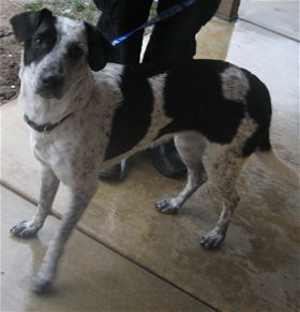
‘Arriba’
Arriba is a 2-year-old female Border collie-Australian shepherd mix.
She has a short black and white coat and is not yet spayed.
Find Arriba in kennel No. 33, ID No. 29502.

‘Beau’
Beau is a 4-month-old Chihuahua mix.
He weighs 6 pounds, has a short, tri-colored coat and is neutered.
Beau is in kennel No. 25, ID No. 32335.

‘Delilah’
Delilah is a 6-month-old female Chihuahua mix.
She weighs 6 pounds and has a short, tan and white coat. She is spayed.
Delilah is in kennel No. 22, ID No. 32336.

Pit bull terrier-Shar Pei
This female pit bull terrier-Shar Pei is 4 months old.
She weighs 25 pounds and has a short, blue and fawn coat. She has been spayed.
Find her in kennel No. 14, ID No. 32337.

‘Lou’
Lou is a 2-year-old Parson Russell terrier-pit bull mix.
He weighs 64 pounds and has a short, white and brown coat. He has been neutered.
Shelter staff said Lou is great with other dogs and children.
Find Lou in kennel No. 11, ID No. 32373 .
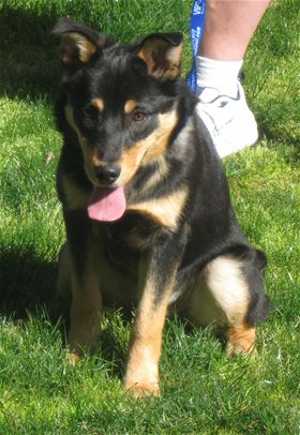
Heeler-border collie mix
This male blue heeler-border collie mix is 8 months old.
He is black and tan in color, weighs just under 35 pounds and has been neutered.
This pup must have a home with other dogs, and a big yard to run. He has a moderate energy level and enjoys playing.
Find him in kennel No. 7, ID No. 32009.

Border collie mix pup
This female border collie mix puppy is 14 weeks old.
She has black coloring, a short coat and has been spayed, and weighs about 12 pounds.
She's full of energy and looking for a good home.
She's in kennel No. 15b, ID No. 32048.

Labrador Retriever-Shar Pei mix
This male Labrador Retriever-Shar Pei mix is 9 weeks old.
He has a short black and tan coat, and is not yet neutered.
Find him in kennel No. 16a, ID No. 32257.

Male Labrador Retriever-Shepherd puppy
This male Labrador Retriever-Shepherd mix puppy is 9 weeks old.
He has black and tan coloring and is not yet altered.
He is in kennel No. 16b, ID No. 32258.

Male Labrador Retriever-Shepherd puppy
This male puppy is a Labrador Retriever-Shepherd mix.
He is 9 weeks old and is not yet altered.
He is in kennel No. 16d, ID No. 32261.

Male Labrador Retriever-Shepherd puppy
This 9-week-old puppy is a Labrador Retriever-shepherd mix.
He has a short dark coat, and is not yet neutered.
Find him in kennel No. 16e, ID No. 32262.

Labrador Retriever-Shar Pei puppy
This male Labrador Retriever-Shar Pei mix puppy is 9 weeks old.
He has black and tan coloring and is not yet neutered.
Find him in kennel No. 17a, ID No. 32260.

Female lab-shepherd mix puppy
This female Labrador Retriever-shepherd mix puppy is 9 weeks old.
She has a short, reddish coat and is not yet spayed.
She is in kennel No. 17b, ID No. 32263.

Female lab-shepherd mix puppy
This female puppy, also a Labrador Retriever-shepherd mix, is 9 weeks old.
She is not yet altered. She has a short, black coat.
She is in kennel No. 17c, ID No. 32264.
Adoptable dogs also can be seen at http://www.co.lake.ca.us/Government/Directory/Animal_Care_And_Control/Adopt/Dogs_and_Puppies.htm or at www.petfinder.com .
Please note: Dogs listed at the shelter's Web page that are said to be “on hold” are not yet cleared for adoption.
To fill out an adoption application online visit http://www.co.lake.ca.us/Government/Directory/Animal_Care_And_Control/Adopt/Dog___Cat_Adoption_Application.htm .
Lake County Animal Care and Control is located at 4949 Helbush in Lakeport, next to the Hill Road Correctional Facility.
Office hours are Monday through Friday, 8 a.m. to 5 p.m., and 1 p.m. to 3 p.m., Saturday. The shelter is open from 10:30 a.m. to 4:30 p.m. Monday through Friday and on Saturday from 1 p.m. to 3 p.m.
Visit the shelter online at http://www.co.lake.ca.us/Government/Directory/Animal_Care_And_Control/Adopt/Dogs_and_Puppies.htm .
For more information call Lake County Animal Care and Control at 707-263-0278.




