 How to resolve AdBlock issue?
The Veggie Girl: Mustard mutterings
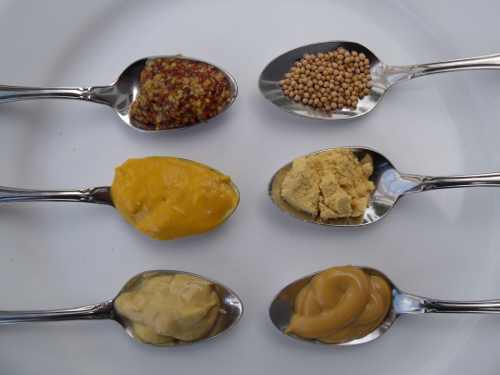
I’m a fool for all types of mustard, from whole seed rustic blends to smooth-as-silk Dijon, from sweet honey mustards to five alarm Chinese varieties.
Even good old American mustard is wonderful in the right setting. Its bright yellow hue is the stuff of ball parks and family picnics.
Mustard, the condiment, is made from the seeds of the mustard plant, a cruciferous vegetable related to broccoli, Brussels sprouts and cabbage.
The leaves of the plant are also edible, lending a spicy note to dishes made with them. While wonderful, we won’t talk about mustard greens here; they’ll be covered in a future column.
For now, we’ll celebrate the delightfully pungent, saucy accompaniment made from the seeds.
There are about 40 different varieties of mustard plants, but only three of these are used for seed production for making mustard: brown, black, and white mustard.
White mustard (botanical name, Brassica alba) seeds have the least amount of volatile oils, so is the most mild in flavor. The seeds are the largest of the three, and range in color from beige or yellow to light brown.
This is the seed from which brightly-toned American mustard is made.
Brown mustard (Brassica juncea) seeds have a pungent taste and are used to make Dijon mustard. They’re dark yellow, rather than brown, in color.
This is the same plant from which mustard greens are harvested.
Black mustard (Brassica nigra) seeds are the smallest and spiciest of the three, and are popular in Indian cuisine, where they’re used as a component of curry, toasted in hot oil or ghee, or processed into cooking oil.
The seeds vary in color from dark brown to black and are often added to rustic, whole seed mustard blends.
The origin of mustard seeds may be traced to areas of Europe and Asia, with white mustard originating in eastern Mediterranean regions, brown in the foothills of the Himalayan mountains, and black in the Middle East.
While there is evidence the ancient Greeks used mustard seeds in cuisine, it is the Romans that experimented with making a paste of the seeds, no doubt the forerunner of the prepared mustards we know today.
The name mustard is derived from the Latin “mustem ardens,” a reference to the use of “must,” an unfermented grape juice used by the Romans in making their version of prepared mustard.
Apicius, an anonymously compiled Roman cookbook of the late fourth or early fifth century, contains a mustard recipe that includes pepper, caraway, grilled coriander seeds, onion, dill, honey and fish stock among its long list of components.
It’s probable that the Romans exported mustard seeds to Gaul (modern day France), leading to the production of mustards there, including the now famous mustard made in the Dijon region by Grey-Poupon, which includes white wine in the recipe.
An early use of the condiment in England, a ball made with coarse-ground mustard seed, cinnamon and flour, was mentioned in William Shakespeare’s “King Henry the Fourth.” These were dried and mixed with vinegar or wine if a paste was desired.
Mustard seeds are mentioned in ancient Sanskrit writings dating back more than 5,000 years. They’re also mentioned in the New Testament (by Christ as a metaphor for the Kingdom of God), and it’s speculated that the referral there is to the black variety.
Dry mustard, the ground powder of mustard seeds, is wonderful when combined with cheese dishes (particularly sharp cheese), such as fondue, Welsh rarebit, and macaroni and cheese.
Mustard and meats go hand in hand, as evidenced by its used with German and Polish sausages, ham, and, of course, hot dogs and hamburgers.
It’s also used in dry rubs for meats, and prepared mustard, alone or combined with other flavors, may be slathered on chicken, pork or other meats prior to cooking.
Hardcore mustard lovers may enjoy rolling meats in a coating of mustard seeds over the prepared mustard before it's tossed on the grill or in the pan or oven.
Mustard is a wonderful flavor for baked beans, either in dried or prepared form.
It’s fantastic when paired with hearty vegetables such as cabbage, carrots or potatoes. (I absolutely love making carrots with honey and Dijon mustard.)
The amount and variety of prepared mustards is astounding. Like microbrewed beer, mustard-making has become a cottage industry, often reflecting a great deal of creativity.
When old world mustards – those from England, Germany, Poland, Holland, France and the like – are added to the mix, the list gets even longer.
Despite the diversity of mustards, mild, citron-hued American mustard is the spread of choice in the U.S. and Canada. It was introduced in 1904 by George T. French, and his remains the most popular brand today.
Mustard may be made with beer in place of vinegar, with whole mustard grains, with fruit such as blueberries, cranberries, or cherries, with added horseradish or hot chili peppers, or sweetened with honey.
It can be hot and sweet, flavored with herbs such as dill or tarragon, or can be uber-hot, like Chinese mustard.
Because of its antibacterial properties (from both the seeds and the vinegar), mustard does not require refrigeration; however, it will last longer if stored in the fridge.
While mustard can last indefinitely, it can dry out, lose flavor, or become oxidized. Mixing in a small amount of white wine or vinegar can revitalize dried-out mustard.
Making mustard at home is amazingly easy. It’s basically a mixture of seeds and the liquid of your choice, such as water, vinegar, wine or beer.
You can vary the pungency and taste of the mustard by combining seeds in varying proportions, balancing the flavors to your liking: white for mildness, brown or black for pungent spiciness.
White and brown seeds can be found at most markets; however, black seeds are a little harder to find, typically requiring a trek to an Indian market or gourmet store.
You can add flavors to your liking – dried herbs for freshness, sweeteners like honey or brown sugar, spices for layers of flavor – and grind it coarse or fine, depending on your taste.
Below is a recipe that will give you the basics of home mustard-making. Once you’ve mastered that, try it with your own unique twists and additions.
If you’re a fan of hot mustards, combining mustard powder and water will achieve that result. Allow it to rest for 15 minutes for the chemical reactions to occur. At that point it will have reached its peak pungency.
If you’re not going to use it immediately, add an acid like vinegar or rice wine to prevent deterioration of flavor.
Before I go, I’d like to share two tips and an oddity.
Tip one: To avoid soggy sandwich bread, spread it with a mixture of butter and dry mustard to seal out moisture. Combine a tablespoon of dry mustard with a cube of softened butter and store in your fridge to use whenever you want your sandwich nice and dry.
Tip two: In recipes, dry and prepared mustard may be substituted for one another. One teaspoon of dry mustard equals a tablespoon of prepared.
And now for the oddity. Did you know there’s a mustard museum? Yep, someone liked mustard enough to open the National Mustard Museum in Middleton, Wisconsin. If you’re curious, check it out here: http://mustardmuseum.com/ .
Be sure to enjoy the bright blooms of the mustard growing in the vineyards this time of year.
Homemade mustard
3 tablespoons yellow (white) mustard seeds
2 ½ tablespoons brown mustard seeds
1/3 cup drinking quality white wine
1/3 cup white vinegar
1 shallot, minced (about 2 tablespoons)
¾ teaspoon salt
¼ teaspoon white pepper
In a non-reactive bowl, combine all ingredients and refrigerate overnight, covered.
Transfer the mustard mixture to a blender and process until mustard has obtained the desired texture and thickness; it is equally delicious whether you leave it chunky or smooth.
Store in an airtight, non-reactive container in the refrigerator for up to two weeks.
Recipe by Chef Emeril Lagasse and courtesy of www.FoodNetwork.com .
Esther Oertel, a freelance writer, cooking teacher, and speaker, is passionate about local produce and all foods in the vegetable kingdom. She welcomes your questions and comments and may be reached at
Helping Paws: Dogs of all sizes, energy levels for your family
LAKE COUNTY, Calif. – A whole new group of dogs of different sizes, energy levels and breeds are available at the county’s animal shelter this week.
Family friendly dogs including German Shepherd, pit bull, border collie, Labrador Retriever and Shih Tzu mixes are ready to join your home.
Thanks to Lake County Animal Care and Control’s new veterinary clinic, most of the animals featured already are spayed or neutered and ready to go home with their new families.
Dogs that are adopted from Lake County Animal Care and Control are either neutered or spayed, microchipped and, if old enough, given a rabies shot and county license before being released to their new owner. License fees do not apply to residents of the cities of Lakeport or Clearlake.
If you're looking for a new companion, visit the shelter. There are many great pets hoping you'll choose them.
The following dogs at the Lake County Animal Care and Control shelter have been cleared for adoption (additional dogs on the animal control Web site not listed are still “on hold”).
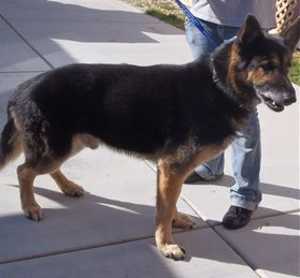
‘Ike’
“Ike” is a 6-year-old male German Shepherd mix.
He weighs nearly 79 pounds, and has a long black and tan coat.
Shelter staff said Ike is great with other dogs, large and small. He is a low energy, well mannered canine who also has lived with horses.
Find Ike in kennel No. 11, ID No. 32187.
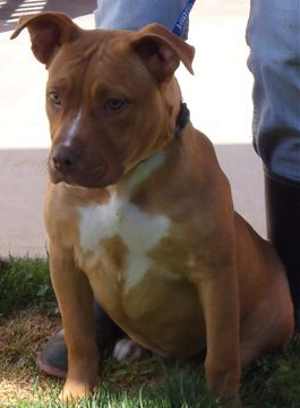
‘Mia’
“Mia” is a 6-month-old female pit bull terrier mix.
She weighs 32 pounds, has red coloring and a short coat, and has been spayed.
Mia is a great young dog for a family with children and other pets. Calm and loving, she is an old soul in a young body.
Find her in kennel No. 21, ID No. 32038.
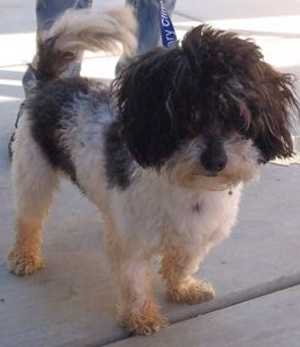
Shih Tzu-poodle mix
This 2-year-old male Shih Tzu-poodle mix is looking to join an active home.
He has black and white coloring, weighs 10 pounds and has a long, curly coat. He already has been neutered.
Playful and free-spirited, this dog would do best in a home with an active family and children ages 8 and up. There is no sitting on the couch cuddling with this boy; he would rather play and run.
Find him in kennel No. 22, ID No. 32196.
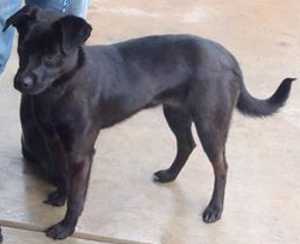
‘Delilah’
This female border collie mix, called “Delilah,” is 3 years old.
She has black coloring and a short coat, weighs 25 pounds and has been spayed.
Delilah is the mom to the puppies in kennel No. 25. She is very smart and loves to play, and needs a family that likes to be outdoors.
Very inquisitive, Delilah also is loyal and likes to stick near her friends.
She is in kennel No. 26, ID No. 32044.
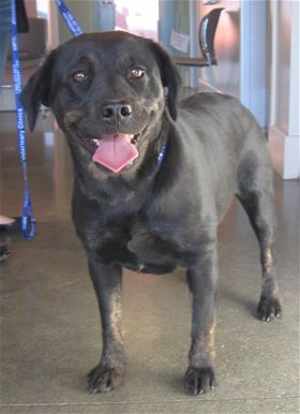
‘Lucy’
“Lucy” is a 1-year-old female Labrador Retriever-Rottweiler mix.
She has black brindle coloring with a short coat, weighs just under 48 pounds and has been spayed.
Lucy is great with kids and other dogs, has a low energy level, and is very loyal and willing to please.
Find her in kennel No. 29, ID No. 32057.
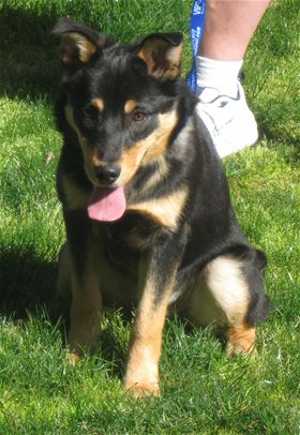
Heeler-border collie mix
This male blue heeler-border collie mix is 8 months old.
He is black and tan in color, weighs just under 35 pounds and has been neutered.
This pup must have a home with other dogs, and a big yard to run. He has a moderate energy level and enjoys playing.
Find him in kennel No. 7, ID No. 32009.

Border collie mix puppies
These border collie mix puppies are 11 weeks old.
Two females are left, one black and one chocolate. Both will be medium-sized dogs, like their mom, Delilah, who is in kennel No. 26.
The puppies are each 11 pounds and both have been spayed.
They are in kennel No. 25, ID No. 32045.
Adoptable dogs also can be seen at http://www.co.lake.ca.us/Government/Directory/Animal_Care_And_Control/Adopt/Dogs_and_Puppies.htm or at www.petfinder.com .
Please note: Dogs listed at the shelter's Web page that are said to be “on hold” are not yet cleared for adoption.
To fill out an adoption application online visit http://www.co.lake.ca.us/Government/Directory/Animal_Care_And_Control/Adopt/Dog___Cat_Adoption_Application.htm .
Lake County Animal Care and Control is located at 4949 Helbush in Lakeport, next to the Hill Road Correctional Facility.
Office hours are Monday through Friday, 8 a.m. to 5 p.m., and 1 p.m. to 3 p.m., Saturday. The shelter is open from 10:30 a.m. to 4:30 p.m. Monday through Friday and on Saturday from 1 p.m. to 3 p.m.
Visit the shelter online at http://www.co.lake.ca.us/Government/Directory/Animal_Care_And_Control.htm .
For more information call Lake County Animal Care and Control at 707-263-0278.
Two moderate quakes reported Saturday
THIS STORY HAS BEEN UPDATED REGARDING THE MAGNITUDE OF BOTH QUAKES.
LAKE COUNTY, Calif. – Two moderate-sized quakes rattled areas of Lake County on Saturday night.
Preliminary reports from the U.S. Geological Survey said the earthquakes were measured at 3.5 and 3.2 in magnitude, but later were adjusted to 3.0 and 2.9, respectively, after they were reviewed by seismologists.
The 3.0-magnitude quake occurred at 6:28 p.m. Saturday near The Geysers geothermal steamfield.
The earthquake was recorded at a depth of nine-tenths of a mile, and was centered one mile northeast of The Geysers, four miles west southwest of Cobb and six miles west northwest of Anderson Springs, according to the preliminary report.
The survey received 13 shake reports from seven zip codes by midnight, some coming from as far away as Los Gatos.
The 2.9-magnitude quake reported at 11:17 p.m. was centered three miles west of Clearlake, four miles south southwest of Clearlake Oaks and six miles northwest of Lower Lake at a depth of 2.4 miles, the U.S. Geological Survey reported.
Approximately 184 shake reports from around Lake County and extending south to San Jose were received by midnight.
Saturday night's quake was the third well-reported quake to strike near Clearlake and Clearlake Oaks this year.
A 3.8-magnitude quake was reported in the area Jan. 24 and a 3.1-magnitude was reported March 13, as Lake County News has reported.
Email Elizabeth Larson at
Space News: Getting to know the Goldilocks planet
NASA's Kepler spacecraft is discovering a veritable avalanche of alien worlds.
Recent finds include planets with double suns, massive "super-Earths" and "hot Jupiters," and a miniature solar system.
The variety of planets circling distant suns is as wonderful as it is surprising.
As the numbers mount, it seems to be just a matter of time before Kepler finds what astronomers are really looking for: an Earth-like planet orbiting its star in the "Goldilocks zone" – that is, at just the right distance for liquid water and life.
"I believe Kepler will find a 'Goldilocks planet' within the next two years," said Shawn Domagal-Goldman, a researcher at NASA HQ who specializes in exoplanet biology. "We'll be able to point at a specific star in the night sky and say 'There it is – a planet that could support life!'"
Kepler has already located a few Earth-sized planets, but they are too close for comfort to their parent stars. These recent finds have heightened the sense that a big discovery is just around the corner.
But finding a Goldilocks planet is just the first step. Getting to know it is much more difficult.
The problem is that, in the cosmic scheme of things, Earth-sized planets are relatively small, and the ones Kepler is finding are staggeringly far away. Most are hundreds, or even thousands, of light years away from Earth. Almost completely hidden by the glare of their parent stars, these distant pinpricks are very difficult to study.
Fortunately, NASA has a plan.
"The reflected light of an exoplanet tells its story," explains Kepler Program Scientist Doug Hudgins, also at NASA HQ. "To get at that story and learn about the planet's atmosphere and composition, we can use a technique called transit spectroscopy."
The basic idea is simple: When a planet reflects the light of its parent star, the atmosphere of the planet leaves a subtle imprint on the reflection – a sort of spectral "fingerprint" that astronomers can study to learn what the planet's atmosphere is made of.
One new mission under consideration by NASA, named FINESSE, is a fingerprint specialist. Short for "Fast INfrared Exoplanet Spectroscopy Survey Explorer," FINESSE would measure the spectra of stars and their planets in two situations: once when the planet is in view, and again when the planet is hiding out behind its star. In this way, FINESSE can separate the planet's dim light from the stellar glare and reveal the composition of the planet's atmosphere.
NASA is also considering an observatory named "TESS"--the Transiting Exoplanet Survey Satellite. Supported in part by Google, the MIT-led mission is specifically designed to find exoplanets in the local galactic neighborhood. TESS would study hundreds of stars within 50 light years of Earth, close enough to study in some detail.
"With better detectors and instruments designed to block the glare of the parent stars, these next-generation telescopes could not only find a Goldilocks planet, but also tell us what its atmosphere is made of, what sort of cloud cover graces its skies, and maybe even what the surface is like – whether oceans cover part of the globe, how much land there is, and so on," says Hudgins.
Domagal-Goldman expects big surprises: "We've found so many unexpected things about planets that now I expect to be amazed. When we can study a Goldilocks planet, I believe we'll discover something revolutionary about how life interacts with a planetary environment. Nature is so much more diverse than we anticipated."
"The possibilities," he believes, "are limitless."
Dauna Coulter and Dr. Tony Phillips work for the National Aeronautics and Space Administration.




