How to resolve AdBlock issue?
Refresh this page
How to resolve AdBlock issue?
Refresh this page
Lake County News,California
  • Home
    • Registration Form
  • News
    • Community
      • Obituaries
      • Letters
      • Commentary
    • Education
    • Veterans
    • Police Logs
    • Business
    • Recreation
    • Health
    • Religion
    • Legals
    • Arts & Life
    • Regional
  • Calendar
  • Contact us
    • FAQs
    • Phones, E-Mail
    • Subscribe
  • Advertise Here
  • Login

County officials offer sewage spill area residents well testing and repair updates 

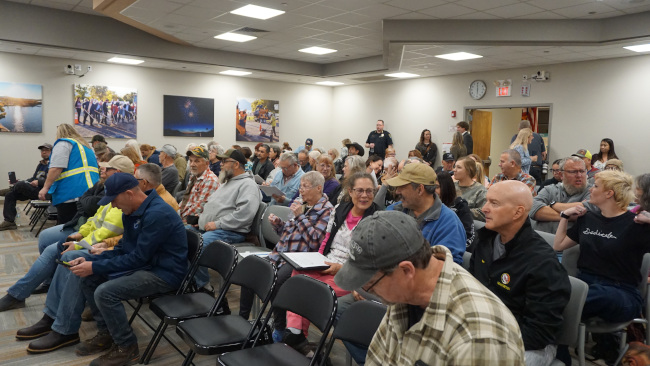
About 100 people gathered at City Hall in Clearlake, California, on Wednesday, Jan. 21, 2026, for a town hall regarding the Robin Lane sewage spill. Photo by Elizabeth Larson/Lake County News.

CLEARLAKE, Calif. — Close to 100 community members impacted by a massive sewage spill in the northern part of the city of Clearlake attended a town hall on Wednesday evening to hear the latest about efforts to test wells and help residents try to get back to normal.

Wednesday marked 10 days since a 16-inch force main operated by the Lake County Sanitation District ruptured in the area of Robin Lane in Clearlake, spilling an estimated 2.9 million gallons during the 38-hour period of time in which repairs were underway.

The town hall, held at Clearlake City Hall, featured updates from county officials and comments from the city manager on the ongoing efforts to clean up the nearly 300-acre spill area and test and clean nearly 100 private wells. A similar town hall was held the week before at City Hall.

Among the updates on Wednesday was that the recovery is now transitioning to being led by the Health Services Department, with Lake County Special Districts — which oversees the Lake County Sanitation District — to continue its mitigation efforts.

District 2 Supervisor Bruno Sabatier said the spill, which began on the morning of Sunday, Jan. 11, was stopped on the night of Monday, Jan. 12, and the cleanup started on the morning of Tuesday, Jan. 13.

Environmental Health is taking the lead on well testing. Department Director Craig Wetherbee said the first week of testing was a blitz to try to get as many sample points as possible.

During the question and answer portion of the meeting, Wetherbee said that of the 94 wells tested, 39 were found to be contaminated with E. coli and coliform. Of those, four came back with testing levels so “astronomically high” they were outside of the scope of the test.

Starting this weekend, drillers and pump teams were in the spill area, shocking — or treating — 51 wells.

He said the effort is focusing on what level of contamination is now present in the wells. Fresh water comes into the aquifer and will push out contaminated water, but Wetherbee said they’re not sure of how rapidly that's happening. 

Some of the test results are encouraging, not showing contamination which Wetherbee said is a good sign for the aquifer. If the sanitized wells have clean testing results, he said that will show the aquifer is clean.

Once the wells start getting two clean samples in a row, county officials can start to lift the prohibitions against using the well water, he said.

“I’m actually really encouraged,” Wetherbee said, noting that the process will take time but it’s heading in the right direction.

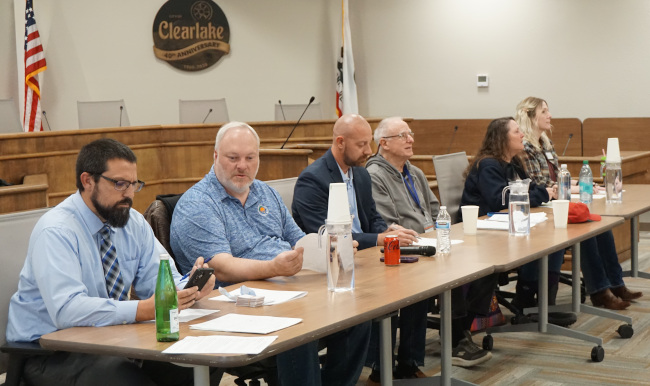
From left to right, District 2 Supervisor Bruno Sabatier, Environmental Health Director Craig Wetherbee, Health Services Director Anthony Arton, Public Health Officer Dr. Bob Bernstein, Special Districts Administrator Robin Borre and Social Services Director Rachael Dillman Parsons at a town hall on Wednesday, Jan. 21, 2026, regarding the Robin Lane sewage spill at City Hall in Clearlake, California. Photo by Elizabeth Larson/Lake County News.


Then, there is still the ground surface to deal with, and Wetherbee said the warm weather and sunshine is the best thing that could have happened. That’s because more ultraviolet light and heat leads to bacteria dying faster. 

Wetherbee said the viable lifespan of E. coli already has passed, and other pathogens from the wastewater are closing in on the end of their lifecycles as well.

Special Districts Administrator Robin Borre, who made her first town hall appearance on Wednesday, said only 3,900 gallons of wastewater made it into the nearby creek. Preventing more of it from going into the creek was what she called a “heroic feat” by her staff.

She said that by Tuesday, Jan. 13, most of the wastewater had been removed from the spill site.

However, in the audience, spill area resident Cassie Hulbert — on hearing Borre’s statement — shook her head and mouthed “no.”

Borre said her team has been working on surface decontamination — pastures, driveways and roadways. Contaminated soil will be removed and replaced with clean backfill. Wetherbee later explained that contaminated soil will be taken to Special Districts and placed in a lined pond. 

Crews on Wednesday dug up a 10-inch valve that had been patched after a spill several years ago and replaced it with a new pipe, Borre said.

Special Districts staff also have been assisting with moving livestock out of harm’s way and providing water for them.

Public Health Officer Dr. Bob Bernstein said wells are being tested for E. coli and coliform, which can get into wells with damaged lids and casings. So far, public health monitoring of emergency room visits has not found any cases of illness associated with exposure to wastewater.

City Manager Alan Flora said his heart goes out to the people who are impacted, and he recognized the enormous frustration and need due to the situation.

“I’m going to be really blunt. I’m pissed about a lot of things, too,” Flora said.

He told residents that while they can’t see everything that is happening, there are a lot of people fighting for them.

Flora said he’s been participating in daily briefings with the county, and the city is prepared to respond and assist.

He noted that the Clearlake City Council has been concerned about the system for some time and is engaged going forward.

State Sen. Mike McGuire was in the city on Sunday and Congressman Mike Thompson has been reaching out to the city and county every day to ask what he can do, Flora said.

The city and Konocti Unified School District will host a dinner for impacted residents at Burns Valley School on Thursday evening. 

“We love Clearlake,” Flora said, adding that city staff are working every day to make the city better.

Officials explain next steps

Sabatier, in explaining the next steps in the response and recovery process, said the Board of Supervisors earlier that day approved up to $750,000 to be utilized for buying water tanks for residents, with pumps to connect the tanks to homes. By that time, he said some tanks had already been installed.

He said there are conversations about long-term planning and how to prevent — or be better prepared for — such incidents in the future.

Wetherbee responded to questions about ongoing well monitoring. He said monitoring will be long-term — for years — but the response itself won’t last that long.

If there is more rain, he said it could cause more contamination, with the bacteria mobilized in the soil.

Wetherbee said many of the wells in the spill area are very old — some having been sunk in the 1940s — and therefore they lack the sanitary seals that didn’t come into effect until 1981. Additionally, some of them have livestock and septic systems nearby — within 100 feet. Environmental Health is working with property owners to remediate those issues.

Asked about regular well testing, Wetherbee said the United States Environmental Protection Agency suggests it take place once a year. Kits can be picked up at the Environmental Health Office in Lakeport, and usually costs between $60 to $80.

Wetherbee warned of individuals who have been in the spill impact area and representing themselves as contractors, giving property owners bids that he called “extortionist” at best. 

The county is paying local companies $435 for each well sanitized, but he said he’s heard of a property owner getting a well sanitization bid for $12,000. Wetherbee urged people to check references and get multiple bids.

Borre received questions about equipment maintenance. She said force main valves — like the one that ruptured — are usually checked yearly, with high priority valves checked every six months.

She said there are 90 miles of gravity line in Clearlake, running from Lower Lake to Lake County Sanitation District’s Southeast Regional plant and passing through a series of lift stations on the way.

Gravity lines are easier to investigate, inspect and clean because they have manholes, Borre said. With a force main, there are limited access points because they are underground and under pressure. The series of valves in them is exercised every six months or a year. 

Borre said the majority of Lake county’s pipes are “AC” — or asbestos cement — with a lifetime of 70 to 100 years. The system isn’t quite that old yet, she added.

Sabatier said the county is having high level conversations about future spills not impacting the water table. That work could be years in the making. 

“Nothing will be happening any time soon,” Sabatier said, noting that no public works project happens overnight.

Email Elizabeth Larson at This email address is being protected from spambots. You need JavaScript enabled to view it.. Follow her on Twitter, @ERLarson, and on Bluesky, @erlarson.bsky.social. Find Lake County News on the following platforms: Facebook, @LakeCoNews; X, @LakeCoNews; Threads, @lakeconews, and on Bluesky, @lakeconews.bsky.social. 

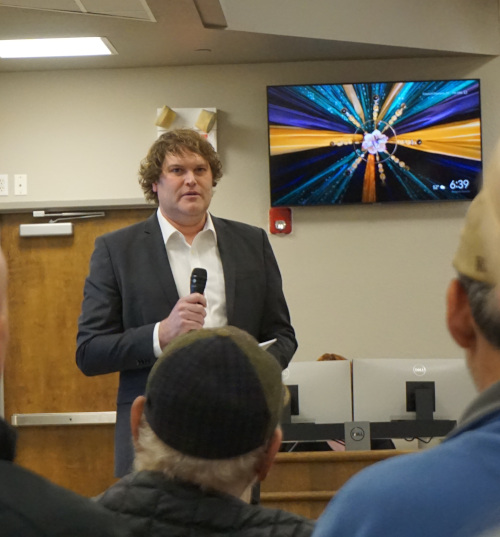
Clearlake City Manager Alan Flora speaks to community members during a town hall on Wednesday, Jan. 21, 2026, regarding the Robin Lane sewage spill at City Hall in Clearlake, California. Photo by Elizabeth Larson/Lake County News.


Details
Written by: Elizabeth Larson
Published: 22 January 2026

Applicants sought for Countywide Redevelopment Successor Agency Oversight Board

LAKE COUNTY, Calif. — The county of Lake is seeking community members interested in serving on the Countywide Redevelopment Successor Agency Oversight Board.

Upon abolishment of all city and county redevelopment agencies in California, the state required the establishment of local oversight boards for each successor agency. 

In Lake County, the two cities and the county have each had their own oversight boards. Pursuant to Health and Safety Code Section 34179, as of July 1, 2018, the three oversight boards must now be consolidated into one seven-member oversight board. 

This board must include one member of the public appointed by the Board of Supervisors.

Applications are available at the Lake County Courthouse, Clerk of the Board Office, Room 109, 255 N. Forbes St., Lakeport, or online at www.lakecountyca.gov on the Board of Supervisors page. 

Applications will be accepted until close of business on March 31.

Please note that membership on the above referenced board is voluntary.

If you have questions regarding this appointment, please contact the Clerk of the Board at 707-263-2580.

Details
Written by: Lake County News Reports
Published: 22 January 2026

Despite its steep environmental costs, AI might also help save the planet

The rapid growth of artificial intelligence has sharply increased electricity and water consumption, raising concerns about the technology’s environmental footprint and carbon emissions. But the story is more complicated than that.

I study emerging technologies and how their development and deployment influence economic, institutional and societal outcomes, including environmental sustainability. From my research, I see that even as AI uses a lot of energy, it can also make systems cleaner and smarter.

AI is already helping to save energy and water, cut emissions and make businesses more efficient in agriculture, data centers, the energy industry, building heating and cooling, and aviation.

A tractor moves alongside a field with rows of crops.
Agricultural irrigation accounts for an enormous amount of the world’s water use. AP Photo/Luca Bruno

Agriculture

Agriculture is responsible for nearly 70% of the world’s freshwater use, and competition for water is growing.

AI is helping farmers use water more efficiently. Argentinian climate tech startup Kilimo, for example, tackles water scarcity with an AI-powered irrigation platform. The software uses large amounts of data, machine learning, and weather and satellite measurements to determine when and how much to water which areas of fields, ensuring that only the plants that actually need water receive it.

Chile’s Ministry of Agriculture has found that in that country’s Biobío region, farms using Kilimo’s precision irrigation systems have reduced water use by up to 30% while avoiding overirrigation. Using less water also reduces the amount of energy needed to pump it from the ground and around a farm.

Kilimo is one example that shows how AI can create economic incentives for sustainability: The amount of water farmers save from precision irrigation is verified, and credits for those savings are sold to local companies that want to offset some of their water use. The farmers then earn a profit – often 20% to 40% above their initial investment.

Data centers

U.S. data centers consumed about 176 terawatt-hours of electricity in 2023, accounting for roughly 4.4% of total U.S. electricity use. This number increased to 183 TWh in 2024. This growing energy footprint has made improving data center efficiency a critical priority for the operators of the data centers themselves, as well as the companies that rely on them – including cloud providers, tech firms and large enterprises running AI workloads – both to reduce costs and meet sustainability and regulatory goals.

AI is helping data centers become more efficient. The number of global internet users grew from 1.9 billion in 2010 to 5.6 billion in 2025. Global internet traffic surged from 20.2 exabytes per month in 2010 to 521.9 exabytes per month in 2025 – a more than 25-fold increase.

Despite the surge in internet traffic and users, data center electricity consumption has grown more moderately, rising from 1% of global electricity use in 2010 to 2% in 2025. Much of this is thanks to efficiency gains, including those enabled by AI.

AI systems analyze operational data in data centers – including workloads, temperature, cooling efficiency and energy use – to spot energy-hungry tasks. It adjusts computing resources to match demand and optimizes cooling. This lets data centers run smoothly without wasting electricity.

At Microsoft, AI is improving energy efficiency by using predictive analytics to schedule computing tasks. This lets servers enter low-power modes during periods of low demand, saving electricity during slower times. Meta uses AI to control cooling and airflow in its data centers. The systems stay safe while using less energy than they might otherwise.

In Frankfurt, Germany, Equinix uses AI to manage cooling and adjust energy use at its data center based on real-time weather. This improved operational efficiency by 9%, The New York Times reported.

An overhead view shows a power substation with wires and equipment.
Artificial intelligence systems use a lot of energy, but they can also analyze energy use to find efficiencies. Joe Raedle/Getty Images

Energy and fuels

Energy companies are using AI to boost efficiency and cut emissions. They deploy drones with cameras to inspect pipelines. AI systems analyze the images to more quickly detect corrosion, cracks, dents and leaks, which allows problems to be addressed before they escalate, improving overall safety and reliability.

Shell has AI systems that monitor methane emissions from its facilities by analyzing methane concentrations and wind data, such as speed and direction. This helps the system track how methane disperses, enabling it to pinpoint emission sources and optimize energy use. By identifying the largest leaks quickly, the system allows targeted maintenance and operational adjustments to further reduce emissions. Using that technology, the company says it aims to nearly eliminate methane leaks by 2030.

AI could speed up innovation in clean energy by improving solar panels, batteries and carbon-capture systems. In the longer term, it could enable major breakthroughs, including advanced biofuels or even usable nuclear fusion, while helping track and manage carbon-absorbing resources such as forests, wetlands and carbon storage facilities.

Shell uses AI across its operations to cut emissions. Its process optimizer for liquefied natural gas analyzes sensor data to find more efficient equipment settings, boosting energy efficiency and reducing emissions.

People talk in a room with many computer screens and large diagrams on the wall.
Buildings in central Copenhagen are heated in a coordinated system with a complex control room. Bernd von Jutrczenka/picture alliance via Getty Images

Buildings and district heating

The energy needed to heat, cool and power buildings is responsible for roughly 28% of total global emissions. AI initiatives are starting to reduce building emissions through smart management and predictive optimization.

In downtown Copenhagen, for instance, the local utility company HOFOR deployed thousands of sensors tracking temperatures, humidity and building energy flows. The system uses information about each building to forecast heating needs 24 hours in advance and automatically adjust supply to match demand.

The Copenhagen system was first piloted in schools and multifamily housing, with support from the Nordic Smart City Network and climate-innovation grants. It has since expanded to dozens of sites. Results were clear: Across participating buildings, energy use fell 15% to 25%, peak heating demand dropped by up to 30%, and carbon dioxide emissions decreased by around 10,000 tonnes per year.

AI can also help households and offices save energy. Smart home systems optimize heating, cooling and appliance use. Researchers at the Lawrence Berkeley National Laboratory found that by adopting AI, medium-sized office buildings in the U.S. could reduce energy use by 21% and cut carbon dioxide emissions by 35%.

Aviation

About 2% of all human-caused carbon dioxide emissions in 2023 came from aviation, which emitted about 882 megatons of carbon dioxide.

Contrails, the thin ice clouds formed when aircraft exhaust freezes at cruising altitudes, contribute more than one-third of aviation’s overall warming effect by trapping heat in the atmosphere. AI can optimize flight routes and altitudes in real time to reduce contrail formation by avoiding areas where the air is more humid and therefore more likely to produce contrails.

Airlines have also used AI to improve fuel efficiency. In 2023, Alaska Airlines used 1.2 million gallons less fuel by using AI to analyze weather, wind, turbulence, airspace restrictions and traffic to recommend the most efficient routes, saving around 5% on fuel and emissions for longer flights.

In short, AI affects the environment in both positive and negative ways. Already, it has helped industries cut energy use, lower emissions and use water more efficiently. Expanding these solutions could drive a cleaner, more sustainable planet.The Conversation

Nir Kshetri, Professor of Management, University of North Carolina – Greensboro

This article is republished from The Conversation under a Creative Commons license. Read the original article.
Details
Written by: Elizabeth Larson
Published: 22 January 2026

Supervisors to hold special meeting on sewage spill funding request; testing and force main work underway

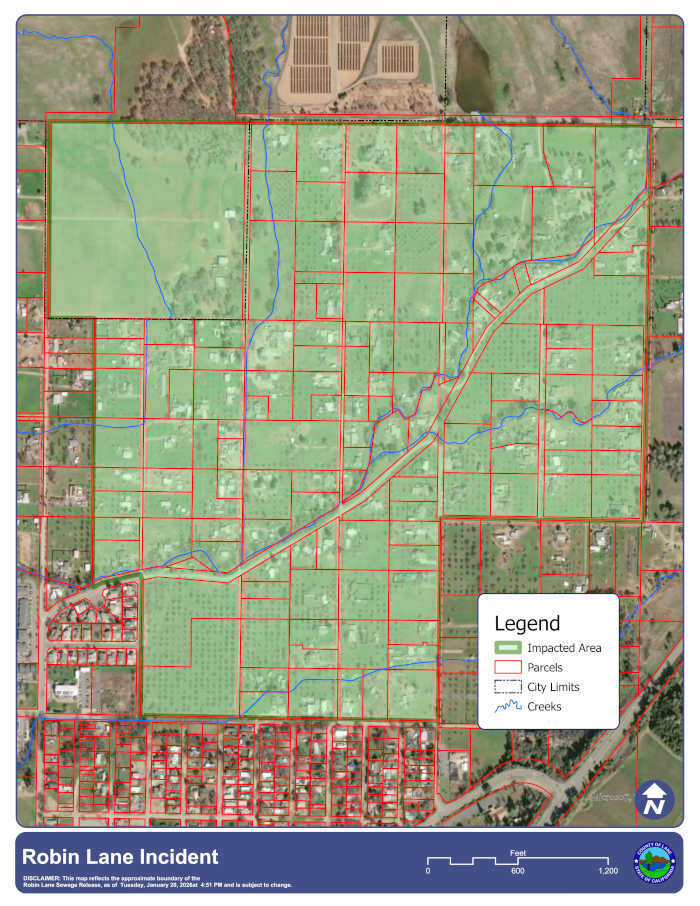
The county of Lake issued the updated map above that shows the approximate boundary of the Robin Lane sewage release as of Tuesday, Jan. 20, 2026, at 5 p.m. The impact area’s estimated size based on the new map is 297 acres. The map is subject to change.

LAKE COUNTY, Calif. – The Board of Supervisors is set to hold a special Wednesday morning meeting to discuss an emergency funding request for the ongoing response to the contained sewage spill that continues to affect hundreds of residents on the northern side of the city of Clearlake.

The board will meet at 9 a.m. Wednesday, Jan. 21, in the board chambers on the first floor of the Lake County Courthouse, 255 N. Forbes St., Lakeport.

The‌ ‌meeting‌ ‌can‌ ‌be‌ ‌watched‌ ‌live‌ ‌on‌ ‌Channel‌ ‌8, ‌online‌ ‌at‌ ‌https://countyoflake.legistar.com/Calendar.aspx‌‌ and‌ ‌on‌ ‌the‌ ‌county’s‌ ‌Facebook‌ ‌page. ‌Accompanying‌ ‌board‌ ‌documents, ‌the‌ ‌agenda‌ ‌and‌ ‌archived‌ ‌board‌ ‌meeting‌ ‌videos‌ ‌also‌ ‌are‌ ‌available‌ ‌at‌ ‌that‌ ‌link. ‌ ‌

To‌ ‌participate‌ ‌in‌ ‌real-time, ‌join‌ ‌the‌ ‌Zoom‌ ‌meeting‌ ‌by‌ ‌clicking‌ ‌this‌ ‌link‌. ‌ ‌

The‌ ‌meeting‌ ‌ID‌ ‌is‌ 865 3354 4962, ‌pass code 726865.‌ ‌The meeting also can be accessed via one tap mobile at +16694449171,,86533544962#,,,,*726865#. The meeting can also be accessed via phone at 669 900 6833.

District 2 Supervisor Bruno Sabatier, whose district includes Clearlake, is asking the board to approve a resolution to cancel $500,000 in reserve designations in the county’s Disaster Response and Recovery Fund and transfer it to the fund for the Lake County Sanitation District’s Southeast Regional System.

The Lake County Sanitation District, or Lacosan, is overseen by Lake County Special Districts.

Lacosan operates a 16-inch force main near Robin Lane and Pond Road in Clearlake that ruptured on the morning of Sunday, Jan. 11.

During the 37.5 hours it took to get the force main repaired, an estimated 2.9 million gallons of raw sewage spilled across hundreds of acres east of Smith Lane, west of Old Highway 53, south of Pond Road and north of Bowers Avenue. 

An updated map issued on Tuesday adjusted down the size of the impact area by just over 30 acres to an estimated 297 acres, based on a Lake County News site calculation.

“Once the affected area was repaired and cleaned up, water tests from over 94 different well sources were collected to understand the status of the water in the wells of affected properties, as well as to gain greater understanding of the water table. As data was gathered, the footprint of the emergency was expanded in consideration of gathered test results, to promote public health and safety,” Sabatier’s report to the board explained.

“Timing for water quality to return to normal levels is uncertain at this time, and background (historical) data available are limited,” Sabatier’s report continued. “The Incident Command team has decided purchasing water tanks and connecting them to those homes that have been affected is our best mid-term solution to get people back into their homes with a semblance of normalcy.”

He added, “Currently, Special Districts and others are helping to refill animal troughs and water tanks, as needed. Staff expect to continue to fill tanks, including any newly purchased tanks, until the well water quality reaches acceptable readings.”

Sabatier said he’s asking for the transfer of $500,000 in Disaster Response and Recovery reserve funds to Lacosan, which is “expected to facilitate purchase of tanks and connecting them to individual property water systems where there are active residences.”

The special meeting is one of two about the sewage spill on Wednesday. A town-hall meeting to update the community on the response to the incident will be held at 6 p.m. at Clearlake City Hall, 14050 Olympic Drive.

In a Tuesday update, the county said, “Officials are aware that misinformation is circulating and will address questions and share verified information at the upcoming Town Hall meeting.”

Force main work, water testing ongoing

The county on Tuesday said Special Districts crews are installing an additional valve on a 10-inch force main along Robin Lane and have conducted camera inspections of the line to better understand current conditions. 

“Because force mains function differently than gravity lines, this work provided an opportunity to inspect a section of pipe that would not typically be accessible under normal operating conditions,” the county reported.

Officials said several properties also are being evaluated “as part of broader cleanup efforts to determine whether soil removal is appropriate. These assessments are part of a careful, methodical approach to protecting public health and the environment.”

Last Wednesday, Public Health Officer Dr. Robert Bernstein issued guidance urging residents in the area who rely on private wells for drinking water to temporarily relocate until his agency has deemed their wells safe. That guidance remained unchanged on Tuesday, the county said.

The county said Environmental Health teams “continue to make steady progress in ongoing cleanup and recovery efforts,” with water testing resuming on Tuesday.

The county’s report said four field teams are actively working throughout the affected areas: Two teams are moving site-to-site alongside drilling crews to efficiently collect samples while additional teams focus on follow-up testing and verification.

Over the weekend, several private wells were sanitized as a proactive step to protect public health, the county reported.

Testing efforts are being concentrated in the Robin Lane and Pamela Drive areas, with additional sampling taking place north of Bowers and east of Smith Lane. 

“These targeted testing activities are helping Environmental Health develop a clearer understanding of conditions across the community,” according to the county’s report.

The Tuesday report also said that, “As test results are received and reviewed, Environmental Health is working to determine whether certain areas may safely be cleared from the incident response.”

Available resources

County officials direct spill area residents to the following resources.

ADA showers: Available 8 a.m. to 5 p.m. Tuesday and Friday at the Clearlake Senior Center, 3245 Bowers Ave.

Avoiding scams after a disaster: Visit this link, https://bit.ly/4jP8A1Z. 

Drinking water: Highlands Water Co. offers a free public water filling station from 8 a.m. to 4 p.m. Monday through Friday at 14580 Lakeshore Drive. Please bring your own jugs or bottles.

Drinking water guidance and information on testing of private wells: Contact Environmental Health at 707-263-1164.

Relocation: Affected residents are directed to first contact their homeowner’s insurance provider to inquire about coverage for temporary lodging under their policy. Residents may also contact Lake County Special Districts at 707-263-0119 for additional assistance and guidance.

Showers, laundry services and potable water: A mobile laundry and hygiene service trailer is available to the public at the entrance to the wastewater treatment plant located at 2485 Pond Road. It includes two laundry sets, with the ability to bring in a larger trailer if additional capacity is needed. Residents can drop off their laundry with on-site staff, who will tag each load with a number, then wash, dry, and fold items before returning them in a clean bag. The unit also includes a double-shower setup (family) and three sinks large enough to wash dishes. A separate family shower area is available and includes one sink, two showers, and a bench, providing space for families and individuals to clean up comfortably and safely. For potable water, members of the public are asked to bring their own water containers. Special Districts staff are on site to assist the public, and a 24-hour call-answering service is available to respond to inquiries related to Special Districts services.

Support to mitigate water and sewer-related needs: Call Special Districts at 707-263-0119.

Temporary housing: Call Social Services at 707-995-4200, Monday through Friday from 8 a.m. to 5 p.m. to request temporary housing. Assistance is available for any household that needs it. Help is no longer limited to elderly/disabled or low-income families. Households that are ineligible for Social Services temporary housing programs will be referred to Church World Service. Church World Service eligibility requirements are: Residents must be impacted by recent sewage flooding; applicants must be vetted through an agency representative (the agency knows the client lives at the address impacted); a confirmed damage assessment is required; clients must have or create an Airbnb account and be able to use the Airbnb app on their phone; clients must have an email address, and the address must be the same address they used to create the Airbnb account.

Water delivery for elderly/disabled: Call Social Services at 707-995-4200, Monday through Friday from 8 a.m. to 5 p.m. to request delivery for households physically unable to refill their own water containers.

Well sanitization services: To schedule well sanitization services or for more information, please contact Environmental Health at 707-263-1164. Environmental Health staff are available to review your location, confirm whether your property falls within the mapped area and provide guidance on appropriate next steps.

Email Elizabeth Larson at This email address is being protected from spambots. You need JavaScript enabled to view it.. Follow her on Twitter, @ERLarson, and on Bluesky, @erlarson.bsky.social. Find Lake County News on the following platforms: Facebook, @LakeCoNews; X, @LakeCoNews; Threads, @lakeconews, and on Bluesky, @lakeconews.bsky.social. 

Details
Written by: Elizabeth Larson
Published: 21 January 2026
  • 11
  • 12
  • 13
  • 14
  • 15
  • 16
  • 17
  • 18
  • 19
  • 20

Public Safety

  • Lakeport Police Department celebrates long-awaited new headquarters

  • Lakeport Police Department investigates flag vandalism cases

  • Lakeport Police Department thanks Kathy Fowler Chevrolet for donation

Community

  • Hidden Valley Lake Garden Club installs new officers

  • 'America's Top Teens' searching for talent

  • 'The Goodness of Sea Vegetables' featured topic of March 5 co-op talk

Community & Business

  • Annual 'Adelante Jovenes' event introduces students, parents to college opportunities

  • Gas prices are dropping just in time for the holiday travel season

  • Lake County Association of Realtors installs new board and presents awards

  • Local businesses support travel show

  • Preschool families harvest pumpkins

  • Preschool students earn their wings

How to resolve AdBlock issue?
Refresh this page